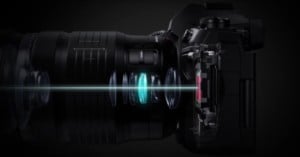
Olympus Says Earth’s Rotation Limits Image Stabilization to 6.5 Stops Max
It turns out the only thing standing between Olympus and even better image stabilization than the E-M1 Mark II's already insane 6.5 stops... is the rotation of the Earth.
It turns out the only thing standing between Olympus and even better image stabilization than the E-M1 Mark II's already insane 6.5 stops... is the rotation of the Earth.
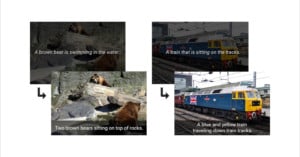
Well, you can add "captioning photos" to the list of jobs robots will soon be able to do just as well as humans. After some training, the latest version of Google's "Show and Tell" algorithm can describe the contents of a photo with staggering 94% accuracy.

Apple released iOS 10.1 to public beta testers today, and it includes one of the most anticipated features they showed off during their iPhone 7 keynote: the "Portrait" mode that fakes a depth of field effect.
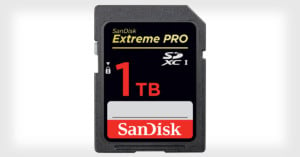
It has finally happened: an SD card has now broken the 1 terabyte threshold. SanDisk and its parent company Western Digital today unveiled a new 1 terabyte SDXC card, ushering in a new era of tiny memory cards with massive storage capacities.
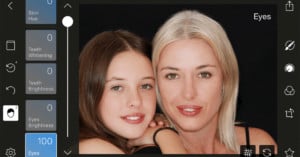
Polarr's powerful and popular photo-editing app on iOS was just upgraded to version 3.0, and the new update brings powerful face detection and editing tools that are being seen for the first time in Apple's App Store.

Qualcomm thinks dual cameras are the future of smartphone photography, and they'd like to get on the train before it picks up too much steam. Enter 'Clear Sight,' the company's new dual camera module that's probably gonna start popping up in smartphones all over the place.
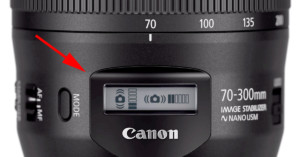
The rumors, patents, and leaks have finally come true. Canon today announced its new EF 70-300mm f/4.5-5.6 IS II USM lens, its first lens with a newly developed LCD information display built right into the lens body.
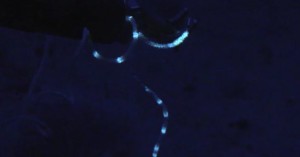
Ultra-high sensitivity cameras like the 4 Million ISO Canon ME20F-SH are making it possible to record things never before possible, like these bioluminescent bamboo corals pulsating with light 1,245 feet below the surface of the ocean.
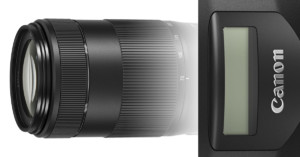
Canon's recent patents suggested that the company is planning to add a digital display to its lenses, and today the first leaked photo of the actual display has emerged.

Why do the new iPhone 7 phones have to simulate a shallow depth of field? The short answer: physics.

Apple just announced the new iPhone 7 and iPhone 7 Plus, a smartphone it calls "the world's most advanced smartphone."
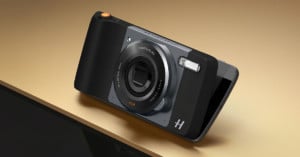
Big news in the world of mobile phone photography today. Motorola just announced a new Moto Mod for its Moto Z line of smartphones. It's called the Hasselblad True Zoom, and it's an attachment that adds RAW photography and 10x optical zoom.
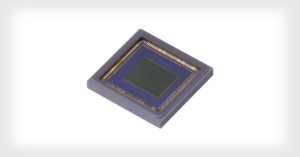
Canon announced today that it has developed a CMOS sensor with a global shutter, perhaps paving the way to future Canon DSLRs that don't suffer from the "rolling shutter" effect.

Doing extreme retouching to the human body in photos has gotten a great deal of bad press as of late, but that's not keeping a London-based software company Anthropics Technology from trying to innovate in that space. It has launched a new program called PortraitPro Body, which it claims is "the industry’s first dedicated full body retouching software."
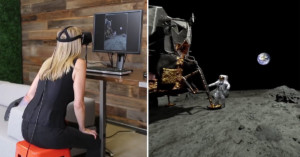
In 2015, light-field camera startup Lytro did a huge pivot, redirecting its focus from consumer light-field cameras (the original and the Illum) to its new light field virtual reality camera, the Immerge. Today the company released a first peek at what the Immerge can do.
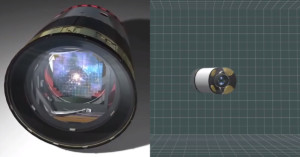
Curious Droid made this 9-minute video that takes a look at 5 of the most amazing camera technologies, both those in existence and those that are coming soon. They include an ultra-powerful satellite camera, a high-resolution surveillance camera, the most powerful camera, the fastest camera, and the smallest camera.

Getting the best possible performance at the edges of a flat camera sensor is tough, but a new patent from Canon shows how the Japanese company is planning to tackle this problem in future Canon image sensors.
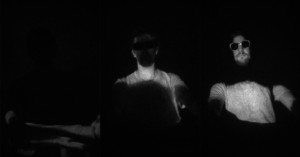
The human eye can't possibly see how light washes over a portrait subject when you fire your strobe—the speed of light is simply too fast. But someone actually managed to capture the whole process on camera... nanosecond by nanosecond.
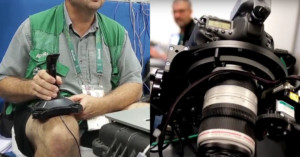
Before the Olympics began, the Associated Press spent a month installing 35 miles of cables and remote camera systems at the sporting venues at the Rio 2016 Olympics. The 1-minute video above offers a glimpse at how the 8 robots and dozens of remote cameras are being used to capture sports photography during the Games.
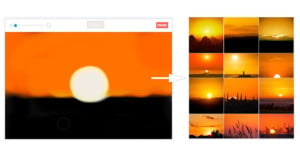
500px today announced a new tool called Splash. Instead of searching for photos using titles, keywords, EXIF details, or colors, Splash lets you hunt for photos simply by sketching them on a canvas.

Remember that amazing automatic colorizing algorithm we told you about back in March? It was just put to an interesting test. As a fun "what if?" hobbyist Amir Avni tried the neural network-powered colorizer on a B&W video.

Excire Search for Lightroom is a new Lightroom plugin that lets you search for photos using powerful image recognition technology. Want to find a photo of your family on a beach? Just type in "beach," and the software will search for photos based on the content.
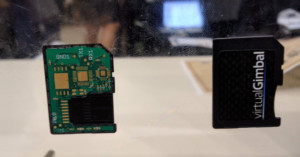
virtualGimbal is one of the most interesting little devices we've ever come across. An SD card with a gyro built right in, the device does double duty by capturing your footage while it also captures the movement of your camera for better electronic stabilization in post.
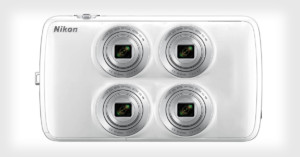
The multi-aperture computational camera is an exciting technology that's emerging in the world of photography, and it appears that Nikon wants in. The company has patented a "4-eye" camera that packs 4 lenses and 4 sensors.
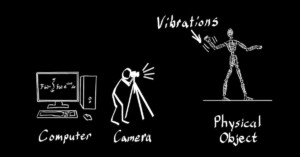
Researchers in MIT's Computer Science and Artificial Intelligence Laboratory are quite literally letting you reach in and touch pieces of an image using just a few seconds of video and their "Interactive Dynamic Video" technology.

Accurately colorizing a photo usually takes hours upon hours of research followed by the same in Photoshop. But now, thanks to fancy new neural network technology, you can do an amazing job in no time.
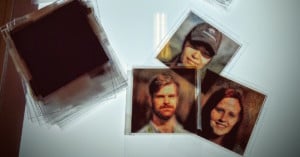
Printing a hologram usually involves some sort of special materials or lenses, but a company called Lumii has invented a way to do it with a regular old Epson inkjet printer! The resulting 'lightfield prints' look for all the world like 3D, full-color holograms.
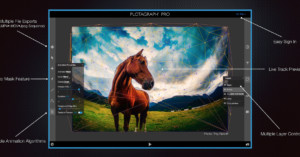
Plotagraph Pro is an incredible new photography tool that can take any still image and animate it into a beautiful looping GIF or video file. No need to shoot a video or capture multiple frames, a single JPEG is all this Web-app needs.

Computers are changing photography in a big way—from colorizing black and white photos automatically, to telling how memorable your photos are. And now, a new imaging technology can change the apparent focal length of a photo, making it look like a wide-angle selfie was taken from further way with a portrait lens.

Microsoft today launched Microsoft Pix, a new smart camera app for the iPhone that uses artificial intelligence features to help you shoot better photos.

For better or worse, copyright law hasn't changed much in the United States even as technology has made it far easier for people to steal or "appropriate" your work. But a new service called Blockai thinks it can help by using something called the bitcoin blockchain.

A computer vision researcher at the University of Washington has developed a face-swapping image search engine that will automatically insert the face from an uploaded photo into any search term at all. No photo editing skills of any kind required.

Most of the photos in IKEA's catalog are CGI these days, and more and more video games are adding serious photo modes. As the virtual and photographic worlds converge, we'll be seeing more and more demos of photorealistic CGI that may trick our eyes. Here's one example.

Researchers working on atomic-level storage have found a way to store massive amounts of data in a tiny space. With a bit more improving, this technology could mean memory cards with tens of terabytes of storage.
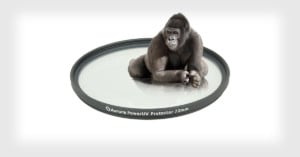
Photographers often use UV filters to protect the front element of their lenses, but tests have shown that impacts that shatter your filter will likely to damage your lens as well. Aurora Aperture wants to change that: they've created the world's toughest filters by using Gorilla Glass.
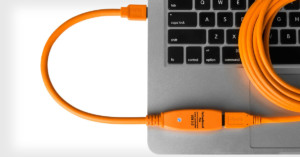
Tether Tools has announced TetherBoost Pro, a product that lets photographers shoot with a tethered USB 3.0 connection of up to 65 feet without any frustrating signal drops.

Faroe Islands is an island country halfway between Norway and Iceland. It features some of the world's most beautiful roads, but those routes haven't been traversed by Google's Street View camera cars. So, the country decided to take matters into its own hands by mapping the island with sheep-mounted 360-degree cameras. It's called Sheep View 360.

Want a taste of the future? There's a new web app that uses advanced "deep learning" research to magically auto-colorize black-and-white photos.

Prisma is a new camera app that transforms your photos to look like paintings by famous artists. It goes beyond the film simulation filters that are widely available these days to offer a surprisingly realistic painting filter.

Remember 6 days ago, when we said tiny storage like microSD was finally getting the R&D love it deserved? We may have been on to something, because Samsung just introduced a new kind of tiny memory card that could leave microSD cards in the dust.
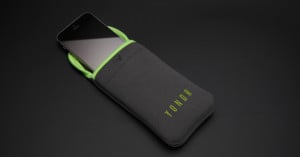
The battle between musicians and their smartphone-wielding concert goers is a constant tussle. Smartphone-free zones are difficult to enforce, and even if you don't want to watch the show through a screen you might lack the self-control to leave your smartphone alone. Enter the Yondr pouch.
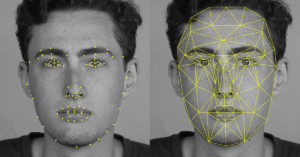
Snapchat's "lenses," more colloquially known as selfie filters or just "filters," may seem like a totally inane feature. But it turns out the facial recognition technology behind them is advanced, impressive... and a tad scary.

A future version of Photoshop may include some pretty powerful automatic selection tools if the technology in this new paper by researchers at The Chinese University of Hong Kong and Adobe Research pans out.

Apple has been awarded a US patent for a system that could disable iPhone cameras with infrared signals, allowing photography to be remotely banned in locations such as concerts and sensitive sites.
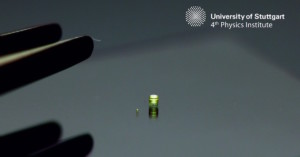
Today in interesting scientific breakthroughs, researchers at a university in Germany have managed to 3D-print a three-lens camera the size of a grain of salt. A camera so small it can be injected using a standard syringe.
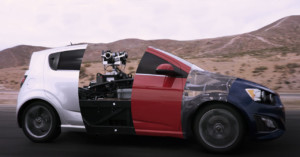
Watching a car commercial will never be the same once you get a peek at the Blackbird. A shapeshifting, adjustable electric car 'rig,' it can become any car—past, present, or future—with some help from CGI.

Check out this photograph of the Golden Gate Bridge. It's no ordinary photo: Bentley calls it "the world's most extraordinary car photograph." Why? Because it's a 53-gigapixel photo that you can zoom waaay into.
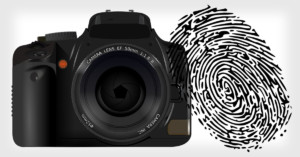
Examining fingerprints is one of the key techniques in forensics, allowing investigators to identify suspects and build a case against them. In the same way, checking "camera fingerprints" could soon be a major tool in helping photographers fight copyright infringement, and a project called ToothPic is working to make that happen.

When the Apple Watch first came out, Apple saw no reason to make it bulkier by putting a camera into the tiny device. But according to a patent published this week, the company may have changed its mind.
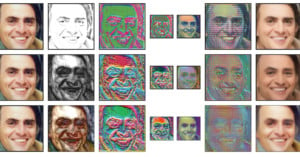
Researchers at Radboud University in Holland have managed to do something pretty crazy. Using hundreds of thousands of photographs, they've trained a neural network to take a hand-drawn sketch and create a photorealistic portrait from it.