Pentax May Have Lucked Out as Nikon and Canon Leave DSLRs Behind
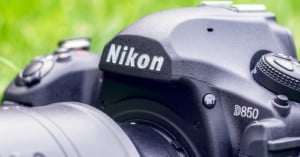
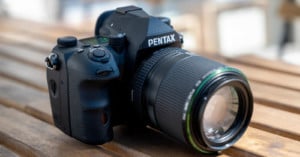
Pentax could now be in the strange and advantageous position as the main beneficiary of the demise of the DSLR as both Canon and Nikon prepare to exit the space.
Pentax could now be in the strange and advantageous position as the main beneficiary of the demise of the DSLR as both Canon and Nikon prepare to exit the space.
The first task I give photography students is to create a starscape. To do this, I ask them to sweep the floor beneath them, collect the dust and dirt in a paper bag, and then sprinkle it onto a sheet of 8x10 inch photo paper. Then, using the photographic enlarger, expose the detritus-covered paper to light.
There are lots of misconceptions about street photography made by people starting out or itching to try this ultimately most challenging (unless you want to take boring photos), most rewarding, and most accessible of photographic genres.
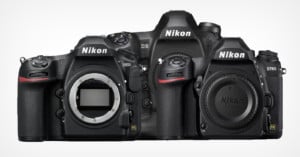
Let’s talk about something obvious that apparently is big news: Nikon is going to stop making DSLRs.
If there was one word to describe 2022's camera sales trends so far, it would be "pivotal." When I say pivotal, I mean it to say that it seems as if a switch has been flipped and the market has turned on its head.
Deepfakes are a problem, and we need to talk about the rising issue of fake content on the internet and how some companies are shifting to put some of the blame for what they created on our shoulders. For more, read this week's Clipped Highlights!
Micro Four Thirds had a lot going for it when it launched as it promised low cost, smaller lenses, and good image quality. So why didn't it become the go-to format?
A few months ago, the US Copyright Office rejected Steven Thaler's request to copyright a picture on behalf of an algorithm he dubbed the Creativity Machine.
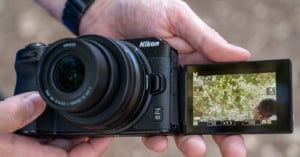
As much as photography purists don't like it, vlogging and streaming are not only a real desire, the demand for cameras in this segment is considerable. After seeing the success of the Sony ZV-E10, Nikon wanted a piece of that pie and aims to get it with the Z30.
Photography has been the most standard way to capture events for decades. If you want an event documented, you hire a photographer. However, in the next few years, that could all change.
With Canon's strong foothold -- or should that be increasing stranglehold -- on the mirrorless market, you can easily argue it is becoming the Microsoft of the camera world.
Most photographers I know have lens preferences and tend to utilize a favorite lens for their photography. Maybe it’s the way the lens captures the sun flare or the way the lens sees what they picture in their mind. But what if you could only shoot one?
We're sold software on the basis that what we can't get right in-camera, we can fix and improve after the event. Even with all the fancy algorithms that are available to us, the single best thing you go do to your image is a simple crop.
During the dark ages of digital photography, also known as the early 2000s, I was spending an awful lot of time trying to get my Canon 430EX Speedlite to work as an off-camera flash. Speedlites, by design, were clearly never meant to be used that way.
Earlier this week, Apple revealed the M2 chip and the two computers that would be the first to use it. And while the MacBook Air saw significant upgrades across the board beyond just the new chip, the equally-priced M2 MacBook Pro did not.
A new report from TechInsights confirms that the Nikon Z9 sensor is made by Sony, a fact that does not matter at all.
Photographers, from beginners to the most experienced, search for ways to improve their compositions. To be successful in your search, you have to compose an image based on two things above all else: light, and the relationships of forms.
As a photographer, you might be out on the street or at a vantage point in the landscape. You raise the viewfinder to your eye, compose the framing that you envisioned, then click the shutter. You have a picture that was acquired using the technical elements at your creative disposal: focal length, shutter speed, and aperture. But where was the camera?
Almost six years ago, I spoke with industry experts about the state of memory cards and all of them told me that CFast was about to be a thing of the past. So did that actually happen? Is CFast really dead?
The announcement has landed and it's now official: Canon has released an APS-C RF-mount camera. In fact, it hasn't just released one - but two - in the form of the R7 and R10. It might seem strange, given that Sony and Nikon have had APS-C models for some time, but this is a big deal because Canon already has the EF-M mount and EOS M APS-C mirrorless range. This begs the question, is Canon about to scrap the EOS M line?
Nikon has revised its medium-term management plan and in an eye-opening revelation, all but announces the death of F-mount.
Nikon recently released its annual results which are a key metric in determining how well the manufacturer is doing both in terms of short-term finances as well as implementing its medium-term strategy. The quick takeaway is that it's making more money, but that camera market share is worryingly low. What does this mean for it going forward?
It's the time of year when many corporations announce performance over the last year and Fuji is no different, except all eyes are on recovery from COVID shutdowns and supply chain problems. So how did Fujifilm do? The short answer is very well and, for its Imaging division, film is king.
The year 2020 saw digital camera shipments nosedive to a new low of 8.9 million units, down from 121 million units in 2010. It was believed it couldn't get any worse and, indeed, shipments stabilized in 2021. So why do sales appear to be in free-fall again?
You're out in the field, having scouted out a new location to grab a landscape vista. You release the shutter button and then chimp the back of the camera to see what you've captured... the sky's blocked out, blinking back at you. You've got a dreaded case of the blinkies, but does it actually matter?
The most common method to teach photographic composition to novices is the "rule of thirds" — in short, divide the screen into equal thirds vertically and horizontally, and then place your point of interest on any of the cross points for a maximally pleasing image.
I believe in a happy medium, somewhere between too little and too much. Aristotle defended this view with his Golden Mean, the middle ground between excess and deficiency. Apply it to the pleasures of life, to your emotions, to your decision-making, and it makes practical sense. Even digital photography follows Aristotle’s wisdom.
Cancer took my mother away. I was in a downward spiral until a chance encounter with nature set me on my path to recovery. I began photography as a means of prolonging the serenity I felt when surrounded by nature.
I know that the idea of proxy recordings and how to create them in editing software such as Adobe Premiere and Divinci Resolve has been talked about a hundred times, but did you know you can generate them in-camera for even more time savings?
The smartphone is perhaps the single most important device in history, wresting the power of news and journalism back into the hands of the everyday person. Data communication is the key enabler, but the camera -- more than anything else -- slakes the thirst for instant visual gratification. So, why is shooting with a smartphone so deeply unsatisfying?
It's a strange twist of fate that the company that rivaled Kodak in film manufacturing but currently makes very little of its money from the camera business should now be the largest camera manufacturer in the world.
The Falling Soldier is one of the most famous war photos ever made, but questions have swirled for many years regarding its authenticity as evidence that it was staged has piled up. In my own research into the photo, however, a new question came up: the photo is attributed to renowned war photographer Robert Capa, but could it actually have been captured by his partner, Gerda Taro?
One of the reasons we pursue landscape photography is to connect with nature. Many photographers cite calmness, a sense of peace, and inspiration when they are surrounded by stunning scenery. I am one of them. Unfortunately, it is increasingly common that the encounter is modified by some human-made element.
Digital cameras are great -- the technology they are built upon is remarkable, underpinned by remarkably sophisticated designs. Not only that, but the pictures they acquire are of such astonishing quality that they make anything that went before pale in comparison. So why then do digital cameras have such (relatively) short lifespans compared to film cameras?
The camera sector isn't exactly a thriving business at the moment, with year-on-year declining sales and a slew of manufacturers having exited the market.
A leading textbook on creative photography, released in 1980, devotes more than 90% of its 460 pages to technical considerations — how cameras and lenses work, darkroom procedures, lighting — and just a few pages to aesthetics and composition.
Even though the heyday of the DSLR is well behind us, it does not seem like we're going to shed the acronym any time soon. A newly-published shopping guide by the New York Post confirms as much: nearly half of its picks for "Best DSLRs" are actually mirrorless cameras.
Apple's newly-announced Mac Studio with its new M1 Ultra chip looks to be a juggernaut, but pretty much no photographer will need that kind of power. The base model Mac Studio is a better choice and might be the best deal for a new computer on the market.
I’ve often been asked that question and it’s relevant, so let’s examine it for a while. Let’s start at the very beginning -- the actual exposure of a negative.
The news of falling camera shipments is like the dripping of a faucet. It comes with a regular, steady, beat, and just when you think it has stopped... plink, there it goes again! So perhaps it's no surprise that CIPA -- the trade body for manufacturers -- has a downbeat forecast for 2022, but strangely seems to have missed the good news!
Who are you, when you’re holding your camera in your hands? You're likely less distracted, or less anxious. Maybe you're more aware, or more alive. But now that we are here, looking out over the smoking ruins of a year that has hardly begun, what should we do?
Is this photo worth $10 million? Prince Andrew thinks so, or at least reports indicate that his out-of-court settlement with Virginia Giuffre will cost somewhere north of $10 million. The figure makes this image perhaps the most costly single photo in the world.
In the past few years, we’ve seen the dawn and domination of mirrorless cameras and exponential improvements in software and computing power. Speaking as someone who started shooting on black and white film, moved to digital on a 6-megapixel camera, and now shoots solely only on mirrorless bodies, I can honestly say that it’s never been easier to produce great quality photography.
When not covering presidential rallies for international news agencies I also photograph artists, especially ballet. I've been photographing the professional ballet company of Charlotte, North Carolina, for 17 years now.
Cameras are expensive, and Canon is no stranger to hiking its prices when it sees fit -- the EOS 1D X Mark III flagship DSLR costs a fairly sizeable $6,500. But has it always been this way?
The gentleman that I (and countless others) learned photography from is one O.P. Sharma, an internationally recognized, black-and-white film photographer. He is one of the masters of photography. He founded the India International Photography Council and was the driving force behind establishing 19 August as International Photography Day every year.
It's the dawn of a new era for OM Digital Solutions (OMDS) -- Olympus as was -- as it forges a new beginning, with a new camera, bearing the new name, and the last to be emblazoned with the Olympus logo. Is this the start of a golden age for Micro Four Thirds (MFT) or simply the beginning of the end for both OMDS and MFT?
It's no secret that Nikon has been having a tough time financially -- a result of an over-reliance on its Imaging Division -- and has been implementing a medium-term strategy to help balance the books and foster long-term growth. Results from its Imaging Division suggest it is struggling and possibly caught in a perfect storm.
With 2021 well and truly over, those manufacturers that align their finances to the calendar year are now producing their financial reports. Canon's latest figures reveal strong and sustained performance, even during the pandemic, which is a result of its shift to mirrorless camera manufacture and facilitating the beginning of a new market dominance.
The BCN Awards are a stalwart in the annual calendar as they recognize sales achievements for (among others products) camera manufacturers. While they only account for the Japanese market, they provide a marker for how well manufacturers are doing. So what are the big takeaways this year?