More Technology in Your Camera is Not a Bad Thing
While some might disagree, I argue it’s never a bad thing to add more features to cameras that make it easier for a photographer to get a great photo.
While some might disagree, I argue it’s never a bad thing to add more features to cameras that make it easier for a photographer to get a great photo.
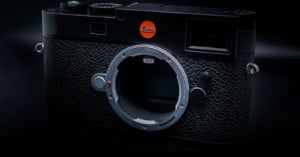
Leica innovated the heck out of the camera with the Leica 1 back in 1925, breaking new ground with the Leica 2 and then the M3. However, not so much in recent years and I argue the "classic" M is now actually holding back Leica's innovation.
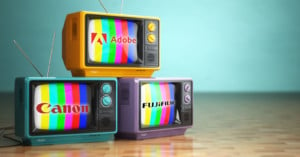
Seeing television ads for cameras and camera products is not nearly as common as it used to be, but that is starting to change as companies realize they need more general consumer support to survive at a time when the market is shrinking.
Adobe recently announced new Camera to Cloud integrations, following its recent acquisition of Frame.io. The Fuji X-H2S will become the first stills camera to natively shoot "to the cloud". This might seem like a niche feature, however look beyond the headlines and this could be a generational step change. Not only because of the ability save to the cloud (like Google Photos) but because of what this then enables.
Since the 90s, the digital camera has entered our lives as a unique, practical product that no one had experienced before. Despite the 640x480 image size and very simple design of the first cameras, their innovative capabilities were admirable.
Today, I want to talk about bad photos. I'm not talking negatively about them either, because bad photos are in fashion right now. I can hear the sound of a million angry perfectionist photographers thrashing at their keyboards, but hear me out.
Earlier this month Olympus revealed some of the thought process behind the 2020 sale of its camera division in which the company jettisoned it in order to pursue greater stability and profitability from its broad portfolio of medical technology. This is in stark contrast to Nikon, which has wiped the slate clean and started again. What is going on with Japanese camera manufacturers and are there any lessons to be learned?
A photograph can reveal some deep human truths, but even the most intricate images may not divulge in a self-referential way. A deeply intimate scene could have been made from very impersonal practices, and similarly one could use a respectful, peaceful photographic approach to produce something obscene.
Photographing football campaigns in one of the most aggressive and intense types of commercial photography there is. While some photoshoots will have a sushi chef for craft services, football sets have doughnuts, caffeine and loud music. Football is unlike any other sport to capture, and I absolutely love it.
Discussion on the topic of "fake news" has become exhausting. Overall, it has lost its meaning. It has gone from referring to actually made-up stories to now just being thrown around for whatever topic someone doesn’t want to hear about.
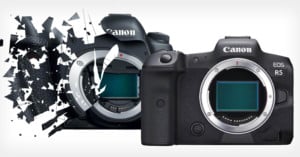
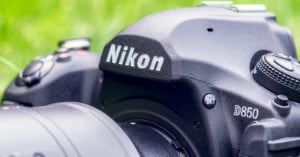
The death of the DSLR was always in the cards - as soon as Nikon and Canon entered the mirrorless fray in 2018 it was not a case of if, but when. However, what was perhaps not expected was the rapidity with which the sales rug would be pulled from beneath DSLR consumers' feet. It's all or nothing when it comes to mirrorless.
Lightroom presets are all around us. You might love them as a 1-click solution to your batch editing needs or you might think that they are useless and that all the photos for which one was used look the same. Still, the truth is they are here to stay and maybe we should start thinking of how to integrate them into our professional workflows as more than crutches for your next Instagram post.
Today Microsoft announced a new Surface Studio -- the third in the lineup and first since 2018 -- and while it’s great to see the company continuing this product line, creative professionals are still waiting for the powerhouse Apple-killer we were promised in 2016.
The Africa Geographic 2019 winner "Tim in Amboseli National Park, Kenya is a great photo. It shows Tim the elephant majestically backlit against a dramatic sky. Except, it didn't win: it was later disqualified for excessive manipulation.
The death of the DSLR has long been vaunted, and even after the appearance of the RF and Z mirrorless systems, it still sees signs of life. But dedicated lens manufacturers might finally have killed it off.
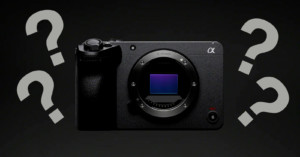
Last week, Sony announced a new camera, and looking at the marketing videos the company produced contrasted against the target user I was told it was for, I found myself quite confused.
In just the last week, I’ve seen multiple instances of camera technology that truly boggle my mind. At the same time, I know how easy it is to just scroll past them.
If you pay attention to the world of photography, you may know that YouTube celebrity Logan Paul recently sold a collection of photos titled 99 Originals as NFTs for tens of thousands of dollars per photo.
As an industry, we need to do better. For our craft, for new and experienced photographers alike, for those clients who don’t get the full information.
Photography competitions garner hundreds of thousands of entries per year and give away about as much money to a small subset of winners. But when those competitions are judged by well-known photographers —which is expected of any prestigious competition — this industry is small enough that it is mathematically impossible to avoid the possibility of a conflict of interest arising.
Much to the surprise of many, photographing athletes doesn’t always mean you are a sports photographer. Truthfully, I don’t know much about sports at all.
The broad strokes of an emotion can be fairly simple to translate into visual communication. A smile for joy, a tear for sadness, bared teeth for anger, wide eyes for fear. Nuance however is always present, the experience and expression of complex emotions are not always as straightforward.
Text-to-image generators are a new and messy technology and this week another major step was taken that some argue is damaging to your copyrighted photographs.
The mark of a mature camera system is the breadth and depth of lenses that are available for it. The most recent news swirling around Canon, its RF mount, and third-party lens manufacturers demonstrates the principal battleground between competing mirrorless brands.
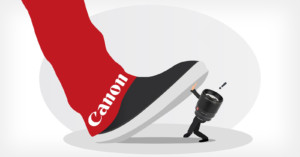
Canon has said the quiet part out loud: it doesn't want you to spend any of your money on anything other than Canon products. This is a huge mistake, and I'm pleading that the company rethink this strategy.
Here’s a question that I’ve asked myself many times over the past few years: does it make sense to travel abroad to take photos?
It’s time that we recognize how much of an impact Gen-Z is having on modern photography culture. Even millennials -- of which I am one -- need to understand that the influence of this young subset of creators is colossal and only going to grow.
Away from the world, the city, and the light pollution, I stood in a green forest where the breeze couldn’t even penetrate the trees surrounding me. It was an area that only existed to me in my imagination after multiple times of poring over Google Maps and allowing my mind to wander.
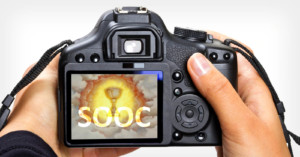
The ultimate skill of the photographer -- of the artist -- is to create the aesthetics of the scene in front of them "in the moment". The Natural Landscape Photo Award is perhaps the epitome of this with minimal image manipulation allowed, while the World Press Photo has a Code of Ethics. So straight-out-of-camera (SOOC) has got to be the pinnacle of ability, hasn't it? Or is there more to the notion of what an image is and where the skill lies in producing it?
Earlier this year, Arizona governor Doug Ducey signed HB 2319, a law that would make it illegal to record or photograph police within eight feet of them. It's being challenged, and the results will have nationwide implications.
Artificial intelligence-powered (AI) image generators have exploded in popularity and apps like DALL-E, Midjourney, and more recently Stable Diffusion are exciting and tantalizing technology enthusiasts.
Of all the arts available to mankind, my heart belongs to music. Perhaps it’s a sentiment that doesn’t serve my self-interest much, as my only achievements in the arts have come through photography.
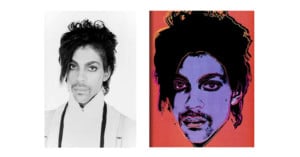
We need to talk about copyright law. Now before your eyes glaze over and I lose you, I promise what I have to say is worth hearing.
For the last several years, manufacturers have repeatedly blamed smartphones as the reason the camera market has collapsed so spectacularly, and a recent experience has me now fully understanding this.
The smartphone has won the compact camera battle, and that ship has well and truly sailed. The only surprising thing about this news is that it took so long for the compact camera to finally die.
Ordinarily, it is the end-of-year results that are the most interesting as they provide a picture of how the year has gone and what the outlook for the next year is. However, with this report, Canon has confirmed three critically important aspects of the camera market which gives it increased confidence going forward.
TikTok's domination in short-form video is not the only thing Instagram should be worried about. In the time that Instagram has shifted ever further away from its roots as a photo-sharing app, Generation Z has found a new space to post their selfies and photo-dumps -- and that's TikTok.
When I think of Ansel Adams, I think about beautiful landscapes, the zone system, and preserving the environment. I would have to say that Ansel Adams and Playboy Magazine are not words I would put into the same sentence, yet here we are.
Most people today own a smartphone with a camera that they bring with them everywhere they go. These state-of-the-art mobile cameras arguably make everyone a photographer (in some sense of the word).
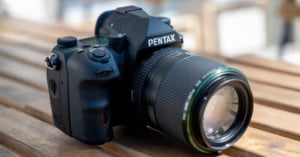
Pentax could now be in the strange and advantageous position as the main beneficiary of the demise of the DSLR as both Canon and Nikon prepare to exit the space.
The first task I give photography students is to create a starscape. To do this, I ask them to sweep the floor beneath them, collect the dust and dirt in a paper bag, and then sprinkle it onto a sheet of 8x10 inch photo paper. Then, using the photographic enlarger, expose the detritus-covered paper to light.
There are lots of misconceptions about street photography made by people starting out or itching to try this ultimately most challenging (unless you want to take boring photos), most rewarding, and most accessible of photographic genres.
Let’s talk about something obvious that apparently is big news: Nikon is going to stop making DSLRs.
If there was one word to describe 2022's camera sales trends so far, it would be "pivotal." When I say pivotal, I mean it to say that it seems as if a switch has been flipped and the market has turned on its head.
Deepfakes are a problem, and we need to talk about the rising issue of fake content on the internet and how some companies are shifting to put some of the blame for what they created on our shoulders. For more, read this week's Clipped Highlights!
Micro Four Thirds had a lot going for it when it launched as it promised low cost, smaller lenses, and good image quality. So why didn't it become the go-to format?
A few months ago, the US Copyright Office rejected Steven Thaler's request to copyright a picture on behalf of an algorithm he dubbed the Creativity Machine.
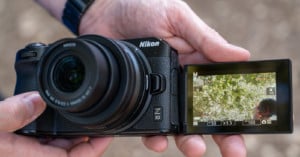
As much as photography purists don't like it, vlogging and streaming are not only a real desire, the demand for cameras in this segment is considerable. After seeing the success of the Sony ZV-E10, Nikon wanted a piece of that pie and aims to get it with the Z30.
Photography has been the most standard way to capture events for decades. If you want an event documented, you hire a photographer. However, in the next few years, that could all change.
With Canon's strong foothold -- or should that be increasing stranglehold -- on the mirrorless market, you can easily argue it is becoming the Microsoft of the camera world.