Do It Yourself

Sometimes, the best products are the ones you make yourself. PetaPixel is your guide to custom lenses, handmade camera rigs, custom-coded artificial intelligence cameras, and the 3D-printed parts that makes photography truly personal.
Building a 20×16-Inch Ultra-Large-Format Camera by Hand

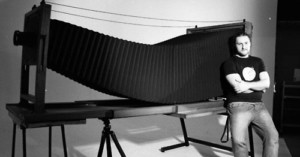
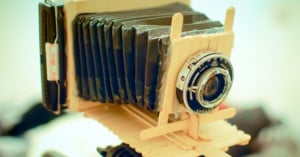
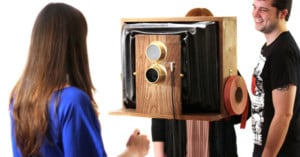
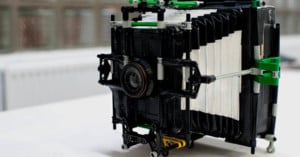
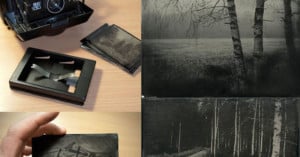
South East England-based photography student Mark Hilton came up with an ambitious New Year's resolution this year: he's in the process of building his own 20x16 "ultra-large-format" camera by hand. It's a camera that's designed to expose Ilford Harman Direct Positive paper.

Convert Your DSLR Battery Into a Power Supply Unit That Plugs Into Outlets

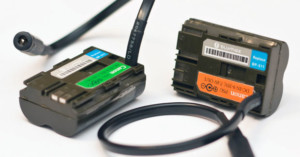
When Milan-based engineer and photographer Andrea Biffi needed a constant source of power for his Canon 40D in order to shoot time-lapse photos over many hours, he decided to save some money by going the DIY route. Biffi turned a defunct lithium DSLR battery into a power supply unit that can be used with everything from a wall outlet to a car battery.

You can do the same thing at home, but you'll need a bit of engineering know-how to accomplish the hack.

Etching Square Format Lines Into a DSLR Focusing Screen

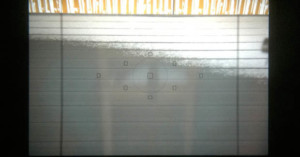
Alternative focusing screens for DSLRs aren't hard to find, but they usually don't have any guide lines geared toward photographers who are used to framing scenes in a square format. Zurich-based photographer Howard Linton is one such shooter. Linton decided to take matters into his own hands by modifying his DSLR's focusing screen with custom lines etched in using an X-Acto knife.

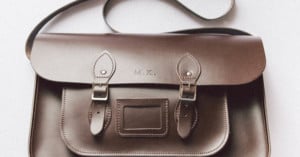
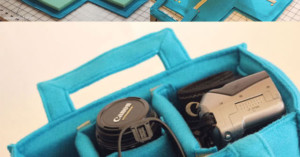
How to Turn Your Satchel Bag into a DIY Camera Bag

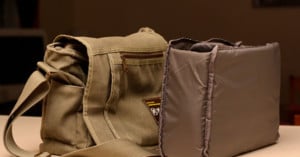
Turning a retro satchel bag into a real photographer's bag is quite easy. All you need is an old camera bag (e.g. a LowePro one) with velcro inserts, scissors, super glue, sticky velcro stripes and, of course, time.

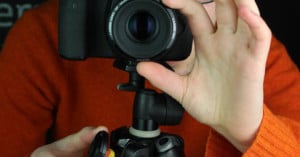
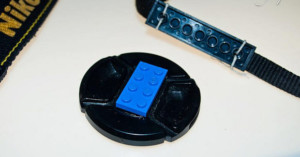
Add a Simple Lens Cap Mount to a Tripod Using LEGO Squares

Last week, we wrote on how you can use LEGO pieces to keep your lens caps on your camera strap when they're not protecting your lenses. A reader named Fearn quickly pointed us to a similar tip published over at Sugru at the end of last year. Instead of using camera straps, however, they suggest tripods as a sturdy way of keeping track of the caps.

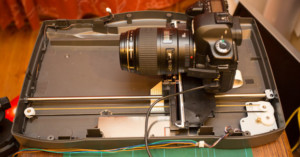
Focus Stacking Macro Photographs with a Hacked Flatbed Scanner

Focus stacking is when you combine multiple photographs of different focus distances in order to obtain a single photo with a much greater depth of field than any of the individual shots. This can be done by turning the zoom ring on your lens, but this can be difficult to control (especially for highly magnified photos). It can also be done using special rigs designed for the purpose, but those are generally quite pricey.

Photographer and software engineer David Hunt recently came up with the brilliant idea of turning an old flatbed scanner into a macro rail for shooting focus-stacking photos.

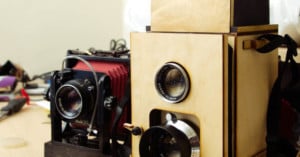
Duo is a Build-It-Yourself TLR Camera that Shoots Instant Film

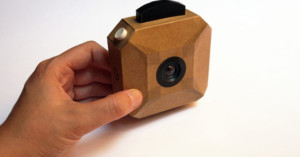
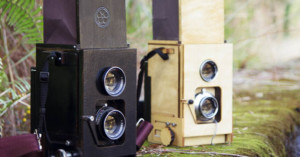
In October of last year, we shared a beautiful wooden homemade TLR camera by photographer Kevin Kadooka. It was a personal project at the time, and we remarked that it could be wildly popular if Kadooka began selling the camera as a build-it-yourself kit.

Well, Kadooka has done just that: the product, named Duo, will soon hit the market as a camera you can assemble yourself (it's like IKEA meets vintage photography).

DIY: Make a Waxed Canvas Camera Bag on the Cheap

Looking to put together a sexy camera bag? Already have a messenger bag you want to carry your camera in? Love the look and feel of waxed canvas bags but don’t want to fork over the money to buy one new? This tutorial is for you!

How to Make a Padded Lens Case Using Plastic Bottles

If you'd like a cheap and simple way to protect your camera lenses from rain and from drops, you can make a makeshift lens case using ordinary plastic bottles (e.g. water bottles, soda bottles). Here's a step-by-step guide on how to do so.

Transform an Ordinary Sink Filter into a Soft Focus Lens Filter

Photographer Nick Cool came up with one of the strangest pieces of do-it-yourself camera gear that we've seen so far this year. He took an ordinary stainless steel sink filter -- yup, the thing that catches food at the bottom of kitchen sinks -- drilled various-sized holes through it, and stuck it into a filter ring after taking out the glass.

Woodenize Your Camera Using Wallpaper or Wood Veneer

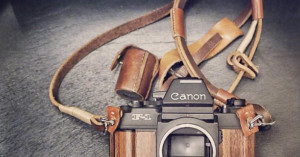
Photographer Patrick Ng has an obsession with natural materials such as wood and leather. Recently, he decided to "woodenize" his beloved Canon F-1n SLR (a professional film SLR released back in 1976). He didn't use a pre-made kit for the conversion, though... Instead, he simply ripped off the faux-leather and replaced it with faux-wood wallpaper.

Beautiful Homemade Polaroid Twin-Lens Reflex Camera Made of Wood

Feast your eyes on this gorgeous twin-lens reflex camera that was designed and built from scratch by photographer Kevin Kadooka, a mechanical engineering student at the University of Portland. It uses a Mamiya-Sekor 105mm f/3.5 Chrome lens and has a Polaroid back for shooting 4.25x3.5-inch instant film, and is crafted out of laser-cut birch plywood.

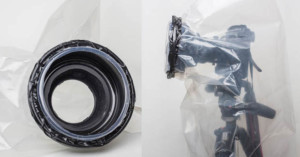
How to Make a Cheap DIY Rain Guard for Keeping Your DSLR Dry

I’ve always been asked how I keep my equipment dry while shooting storms, and I figure with Hurricane Sandy on the way, now would be a good time to share! This is a very simple, inexpensive, easy-to-use, and effective solution to shooting in the rain! It costs less than 5 dollars, but I have never felt the need to purchase anything to replace it.

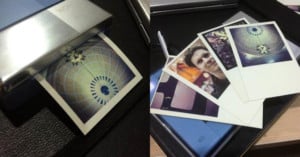
How to Hack Together Your Own Remote Instagram Printer

Remember the remote Instagram printer called Instaprint? Although the Kickstarter fundraising campaign for the product raised nearly a quarter of a million bucks from 800+ backers, it failed to reach its goal of $500K, and we haven't heard much about the device since then.

This Clever Instagram Camera Halloween Costume Shoots Full-Frame Photos

Check out this geeky Instagram-inspired Halloween costume created by photographer Eric Micotto. What's neat is that it actually "works" as a camera: it's powered by a Nikon D800 snapping photos through the "lens", and has an iPad on the back that acts as the camera's giant LCD screen. Subjects who have their photo taken by the costume can run around to the back to take a peek at how it turned out.

How to Process Your C-41 Film at Home

After almost two years of shooting film nonstop and more than $1,000 worth of expenses on processing and prints, I needed to reconsider my budget and find a way of being able to shoot more and pay less. I thus began to process my C-41 rolls at home. It's extremely easy to do and I‘ll show you today how to do it, step by step.

Hyperscope: A Custom-Built Cylindrical Pinhole Camera for Roll Film

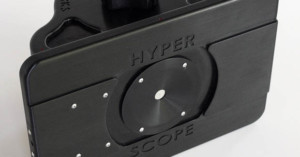
In the Star Wars universe, Lightsabers are hand-built as part of their wielders' training, and each one is as unique as the person who made it. Photographer Matt Abelson seems to have the same idea about cameras: he builds high-quality one-of-a-kind pinhole cameras based on his own designs.

The Hyperscope (shown above) is one of his creations. It's a cylindrical can camera that takes medium-format roll film, and is crafted out of chunks of aluminum.

A Clever Polaroid Camera Promo Mailer Made with Card Stock

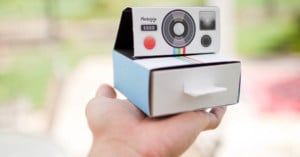
We've shared examples of creative promotional mailers in the past, but we usually don't receive them. A few days ago, however, we received a small box from the folks over at Photojojo. Inside was a clever papercraft Polaroid camera that serves as both a press kit and a desk decoration.

Turn Used Film Canisters Into Magnets for Your Fridge

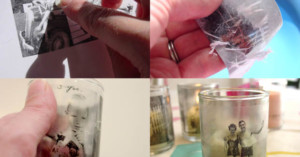
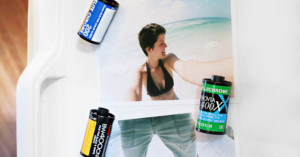
If you still process your own film in a darkroom, you probably regularly toss empty film canisters into the trash can once you've popped off the cap and retrieved the film inside. The next time you're in there, try saving those canisters: you can upcycle them into neat magnets for displaying photos on your fridge -- perhaps even prints of latent photos that were once in those canisters!

Canon 5D Mark II Goes Under the Knife, Emerges as a Wannabe Leica

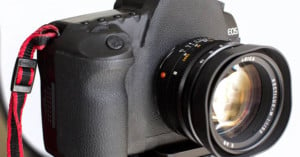
San Diego-based photographer Robert Benson had a curious problem a while back. He had a $6,500 Leica Noctilux 50mm f/1 lens, but no camera to use it on. Not being able to afford the Leica M9 at the time (and unsure if he wanted to ever buy one), he decided to make massive modifications to his Canon 5D Mark II so that it would accept any Leica M lens without needing an adapter. The frankencamera above is what emerged from the brand-change operation.

Build Yourself a Cheapo DIY Beauty Dish Using Styrofoam Bowls

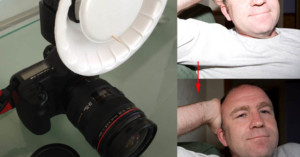
Photographer Kirsty Wiseman didn't want to shell out money for a real beauty dish -- she doesn't really need one -- so she built this funny-looking DIY beauty dish for a few pennies using a couple of Styrofoam bowls, a couple of cocktail sticks, and a piece of aluminum foil. After playing around with it, Wiseman was delightfully surprised to find that her gear hack actually produced decent results.

$150 Open-Source Attachment Turns the iPhone into a Thermal Imaging Camera

Modder Andy Rawson needed an easy way to find air leaks in his 100-year-old house in order to improve its energy efficiency. Not wanting to spend thousands of dollars on a thermal imaging camera, he decided to go the DIY route. He built a box containing a 64-zone temperature sensor, and managed to connect the device to his iPhone via the dock. By overlaying the temperature data onto the iPhone's camera display, the $150 attachment instantly turns the iPhone into a cheap thermal imaging camera.