Do It Yourself

Sometimes, the best products are the ones you make yourself. PetaPixel is your guide to custom lenses, handmade camera rigs, custom-coded artificial intelligence cameras, and the 3D-printed parts that makes photography truly personal.

Upgrade Your Nighttime Photos and Light Paintings with a DIY 500 LED Flashlight

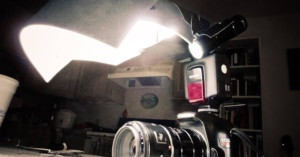
Want to light your nighttime photographs with something that can be mistaken for a portable sun? Check out this monstrous homemade flashlight composed of 513 separate LED lights. Created back in 2008 by Ledcreations, the device offers a whopping 3500-4000 lumens of light -- way more than the hundreds of lumens offered by other powerful flashlights on the market.

Make a DIY TARDIS-Themed Photo Booth

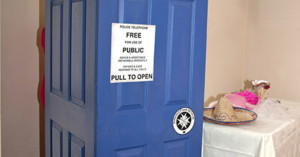
Samuel Cox, the "maker of things" whose Minority Report-style photo viewer we shared last year, was recently invited to a friend's wedding. He came up with the neat idea of creating a TARDIS-themed photo booth for the wedding reception, an accessible way for guests to leave photo memories in a lighthearted manner.

Want a Free Studio Headshot? Just Get Arrested in Santa Barbara

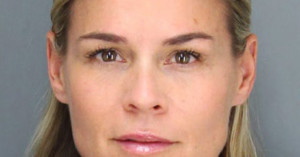
Some people who find themselves on hard times try to have themselves arrested so that they can eat for free in prison. It turns out that people in Southern California can do the same thing for a free studio-style headshot. Cat Cora, a chef on the Food Network show Iron Chef, recently got booked for a DUI after drinking three beers and getting behind the wheel. Her mugshot wasn't taken until 11 days after her arrest, so Cora had time to have her hair and makeup done in order to pose for a picture-perfect mugshot. When the photo made its way onto the Internet, websites began to comment on how it looks more like a studio portrait than a police station mugshot.

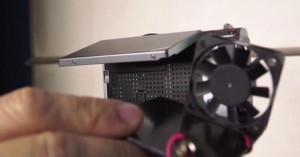
Make a DIY Dashboard Camera Mount for $10 Using a Car Sponge

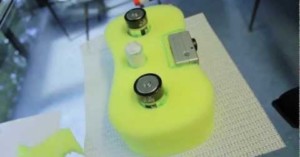
When filmmaker Ben Gill recently needed a way to attach his cameras to a car dashboard for a movie he was making, he decided to go the DIY route and come up with a makeshift solution. His resulting mount costed less than $10, and worked quite well. It was created using a car sponge (the kind that looks like a giant peanut) and some rug pad.

Build a DIY Bluetooth GPS Unit for Your Nikon DSLR

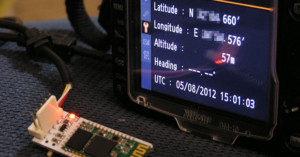
Israeli photographer Ido Nassimi wanted to geotag the photographs shot using his Nikon D90, but didn't want to shell out $200 bucks for Nikon's official GP-1 GPS receiver. Since he had a GPS Bluetooth receiver lying around, he decided to do some research and make it compatible with his DSLR. He ended up successfully building one for around $50.

Find a $1 Macro Lens for Your Phone Inside a Cheap Laser Pointer

If you want to take Lensbaby-style selective focus macro shots using your phone, go buy a cheap laser pointer. Photographer Zaheer Mohiuddin writes that the lens inside laser pointers (the one that focuses the laser) works well as a macro lens for the tiny cameras found on smartphones. After taking the device apart and finding the small gem-like lens, simply attach it to your camera with some tape to start shooting close-up pictures.

Old Film SLR Converted into a Slit-Scan “Photo Finish” Camera

Slit-scan cameras are used to shoot finish line photos due to the fact that recording a moving subject along a strip of film makes it impossible to miss any frames. Engineer and photographer James Guerin was interested in the distinctive look, so he went about building his own slit-scan film camera using an old Pentax SLR.

He ended up with the heavily modified camera seen above: a Pentax ME Super SLR that's equipped with a special winding system that automatically moves film across a narrow slit as the photos are being exposed.

Make a $2 DIY Motion-Activated Alarm for Your Camera Bag

For people looking to protect their belongings from theft in public places, there are bag alarms out there that can alert them (and everyone around them) if someone tries to pick up their stuff. DIY hacker Kip Kedersha (kipkay on YouTube) recently came up with a clever way to make one of these alarms for just $2.

Take Hands-Free Roadtrip Photos with a Pair of Hacked Cameras

Snapping a photograph while driving isn't the smartest, safest, or easiest thing to do. How then should one go about snapping pictures of the interesting things you drive past without breaking the law or putting people at risk?

Caleb Kraft of Hack a Day has one possible solution: remote-controlled cameras that attach to the side windows of a car.

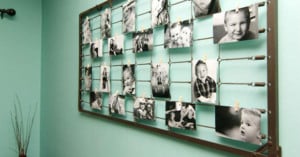
DIY Photography Wall Art from Baby Crib Springs

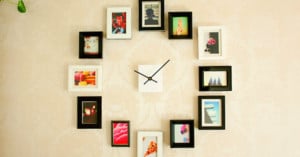
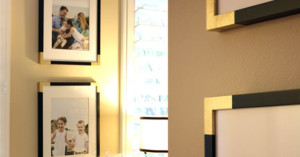
Are you looking for creative ways to decorate your walls and display numerous photos without making it look like your crazy great-aunt’s hallway? Now you can with this ingenious DIY project!

While I would love to take credit for this idea, it is really my wife’s brainchild. Apparently a desire to decorate the walls, the concept of saving money while using up junk in one’s basement to make the house look pretty, combined with time spent surfing the web will generate exceptionally creative ideas like this. (Yes, there are others who have done similar. However, that was only discovered after the original brainchild was birthed.) So, let’s get started, shall we?

Cheap DIY Fluorescent Studio Lights for Beauty Photography

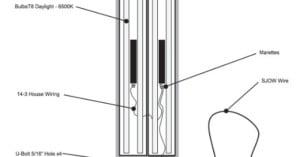
Who said that hi-end lighting equipment has to be expensive? And who says the only way to shoot with fluorescent light is to use the flicker-free Kino Flo lights that can cost you thousands of dollars?

I began using my fluorescent lighting technique nearly 10 years ago, long before Kino Flo’s and Peter Hurley became popular. I have been asked to describe it so many times that I decided it was time to put together a few tutorials to show how to build it and how to use it. In this article, I am going to deal with “how-to use” the fluorescent studio lights.

Dirkon: The Vintage DIY Pinhole Camera Made of Paper

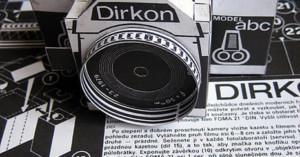
The Dirkon pinhole 35mm camera is made entirely from paper cut from a template by designers Martin Pilný, Mirek Kolář and Richard Vyškovský. The three published the template in a 1979 issue of Czechoslovakian magazine ABC mladých techniků a přírodovědců (translated as An ABC of Young Technicians and Natural Scientists). While original prints of the magazine are rare, the Dirkon gained cult popularity in Chzechoslovakia.

How to Make a DIY Polaroid Pop-Up Card

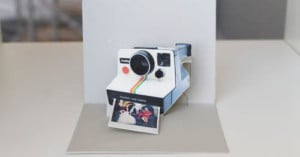
As you already know, we're pretty obsessed with Polaroids, and all the creative photography we can get our hands on. This tutorial will teach you how to make a pop-up Polaroid camera card that "prints" out a miniature Polaroid picture.

The pieces of card stock for this project are about 7-1/2 inches long by 4-1/2 inches wide. To create a mini Polaroid you can print, we recommend using the Shake It Photo iPhone app. Send the image from your phone to your email, drop it into Preview, Photoshop or Word to resize, and you're good to go.

Repurpose Empty Film Roll Canisters as Invitation Holders

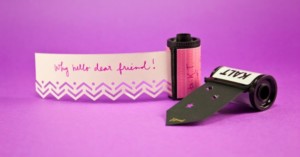
If you've got spent, empty film cassettes lying around collecting dust, Photojojo has a crafty idea for the mindful re-user: make them into rolled invitation or stationery holders.

It's quite simple: cut and decorate 1.375″ x 11″ strip of paper, pop the top off the film cassette (you can use a bottle opener) and tape the inside end of the strip to the film spool. Wind the paper into the cassette and leave a tab for the recipient to unfurl the message.

Make a DIY Slide Projector Using an IKEA Lamp

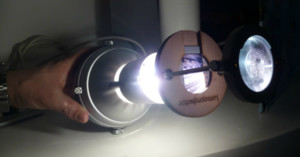
Here's a cool DIY project, courtesy of creator Derte84 and the folks over at Instructables, for those of you who have a bunch of slides sitting around but no slide projector in sight. Putting the whole thing together will require a little bit of hardware (e.g. you'll either need the tools to cut the wood yourself or an account with a laser cutting service) but the final product is pretty cool.

How To Develop Photo Paper With Your Favorite Vintage of Merlot

Around this time last year, we featured a video on developing film using coffee and vitamin C. And now, the folks behind the Caffenol blog (which was named after the nickname given to the "home brew" developer) have put together a video showing that it's possible to do something similar using red wine instead of coffee and photo paper instead of film.

DIY Kino Flo Alternative for Awesome Headshot Lighting

About a week ago, Winnipeg-based photographer Tristan Shea Penner made quite a splash in the DIY world by releasing the above video about his DIY alternative to the Kino Flo lights that iconic headshot photographer Peter Hurley uses. People were intrigued by the quality of the portraits Penner was getting with his rig, while managing to keep it semi-portable at the same time. The only problem was that the video didn't get specific on how to build the rig for yourself, so Penner put together a full set of instructions that he's now posted on his website.

Frankenlens: A Polaroid Fused with a Micro Four Thirds Camera

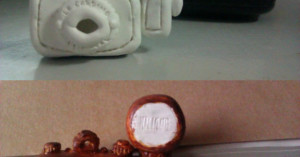
Here's an interesting project that photographer Gabriel Verdugo Soto put together this last weekend by slapping together an old polaroid lens/aperture mechanism and a micro four thirds camera. In order to keep the lens in focus, he measured the distance from the lens to the polaroid paper in the orignal camera and used macro tubes to ensure the same distance was maintained between the lens and the sensor. The whole thing was then attached to a 52mm ring, and held together using that white epoxy clay you see in the pictures.
How to Make a 360° Analog Camera Hat

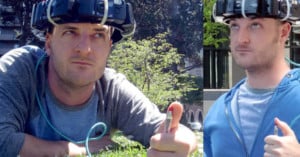
Mike Warren has written up an in-depth tutorial on how you can build a 360° camera hat using 6-8 disposable cameras. The cameras are worn around the head like a crown, and are simultaneously trigger using a single shutter release with the help of servo motors that depress the shutter when triggered. Warren writes,

With the camera array sitting on your head, you're able to capture a 360° panorama view of your surroundings. This project requires no special electronics knowledge and can be assembled in about an hour.

I designed this camera array off something I saw on the "Radar Detector" music video by Darwin Deez. But, after making the camera hat, everyone kept asking if it was a low-fi version of Google Street View. It's more the former than the latter, but people can draw their own interpretations.

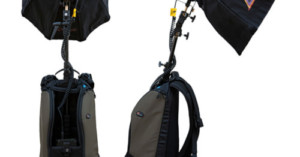
DIY Backpack OctoDome for Lighting Solo Shoots

When photographer Ian Spanier was assigned to shoot 4-time Mr. Olympia Jay Cutler at his home in Vegas, the budget wouldn't allow him to hire an assistant. Still, this was an important shoot, the editor of Muscular Development had stuck his neck out to get him this gig, and he wanted to do as good a job as possible. So instead of depending on natural light, or shooting with a standard top mount flash, he decided to hack together something better.

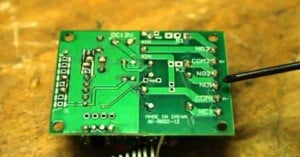
How To Make a 150-foot Wireless Remote by Hacking a Garage Door Opener

While working on some light painting shots, Sawo from Enlightpaintment was frustrated that he had to keep running back and forth from his camera. Even using an IR remote he was adding seconds of unnecessary exposure during which he wasn't actually doing anything but running. So, in a fit of creativity, he decided to put together his own DIY wireless remote using about $20 worth of equipment from Radio Shack and eBay.
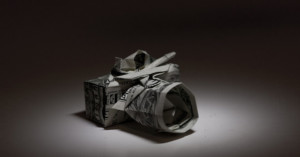
How to Fold an Origami Camera Using a Dollar Bill

Last year we featured a neat little origami camera created using a dollar bill by Won Park. If you've been dying to know how to fold one yourself, today's your lucky day. Be warned though: isn't definitely not an origami project for beginners.

Create Your Own DIY Tilt-Shift Adapter Using a 3D Printer

We really enjoy DIY projects for photographers, and as such we've featured everything from the ultra simple to complex light-painting robots. But what excites us about Instructables' DIY tilt-shift adapter isn't just the durable plunger adapter you end up with, but rather the idea that one could manufacture their own camera accessories with a little bit of design skill and a 3D printer (check out Shapeways if you don't have one sitting around).

For this particular project you'll need a camera, an extra lens, some digital calipers, 3D design software like 123D, and access to a 3D printer or 3D printing service. After that just follow the steps in this video and you can wind up with results like the ones you see below.

LightPlot: A Robotic Arm That Creates Animated Light Paintings

The photos that went into the animation above were all created in-camera using software and a robotic arm programmed before hand with predetermined patterns. The project, known as LightPlot, started as an NXT Lego experiment in stop-motion photography by Ben Cowell-Thomas. He wanted to create a motion control rig for stop-motion using NXT, but as he was looking through some light painting projects online, he began to wonder how he could turn his lego project into a light painting rig.

A DIY Rig for Perfect Light Painting Orbs

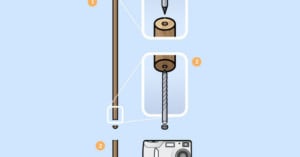
Unlike most DIY projects this one won't come cheap, but if you've always yearned for that ever elusive "perfect" light painting orb, then photographer Hugo Baptista has a solution for you. All you need to replicate his results is a Meade DS-2000 telescope mount, a drill, an LED strip with a wireless controller, and a piece of wood.