Posts Tagged ‘twitter’

Sigma Exec Apologizes to Customers on Twitter for SD1 Price

Sigma Exec Apologizes to Customers on Twitter for SD1 Price twitterresponse

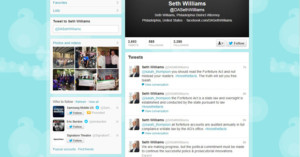
Apparently Sigma was aiming for a much lower price when developing the SD1 DSLR, but was forced to price it high after putting in whole bunch of “great stuff”. The company’s Chief Operating Officer Kazuto Yamaki is responding to user complaints on Twitter with some apologetic Tweets, saying the company had missed the price range that they had originally targeted. Perhaps the SD1 wasn’t designed as a halo product after all…

(via 1001 Noisy Cameras)

TwitPic Updates ToS to Reassure Users About Photo Copyright Ownership

TwitPic Updates ToS to Reassure Users About Photo Copyright Ownership twitpic

Since launching in 2008, TwitPic has been at the center of quite a few copyright controversies and legal battles, especially when disasters strike and Twitter users are able to publish photos of things that are happening well before major news outlets. Back in early 2010 photographer Daniel Morel had an iconic photograph taken during the Haiti earthquake widely republished in newspapers across the world without his permission after he uploaded the photos to TwitPic, then later that year Twitter’s decision to display TwitPic photos directly on their website caused a brouhaha. TwitPic has finally decided to update their Terms of Service to make it clear that users of the service retain the copyright of everything they upload.
Read more…

First Round of Fight Over Iconic Haiti Photo Goes to Photog

First Round of Fight Over Iconic Haiti Photo Goes to Photog papers

Earlier this year photographer Daniel Morel was shocked when a photograph he captured during the devastating earthquake in Haiti and posted to TwitPic was distributed by Agency France Presse (AFP) and published on the front page of newspapers around the world — all without his permission.

To add insult to injury, he was then sued by AFP when he sent cease and desist letters in response to the copyright infringement. The dispute has turned into a legal battle over whether images uploaded to TwitPic and shared on Twitter can be freely republished by third parties. In what might be an indication of things to come, a federal court has denied AFP’s pre-trial request to have the case thrown out.
Read more…

Real-Time Twitter Photo Search with Hashalbum

Real Time Twitter Photo Search with Hashalbum hashalbum1

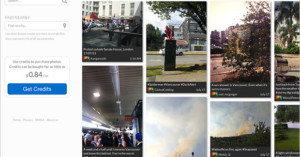
Twitter sees hundreds or thousands of Tweets published every second, and many of these are photos of things happening real-time. Hashalbum is a new website that aims to help you browse this constant stream of images in real time by allowing you to do a simple search by hashtag, returning images that are found in Tweets containing that hashtag.

Hashalbum (via Lifehacker)

Twitter Photo Rights Controversy is Much Ado About Nothing

Twitter Photo Rights Controversy is Much Ado About Nothing ado

Last week Scott Bourne published an article on Photofocus titled, “Photos On Twitter – What You Should Know“. In it, he claimed that Twitter’s terms of service (TOS) forced photographers to give Twitter a license to do whatever they wanted with photos shared through the service. The argument centered around a couple paragraphs found in the document:

By submitting, posting or displaying Content on or through the Services, you grant us a worldwide, non-exclusive, royalty-free license (with the right to sublicense) to use, copy, reproduce, process, adapt, modify, publish, transmit, display and distribute such Content in any and all media or distribution methods (now known or later developed).

This was used to argue that Twitter owns a license to photos shared through the service. Read more…

New Twitter Obeys the Golden Ratio

New Twitter Obeys the Golden Ratio golden

The golden ratio is used by nature, photographers, and now… Twitter! Did you notice it in the new Twitter design?

After studying the ratio extensively, German psychologist Adolf Zeising wrote in 1854,

The Golden Ratio is a universal law in which is contained the ground-principle of all formative striving for beauty and completeness in the realms of both nature and art, and which permeates, as a paramount spiritual ideal, all structures, forms and proportions, whether cosmic or individual, organic or inorganic, acoustic or optical; which finds its fullest realization, however, in the human form.

Even if you’ve never heard of the golden ratio, you’ve probably heard of the rule of thirds. The two concepts are similar and related. Here’s an interesting article discussing them.

(via Laughing Squid)

British Royal Family Has a Flickr Account

British Royal Family Has a Flickr Account royalflickr

The Royal Family is really getting into social media: in addition to their YouTube channel, Twitter, and series of iTunes podcasts, the Family now has a Flickr account which went live to the public this morning. Currently, the British Monarchy’s photostream contains 683 uploads of both recent and older historical photographs. According to an announcement from the Royal Collection, photos will be continually added to the account. The Flickr account launch was scheduled to coincide with the summer opening of Buckingham Palace. Some of the images featured on the photo-sharing site are to be featured in the exhibit, The Queen’s Year, which opens tomorrow at the Palace.

Photographer Claims Daily Mail Stole TwitPic Photos

Photographer Claims Daily Mail Stole TwitPic Photos 5

Earlier this month, the Daily Mail published some photos taken at a Dalston polling station during the British General Election by Emily James of Just Do It.

James’ photos were originally uploaded via TwitPic. Later, they were republished on several other sites, including The Guardian and Times Online, initially without permission or compensation. However, The Guardian and Times both offered James retroactive compensation. The Times offered £250 for using one photo, along with a brief emailed apology for using the image without permission.

The Daily Mail, however, initially incorrectly credited the image to someone else, then removed the credit line altogether.  James sent them with an invoice for £1170 — a rate set at £130 and multiplied by three per image to compensate for their lack of knowledge or permission.

The picture editor at the Daily Mail responded, saying:

Thanks for the invoice.

Unfortunately we cannot pay the amount you have requested, these images were taken from twitpic and therefore placed in the public domain, also after consultation with Twitter they have always asked us to byline images by the username of the account holder.

We are more that happy to pay for the images but we’ll only be paying £40 per image.

James, aware of the difference between TwitPic and Twitter Terms of Service, responded to the Daily Mail:

I’m afraid that you are wrong about the terms of publishing on Twitpic. If you read the terms of service you will see that copyright is clearly retained by the poster:

http://twitpic.com/terms.do

Third parties who wish to reproduce posted images must contact the copyright holder and seek permission.

You should have contacted me if you wanted to use the photos, as every other news outlet did. had you done so, you might have been in a position to get the photos for £40’s each.

However you didn’t contact me, even though this would have been very easy to do, nor did you inform me that you had used them. Instead, I had to uncover that you had used them, that one of them was not credited even with the correct twitter account, and that none were credited as I would have asked them to be.

James and the crew at Just Do It Films say they are still waiting for full payment and an apology.

This seems to be a similar issue that photojournalist Daniel Morel has with news agency AFP over whether images distributed over TwitPic and Twitter warrant free public distribution.

(via British Journal of Photography)

Kodak Loses Marketing Guru, Launches New Photo Sharing Site

Kodak Loses Marketing Guru, Launches New Photo Sharing Site jeffhayzlett

Kodak made the surprising announcement today that their Chief Marketing Officer Jeffrey Hayzlett is resigning on May 28th to “pursue personal projects.”

Hayzlett recently authored a book on his experiences with marketing and brand-building, called The Mirror Test: Is Your Business Really Breathing?, which he has been actively promoting on a tour and Twitter over the last few months.

Hayzlett, who has been with Kodak since April 2006, is known for his accessible public presence, especially on Twitter. Though Hayzlett was often criticized for his over-sharing, strong persona via social media, he said that sharing his knowledge, especially about his use of social media as a tool, is key to his success in bringing Kodak back into the public eye.

The CMO has more than 21,000 followers, and has used the social media site to engage with customers, sometimes with literally biting exchanges. In an interview with the Huffington Post, Hayzlett said:

“I’ve had in the corporate world my public relations, community relations people walk up to me and say Jeff, I don’t think this is appropriate that you wrote “Bite Me” to this guy. I look at them and I go, well that’s who I am. The guy said something very offensive, he had no right to say it, I’m sorry. They say well please be nicer, so now I write “Please Bite Me”.

Kodak says Hayzlett will be involved with the company through August as he transitions out.

Even as Hayzlett is leaving, Kodak is sticking to developing its online presence by launching a new photo sharing website, Kodak Moments.

Kodak Loses Marketing Guru, Launches New Photo Sharing Site 5723939672007641380

Photos and videos, along with captions, can be uploaded to the interactive community site. Users then tag the photo with a certain emotion. User-submitted photos can be browsed by emotion, and other viewers can tag them with emotions they feel in response. The site also has “Moments,” which are official events by Kodak, such as the Burton US Open, Celebrity Apprentice, and the People’s Choice Awards.

Kodak Interactive Marketing Manager, Mike Mayfield said that images uploaded will be displayed in email newsletters, marketing, Times Square Billboard, and other marketing outlets.

Some photographers may be uneasy with uploading, since the rather broad Terms of Service currently states:

In consideration of acceptance of my submitted photo, video and/or story (“Contribution”) as part of KODAK Moments, I hereby grant Kodak, and others with Kodak’s consent, the right to edit, copy, distribute, publish, display and otherwise use the Contribution for purposes of the KODAK Moments program without attribution, consideration or compensation to me, the photographer, my successors or assigns or any other individual or entity.

Mayfield responded to the concern, saying:

Kodak has great respect for the rights and use of images we receive. Images submitted to the KODAK Moments website will only be used in the context of promoting the KODAK Moments program. The language in the terms of service stating it could be used for any advertising or publicity is an oversight and we are correcting the terms so that language is removed. We have received some wonderful submissions and if we do decide we would like to use those images outside of the KODAK Moments program, we will reach out and obtain permission from the photographer before doing so.

So it sounds like Kodak still has to hash out some legal jargon, but at least they’ll ask your permission before running specific photos in their ads, albeit possibly without attribution.

(via PDN)

News Wire Allegedly Steals Iconic Haiti Photo, Then Sues Photographer

News Wire Allegedly Steals Iconic Haiti Photo, Then Sues Photographer papers

Photojournalist Daniel Morel shot an iconic image of a shocked woman looking out from the rubble moments after last January’s earthquake in Port au Prince, Haiti. Within an hour, Morel jumped on Twitter to share 13 high resolution images he had uploaded on Twitpic. By the next day, the photo of the woman was picked up by Agence France Presse (AFP) and Getty Images, was run on the cover of several publications and websites.

But Morel said he never authorized the news wires to distribute his images. In fact, several of his images were credited to another person, Lisandro Suero of the Dominican Republic, who reportedly has no photographic background. However, Suero tweeted Morel’s images without the photographer’s permission, and claimed copyright as his own:

News Wire Allegedly Steals Iconic Haiti Photo, Then Sues Photographer haititweet

And so began a legal storm.

Now Morel is being sued by AFP after he sent them cease and desist letters that the agency calls an “antagonistic assertion of rights.”

According to court documents, AFP claims that they did not infringe on Morel’s copyright and is suing Morel for “commercial disparagement,” as well as “demanding exorbitant payment.” AFP says that Twitter’s Terms of Service allowed for them to use, copy and distribute the image, and that Morel did not specify limits on how the photo should be credited.

Morel responded, saying that he was not familiar with Twitter’s TOS, and maintains that the images were stolen from his account without his permission, distributed and sold by the agency, which then “induced” other publications to violate Morel’s copyright. In a counterclaim to the agency’s complaint, Morel’s lawyer, Barbara Hoffman wrote:

To the extent that under the circumstances a specific intent in posting the images on Twitter can be attributed to Mr. Morel given the circumstances, … he posted his images online and advertised them on Twitter in the hopes that his images would span the globe to inform the world of the disaster, and that he would also receive compensation and credit as a professional photographer for breaking news of the earthquake before the news and wire services.

Some publications, including The Wall Street Journal, NBC, and the Associated Press contacted Morel to exchange compensation for his permission to publish. Others did not.

In order to enforce his copyright, Morel sent several cease and desist notices to several publications.

It seems that the case really boils down to the semantics of the Twitter TOS.

What might be worth noting is that the court documents from AFP frequently cite Twitter’s TOS, which mostly regards the text in Tweets, and does not extend to content linked to (otherwise, entire sites’ content might be considered royalty-free). Morel uploaded on TwitPic, which has a separate Terms, and is an entirely separate entity from Twitter.

Media Nation blogger Dan Kennedy posted PDFs of AFP’s complaint against Morel and Morel’s answer.

Whatever the verdict, this suit may change the manner in which photographers and journalists transmit their data via social media, even in difficult emergency situations like post-quake Haiti.

Do you have legal insight, experience with copyright infringement, or any thoughts about social media and the TOS?