Educational

PetaPixel's editorials are in-depth stories, thought-pieces, and opinions on the photography industry led by the minds of our editorial team.

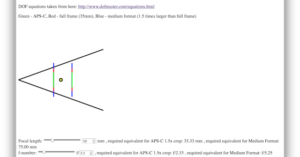
This Handy Little Web App Helps You Visualize DOF Across Various Formats and Focal Lengths

When it comes to understanding how depth of field, focal length and other variables are affected by different film/sensor formats, it can get confusing. Fortunately, Reddit user redblue has created an incredibly useful interactive resource that will help you better visualize the factors at play by letting you change variables while swapping sensors sizes and seeing the effect in real time.

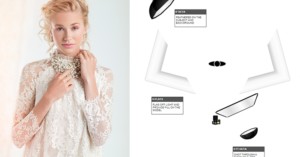
How Many Studio Lights Do You Really Need?

When it comes to the quantity of lights that one needs, opinions are often heavily polarized and a hotly contested debate often rages. There are those that are staunch supporters of one light while others claim that a handful of lights are needed before anything meaningful can be done. Ultimately neither group is right as there is no definable minimum or maximum number of lights that one should use.

How to Photograph People When You Travel

People often tell me that they find it difficult to take good portrait photos when they travel. Approaching strangers and asking to photograph them, usually with a language barrier, can be a daunting prospect. And how do you take a portrait that is creative and meaningful rather than just a simple snapshot of the person? I have developed approaches and techniques over the years to help become confident as a travel portrait photographer.

This is the World’s Most Valuable Selfie: It Was Taken in the 1850s and Just Sold for $115K

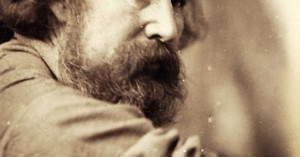
Photography pioneer Oscar Rjlander captured a self-portrait in the 1850s that is being hailed as yet another ‘first selfie ever.' But whether or not it really is the first (and that doesn't seem to be the case) it can probably claim to be the most valuable selfie (based on what we could uncover) after being sold at auction for over $100,000.

Can You Spot a Fake Smile in a Photograph?

"Smile" is a common command uttered before pressing the shutter and snapping a photo, but it's not always a real smile that gets captured in the resulting portrait. How well can you distinguish a "real" smile from a "fake" one in a picture? …

“Why I Want to Switch to Nikon, But Can’t”: Tony Northrup Throws Gas on the Canikon Debate

Photographer and educator Tony Northrop is stirring the pot again, offering a bit of education on a hotly debated topic. Don't worry though, this isn't about crop factor... it's arguably worse.

This time, he's taking a well-informed, in-depth look at the Canikon debate, meticulously going through the comparisons between each companies lineup of camera bodies, lenses, and flashes, and explaining why he will continue shooting Canon, despite wanting to make the switch to Nikon.

Comprehensive Guide Tells You Everything You Need to Know About Codecs

If you're thinking about adding a video component to your portfolio, one of the most important-but-confusing things you'll have to wrap your head around is codecs -- the different video compression/decompression formats available to you. These not only determine the quality retained by the camera, but also affect how you will approach the post-processing of the footage.

A Retinal Neuroscientist’s Rebuttal: Why Humans Can’t See Near Infrared, No Matter What They Eat

One of the more interesting stories we ran across this weekend was an initial update from a small group of scientists who claim to have successfully extended human vision into near infrared. Their data seems to show that they have, indeed, managed to do this simply by altering their subjects' diet by restricting vitamin A1 and supplementing with A2 in order to create a certain protein complex. You can read more about this here.

What Photographers are NOT Considering When Using High ISO

It’s no secret now that modern cameras have taken photographers to new heights with their ability to shoot at and above ISO 1600. Personally, I can now shoot in situations where previously, I ‘had no choice’ but to use flash or put the camera down, so it’s no surprise many photographers are taking advantage of high ISO to be able to shoot in poor existing light.

Video Tutorial: How to Create Clean, Flawless Photoshop Actions

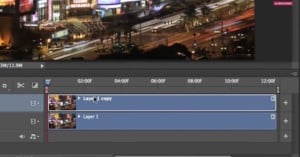
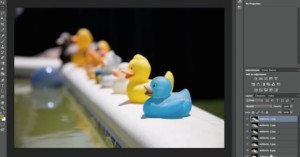
Photoshop actions can be a critical resource in any photographer’s workflow. Turning otherwise monotonous tasks into an autonomous utility, actions are created by manually performing a series of steps and recording them as an ATN file. This ATN file can then be ‘played’ in the future, when you’re looking to repeat those actions on future images, without the hassle of repeating the now-recorded workflow.

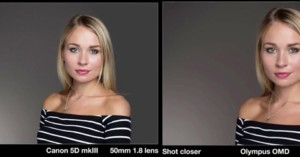
Back to the Basics: ISO and Noise Explained

As photography technology continues to improve year in and year out, the ISO ranges we’re capable of pulling quality images from are getting truly ridiculous. But as amazing as the improvements in ISO are, it's important to have an understanding of what ISO actually is and how you can make the most of these growing numbers.

The Inverse Square Law of Light Explained in Simple Terms for Photographers, Part II

A few weeks ago we shared with you the first part of a series Karl Taylor created, explaining the inverse square law of light. That is, the intensity of light given off from a source is inversely proportional to the square distance from the source. In the video he shares a number of examples, using a model and his own setup as a demonstration. Now, he’s back with part two.

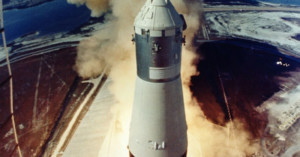
45 Years After the Moon Landing, We Look Back at the Best Photos from Apollo 11

It was 45 years ago, yesterday, astronauts Neil Armstrong, Buzz Aldrin and Michael Collins took on what is without a doubt one of the most important endeavors in the history of humankind. Packed together into one of the most incredible pieces of engineering to ever exist, the astronauts of Apollo 11 left Earth’s atmosphere, with hopes of being the first humans to ever step foot on the Moon.

Tutorial: Everything You Need to Know About Using Auto Exposure Bracketing

Exposure bracketing is the practice of taking several exposures – at least two, usually more – of the same scene. With each exposure taken, the goal is to vary the exposure time, effectively giving you more range to work with in post when all is said and done. Nowadays such capability is implemented into the firmware of cameras, allowing you to automatically set this up and capture all of the exposure with only one press of the shutter.