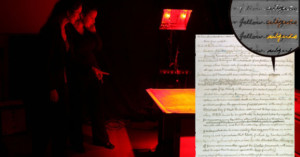
How Hyperspectral Cameras Are Being Used to Uncover Ancient Mysteries
Hyperspectral cameras are those that can capture information in the electromagnetic spectrum, far beyond what the human eye — …
Hyperspectral cameras are those that can capture information in the electromagnetic spectrum, far beyond what the human eye — …
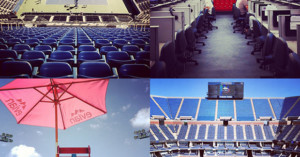
It pays to be a top user on Instagram. In addition to having hundreds of thousands of eyes glued to your stream of photos, marketers for the world's top brands are constantly trying to think of ways to incorporate you into their advertising campaigns. Case in point: at the US Open this year, there will be three Insta-celebs covering the event alongside the photojournalists from major national media outlets.
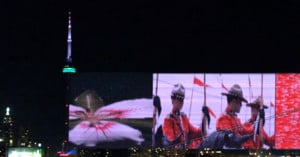
If you've visited the CN Tower in Toronto, Canada anytime during the past five years at night, you've likely enjoyed the dazzling light show that appears on the side of the tower. The 1,330 uber-bright LED lights (which cost a cool $2.5 million) were installed in the elevator shafts back in 2007, and are turned on from dusk every day until 2 the next morning. What you might not have known, however, is that the seemingly random colors that appear are really not so random after all: they're actually pieces of photographs!
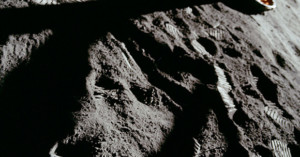
Neil Armstrong passed away this past Saturday at the age of 82. In addition to being the first man to walk on the moon, he was also the first photographer to set foot on that hunk of rock 238,900 miles away. Armstrong and fellow astronaut Buzz Aldrin snapped a total of 122 70mm color photographs using modified Hasselblad 500EL cameras during their short visit on July 21, 1969. However, not all of them were pretty.
American Photo magazine writes that the photographic record left by those two men shows a very human picture of that first landing. Some of the "dud" photos show accidental shutter preses, focusing errors, lens flare, and even photobombed landscape shots.
What if there existed a high-profile, high-powered, and high-art photographer who worked exclusively in Instagram? That's the premise of this sketch by comedy webshow K-LOL. It offers a glimpse into the life of a fictional photographer named Flam Wenders, who's called the "Andy Warhol of Instagram".
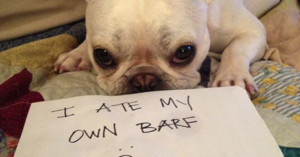
Dogshaming is a website where dogs around the world (or their owners) can submit photographs in which they confess all the bad things they do. Pet owners are asked to submit photos of their disobedient dogs containing signs that give the dogs a healthy dose of Internet shaming.
Just a few hours ago, a man opened fire at the Empire State Building in New York City, killing a former co-worker before being gunned down by police. Ryan Pitcheralle was passing through the area when the shooting occurred, and used Instagram to capture a photograph of the victim lying in a pool of blood.
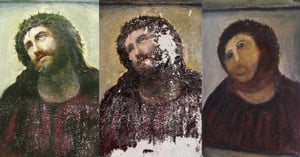
If there was such thing as a Photoshop disaster in real life, this story would probably qualify. An elderly woman in the city of Zaragoza, Spain recently took it upon herself to restore an 19th-century fresco of Jesus that had been deteriorating over the past few years. As you can see from the before and after photos above, the results weren't pretty.
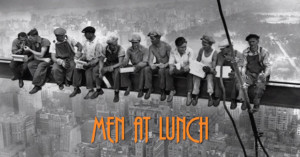
Men at Lunch is an amazing new documentary film by Seán Ó Cualáin that explores the story of one of the most iconic photographs of the 20th century: Lunch atop a Skyscraper. the 1932 photo of eleven construction workers taking a lunch break while sitting on a girder suspended 850 feet above New York City.

Manchester-based couple Lisa and Alex are on a mission to find the best place in the world to get married, and through first hand experience rather than other people's opinions. They're currently in the midst of a two-year journey around the world in a 24-year-old camper van, hunting for both the perfect location and the best cultural wedding ceremonies.
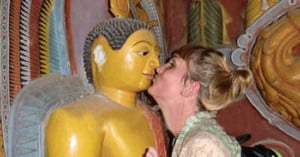
It's standard procedure for photo labs around the world to contact authorities if illegal activity is discovered in pictures, but what constitutes "illegal activity" can different widely from place to place. Case in point: three French tourists were recently given jail terms in Sri Lanka for photographs they took containing Buddha statues.
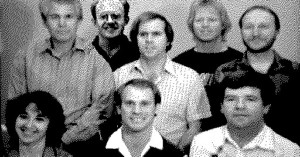
The people over at New York-based hackerspace NYC Resistor recently found an old Apple Macintosh SE on the side of a road in Brooklyn -- a computer that was manufactured between 1987 and 1990.
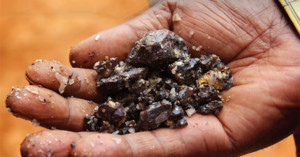
Conflict minerals are minerals supplied by war-stricken parts of the world in which armed conflict and human rights abuses are prevalent -- minerals that are essential in the manufacture of consumer electronics. There has been a huge push recently to eradicate conflict minerals from the gadget industry, since the trade of these materials lines the pockets of unscrupulous folk and directly funds violence.
The Center for American Progress's Enough Project is trying to get major manufacturers involved by releasing an annual ranking on how well those companies are doing in avoiding conflict minerals. The latest report, released earlier this month, shows that certain camera companies -- namely Canon and Nikon -- are lagging behind big-time when it comes to being involved in this matter.

What would happen if Apple made a DSLR? Web video artist Adam Sacks thinks it would be a hit with iPhone users who use their phones for the sole purpose of taking pictures of food, applying filters to them, and then sharing them online. He created this humorous parody of an Apple commercial in which Greg Mansfield, the "Vice President of iPhone Product Design", introduces the iPhone 5. The new phone is reinvented as a DSLR to make everyone's life easier, and features a single app: Camera.
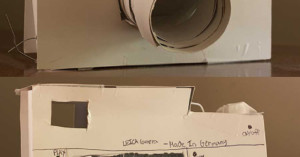
Leica User Forum member lm_user is one lucky photographer. For his birthday recently, his kids gifted him with this beautiful Leica M10 prototype digital rangefinder -- the only one known to exist.
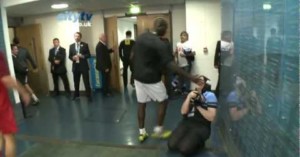
If you're a superstar athlete looking to swipe a sports photographers DSLR for some impromptu picture taking, here's a pro tip: do it nicely.
Earlier this month, Usain Bolt made headlines for some "spot news photography" at the London Olympics. After winning yet another gold medal, Bolt grabbed a DSLR from a photographer he knew and started snapping some awesome POV photos. Perhaps inspired by Bolt's antics, soccer player Mario Balotelli of Manchester City tried his hand at swiping a photog's camera this past weekend, but was far less successful.
Magically enhancing photographs to solve crimes is a staple of crime and detective dramas. To ordinary folk who have never touched a program like Photoshop, the enhancement technology might sometimes seem believable -- after all, government technology is always decades ahead of civilian tech, right? However, to anyone who has any experience in photo editing, it's pretty obvious that certain things just aren't possible. Completely changing the camera angle in a photo, for example.
The short clip above is one ridiculous example of the "enhance!" cliché. It aired in an episode of CSI a few years back, and the YouTube uploader shared it with the title, "Why I Don't Watch CSI".
The New York Times has published a great interview with Michael H. Osterreicher, the general counsel for the National Press Photographers Association and the editor of the organization's advocacy blog. In it, NYT Lens Blog co-editor James Estrin asks Osterreicher about photographers' rights and the trend of people being stopped while shooting public locations.

San Francisco-based photographer Lisa Kristine has spent the past 28 years documenting indigenous cultures in 70 countries on 6 continents around the world. More recently, she has been working with the organization Free the Slaves, using her photography to document the monstrosity that is modern day slavery.
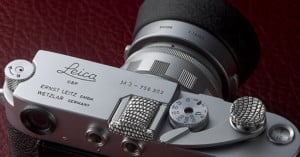
Forget rings on your fingers or grills on your teeth: Japanese designer Jay Tsujimura thinks your camera is where bling should go. Presumably geared towards people who use pricey cameras as a fashion accessory and status symbol, Tsujimura's premium line of camera jewelry is designed to adorn hotshoes and shutter releases.
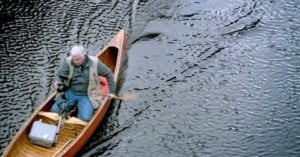
Back in May, we wrote about a photographer named John Butterill and his brilliant idea of using a Internet-connected phone to share his photo adventures with people whose mobility was limited. Google liked Butterill's story so much that they're sharing it as an example of the different things you can do through Google+ Hangouts. The video above is a neat look at how Butterill came up with his idea, and how the concept quickly spread around the world.
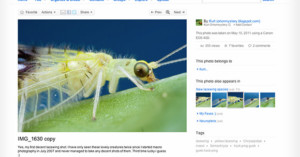
California-based entomologist Shaun Winterton was browsing Flickr back in May 2011, when he discovered a new species of insect.
That's right: he made a scientific discovery by simply looking at pictures online.
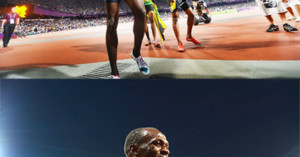
Ever wonder what it's like to be the world's fastest man winning a gold medal at the Olympics? Usain Bolt wants you to know.
After sprinting to victory in the 200m race today, Bolt proceeded to run over to the photographers' pit, commandeer a Nikon DSLR from one of the photographers, and snap super wide angle views of what he was experiencing. The photographer, Jimmy Wixtröm of Aftonbladet (Scandinavia's largest paper), left the event with memories of a lifetime and a memory card containing epic images that are the envy of many a sports photographer.

One of the common reasons given for being wary of photographers is that terrorists commonly use cameras as part of their information gathering tactics prior to devastating attacks.
The disconcerting video above is a terrorist prevention video that was funded by the Department of Homeland security and uploaded to Houston's city website back in January 2011. Starting at 1:42, it attempts to convince people that photographers may be potential terrorists, and that the police should be called if one appears to "hang around for no apparent reason."

Would you shoot a wedding professionally with your iPhone and Hipstamatic? If you want to stay in business, probably not. But what if you were asked to do so, and paid for your work?
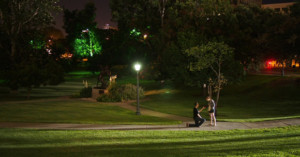
Photographer Patrick Lu always carries around his Olympus OM-D EM-5 camera around. "Every day. Everywhere," he says. That came in handy last week, when Lu and a friend were at the capital in Austin, Texas. His eagle-eyed friend somehow noticed that a man nearby was about to propose, and Lu was able to snap some stealthy photos of the event, including the beautifully framed one above.
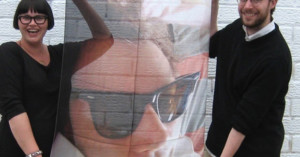
Leather goods maker Hayden-Harnett has a new product geared towards fashionable photographers: the Bespoke Scarf. Using a friendly web-based interface, fashion-aware photogs can upload their favorite images to have them transformed into a silk scarf.

Guess who one of the newest members on Instagram is? Ayatollah Ali Khamenei, Supreme Leader of Iran. His new account has the handle @khamenei_ir, the same as his surprisingly active Twitter account.
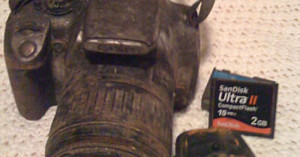
How long can photos stay alive inside a Canon Rebel DSLR sitting at the bottom of a muddy creek? A crazy new lost-and-found story suggests that the answer is at least 3 years.
The story, first reported by John Alexander over at PostStar, is fit for a Sherlock Holmes short story.
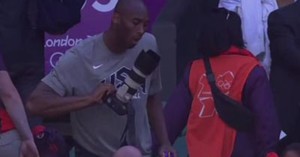
Basketball superstar Kobe Bryant is one of the most graceful players in the NBA, but put a camera in his hands and he becomes a mere mortal. Bryant was spotted by television cameras at a Roger Federer Olympic tennis match having trouble with his Canon DSLR and telephoto L lens. He is seen asking someone -- presumably a photographer -- for help, only to be told that the lens cap was still on.
Nate Jones over at Metro was recently looking through Getty Images in search of Olympic beach volleyball photos, when he came upon an interesting/"gross" discovery: some of the photographs focused on the body rather than the athlete or the sport. While other Olympic sport photos focus on action and emotion, it seems that certain beach volleyball photographers are intent on snapping images of behinds.
That got Jones thinking, "what if every Olympic sport was photographed like women's beach volleyball?" He then decided to take other shots of other sports and crop them through the lens of volleyball photographers. Here's a sampling of the hilarious images.

Freelancers often have to deal with the difficult challenge of trying to satisfy vaguely stated requests from clients, and also the frustration of meeting new requirements that aren't revealed until after the work is "completed". The video above is an interesting social experiment by Don't Get Screwed Over that attempts to show people what these freelance horror stories feel like to the people getting "screwed over".
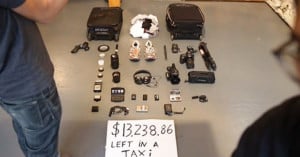
A photographer's worst nightmare happened to YouTube filmmaker Casey Neistat recently. After taking a taxi after a long 18-hour work day and flight, Neistat accidentally forgot all of his luggage -- and $13,238.86 worth of camera gear -- in the back of a New York City taxi cab. Among the equipment lost was a Canon 5D Mark III kit ($4300), a 24-70mm lens ($1600), and about $550 worth of memory cards -- equipment necessary for Neistat to make a living.

New parents love sharing photos of their babies with the world, but that doesn’t mean the world always appreciates …

Photographs of of Syria these days are filled with grim sights of pain and suffering. One Austrian newspaper apparently decided that the photos weren't grim enough. Kronen Zeitung, Austria's largest newspaper boasting ~3 million readers, published a photo this past weekend (top) showing a couple stepping through the rubble of a destroyed building complex with their child wrapped in a blanket. A powerful image... but completely fabricated. The original photo (bottom) published by the European Pressphoto Agency two days earlier shows a completely different scene.

The next time you fly, be sure not to forget your camera on the plane -- your camera might make the national news. A United Airlines flight carrying 169 people from New Jersey to Switzerland was diverted to Boston last night after a camera was discovered in a seasickness bag behind one of the seats. In addition to inconveniencing the passengers, two F-15 fighter jets were scrambled to follow the plane. The camera was later discovered to be... an ordinary camera.

Some fashion photographers are known for hyper-conceited attitudes and nasty personalities — traits that aren’t usually shared by infant …

More and more superstar athletes are using instant photo sharing services like Instagram, …

The Guardian featured a gripping article yesterday that asked photographers to look back at some of their most powerful photos, and how they could have helped instead of standing by and taking pictures. On the one hand we've all felt that surge of indignation as we wonder "why didn't they help!?" On the other, only a photographer that has been there could understand what it's like to be under that kind of pressure:
Video Game Tourism has an interesting article about the growing art of video …

If you grew up enjoying 3D stereoscopic photos using a View-Master, …

Andy Pandy of Pandyland drew this humorous …

Heartwarming video alert: soccer fans snapping photos inside a London Olympics 2012 photo booth were given a surprise of a lifetime when soccer legend David Beckham randomly poked his head in. The video above -- created by Adidas -- captures the priceless reactions of the shocked fans. See if you can spot the die-hard Beckham fan (hint: he's young).
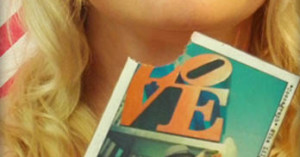
Cocoagraph is a Philly-based chocolate company that turns customer photos into Polaroid-style chocolate bars. It's a fun and tasty way to make your photos a treat for the eyes and the mouth.
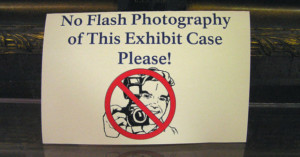
There's always been a general consensus that there is an actual reason behind the "No Flash Photography" signs we see plastered all over the place. In some places it makes sense -- not flashing photosensitive animals at the aquarium speaks for itself -- but what about art galleries and museums? Why exactly do we have to rely on natural light there? According to Steve Meltzer on Imaging Resource, no good reason at all.
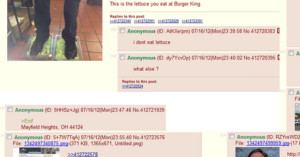
This past Monday, someone posted a photo to imageboard 4chan showing a Burger King employee stomping on two tubs of lettuce. The caption read "This is the lettuce you eat at Burger King." Other tech-savvy vigilante users immediately pounced on the case in hopes of identifying the poster. Unfortunately for the lettuce defiler, the photograph was taken with geotagging enabled, allowing the EXIF data to be used to zero in on the precise restaurant where the image was created: 1475 Worton Boulevard, Mayfield Heights, OH.
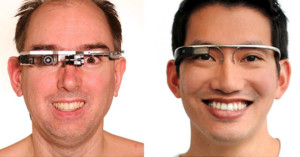
Professor and self-proclaimed cyborg Steve Mann created an eye and memory-aid device he calls the EyeTap Digital Glass. The EyeTap, worn by Mann above on the left, is a wearable device that is similar to Google Eye, pictured right, but he's been making them at home since the 1980s. The goal of his project is to use images to aid memory, or even to augment the memories of people with Alzheimer's Disease or who simply want to preserve their memories more permanently. However, a recent misunderstanding over Mann's technology allegedly caused a confrontation between Mann and several employees at a Paris McDonald's restaurant.
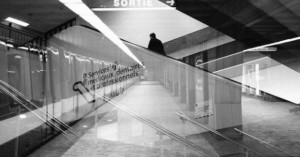
Over the past month there has been a back and forth going on in the background of the photographic community between writers/photographers Joerg Colberg and Edward Rozzo. The discussion -- which has turned into a fascinating debate on the static present and uncertain future of contemporary photography -- was sparked by an article by Colberg entitled "Photography After Photography (A Provocation)," and provocative it was.
Photography has finally arrived at its own existential crisis. It is far from being over - no medium is ever over as long as there is just an ounce of creativity left on this planet. But photography has long been running in a circle. Over the past ten years, it has increasingly become dominated by nostalgia and conservatism. Even the idea that we now need editors or curators to create meaning out of the flood of photographs ultimately is conservative, looking backwards when we could, no we should be looking forward.

PIX magazine is a newly launched digital magazine that has women photographers in mind.
But the writers at Jezebel -- and at least one female photojournalist who wrote in with a tip about the magazine -- are a bit miffed over the content, which they say is "full of lady stereotypes".
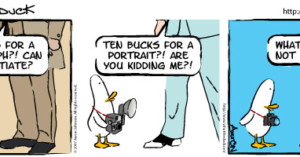
Here’s a humorous What The Duck comic that perfectly captures the general public’s …