Do It Yourself

Sometimes, the best products are the ones you make yourself. PetaPixel is your guide to custom lenses, handmade camera rigs, custom-coded artificial intelligence cameras, and the 3D-printed parts that makes photography truly personal.

A DIY Rig for Perfect Light Painting Orbs

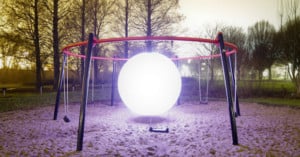
Unlike most DIY projects this one won't come cheap, but if you've always yearned for that ever elusive "perfect" light painting orb, then photographer Hugo Baptista has a solution for you. All you need to replicate his results is a Meade DS-2000 telescope mount, a drill, an LED strip with a wireless controller, and a piece of wood.
Make a Cheap Shutter Release for a CHDK Canon Camera with a 5V Battery

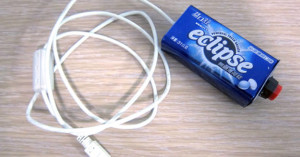
If you have a Canon compact camera running the Canon Hack Development Kit (CHDK) firmware, you can create a simple shutter release cable using some cheap components. The firmware causes the camera to snap a photograph anytime 5V is sent down a USB cable connected to the camera. You can do this using a USB cable (e.g. the one that comes with your camera), 5V battery, simple push button, and some kind of housing (a metal candy tin, for example). Oh, and you'll need to be comfortable cutting up …

The Afghan Box Camera: Not-So-Instant Instant Photography

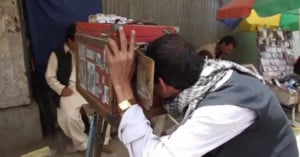
The Afghan box camera, or kamra-e-faoree as it's called in Afghanistan, is a humble creation that has served its purpose well for many years. We say humble because the "camera body" consists of a wooden box, the "focusing apparatus" is a metal shaft attached to a piece of wood, and the "shutter" is controlled by removing and reinserting the "lens cap" manually.

How to Transform a Cheap Foot Candle Meter into a DIY Light Meter

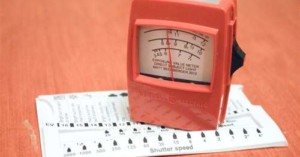
For those of you amateur photographers out there who like shooting film, sometimes old cameras don't have the right light meter for getting the correct exposure. Sometimes they are faulty, inaccurate or have no light meter at all! Photographic light meters can be pretty expensive but analog foot-candle meters are cheap because they don't really have any photography purpose, until now. This guide will show you how to put it to work for photography.

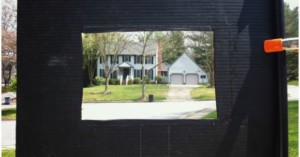
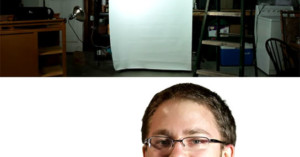
Create a Film Noir Look Using This Homemade Telescopic Snoot

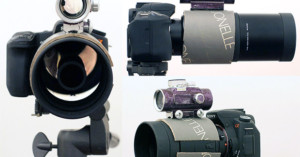
A typical snoot is used to control the direction and radius of of the light you're casting onto your subject, and they're great for getting certain effects. But photographer Peter Miesch's take on the snoot is a bit different; used right, his will give your photos a film-noire effect like you see in the example above.

DIY Camera Strap Made of Nylon Rope

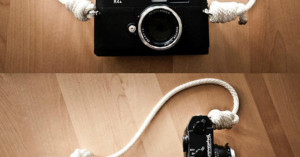
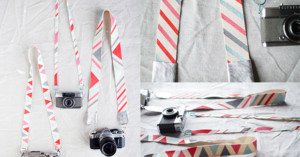
Photographer Jared Krause made this simple camera strap for shooting on the streets of Toronto. The length of nylon rope he used cost just $2.50. Due to cold weather, Krause almost always wears the strap outside a jacket or sweatshirt, but if you're shooting in warmer weather it might be wise to add some padding for comfort.

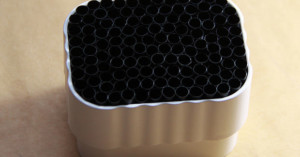
Make a DIY Grid Spot Using a Gutter Adapter and Drinking Straws

Photography enthusiast Jeff Vier made himself a cheap DIY grid spot using a $5 gutter downspout adapter he purchased from Home Depot and a $0.50 bag of drinking straws. Simply cut all the straws to the same length (the longer the straws, the more focused the light), carefully arrange them inside the adapter, and then use super glue to fix them into place. Vier found that his makeshift adapter fit perfectly over his Speedlight 580 EX II without any adjustments.

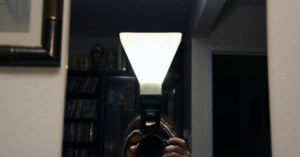
Cheap DIY Open-Top Flash Diffuser a la Home Depot

Flickr user boingr came up with a great idea for those of us who don't want to spend money on a flash diffuser from a camera shop -- head over to Home Depot instead. All he did was buy an Amerimax Home #85208 downspout funnel, shimmy it onto his Canon Speedlite 580EX II, and presto: Open-Top Flash Diffuser.

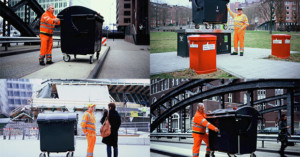
German Garbage Men Turn Dumpsters Into Giant Pinhole Cameras

A group of garbage men in Hamburg have figured out a way to combine their love of photography with their work of hauling trash, turning large dumpsters into giant pinhole cameras to photograph their city. The dumpsters are converted by drilling tiny holes into the fronts and then hanging large sheets of photo paper inside. Although framing a shot with the giant rolling cameras takes only a minute, exposing it can take up to an hour of waiting. They've dubbed the experiment the "Trashcam …

Miroslav Tichý’s Homemade Camera

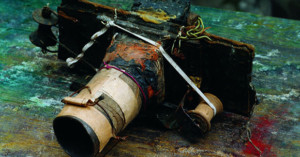
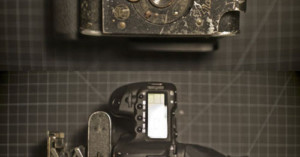
This might look like a pile of garbage, but it's actually one of the homemade camera used by photographer Miroslav Tichý from the 1960s until 1985. He made his camera bodies from things he had on hand, including plywood, road asphalt, and thread spools. His lenses would be created from toilet paper tubes with custom lenses created from Plexiglas that had been sanded with sandpaper and then polished with toothpaste and cigarette ashes. For his enlarger, he used sheets of metal, two fence slats, …

Make a Fleece Cozy for Lens Protection

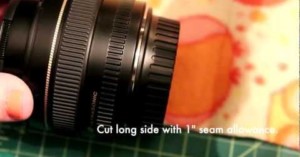
Here's a short video tutorial on how you can make a cozy for lens protection using some fleece and some velcro. It's a simple wrap that allows you to keep your lens safe when transporting it in something other than a camera bag. Simply measure out a piece of fleece that's the appropriate size and sew some velcro onto the ends. The project takes about 30 minutes and costs a buck or two for each cozy.

Create Anthotype Photos Using the Photosensitive Juices of Plants

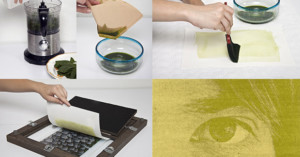
Looking for a weekend project? Try you hand at creating an anthotype, or an image created using photosensitive material from plants. Grind up some plant matter to harvest the juices, paint the juices onto some paper, place a negative over the paper, and then leave the image out under the sun. When it's done exposing, scan the image to preserve it and place the print in a dark place, since light will slowly cause the image to disappear. Photojojo has a step-by-step tutorial on the process here.

Coffee Sleeves Can Double as Makeshift Lens Hoods When in a Crunch

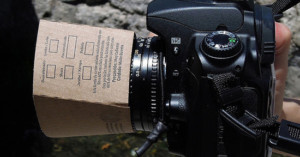
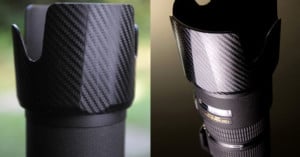
Flickr user Nick Cool was shooting in Machu Picchu, Perú on a sunny day when he made a helpful discovery: his coffee cup's sleeve doubled nicely as a makeshift lens hood. While it's probably not the best thing to use on a regular basis, it's a clever MacGyver-ish idea that got the job done. For less-ghetto sun shielding that's just as portable, you can look into printing/making your own lens hood or a nifty new product called the Flex Lens Shade.
This Holga Camera is Worth $24,000

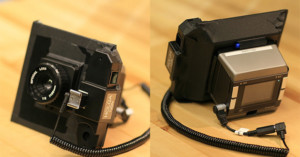
This Holga camera is named the "Holga-Cam of the Apocalypse" and is worth $24,000. Photographer Mike Martens created it using a Holga 120N camera body worth $25 and a Phase One P25 digital back worth $24,000. The two components are fused together using a horseman lens board (hence the camera's name) and a foot of black gaffer's tape. The camera shoots low-fi photographs at 22 megapixels. You can find more images of the camera here and sample photographs shot with it here.

Use a Nutella Lid as a 72mm Lens Cap

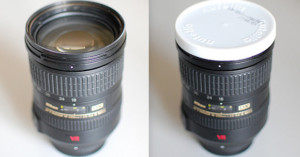
Here's your completely random photography fact of the day: Nutella lids can double as lens caps. Belgian photography enthusiast Frans Leys lost the 72mm cap to his 18-200mm Nikon lens, but found that the cap from his 220g jar of Nutella was a perfect fit. 220g isn't the standard size sold in the US, but can be found in some shops.

DIY Large Format Camera Created From Photography Books

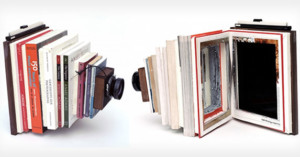
Artists Taiyo Onorato and Nico Krebs create homemade cameras out of bizarre objects such as turtle shells and large stones. The large format camera above was crafted out of a stack of photography books. Their experiments are documented in a book titled As Long As It Photographs It Must Be a Camera. You can find a recent interview with the artists over at American Photo.

Collapsible Hanging Bookshelf Made with Reused 35mm Film Strips

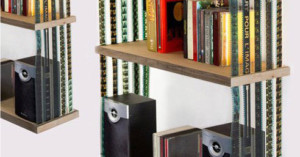
VU35 is a new brand by Lucas Desimone and Matias Resich that offers products created from wood and reused 35mm film -- a plastic material that's difficult to dispose of. Their first product is a minimalistic collapsible bookshelf called Filmantes, which uses strips of film to connect three wooden shelves.

Protobooth: A Photobooth That Shoots 3D Animated GIFs

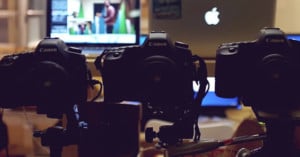
Protobooth is a creative photobooth by design firm Digital Kitchen that captures 3D photos rather than static images. Comprising 3 Canon 5D Mark II DSLRs, 4 Macbook Pros, and some fancy software mojo, the Protobooth simultaneously captures three photos at the push of a button, saves them to a networked hard drive, stitches them using Automator, applies a Photoshop filter action to the image, and then saves it as a GIF.

Broken Sigma Lens Fixed with a Peanut Butter Jar Lid

YouTube filmmaker Casey Neistat's DSLR recently took a tumble, breaking a piece off of the built-in lens hood of his Sigma lens. Instead of sending the lens in for repairs, Neistat decided to do a thrifty repair himself. After finding a similar-sized jar lid on some peanut butter at a local grocery store, he created a replacement hood himself by drilling a large hole and a couple small screw holes into the lid. He calls the project "The Peanut Butter Solution".
DIY Gyroscopic Camera Stabilizer Made On the Cheap

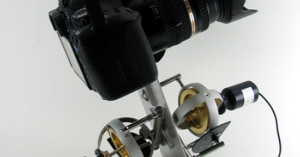
Physics guru David Prutchi recently came across a line of professional grade gyroscopic camera stabilizers by Kenyon Laboratories. They cost thousands of dollars each, but Prutchi noticed that the designs hadn't changed much since they were first patented in the 1950s. He then set out to create his own DIY version using low-cost gyroscopes from Gyroscope.com. His finished device (shown above) actually helps stabilize his DSLR when shooting video or when photographing with non-image-stabilized …

Use a Drop of Water as a Macro Lens for Phone Photographs

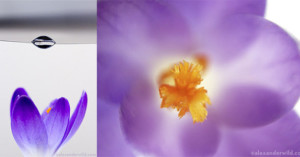
Here's a super cool trick: instead of buying a special macro lens for your smart phone, simply use a drop of water! Carefully place a drop of water over your lens, carefully invert the phone, and voila -- instant macro shots with the cheapest lens you'll ever own. Alex Wild over at Scientific American has more details on the technique and some great sample shots taken with it.

Personalize a Birthday Party with Picture Perfect Party Hats

If you want an extra personal touch at birthday parties, you can turn portraits of the birthday boy or girl into picture perfect party hats! Simply print out a portrait using a special template, turn it into a cone, add some fringe, and you're done. Eden over at Sugar and Charm has the low down.

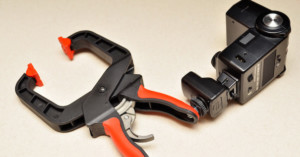
Add a Tripod Screw to a Hand Clamp for a Versatile DIY Flash Mount

Photographer Allen Mowery has a step-by-step tutorial on how to build a useful DIY flash mounting accessory using a ratcheting hand clamp and standard 1/4-inch threaded screw. It's a cheap DIY version of the Super Clamp or Nasty Clamp, and can help you place your flash in places that are inaccessible to light stands or traditional equipment.

DIY Lightbox for Lighting Macro Photos

Photography enthusiast Kris Robinson used to handhold a flash above his subjects for macro photographs, but then he got tired of doing that and ran out of hands. He then came up with the brilliant idea of making a do-it-yourself contraption that attaches to his flash when it's mounted to the hotshoe. The light travels down a tube lined with reflective aluminum tape, and is bounced downward onto the subject through a diffused lightbox. For a couple sample shots, see here and here.

Make Personalized Bookmarks Using 35mm Film Strips

If you have some unwanted 35mm negatives lying around and need a simple gift idea, you can try your hand at turning them into one-of-a-kind bookmarks. Simply cut out the actual frames from the film strip and replace them with actual photographs to create film strips that you don't need to hold up to the light to enjoy.

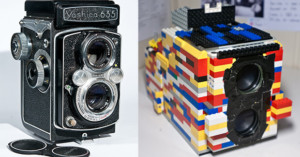
Fully-Functional Twin-Lens Reflex Camera Created Using LEGO Bricks

After seeing the LEGO large format camera we featured last year, Norway-based photographer Carl-Frederic Salicath set out to create his own LEGO camera. Rather than go with large format, he decided to build a more complicated Rolleiflex-style twin-lens reflex camera that uses 120 film. Aside from LEGOs, he also used some matte ground glass, a mirror, and lenses taken from a binocular.

Hack a Mirror for Close-Up Portraits of Self-Aware Animals at the Zoo

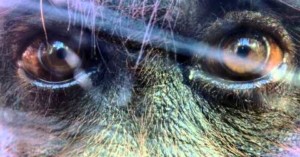
Mark Rober -- the guy behind the gaping-hole-in-torso costume -- recently came up with a creative way of getting up close and personal with gorillas at his local zoo. It turns out that apes can't resist looking at themselves in mirrors, so Rober drilled a hole in a mirror and pointed his iPhone's camera through it. He was then able to snag some awesome footage that most visitors would never be able to capture. This trick may also work for other animals that are known to pass the mirror test of …

Turn a Used Candy Box Into a Mirrored Pop-Up Flash Bounce Reflector

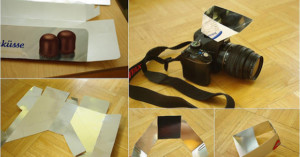
Want to improve the quality of the photos captured using your DSLR's popup flash? Tina (AKA synthetic_meat) discovered that the cardboard box that came with a particular brand of chocolate had a nice silver lining on the inside -- perfect for making a mirrored bounce reflector! After some cutting, scoring, and folding, she came up with a DIY Lightscoop clone that lets you bounce your onboard flash off the ceiling or wall for softer and more appealing images. You can download the free template …

Turn a Polaroid Picture into a DIY Scratch-Off Card

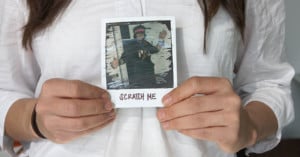
Here's a sweet DIY project idea by Brittany Morin that's perfect for that special day that's right around the corner: scratch-off cards made from Polaroid pictures! Basically all you need is some acrylic paint and some dish soap. Mix the two together with a ratio of one part soap for every two parts paint and you'll have yourself some scratch-able paint!

Turn an Old GPS or Cell Phone Mount Into a Suction Cup Tripod

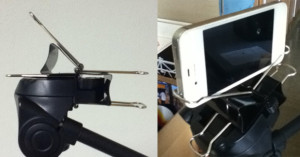
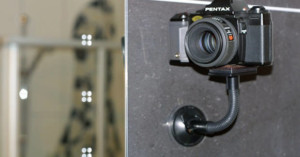
If you have an old mount for attaching a GPS or cell phone to your windshield, you can upcycle it into a suction cup tripod for your camera (just make sure it's not the flimsy kind that falls off on its own). What you'll need to do is flatten the mount surface and then install a tripod screw. Nano_Burger has a step-by-step tutorial on how he did this conversion over on Instructables. The resulting tripod allows you to fix your camera in locations that aren't accessible to tripods that don't …

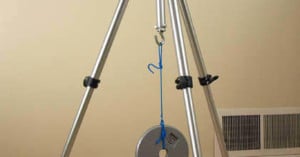
Give Your Tripod Some Extra Stability By Adding a Weight Hook

Heavier tripods are generally more stable than lighter ones -- wind doesn't affect them as much -- but hauling them around can be a pain. Instructables user Andrew Axley came up with the brilliant idea of making his simple tripod more stable by adding his own weight hook. The tripod is light when not in use and when you need extra stability you simply hang your camera bag onto the hook. All you need to do is figure out a way to attach a hook securely at the center -- Axley chose to drill a hole …

Make a DIY Collapsible Beauty Dish

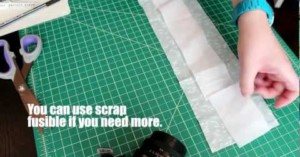
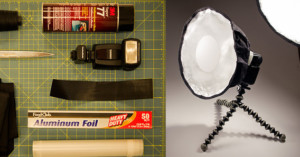
Industrial design student Hunter Frerich came up with a simple and cheap DIY beauty dish that's created using fabric, foil, velcro, and glue. To make your own, simply download and print out the template and follow the step-by-step instructions.

Make a Custom Snow Globe Using Photos of Your House

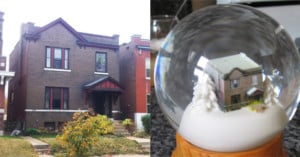
Here's a fantastic project/gift idea for those of you who are both tech-savvy and artsy: make a custom snow globe of your house. The process involves capturing photographs of the house from all sides, turning the images into a 3D model of the home using a 3D modeling program (e.g. Google Sketchup), turning the 3D model into a physical object using a 3D printing service (e.g. Shapeways), and then sticking the object into a custom snow globe kit. Qarl has published a step-by-step tutorial on the …