EXIF data embedded in an image file can shed quite a bit of information about a photo, including how it was created and the owner of the copyright. It’s useful, but can be easily stripped away. A new consortium led by three organizations (IPTC, 4A’s, and ANA) is pushing to make metadata permanent. It recently published an Embedded Metadata Manifesto, which states,
Ownership metadata is the only way to save digital content from being considered orphaned work. Removal of such metadata impacts on the ability to assert ownership rights and is therefore forbidden by law in many countries.
[...] Properly selected and applied metadata fields add value to media assets. For most collections of digital media content descriptive metadata is essential for retrieval and for understanding. Removing this valuable information devalues the asset.
Do you want to live in a world where it’s illegal to remove or tamper with a photograph’s EXIF data?
Src Img is an uber-simple bookmarklet created by Jarred Bishop and Hayden Hunter that lets you quickly do a Google Image search for any online photograph with just two clicks. It’s a simple link (i.e. bookmarklet) that you drag into the bookmarks bar of your browser. Whenever you want to search Google Images for a particular photograph, simply click the bookmarklet. It’ll overlay all the photos on the page with a “?¿” square. Click this to search for that photo. Voila!
If you need to print some photos taken by someone else using print services at places like Walmart, be careful: if the photographs look “too professional” some places will require a written copyright release before allowing you to pick up the prints — even after you’ve paid for them. The Consumerist has a story of a woman named Jessica who ran into problems at Walmart after collecting photos from a couple pro photographer friends for a friend’s funeral:
See, Jessica’s friend was a professional photographer, as is her friend’s husband, who had e-mailed Jessica the photos to have printed. “So even their candid pictures appear professional,” she explains to Consumerist.
[...] In addition to those photos, Jessica says that Walmart wanted copyright info on a couple of shots that had been taken at a pro studio like Olan Mills back in the ’70s.
“There was no mark on them to indicate where they were taken, and my friend’s mom had sent me those,” writes Jessica. “She paid for them back in the day when they were taken, and she scanned them for me last week. How am I supposed to get written copyrights for every single picture?
Jessica had also checked a box affirming that she had permission to print the images while on Walmart’s website. Protecting copyright is a good thing, but having employees make decisions on whether photos are “too professional” after they’ve already been printed and paid for doesn’t seem like a very good system.
Renowned rock photographer Baron Wolman, the first photo editor at Rolling Stone magazine, is speaking out against the worrying trend of copyright grabs by music artists. He recently spoke to makingimages.com.au, saying:
I think it’s horrible – here’s how I feel about that. They own their likeness, they are the creative force – if they were not musicians, we would not have been taking pictures, right? So they’re the source of the creativity, but on the other hand, we are the source of the visual creativity recording them. So I think that that copyright should remain with the photographer, but with limitations upon how the pictures can be used.
[...] But to just say “they own everything”, I mean, why even do it?
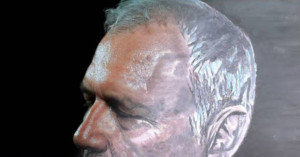
Singer Bob Dylan is being accused of plagiarism after several paintings in his recent art show were found to have “striking resemblances” to works by photographers such as Henri Cartier-Bresson, Dmitri Kessel and Léon Busy. An example is Dylan’s painting titled Opium (above left), which appears to be directly copied from Busy’s Vietnam (above right). A Flickr user also found that Dylan had copied six photographs — one of which an artificial Photoshop edit — from his Flickr stream. Read more…
Photographer Rodney Smith writes that the greatest gift possessed by still photographers is under attack like never before:
So dear photographers, others before you fought hard and long to give you a gift. And although everyone from corporations, to magazines, to art buyers try desperately to take it away from you, I implore you not to give it away.
Most of you are young and feel the need to work, and feel powerless against larger forces. You do not realize that when you get older, having the rights to your own work will be the best gift you have as a still photographer. It will help you when you need it most.
[...] The pressure is on. The economy is awful and people will grab what they can get away with. I implore you to stay strong and fight hard for what many other photographers, over the last 50 years, have fought hard to give you; the right to own and control your own work.
If a stranger suddenly grabs your camera and takes a photograph, who owns the copyright to that photograph? Photographer Mirjam Letsch writes,
Walking in an Indian bazaar, my Nikon dangling on my shoulder, this boy quickly clicked five times. I really liked the creative result when I later saw these images! Don’t know who owns the copyright though!
This might seem like a pretty farfetched example, but what about a case where you carefully set up and compose a fine art photograph, then for some reason ask a stranger to press the shutter for you?
Could allowing the use of your photos for free actually be a way to increase income? Portrait photographer Jonathan Worth — the man behind Coventry University’s free photo courses — used to send take-down notices to any website that shared his work without permission. Then he met author Cory Doctorow, a proponent of Creative Commons licensing, who suggested that he try giving away his work for free. Worth then made a high-res photo freely available online and quickly sold 111 signed prints, netting him £800 (~$1,270). Read more…
A photograph is a mechanical representation of facts. This is unlike a painting, which is a non-mechanical representation of something—be it facts, such as an attempt to paint an outdoor scene or create a portrait of someone, or imagination in the form of how the artist sees the world, such as the Vincent van Gogh’s Starry Night painting. Paintings, therefore, are pure expressions of ideas or facts. Photographs, however, are mechanical expressions of facts.
[...] extending copyright protection beyond the mechanical copying of a photograph (i.e., scanning it and sending it to all your friends) is extending copyrights in photographs too far. The expression of a photograph cannot be separated from its factual reproduction of actual events. Attempting to do so leads to absurd results.
Therefore, a bright-line rule should reserve copyright protection in photographs only for the reproduction of those photographs. Copyright protection should not extend to the elements within the photographs themselves—doing so results in copyrighting facts, which is beyond the scope of copyright law.
It’s a pretty length piece, but well worth a read. What’s your opinion on this issue? Should the elements within a photograph be covered by copyright protection?
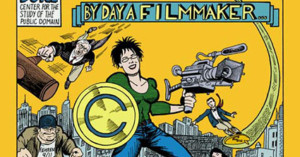
Ever wonder how and why copyright law came about? This interesting video will bring you up to speed. It’s pretty biased against certain aspects of copyright law, but is interesting nonetheless.