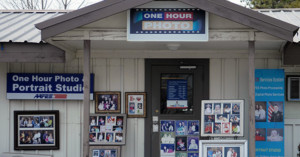
Bryce Bell of cardnetics created this business card design that features a built-in aperture mechanism. Pull the lever down and the aperture opens up. If you run a photography-related business, this could be a neat business card to pass out to your clients. Pre-assembled cards start at $6 each, while you can buy kits that you put together yourself for $2.50. If you want to try printing and laser cutting the card yourself, the design templates are available here.
Things aren’t going very well for Sigma these days — just days after the world balked at the $9,700 price tag it’s attaching to the upcoming SD1 DSLR, Nikon is announcing that it’s suing Sigma for $150 million over the vibration reduction technology found in Sigma DSLR lenses. Furthermore, it’s demanding that Sigma put a halt to the manufacturing and sale of lenses that infringe on the VR patents, which might be a large number of OS (Optical Stabilization) lenses.


Since we first covered its launch back in October 2010, Instagram has become one of the fastest growing photo-sharing companies and iPhone apps. This week founder Kevin Systrom announced that they now have 4.25 million registered users, and that users are posting 10 photos every second, or around 900,000 photos per day. Not bad for a seven month old service, eh?

Ever wonder what the fees involved in doing photography for an ad campaign look like? Jess Dudley, a producer over at Wonderful Machine, has an insightful post on A Photo Editor breaking down an estimate he recently did for a client:
The photographer and I settled on $2,500.00/shoot day for his basic creative fee. But what about the licensing fee? There were some factors to consider. The agency and the client were both pretty big players. The client was going to get a lot of use out of the pictures, and they stood to gain a lot from them, all which suggested a solid fee. Applying slight downward pressure on the value was the fact that the photographer didn’t have a long track record with automotive advertising, the spontaneous nature of the shoot made the campaign a little risky for the client, and this campaign was only one of several that they were producing for that brand. After consulting my usual pricing guides and agency contacts, I chose to price the first 20 images at $80,000 (effectively $4,000 each), with the option of the next 10 at $3,000 each and the 10 after that at $2,000 each.
You can read the rest of the breakdown here — it’s quite illuminating.
Production issues experienced by Canon and Nikon (caused by the earthquake and tsunami) may soon allow competitors to eat into their dominant DSLR market shares and, according to a story by USA TODAY, Sony is pegged as one of the main benefactors:
Canon has 44.5% of the digital SLR market, followed by Nikon at 29.8%, Sony with 11.9% and Olympus at 5.1%, IDC says.
[...] At a time when many Canon SLRs are hard to find, due to production issues, the Sony models are not only in amply supply, but discounted to sell with special promotions.
[...] Sony has the name recognition, and ample shelf space in prominent stores.
These gains would likely be limited to first time buyers who are looking for their first DSLR — camera owners already committed to Canon or Nikon’s mounts are unlikely to switch systems just because of a temporary shortage.
On Nikon’s question and answer Facebook app, a guy named Andrew Yu offered the idea of replacing the shutter button with two touch sensors and received the above response from Nikon. It’s an interesting look at how Nikon, camera manufacturers, and big corporations in general usually respond to ideas and suggestions from the general public. Read more…
Market research firm IDC released its findings about the worldwide digital camera market recently, with interesting details about the current market shares of camera manufacturers. From 2009 to 2010, Canon’s share remained perfectly constant at 19%, while #2 player Sony increased its share from 16.9% to 17.9%. Nikon also grew from 11.1% to 12.6%. The worldwide market for digital cameras is also growing — last year it increased 10% to 141 million cameras sold. Read more…
The stock prices of major camera equipment manufacturers took a major — and expected — dive after the earthquake on March 11, 2011. Though they made a brief recovery afterward, they’re continuing to fall due to the risk that gear prices may soon skyrocket soar once decreased production isn’t able to meet demand.
Goodbye Flip Video camera. Cisco announced today that they’re killing off the camera line in an attempt to refocus their consumer electronics business. They purchased the company behind the camera, Pure Digital Technologies, back in 2009. Flip Video cameras have long held the bestselling spots for camcorders on websites like Amazon by offering both HD video recording and convenient transferring with a built-in USB connection, but competition from rival camcorders and the introduction of HD video in smartphones (e.g the iPhone) has eaten into Cisco’s market share.
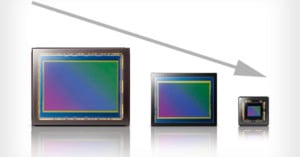
With the rate camera technologies are progressing on phones, makers of compact cameras are being forced to innovate lest their cameras go the way of the Flip. Perhaps that’s why manufacturers are moving into large sensor cameras as phones invade the compact camera market.
If you think the 5-megapixel sensor found on the iPhone 4 is good, wait till you see the camera found on the next iPhone — it’s reportedly going to be a 8-megapixel sensor made by Sony. The Street wrote back in 2010 that the next version of the iPhone to arrive in 2011 would pack an 8-megapixel Sony sensor rather than the 5-megapixel OmniVision one found in the current phone, and Sony’s CEO Howard Stringer seems to have confirmed that today in an interview with the Wall Street Journal. Read more…