Educational

PetaPixel's editorials are in-depth stories, thought-pieces, and opinions on the photography industry led by the minds of our editorial team.

Finish Line Cameras and Slit Scan Photography

Yesterday we reported on how US Track and Field saw its first "photo finish" tie this past weekend in an Olympic qualifying race. If you thought the finish line photo looked strange, it's not just you: it's not an ordinary photo. Journalist Daniel Rutter has written up a great article on how finish line cameras work: …


Is Your Browser Color Managed?

Is your browser color managed? If not, the photographs you are looking at are distorted versions of what their creators intended them to be. Is the car above rendered in school bus yellow, or in a jarring purple?

The Largest Photography Project Ever Sponsored by the United States

You probably know of the iconic photograph titled Migrant Mother, but do you know the government photo project that led to its creation? Between 1935 and 1943, the US Government launched the largest photo project in the history of the country through its Resettlement Administration (RA) -- later called the Farm Security Administration (FSA). The project enlisted the likes of Walker Evans and Dorothea Lange to help educate citizens in the East about what was going on in the West, and the giant …

The Bastards Book of Photography: An Open Source Primer on Using Light

Typical photo books and resource books for photographers come printed and bound, which is not a bad thing. Digital as our photography has become, displaying it, or teaching people how to replicate it, are two areas in which ink on paper still rule. Dan Nguyen's The Bastards Book of Photography, however, breaks these rules, and in the process becomes both a great resource for beginners, and a re-think on book distribution and creation.

Creepy Portraits of Women Showing the Thatcher Effect

Dutch photographers Anuschka Blommers and Niels Schumm shot a series of photographs for a Dove ad campaign that uses the Thatcher effect for some stealthy creepiness. The effect is created by flipping a portrait upside down while keeping the eyes and/or mouth right side up. The human brain has a difficult time detecting these subtle "local" changes, and the portraits may look normal until you see them flipped. Try turning your monitor or head to look at these images upside down.

The ‘S’ in Canon’s EF-S Lens Mount Stands for “Small Image Circle”

If you're a crop sensor Canon shooter, you may have learned in the past that the 'S' in EF-S stands for "Short-Back Focus". Well, that's not true anymore. The lens mount was originally for lenses with rear elements closer to the sensor plane than in EF lenses, but there are recent EF-S lenses that eschew the short back design. The moniker now stands for "Small Image Circle", as evidenced by this technical report.

This is What Happens to 35mm Film in Hydrochloric Acid

Chemistry and physics teacher MattAttackPro shot the above photo showing what happens when a roll of unused 35mm camera film is dropped into a beaker of hydrochloric acid. What you're seeing is the emulsion (light sensitive chemicals suspended in gelatin) separating from the clear plastic backing.

The Uncropped Versions of Iconic Photos

Here are some uncropped (or "unzoomed") versions of iconic photographs that show more context than their famous cropped counterparts. It's interesting to see what photographers and photo editors chose to keep and what they chose to throw away. The image above is an alternate view of Tank Man.

Kodak Used a Calendar That Had 13 Months

Here's a random but interesting piece of photo-related trivia: did you know that Kodak used a calendar that had 13 months? It was called the "International Fixed Calendar", and was proposed by a guy named Moses B. Cotsworth in 1902. The system divided each year into 13 months of 28 days each, with one or two days each year not belonging to any month. The extra month was named "Sol", and appeared between June and July. Although it was never officially adopted by any country, Kodak founder George …

National Geographic’s Senior Photo Editor On “What Photo Buyers Want”

A little over a month ago we featured an extended interview with long-time Newsweek Photo Editor Jamie Wellford. It was a longer video than we usually put up but very educational and well worth an hour of your time. And now Photoshelter has put together another long interview/webinar as part of their "What Photo Buyers Want" series, this one with National Geographic Senior Photo Editor Elizabeth Krist.

Canon Unveils the EOS Rebel T4i/650D With Continuous “Movie Servo AF”

After weeks of speculation and a big picture and spec leak yesterday, the wait is finally over -- the Canon EOS Rebel T4i/650D has finally arrived. Since the T3i release last year wasn't anything to write home about, Canon have really tried to make the new rebel worth an upgrade, and they've done this mainly by introducing an upgraded AF system, capacitive touchscreen LCD and Movie Servo AF that works with the new STM lenses, which also debuted today.

A Quick Trick for Figuring Out Which of Your Eyes is Dominant

One tip that instructors often pass onto the beginning photographers is to use their dominant eye (i.e. the eye they prefer seeing with) to look through the viewfinder. If you want to find out which of your eyes is the dominant one, here's a quick test you can do: extend your arms straight out and form a small triangle with your hands. Looking through the triangle with both eyes open, frame something nearby (e.g. a doorknob) and place it in the center of the triangle. Then close your eyes one …

The First Photographs of US Presidents

Here's your interesting piece of photo trivia 'o the day: John Quincy Adams, the sixth President of the United States, was the first president to have his photograph taken (the earliest photo still in existence, at least). The daguerreotype was shot in 1843, a good number of years after Adams left office in 1829.

The Science Behind Tintype Photography

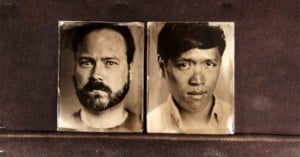
Here's another video featuring SF photo shop Photobooth and its tintype portraits. Will and Norm of Tested talk to shop owner Michael Shindler, who goes in depth into how tintype photographs are created and the science behind the process.

Startling Portrait Offers Visual Proof that Sunlight Causes Premature Aging

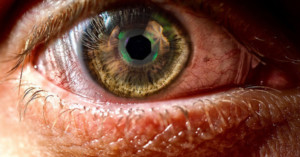
If you've never been a fan of using sunblock, here's a photograph that might change your feelings toward it. Shot by doctors Jennifer Gordon and Joaquin Brieva of Northwestern University and published by the New England Journal of Medicine, the photo shows a 69-year-old truck driver who exhibits a strong case of photoaging. In the 28 years he spent driving trucks, the man's face received far more sunlight on the left side with the sun streaming in through the driver's side window.

What Night Sky Photographs Will Look Like Over the Next 7 Billion Years

NASA astronomers announced today that they are certain that our galaxy is on an unavoidable collision course with the Andromeda Galaxy, the closest spiral galaxy to us. Don't worry though, it won't be happening for another 3.5 billion years or so. What's interesting is that the collision will drastically change what our night sky looks like, and the astronomers released a series of photo illustrations showing what future astrophotographers will be shooting when they point their cameras at the …

Ever Wonder What This Symbol on Your Camera Means?

Take a look at your camera, and there's a good chance it'll have this symbol: Φ -- a small circle bisected by a long line that looks like a hieroglyph of Saturn. If you've always wondered what it means, today's your lucky day: it's called a "film plane mark" (or "focal plane mark", depending on who you ask), and indicates exactly where the film (or sensor) plane is inside the camera body. One reason the mark is useful is that macro photographers often want to determine the exact distance …

Did You Know: Kodak Used Collectible Stuffed Animals to Sell Cameras

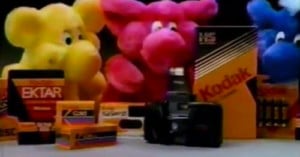
We've heard of camera manufacturers dipping into unrelated fields before, and we've also seen some pretty interesting marketing stunts, but in the early 90's Kodak had already done both... in a colorful, cuddly sort of way. Back then, as an either desperate or creative ploy to get kids into photography, Kodak came out with the Kolorkins: a set of colorful, collectible stuffed animals.

Hasselblad vs Red Epic: Will Video Kill the Still Photography Star?

Video technology is advancing at an alarming rate, and the question that seems to be on many a photographer's mind is: "will video ever render still photography obsolete?" In the future, will shooting a sunset simply involve going out and recording 30 minutes to an hour of video and then pulling your favorite frames into Photoshop or Lightroom? Well, that's the question that this video from Fstoppers is trying to answer.

Every Instagram Filter on One Photo

What do you get if you apply every Instagram filter to a single photograph? Belgian blog Appelogen decided to find out, starting with a normal photo of a pathway and applying one filter at a time. The resulting image is pretty abstract, and prompted them to ask the question, "is it art?" …

Manhattanhenge: A Unique Bi-Annual Photo Op for New Yorkers

Twice per year something really cool happens: the stars, or rather one particular star, aligns with the grid of streets running through Manhattan island, offering photographers and astronomers alike an opportunity to go out and snap a few very unique and very cool photos. On May 29th (today) and July 12th of this year (it varies a bit each year) the sun sets in perfect alignment with the Manhattan grid. It's known as "Manhattanhenge". On those specific days, when the sun sets, you will see half …

History of Imaging: A Brief Look at Photography’s Roots

In Episode 1 of the Framed Network series Film, hosts and photographers Tanja Lippert, Ryan Muirhead and Tia Reagan take an in depth look at the history of photography. If you love the analog way of life then you're going to want to stick around and watch the entire thing, because when Tanja, Ryan and Tia aren't being a bit crazy, they're sharing some really interesting information about the roots of film photography and, therefore, photography in general. People without a sense of humor …

Why Your Digital Camera’s GPS Might Not Work in China

It's strange to think that cartography laws could somehow affect the functionality of your camera overseas, but a recent article on Ogle Earth points out that just such a thing has been going on with GPS-enabled cameras as far back as 2010. The whole "investigation" into the matter began with the release of the Panasonic TS4 earlier this year. For some reason the press release cautioned that the GPS in the camera "may not work in China or in the border regions of countries neighboring China." …

A Brief History of John Baldessari

If you've never really understood conceptual art, the video above will only serve to confuse and frustrate you more. Purple eccentric dinosaur eating mayo. If you've never heard of John Baldessari, the video above will bring you up to speed. Baldessari is an internationally renowned conceptual artist who's known for using found photography and appropriated images in his work. Photographer Cindy Sherman counts him as one of her biggest influences. The short documentary above gives a brief …

Flashed Face Distortion Effect Makes Ordinary Portraits Look Hideous

If you ever create a slideshow of portraits, you might want to avoid showing them aligned side-by-side with a gap in between. The video above shows a crazy optical illusion that researchers have dubbed the "Flashed Face Distortion Effect". By flashing ordinary portraits aligned at the eyes, the human brain begins to compare and exaggerate the differences, causing the faces to seem hideous and ogre-like. Researcher Matthew Thompson writes, …

The Economics of Leica Camera Pricing

Have you ever wondered how Leica chooses its pricing for its high-end cameras? J Shin has written up a great post over at Leica Rumors that offers a geeky and lengthy explanation of the economics behind the company's pricing decisions: …

What the Fujifilm FinePix X100 Looks Like Completely Disassembled

If you've ever wanted to know what the Fuji X100 looked like on the inside, without breaking your own apart that is, then you can benefit from James Maher's misfortune. On a recent fishing trip, the dry container Maher used to store his camera gear turned out not to be watertight and soaked all of his equipment. Rather than doing what most of us would do (assume the fetal position and cry uncontrollably?) he took it as an opportunity to take the whole thing apart and document the process in …

The Longest Photographic Negative in the World Measures 129 Feet

While we're on the subject of world records in photography, did you know that the world's longest photographic negative is 129ft 6.69in (~39.5m) long? It's a giant panorama of the streets of Buenos Aires, exposed by Argentinian photographer Esteban Pastorino Diaz using a homemade panoramic slit camera that was attached to the top of his car.

Is This Britain’s Most Photogenic Face?

Beauty may only be skin deep, but apparently it's also scientifically measurable. At least that's what Lorraine Cosmetics was banking on when they put together the Britain-wide beauty contest "Lorraine: Naked." Contestants, who were not allowed to have had any plastic surgery, were asked to send in a photo with no makeup on, and after many different symmetry tests, input from experts and a nationwide vote over the top three, Florence Colgate emerged victorious.

How Digital Camera CCD Sensors Work

Digital camera sensors come in two flavors, charge couple device (CCD) sensors and complementary metal–oxide–semiconductor (CMOS) sensors. In this video, Bill Hammack the Engineer Guy offers a short explanation of how CCD sensors capture and store images, and how a color filter array is used to capture color photos.

Hardcore Durability Test Looks to See Just How Much the Canon 7D Can Take

It goes without saying that nobody should ever test their camera's limits where durability is concerned (so please, don't try any of this at home); but in the interest of science (or lunacy?) someone volunteered their Canon 7D and asked the folks over at DigitalRev to see just how much the camera could really take before it gave up its digital ghost.

LitUp Episode 1: An Introduction to Lighting With Photographer Joel Grimes

In this first episode of LitUp -- a series by [F]Network that is attempting to de-mystify the world of studio lighting -- photographer Joel Grimes takes you through his journey as he discovered how to properly manipulate and use light in his photography. The short video covers many areas: from drawing from different sources of inspiration (his came from Rembrandt), to how one should choose modifiers, to using continuous light sources for HDR photography and more.

Behind The Scenes at a Photo Shoot With The Cascades Raptor Center

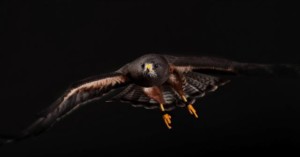
Photographer Jon Meyers has shot many different subjects at his studio in Eugene, Oregon; but the birds of the Cascades Raptor Center were a first. Fortunately, he and his videographer friend Michael Ferry chose to record this unique photo shoot and put together a behind-the-scenes video for anybody interested in how capturing a hawk mid-flight in-studio might work. Plus, it makes for a good way to start off a great weekend.

A Moving Mole: Why Abraham Lincoln’s Portrait Was Flipped for the $5 Bill

If you pay close attention to presidents, or money (or preferably both in this case) you may have noticed that one particular famous photo of President Abraham Lincoln taken in 1864 was the inspiration for the photo we now see on the five dollar bill. But you may have also noticed that the President's mole is on the wrong side of his face on the money. Well actually it isn't, the "mirror image" on the five dollar bill shows the President as he was in real life. The original photo, taken using …

The Making of the Limited Edition Leica M9-P “Edition Hermès”

Having released three (count em') new cameras yesterday, you'd think Leica would be spent; but it looks like they had one other camera up their sleeves, a special edition of their M9-P called the "Edition Hermès." If the name sounds familiar that's because it is: every few years Leica announces an "Edition Hermès" of one of their cameras in collaboration with Parisian house Hermès -- only this year they've also decided to include a making of video to go along with it.

HD Video Explained: Why 720p is Better than 1080i

High definition video recording is a standard feature on digital cameras these days. If you've never really understood the terms 1080p, 1080i, and 720p, here's a short and sweet explanation that'll bring you up to speed. Benjamin Higginbotham of Technology Evangelist describes the differences between varieties and why you can consider 720p "better" than 1080i.