The Use of EXIF Data in Digital Photos as Courtroom Evidence
Donalee Moulton over at The Lawyers Weekly has an article describing how EXIF data is beginning to be accepted as valuable evidence in courtrooms -- at least in Canada:
Donalee Moulton over at The Lawyers Weekly has an article describing how EXIF data is beginning to be accepted as valuable evidence in courtrooms -- at least in Canada:
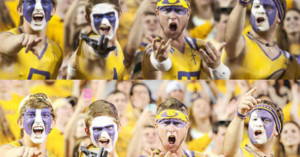
Should Photoshop play a role in political correctness? Louisiana State University is drawing some criticism this week after it came to light that the university had used Photoshop to erase Christian crosses from the chests of body-painted fans.
Ross Ching has created a new people-less time-lapse video for his Empty America series. The featured city this time is Seattle, Washington.
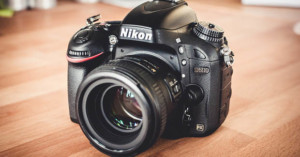
We tend not to get too excited about sensor dust problems at LensRentals; we clean sensors on every camera after every rental, so it’s just routine. When we started carrying the Nikon D600, they all arrived with a fair amount of dust, but that’s pretty routine, too. Manufacturing and shipping can be a dusty experience.
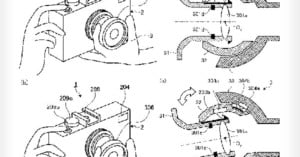
Watch out Lensbaby. A recently published Olympus patent (No. 2012-199834) suggests that the Japanese camera company may be developing a selective-focus tilt lens of its own. The patent describes a technique for compensating for the "color shift" and image degradation that occur when using a tilt lens.
A couple of weeks ago, photographer Mike Simons of Tulsa World covered the annual college football game between the Oklahoma Sooners and the Texas Longhorns football. Known as the Red River Rivalry, the series considered one of the greatest rivalries in American sports. To capture what photographing the conclusion of such a big game is like, Simons decided to wear a GoPro camera on his head to record a first-person point of view.
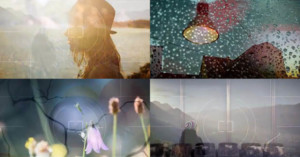
If you have two minutes to spare, you've got to check out this time-lapse video by photographer Rob Whitworth. There are plenty of time-lapse projects on the web, but one thing in particular about this one caught out eye: the transitions. Whitworth came up with some of the most creative transitions we've seen so far in a city time-lapse. Scenes bounce between day and night. Shots zoom from one into another. It's like a roller coaster for your eyes.
People often laugh and poke fun at the cliche of impossible image enhancements seen in TV shows and movies, but you won't be laughing when you see what SmartDeblur can do -- you'll be gawking in amazement. Created by programmer and image processing expert Vladimir Yuzhikov, the program can magically reveal details in photographs that are blurry due to poor focusing and/or shaky hands.
There's a new rising star on Instagram, and he's only one year old and walks around on four legs. It's Trotter, a San Francisco-based French Bulldog owned by photographer Sonya Yu. Six months ago, Yu -- a professional food photographer -- began dressing Trotter up in various costumes and snapping clever portraits of the outfits.
Editor's note: "Tenzing Norgay" is the penname used by the author of this article. He is not related to the famous mountaineer.
Frank Said What? is an amazing new iOS camera app that can accurately describe any photo you show it. It's not just smart, it's witty too: "Frank" will usually give your photographs humorous captions. Some will make you smile, while others will make you laugh out loud.
Earlier this year, we shared the photos of Tim Noble and Sue Webster, London-based artists who are well known for creating amazing shadows using piles of carefully arranged objects. Perhaps inspired by their work, photographer Julian Wolkenstein shot a clever series of photographs a couple of years ago that show three people contorting their bodies in various ways to create intricate shadows on the wall behind them. The project is titled, Nova.
Last year, we wrote about Poladarium, a tear-off calendar that inspires you with a new Polaroid picture every day. Now, for roughly the same price, you can create one that features your own photographs. Instagram printing company Printstagram has launched a new calendar product that allows you to turn your Instagram photo stream into a beautiful stack of 365 8.5x7cm "Polaroid" pictures.
There was once a time when you could more easily spot a professional photographer simply by glancing at the camera equipment in a person's hands. Was it a beast of a camera with a gigantic lens attached to it? You're looking at a serious shooter. Is it a dinky pea shooter that is used with arms outstretched? The person is a tourist, newbie, or both.
Photography purists, you might want to look away. For the rest of you: remember that Craiglist listing we shared a couple of months ago posted by a couple looking for Hipstamatic wedding photographers? Among the hoards of enthusiastic Hipstamatic shooters who responded were Keith and Marc, hosts of the iPhoneography podcast TinyShutter. After being chosen for the gig, they drove down to Connecticut from Massachusetts and New Hampshire to capture the wedding with their iPhones.
Thomas Hawk is a San Francisco-based photographer and popular photography blogger. Visit his website here.
Dissatisfied with the way your smartphone photographs are turning out when the built-in flash is fired? When desperate times call for desperate measures, you can make your flash match the ambient light around you with the help of a colored gel. The flash is often just a tiny LED, though, so how do you comfortably "mount" the gel to your smartphone? Reader Todd Glidden has an answer: use an index card.
You've probably seen a good number of sample photos and videos from camera and lens tests before, but probably not quite like this. Filmmaker Anders Øvergaard puts a creative twist on the idea of "test videos" with this sample footage shot with only a Canon 550D/Rebel T2i and Tamron 18-270mm lens.
Toronto-based photographer Tom Ryaboi is one of the godfathers of "rooftopping", which involves climbing to the tops of skyscrapers, pointing a camera off an edge, and capturing cities from high perspectives that most people never experience. It's an activity that's not for the faint of heart; rooftoppers sometimes even dangle their feet off the edge of buildings.
Here's an old-ish video that's been making the rounds again lately (viral videos are like viruses -- they don't go away very easily). Titled "Camera shutter speed synchronized with helicopter blade frequency," it shows what can happen when your camera is synchronized with the RPM of a helicopter's rotor blades. The resulting footage makes the helicopter look as though it's just floating in the air!
4K-resolution video capabilities are finding their way into more and more cameras these days, even though monitors that can display the resolution currently cost as much as one or two family sedans. Heck, even the tiny new GoPro Hero3 can shoot 4K, albeit at a semi-useless 15fps.
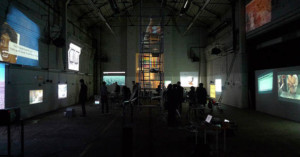
"BYOB" is an initialism that's readily understood by college students who party. To artist Rafaël Rozendaal, however, it means something entirely different. In 2010, Rozendaal launched Bring Your Own Beamer, a series of novel "open source" art exhibitions in which participants were asked to bring their own beamers (AKA projectors). The recipe for the concept is extremely simple: find a venue with plenty of wall space (and outlets), invite a bunch of artists and art-lovers, and have images …
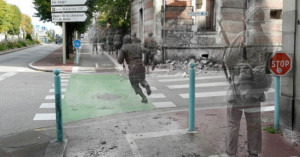
Dutch historian Jo Teeuwisse is back with another fascinating then-and-now project (we featured her work once back in 2010), this time titled Ghosts of War--France. The images show old World War II photographs of soldiers blended seamlessly into photos of the same locations in modern day France.
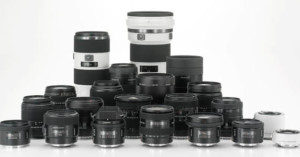
When Sony unveiled its "One Sony" game plan back in March after posting billions in losses, the company highlighted digital photography as one of its three main pillars going forward. It was a bit of a surprise, then, when Sony announced today that it will soon be closing a large lens manufacturing factory in Japan as part of the restructuring efforts.
A crazy story of photo survival has emerged over in New Zealand. Apparently a couple had lost their camera during the Christchurch earthquake last February. They found the demolished camera yesterday, 18 months after it got buried in silt, and were overjoyed to find that their precious photos were still readable.
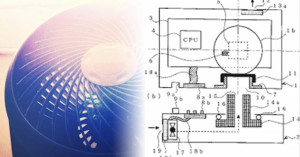
Forget DIY camera mods for keeping your sensor cool: Nikon has a much fancier solution. A recently published patent by the company (No. 2012-198447) shows a camera attachment that's specifically designed to prevent sensors from overheating. It attaches to the bottom of the camera and blows cool air into the body through the tripod mount underneath. If computers have dedicated cooling fans, why can't compact cameras?
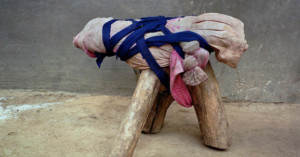
Photographer Michael Wolf began his career as a photojournalist in Hong Kong working for a German magazine. In the early 2000s, he turned to non-editorial photography with an unusual project called Bastard Chairs. Wolf had noticed that all over China, there were makeshift chairs that had been put together using whatever materials the owners could get their hands on. He began documenting these strange pieces of furniture, showing the creative ideas people in China had for sitting down.
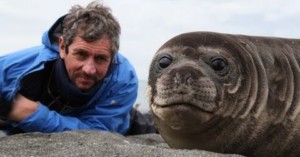
Photographing wild gorillas is scary. Taking pictures of baby elephant seals? Not so much. In this amazingly cute video, Irish broadcaster Charlie Bird encounters a pair of friendly elephant seal pups while photographing on a beach in Antarctica. Apparently if you lie on the sand near pups, they'll come to you to cuddle and to investigate your DSLR.
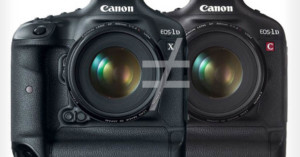
Last month we wrote that DSLR blog EOSHD had learned from at least one Canon rep that the upcoming 1D C cinema DSLR was essentially a 1D X with tweaked firmware. This would mean that the 1D X is also capable of 4K video with "no heat or bandwidth issues." However, that claim is now being challenged by Canon Rumors, which writes that the cameras do in fact have some important hardware differences as well.
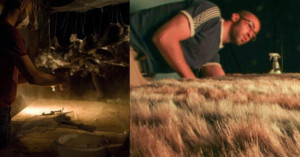
We first featured photographer Matthew Albanese's Strange Worlds project back in 2010, not too long after the project's inception. His amazing images appear to show beautiful outdoor scenes, but were actually shot on a tabletop in his studio. He creates extremely detailed dioramas that take months to complete, and then uses various photographic techniques to make the scene look like the real world. It's like the opposite of using tilt-shift lenses to turn the world into a miniature model.
When Adobe unleashed Photoshop CS5 back in April 2010, one of the big features that had photographers buzzing was Content Aware Fill. With a simple selection and a few keystrokes, the tool could magically delete a portion of a photograph and replace the void with details from the surrounding area. The tool was so revolutionary that when a sneak peek demo went viral, viewers began calling the video fake and too good to be true. It wasn't.
Most photographers and artists will never have the opportunity to make the kind of images that Andy Ellison does. As an MRI technologist at Boston University Medical School, Ellison has access to extremely expensive imaging machines. More specifically, he runs a research-only Philips 3 Tesla MRI machine. When he's not using it for official purposes, he experiments with it by placing various fruits, vegetables, and flowers inside. The resulting still images and animations are beautiful and …
Lytro has been upgrading its cameras and shipping them to store shelves all over the world as of late, and it's not planning to let up anytime soon. In addition to the newly added manual controls, the company is gearing up to jump into the world of 3D.
Unless you only shoot in monochrome, color likely plays a huge part in the experience of viewing your photographs. You may be aware of how you use them, but do you know how the colors in your images affect the people that look at them? PBS Off Book put out this fascinating video today that explores just how powerful colors are.
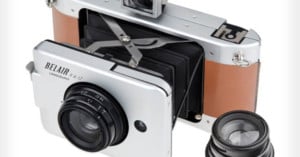
Just because a camera has bellows doesn't mean it's vintage. Just announced today, the new Lomography Belair X 6-12 has bellows as well. It's a portable medium-format camera that shoots auto-exposed photographs on 6x12 film -- the world's first camera to do so.
There's a new organization called Reporters Instructed in Saving Colleagues (RISC) that's training photographers around the world in first aid, in order to prevent what happened to Tim Hetherington from happening again. Pete Brook of Wired writes, …
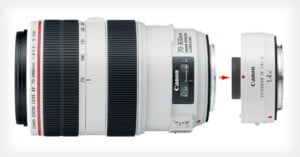
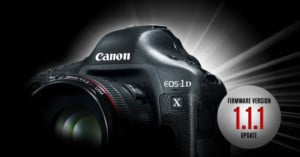
Canon released a new firmware update for the 1D X this morning that gives the DSLR cross-type autofocus when using certain telephoto and extender combos that have a max aperture of f/8. The announcement page includes a list of lens/extender combinations that are now compatible.
There have been a number of projects in the past that asked people to capture videos and photographs all over the world during a single day. Montblanc wants to take the idea one step further: the luxury company has launched a photo project called "Worldsecond" that aims to have all its participants capture photographs across the globe at the same moment in time.
You know those carnival cutouts that let you stick your face in a hole for humorous photographs? A Chinese blogger named toshiya86 had the brilliant idea of creating these cutouts for her beloved cat Guagua's birthday. Humorous portraits resulted.
Well, that's quite a turn of events. Yesterday we reported that photo sharing app Color had denied rumors that the service would soon be shutting down. Based on the app's lack of users, we said that Color would need to find some traction -- and find it soon -- for the $41 million invested in it to pay off. Turns out they won't be needing a miracle after all, because they've reportedly already found one: the app will reportedly be acquired by Apple.
The Canon 1D X firmware update that Canon accidentally leaked yesterday is now official and available over on Canon's website. The upgrade adds two autofocus features that photographers have been asking for since the camera was released: illuminated AF points and the ability to use cross-type autofocus at f/8.
If you've been following the news over the past week, you probably know that the Space Shuttle Endeavour spent October 11-14 rolling through the streets of Los Angeles, going from the Los Angeles International Airport to its new home at the California Science Center. News crews and large camera-wielding crowds were constantly by the shuttle's side, documenting its progress.
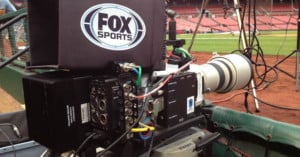
You know that beastly Sigma 200-500mm that we've featured twice in the past two days? Turns out it's headed to the World Series to be used for some pretty ground-breaking imagery. A post today by Jakob Schiller over at Wired fills in some interesting details on what the lens will be used for.
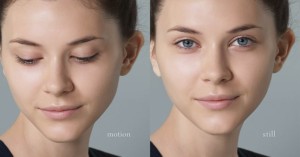
Beauty retouching on still photographs of faces is both ubiquitous and controversial in some industries. You've likely seen your fair share of tutorials and demonstrations that show amazing feats of Photoshop, but did you know that the same 'shops can be done on video? And not just any video, mind you: 4K video.
New York-based photographer Trevor Paglen's photos blur the lines between a number of fields, including art, science, and journalism. For his project Limit Telephotography, Paglen used powerful telescopes designed for astrophotography in order to see things that people aren't supposed to: classified military bases.
Copyright infringement of photographs is anything but uncommon in this Internet age, as countless images are published all across the web every day without the owners' consent. The problem is so widespread that virtually everyone gets away with it. The ones that don't, however, are occasionally in for a good deal of pain.
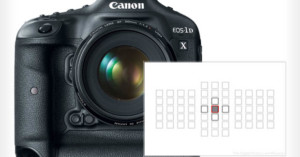
Ever since the Canon 1D X and 5D Mark III were released, photographers have been complaining about sometimes not being able to see the black AF points in the new 61-point system. In July we wrote that Canon was reportedly working on a fix. It now looks like the fix may soon be upon us, in the form of a firmware update.
People say money can't buy happiness. Turns out there's another thing it can't buy: photo sharers. Despite raising a staggering $41 million in funding before even launching, the photo sharing app Color has been struggling to find users. Even after major pivots that changed the service's DNA, the app only has less than half a million active users.
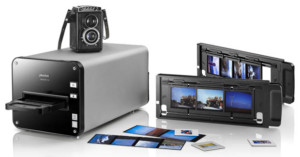
One of the latest entrants in the at-home film scanning game is the Plustek OpticFilm 120. Just announced a few months ago and made available for pre-orders earlier this month, the OpticFilm 120 is a professional caliber scanner that can digitize both 35mm and 120mm medium format film. With a price tag of $2,000, it's not exactly wallet-friendly for the average film shooter, but is quite affordable when compared to other medium-format pro-grade scanners on the market.
Do you have old large format film holders lying around that you no longer have any use for? You can breathe new life into them by transforming them into nifty picture frames.