Space

Photography and astronomy offer humanity a fascinating view into the universe.

How to Shoot Milky Way Photos with a Crop-Sensor DSLR and Kit Lens

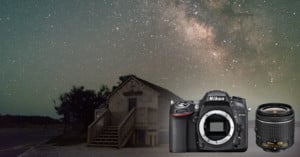
Can you shoot Milky Way photos using an entry-level crop-sensor DSLR and a basic kit lens? Yes, you can, but there are some tips, tricks, and techniques you can use to improve your results. Photographer Michael Ver Sprill (AKA Milky Way Mike) made this 16-minute video tutorial as a basic guide to doing this.
These Photos Show Why We Need to Preserve the Night Sky

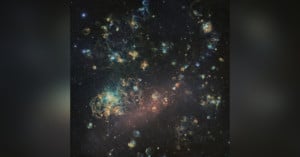
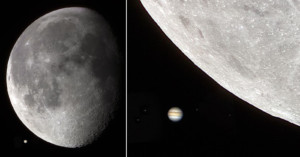
Due to the rapid growth in population, an increasing percentage of the human population lives in cities and suburbs where the night sky is completely obscured by the artificial lights. Skylines littered with lit skyscrapers reach sky high. An endless river of traffic flashing high beams. And the cities are ever-expanding. It is conceivable that most people have lived without having seen the true natural night sky.
Six Years of McWay Falls

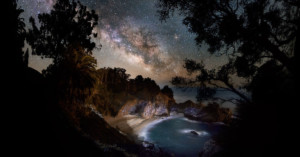
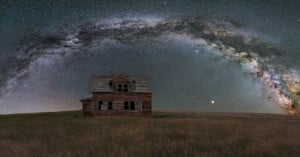
McWay Falls has been a tourist destination for longer than many of us even heard of the place, but it wasn't until 2012 that photographer Steven Christenson really "discovered" the potential of the site at night. Nestled in the rugged and gorgeous part of the California coast better known as Big Sur, McWay Falls enjoys extremely dark skies.

Curiosity Rover Captures Two Solar Eclipses on Mars

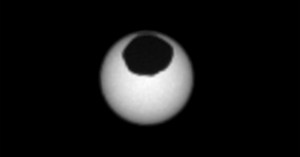
Photographers have captured many awe-inspiring photos of solar eclipses in recent years. But Earth isn't the only planet photos are being shot from: NASA's Curiosity rover has captured some beautiful solar eclipse photos over the past few weeks from the surface of Mars.

How to Photograph the Milky Way

This guide will be a walkthrough of the basics of Milky Way photography. It is best for beginners, but even intermediate and expert photographers might find something new! Plus, I always find it never hurts to refresh yourself on the basics.

This Astronaut Shot Racetracks from Space with a Nikon DSLR

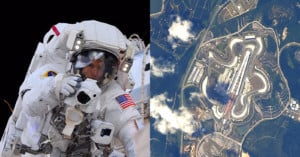
NASA astronaut Drew Feustel grew up in Detroit and is an avid car and racing enthusiast. So much so that while commanding the International Space Station in 2018, Feustel photographed racetracks from space with a Nikon DSLR before watching the race itself in his free time.

A Gorgeous Tour of the Earth, As Seen from the ISS

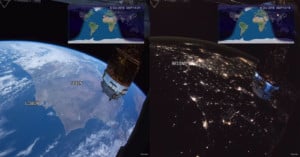
Philadelphia-based photographer Bruce W. Berry Jr. took recent photos and videos captured from the International Space Station (ISS) and edited them into this gorgeous 6-minute short film that takes viewers on a journey around the world.

New Photos Show Water Ice on Mars

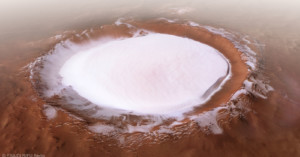
The European Space Agency (ESA) has released an eye-opening pair of new photos that show a massive crater of water ice on Mars. The crater measures 51 miles (83km) across and contains a 1.1-mile-thick (1.8km) mound of water ice all year round.

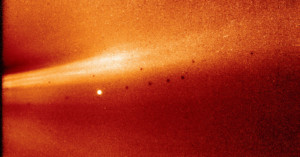
A photo captured by a NASA probe from within the Sun's corona

This is the First Photo Shot Inside the Sun’s Corona

NASA's Parker Solar Probe is on a mission to explore the Sun's corona (basically its atmosphere), and the robotic spacecraft recently made the closest-ever approach to a star. NASA just shared a remarkable photo share by Parker: the first photo ever shot from inside the Sun's corona.

Astrophotography: How to Photograph the Stars

Before we get started, it's essential to understand that astrophotography takes time and practice in order to achieve good results, so don't get frustrated if you don't nail it on the first go.

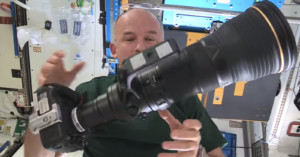
This $23,000 Nikon DSLR Kit on the ISS Had a Delivery Fee of $130,000+

The astronauts onboard the International Space Station get new cameras delivered from time to time -- 10 Nikon D5s arrived in late 2017 after NASA ordered 55 of them. But did you know that it's extremely expensive to stock the ISS astronauts' camera arsenal? That camera kit you see above cost at least $150,000 to send to the space station.

This is the First 8K Video Shot in Space

NASA has released the first 8K footage ever shot in space. This 3-minute video was captured aboard the International Space Station using a RED Helium 8K camera, and it shows the astronaut residents living, working, and conducting research.

The Winning Photos of Astronomy Photographer of the Year 2018

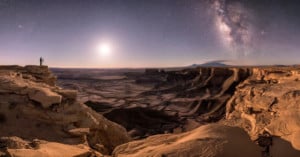
The Royal Observatory Greenwich prestigious Insight Investment Astronomy Photographer of the Year contest has unveiled the overall winners for the 2018 edition. The top prize was awarded to American photographer Brad Goldpaint, whose photo "Transport the Soul" (shown above) captures Moab, Utah, with a photographer, rock formations, Andromeda (left) and the Milky Way (right).

How Two Friends Built a Remote Astrophotography Observatory

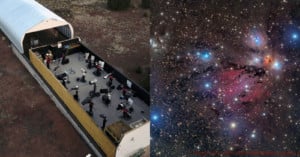
Deep Sky West is a remote astrophotography observatory in New Mexico, USA. It offers the opportunity for any astrophotographer around the world to use the site to access clear skies without the need to travel there, and to use advanced astronomy and photography equipment without the need to own it themselves.

This Milky Way Photo Was Shot on a Phone

The Huawei P20 Pro smartphone boasts the highest-scoring smartphone camera ever evaluated by DxOMark, sitting head and shoulders above its competition with an overall score of 109. Here's how good the on-board Leica triple-camera system is: you can shoot beautiful shots of the Milky Way in the starry night sky.

This New Atari 2600 Video Game is 8-Bit Astrophotography

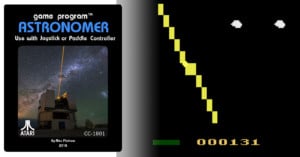
What would an 8-bit astrophotography video game be like? That's what astrophotographer and PhD student Alex Pietrow asked, and he ended up creating a new video game called Astronomer for the the Atari 2600, the classic console that was launched back in 1977.

How to Shoot the ISS Flying Across the Face of the Moon

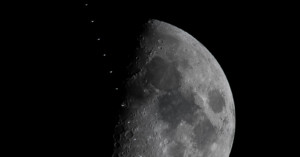
I’ve always been fascinated by the night sky, and one of my favorite things to look out for is the International Space Station when it passes overhead. It still boggles my mind that there are people up there, 200 miles into space. Perhaps they are looking down too. In this tutorial I’m going to show you how to photograph an ISS transit – in other words, photographing the ISS as it flies in front of the moon!

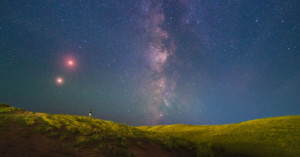
A Photo of My Girlfriend, the Lunar Eclipse, Mars, and the Milky Way

I normally love to plan my photos and I would have liked to plan a cool shot with yesterday’s moon eclipse. However, when I planned my current trip to Kyrgyzstan, I didn’t realize I would be there with the lunar eclipse of 2018 (bad planning, I know).

How My Photo Went from Reddit to the Walls of NASA

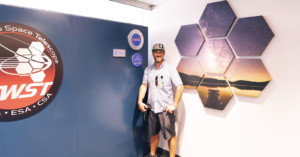
About 4 months ago, I posted a photo of my 7-hexagon canvas cluster to Reddit's r/space (on a Sunday, the only day you're allowed to post your own astro photos to the sub). The title of the post was: "I'm a photographer and print-maker and my passion is the night sky. I made this 7-hexagon canvas cluster in honor of the forthcoming James Webb Telescope. The photo is of the Milky Way over WEBBer Lake, CA."

The Time Between: A Look Through the Eyes of an Astrophotographer

It is the hottest time of the day during the hottest month of the year in Montana, but two hundred feet above me a pair of nighthawks sense a change. They dive and twist with a grace somewhere between fighter pilot and falling leaf, air buzzing through their wingtips, raspy calls beckoning night, commanding the sun to set. The single, sand-rock knob that I sit on here in the prairie while I watch their aerial display will hold the heat I feel through my jeans well into darkness.

7 Pro Tips for Crushing Your Night Photography

People ask me all the time how I get my night shots with the stars, so I made a video on the subject. Here are my 7 tips for crushing night photography.

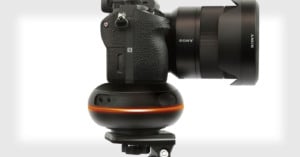
Why and How to Use a Star Tracker for Photos of the Night Sky

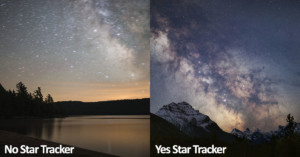
Astrophotography is generally a race against time to capture as much subtle starlight we can before the stars create trails in our images. The movement of the Earth puts a natural limit on how much sharp, subtle detail we can reveal. We have to use super fast, wide angle lenses and high ISO values to see all the awesome detail. Fortunately, a tool exists to circumvent this barrier to reveal more of the hidden magic we have in our night sky.

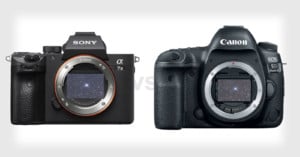
Comparing the Sony a7 III and Canon 5D Mark IV for Astrophotography

I’m an avid night sky photographer that cut my teeth capturing the stars using the original Canon 6D. I shot with that camera for years until purchasing the Sony a7S (Mark I) after reading about how it could essentially “see in the dark.”

How I Got Better at Photography

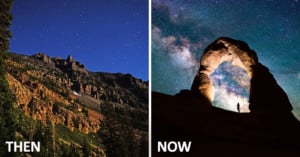
Two years ago, I splurged some money and bought a camera because I'd always wanted to try to take pictures of the stars. The left photo above was the only decent picture out of 700 taken on my first clueless attempt. The right photo was taken about 2 weeks ago. Don't let your dreams be dreams.

This is the Milky Way Photographed in a Crystal Ball

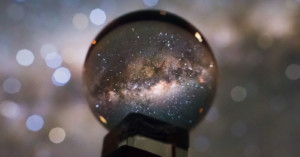
Photographer and astronomer Juan Carlos Munoz was browsing a flea market in Santiago, Chile, a few days ago when he stumbled across some crystal balls. He bought one for a few dollars and then decided to use it for astrophotography. This "cosmic marble" photo of the Milky Way in a crystal ball is what resulted.

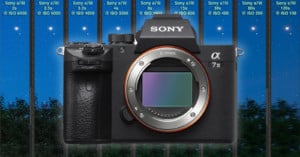
Sony’s ‘Star Eater’ Problem Has Been Defeated in the a7 III

Over the last year or so, firmware updates from Sony introduced a much-publicized penchant for Sony Alphas to “eat” stars even in RAW files, apparently due to an internal noise reduction or anti-aliasing routine users could not turn off. Stars were smoothed away along with the noise in exposures longer than 3.2 seconds in some Sony cameras (and longer than 30 seconds in others). I feel that in the a7 III, the Star Eater has now been largely vanquished.