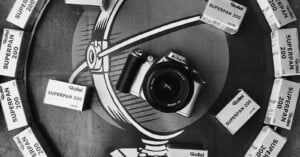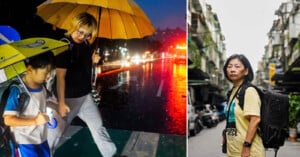

Running on Film with the Hasselblad XPan
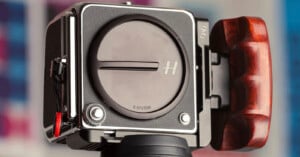
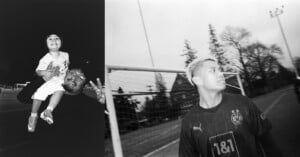
This editorial photo shoot began with a simple idea, a question even: could a running sequence shot on the Hasselblad XPan create an editorial story in only a few frames?
I was four years old when my parents took me on my first mountain climb, to the summit of Fairview Peak. By six, I'd climbed my first fourteener, Mount Sherman. Climbing became my proving ground for most of my childhood, and it set a foundation I wouldn't fully understand the value of for another forty years.
We are living through the most photographed moment in human history, and somehow, street photography matters more than it ever has.
The Wall Street Journal says it is keeping pace with technology and protecting its photography archive. But hundreds of freelancers -- anxious about intellectual property ownership -- object to the Journal’s new contract and are withholding their services.
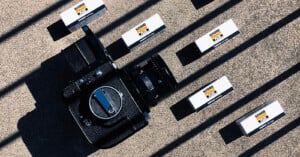
The original Fujifilm Acros film long held a special place in our camera bags here at Blue Moon Camera. We’d say that the whole Neopan line of films was highly favored by us, but we lost Neopan 400 and 1600 some time ago and Acros was the lone survivor.
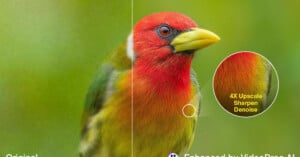
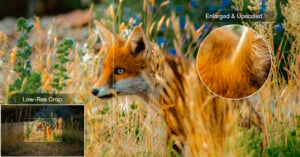
Over the last few years, image upscalers powered by AI have become remarkably good at making photos larger. The challenge is no longer whether an image can be enlarged to 4K or even 8K, it's whether the result still looks like the original photograph.
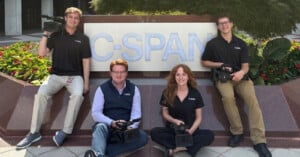
C-SPAN likes the adjective “unfiltered.” Before Trump II was sworn in, C-SPAN refreshed its logo with the tagline “Democracy Unfiltered.”
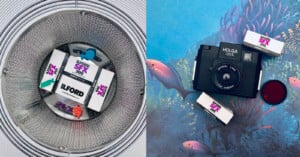
When we first conceived of our Film Friday series, we had a few different motives in mind. The first was that we had long noticed that some black and white films were more popular than others with our customers. We sold a lot more Kodak Tri-X than we did Ilford XP2, for example.
Happy Football Film Friday! Football, soccer, footy... whatever you call it we know what has been captivating your attention these past couple weeks, and will for the days ahead!
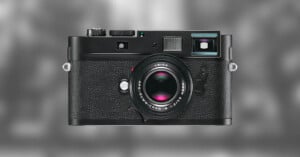
In an era where we are obsessed with megapixels, AI-driven autofocus, and high-ISO performance, I find myself regularly putting down my Leica M10-R and my Leica M11-P to pick up a tool that, on paper, has no business competing in 2026: the Leica M9 Monochrom.
Linear Camera Profiles are one of those things that have been floating around the Lightroom community forever, but only a few people seem to use them. And while there are a lot of video tutorials on how to make a linear camera profile for your camera, there is almost nothing on how to use them in your editing workflow.
I have wondered for many years what you would see if you were a tiny ant looking up when walking through a flower field, or a ladybug that has just landed on a flower stem.
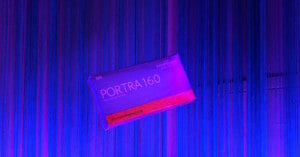
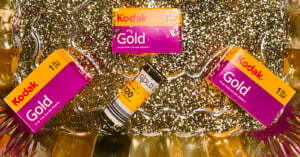
If you were to ask us what the perfect color film is, we’d tell you it is Kodak Portra. Exactly which speed of Portra matters only a little as the whole family of films is pretty amazing.
The world was introduced to Cleveland Browns photographer Matt Starkey in 2021 when Denver Broncos defensive player Justin Simmons plowed into Starkey on the sidelines on national television.
On June 9, Chief Judge for the Ninth Circuit Court of Appeals Mary H. Murguia issued an Order in the case of Jeffery B. Sedlik v. Katherine von Drachenberg, aka Kat Von D, et. al. granting an en banc rehearing by the full court.
For several summers, I have taught drone photography in Iceland’s highlands under permits issued by the country’s nature conservation agency. I applied on time, followed every condition, and never received a complaint from a ranger, another visitor, or the agency itself.
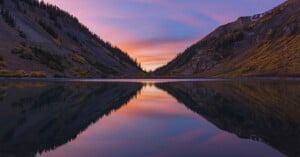
Towering 11,249 feet above sea level, Mount Hood is the tallest mountain in the state of Oregon. The mountain is so large that on a clear day, it can be visible from over 100 miles away.
Most photographers I know are in constant motion. New cities, new continents, new visual problems to solve. There's truth in it. Unfamiliarity forces you to look. Familiarity gives you permission to stop. But there's another, less-discussed school of practice that works in the opposite direction: stay. Return. Go back to the same streets until the strangeness burns away and something else appears in its place.
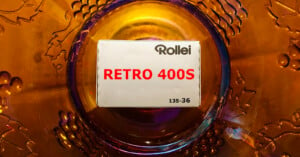
With this Film Friday Review we are shining a light on a new color film that seems to love traveling the world under a multitude of aliases. While we first met this film as Optik Oldschool OptiColour, you might have crossed paths with it under the ORWO Wolfen NC200 or KONO Color 200 monikers.
Photographer Sam (Samantha) Owens is covering her first NBA Finals, representing the long-time advancement of women assigned to document elite sports events.
The world of photography is currently navigating a crisis of authenticity. AI-generated images are now indistinguishable from photographs. Judges and audiences alike can’t tell the difference. Even experts are getting it wrong.
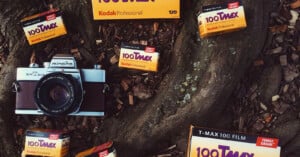
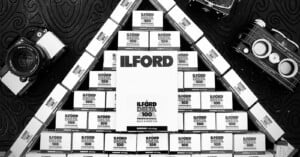
TMax 400 came into the world in 1986, at the same time as its slower speed brother. You can think of them as near identical twins, in fact. Since its introduction, TMax 400 has helped define a whole new generation of black and white films with its tabular grain structure, high resolution, and sharp image details.
Lengthy photo and video editing sessions can take a toll on your body. Sitting for long periods in an uncomfortable, non-ergonomic chair is painful, bad for your long-term health, and it saps artists of their creative energy and flow. The Sihoo Doro C300 Pro V2, the first full-body, adaptive ergonomic chair, promises to keep you comfortable whether you're doing a light editing session or working in crunch time.
Xiaomi has unveiled its latest T Series smartphones, the Xiaomi 17T and 17T Pro, both co-engineered with Leica.
Photographing and writing an in-depth project enhanced the published product, says an award-winning independent photojournalist.
Post-processing has long been the most time-consuming part of a photographer's workflow, and the numbers back that up. According to the 2026 Zenfolio State of the Photography Industry report, about 70% of photographers spend between 26% and 75% of their working time on editing. Only 5% of photographers surveyed feel they are managing the stress of running their business well.
When he got his cancer diagnosis, Los Angeles-based photojournalist David Swanson vowed, “I will get through this.”
Few photographers ever get to work inside the portrait room of a major awards ceremony. Most will only ever see the finished images: the winner holding the award, the controlled lighting, the polished expression, the clean composition.
The media award season -- a time for applause -- also highlights an irony of the fast-changing marketplace: the winners could be gone.
Last year, a client came to me with a straightforward brief: they needed a full lookbook for their new clothing line. But there was a catch. “We don’t want a shoot,” they said. “Just take our phone photos and make them look professional with AI.” I could have said no. Instead, I said yes -- and it changed how I think about my entire career.
Early morning. Black t-shirt, dark blazer. I’m dragging heavy bags down from my apartment just outside Stockholm, heading to a taxi waiting outside. In twenty minutes, I’ll be at Stockholm Waterfront, where three intense days of shooting are about to begin. And I love it.
Now, my not-so-piping-hot take is more nuanced, but I still stand by that statement in the title. Because while stunning skies are what drew me to landscape photography, they’ve also held back my development and growth.
As much as I think that landscape photography is a lone pursuit, it often conflicts with the need for feedback about our work. Learning to take photos is one thing but learning to interact with others, to find connections and build a creative network is often overlooked, but just as vital.
With these products from ProMaster, a brand known for designing photography gear for every creator, you’ll be ready to spring into action when the weather is warmer. From a supremely lightweight and compact tripod to new straps to sport your camera in style, premium filters for flawless images, Rugged SD cards made to withstand the elements, and a shoulder bag to safely store it all while you’re on the move, this list has everything you need for a spring refresh.
You might not know what the word "provenance" means but you probably are familiar with the problem it can cause. You take an amazing photo, it goes viral on social media, but no one knows who took it. There is no provenance trail to link back to the creator.
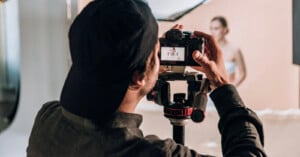
One of the most overlooked decisions on a commercial photo set is what everyone sees on the monitor.
I’ve looked at thousands of black and white photographs over the years -- both my own and those of others -- and I’ve noticed something that nobody talks about enough.
I still can’t believe it: 15 years of being addicted to capturing the night sky. Did you know this addiction all started with my first bear encounter?
Canon, Nikon, and Sony raised prices during the tariff period, citing increased costs. Now that the Supreme Court has invalidated the IEEPA tariffs and US Customs has opened a refund process for at least some affected importers, the photography community deserves transparency about whether companies will seek refunds and, if they do, whether any portion will flow back to customers who paid higher prices.
As the global population of photographers swells, so do their digital libraries, leaving everyone with the same question: where and how to share their best work. Flickr was among the first online communities designed to address that dilemma, and it remains one of the best. Some demand sweeping overhauls or argue the price isn't justified.
We have bred an entire generation of technicians, not observers. The modern photography industry operates on a highly profitable, cynical lie: buy the next lens, the next sensor, the next firmware update and your photographs will finally matter.
As much as photographers and videographers may want to be out in the field, behind the camera, they know firsthand how important the behind-the-scenes work on the computer is to delivering great results. Editing RAW files and cutting together videos is an essential, often intense part of the creative process. Sihoo wants to ensure those long hours at the desk aren't just productive, but comfortable, thanks to its ergonomic chairs.
This March, Spanish conceptual artist and photographer Joan Fontcuberta published a new book in Italy. Immagini Latenti concludes with a chapter on AI and photography, referencing the debates surrounding Boris Eldagsen’s submission of an AI-generated image to the Sony World Photography Awards in 2023 and Miles Astray’s submission of a photograph in the AI category of the 1839 Award in 2024.
If you browse cameras on eBay, you’ve likely come across a deal that looked too-good-to-be-true: high-end, new, shiny, bargain basement price, and offered for sale by a seller with zero feedback. In the interest of research (and curiosity) I bought one of these cameras on eBay knowing I would likely be scammed. I wasn't disappointed.
Old photos don't just fade, they slowly lose the details that make them meaningful. If you're looking for how to bring old photos back to life or make them clearer, an AI-powered tool like Aiarty Image Enhancer can serve as an essential part of the restoration workflow, offering one of the fastest and most practical solutions.
A camera projects an illusion of authority. It is easy to mistake the act of framing for the act of creation. We expect the lens to function as a paintbrush, assuming that technical mastery guarantees dominion over a scene. The prevailing mythology insists that vision alone bends reality, and that a trained eye can summon permanent order from spontaneous chaos. The vagaries of the environment dictate otherwise.
In the modern age of wildlife photography, I increasingly find myself reflecting on the balance between technological advancement and …
Sports journalist David Jablonski is a multimedia pioneer. For nearly two decades, he has achieved a journalism trifecta: writing, photography, and videography.
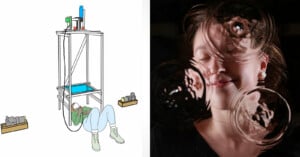
When National Geographic Magazine set out to tell the story of bioengineered “supersilk,” it created a photogenic test to prove its strength.
In late February, award-winning photojournalist Matt McClain of The Washington Post was recognized by the annual Best of Photojournalism contest sponsored by National Press Photographers Association (NPPA). Earlier that month, McClain and 300+ Post journalists were laid off as the publication restructured.