Editorial

5 Business Mistakes Photographers Make and What You Can Do About Them

Why do some professional photographers fail to make it in business?

If you can’t cut it technically or artistically as a photographer, then clearly your photography business will have a very limited lifespan. But there are other ways in which you can take your eyes off the ball when turning pro. Here are some classic examples of failure that are easy to avoid when you know how...
Which Pro Camera Do You Really Need to Shoot Like a Pro?

Let’s start with a little quiz. What one thing makes a pro camera a pro camera? Build quality? Weather sealing? Fast autofocus? Fast motor drive? Dual SD card slots?

Don’t think too long over the answer because it’s none of the above. A pro camera is a camera that a pro uses. Period.

The Photographer’s Creed

The Rifleman's Creed (also known as "My Rifle") is a famous creed from World War II that all Marines learn during recruit training. The text emphasizes the rifleman's symbiotic relationship with his personal rifle, and talks about how he needs to become one with it and treat it as an extension of himself.

Please Don’t Be the One to Get Drones Banned

Photography drones are facing a perilous atmosphere of distrust and legal chaos. In these circumstances, even small mistakes can have big consequences. A shift in public sentiment against private drone usage could easily result in the application of restrictive regulations, or perhaps even conditional bans.

Approaching the Problem of Style

To do a dangerous thing with style is what I call art.

~ Charles Bukowski

Easier said than done, I think. Good, actionable advice on how to develop your photographic style is hard to find. Clichés, on the other hand, sprout like lawn weeds everywhere: "Style develops over time; you can’t rush it!", "Confidence creates style!", "Imitate other people’s work and put a twist on it!", "Here are 3 ways/8 ways/10 tips to creating style!"

A Retinal Neuroscientist’s Rebuttal: Why Humans Can’t See Near Infrared, No Matter What They Eat

One of the more interesting stories we ran across this weekend was an initial update from a small group of scientists who claim to have successfully extended human vision into near infrared. Their data seems to show that they have, indeed, managed to do this simply by altering their subjects' diet by restricting vitamin A1 and supplementing with A2 in order to create a certain protein complex. You can read more about this here.

The results seem exciting, mind-blowing even. But retinal neuroscientist and photographer Bryan Jones begs to differ, and he has been kind enough to let us reprint his full rebuttal below.

Cheap Shot Challenge: Photos Taken with Expensive Gear Recreated On the Cheap

Want to make some great photos but don’t have or don’t want to spend a lot of money? A few days ago I posted photo of a Hummingbird on my Facebook page I took with a new Nikon D810 and a 85mm 1.8. I received a comment asking me “how much money do you spend on your equipment to get a shot like this?” Others comment from time to time that they’d love to get into photography but don’t have the money.

So, I thought, how close can I come to some of the shots I get with my Nikon D600 and the D810 with a really cheap used DSLR? The personal challenge began.

Embarrassed to Photograph Ferguson

I’ve spent the past week down in Ferguson, MO covering the protests and police response. What I never expect was to find myself embarrassed to photograph but it happened on Tuesday 8/19/14.

What Photographers are NOT Considering When Using High ISO

It’s no secret now that modern cameras have taken photographers to new heights with their ability to shoot at and above ISO 1600. Personally, I can now shoot in situations where previously, I ‘had no choice’ but to use flash or put the camera down, so it’s no surprise many photographers are taking advantage of high ISO to be able to shoot in poor existing light.

Photography, Authority and Race

I am troubled by what I have seen.

In recent weeks, we have witnessed terrible, on-going episodes within our borders through photos and video that speak volumes about the tragedy of race. Racism is as old as human history, and there is a long, rich history of capturing race conflicts in the US by photographers like Charles Moore, Bruce Davidson, Gordon Parks and others.

But in this post 9/11 world, the balance of power has shifted towards authority -- militarized officers outfitted with high-powered machine guns and body armor straight out of central casting for a Michael Bay film who seemingly police differently depending on the color of your skin.

Why Polaroid’s Cube Action Cam is Special

Shopping for an action camera is like shopping for adhesive bandages: you either buy Band-Aids ... or you pick up something  called "Aid Plus Bandages" because they're on sale. And when you bring them home, you just call them Band-Aids anyway.

Confessions of a Colorblind Photographer

I’m colorblind.

There it is, I said it. I’ve been holding it back for years, before I even knew I wanted to be a photographer and it feels good to put it out there. I’ve told exactly two photographers about my handicap before tonight but I feel like its time to put it out there publicly. I was ashamed of it but I’m not anymore. It’s part of who I am.

Destroying the Creative ‘Monsters’ and Overcoming the Immature Mindset that Nearly Killed Me

I’m writing this from the perspective of someone who is trekking through the process. I’m not sitting on a high horse. I can’t even afford a horse.

It is often said that you have to be partially insane to be a creative. I’m not sure if that idea is influenced by the odd forms of modern art, or if someone recognized the risk of choosing fields with high unemployment rates.

10 Things Google Should Consider in Launching a Standalone Photo Sharing Service

Google used to have a standalone photo sharing service. It was called Picasa. I never really liked it. It wasn’t a very social site. I thought Flickr was a lot better.

Today’s news is that Google is looking to spin off Google Photos from Google+. Maybe it’s true, maybe it’s not. You never know. The timing of Friday afternoon stories and leaks always makes you wonder. Usually when companies want to push something they release it more like Tuesday mornings or make a big deal about it at I/O or something.

A Cautionary Tale: How a Bug in Dropbox Permanently Deleted 8,000 of My Photos

TL;DR: If you are using Dropbox as a sole backup of your files, think again. Without making a mistake, you might lose your files.

I started using Dropbox back in 2009 and have always loved the service. Over time, I kept moving more and more files to my Dropbox folder and eventually had to upgrade to the Pro plan to keep up with the space requirements. In particular, I moved there all of my photos in order to be able to view/share them online and also to have them backed up.

In April of this year, a hard drive in my laptop was running low on space so I decided to use the Dropbox’s Selective Sync feature to unsync some large directories from the laptop. Because there was never any problem with the service and also because it’s already the year 2014, I thought it might be about time that one can trust a cloud-based storage service and use them as a sole backup of their files. Boy, I was wrong.

Good Enough to Succeed in Photography

It’s been a tough few years and people are frustrated with the state of the industry. Everywhere I turn, people seem to be saying that a photography career isn’t what it used to be and that budgets are tight. Many of the blogs I read and the message boards that I visit all seem to be repeating the same message: There’s no work, there’s no money, and the competition is too intense to succeed. To quote one frustrated photographer, “How do you f’ing make a living shooting pictures anymore?”

How I Used ‘Grandpa’s Photos’ to Honor My Grandfather’s Memory and Retrace His Steps

It’s a sad day when your Grandfather needs to go into a ‘nursing home.’ For years my Grandpa, Stephen Clarke, had always been the strongest, smartest, most capable guy in the room. Now, he had been reduced to needing 24-hour care in a place that smells like a hospital.

In an effort to help him, my family and I cleaned out his now empty house. As I was sorting through things and cleaning I found a box of old 35mm slides. Little did I know just how much these slides would change the next half-decade of my life, eventually leading me to create my latest project, Grandpa’s Photos.

Stop Hiding: Show YOU and You Won’t be ‘Just Another Photographer with Pretty Images’

In the world of photography, we typically hide behind our cameras and our images. Many of us are shy and would prefer to stay behind the camera, not in front of it. And then that starts to extend into our online brand as well.

I can relate. I’ve done this for a long time. But I recently had a meeting that changed everything.

No Cameras Allowed: Is it Real or Fake?

'No Cameras Allowed' is an upcoming film that shows the journey of a guy named Marcus Haney who got into Coachella festival with a faked press pass and got exclusive film footage of famous bands.

After that, he got invited by bands like ‘Mumford and Sons’ to join them on tour. The film has gotten quite a bit of hype in the online photo world, but is No Cameras Allowed real or just a faked story to get some money out of kids who believe this is how the music photography business works?

Making Up for Having a Small Sensor

The world of photography is filled with true artists, astounding technology, and experts who can help you become the photographer you want to be. There are photographers who just make you shake your head at the brilliance of their imagery, teachers who give back endlessly to the profession they love, and manufacturers who create tools that help us all produce the pictures we want to make.

Your Kit Lens is An Excellent Lens

As the saying goes, quality lenses are a lot more important than good bodies when it comes to investing in camera gear. They last longer, retain their value more, and have more utility overall than, say, buying the latest DSLR that will become obsolete in 3 to 5 years. But if you are into photography for the first time, you’ll likely buy an entry level camera that comes bundled with an inferior, even crappy, kit lens. Or is it?

Do you really need quality gear to take good pictures? Spend thousands of dollars on red/golden rings lenses?

I Was Hidden on This Guy’s Hard Drive for Over 6 Years

This post was originally published on the Joey L. Blog and is being republished here with permission

It’s been estimated that as many as 880 billion photos will be taken by the close of this year. I’m not quite sure how that statistic could ever be properly calculated, but I think it’s safe to say that with the rise of the digital medium, human beings are taking a s**tload more pictures than ever before.

With all those photos being taken, chances are you and I have at one point accidentally wandered into someone else’s frame. It’s likely, however, that you’ll never really know you’ve photo-bombed someones shot. That’s why I was surprised by a Twitter message that I received out of the blue from a photographer I’ve never met.

We are Visually Sophisticated and Visually Illiterate

Film blogger, Tony Zhou, recently published a video breakdown of Michael Bay’s signature style, which he hilariously refers to as ”Bayhem.” As a lover of cinema, I watched with rapt attention as Zhou broke down the technical elements that characterize films like Transformers – rotating shots, multiple moving elements, low angles, etc.

He’s not a fan because Bay’s belief that more is more runs counter to his own tastes. Bay doesn’t just rotate the camera around the subject. He has the subject counter rotate while standing up from a crouched position to emphasize movement and epic-ness. Creating an epic shot without reason (other than “because I can”) leaves us with a story devoid of substance and meaning. The piece had me nodding the whole time, but it wasn’t until 7:21 where things really clicked for me.

Instagram and Anxiety of the Photographer – Part III

“we still look relentlessly to technology for solutions to the very problems technology seems to cause [...]” – David Foster Wallace

Over the past few years, iPhoneography has created a new form of photography that has and will continue to re-structure how we interface with technology, gather and generate data, and how we create narratives. iPhone (and similar smartphone) users employ mobile photography to disseminate mass amounts of information, to subvert cultural institutions, and for political rallying. These behaviors parallel the same strategies of the radical Avant-Garde art movements of the 20th century.

In the third and final article in this series I will expose the hidden contradiction that exist between mobile photography and the Avant-Garde described in Wallace’s quote through the use of Collage.

The Problem of Word Inflation in the World of Photography

It seems every news and blog site that I visit these days in inundating me with stunning photos. Sometimes the photos are labeled “Jaw-Dropping” or “Amazing” or “Incredible,” and to be honest, the pictures are usually great. But just as often they are just above-average pictures with exaggerated headlines.

What’s going on here? When did every picture become stunning? And if every picture is stunning, is any picture stunning really? I mean how stunned can I get?

What I’ve Learned from Albert Watson’s Iconic Portrait of Steve Jobs

October 5th, 2011 was a Wednesday, and the Cache Valley Photographers were gathered at my studio for their weekly lunch time meeting to discuss Scott Kelby’s Guest Blog, and I remember the day well. The Guest Blogger was Jodi Cobb, who wrote about her project documenting modern slavery. Unfortunately, the group didn’t spend as much time discussing this as it deserved because it was also the day that Steve Jobs passed away.

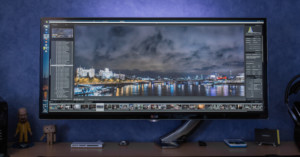
I Replaced My Dual Screen Editing Setup with a 34-Inch 3440×1440 LG Monitor

As a photographer, I’ve long been an advocate of a dual screen set-up for a more efficient workflow. After all, what is better than having the ability to spread out all your applications palettes across multiple screens? For a couple of years now, I’ve had a Dell U2412M 24” (1920x1200) and Dell U2713HM 27” (2560x1440). That is no longer the case...
Why Do Photo Gear Reviews Have Crappy Sample Images?

It took me many years to overcome the affliction known as gear acquisition syndrome. You see, I am a self-professed gear head, and I went through a period where I needed every new Nikon DSLR and I simply couldn’t get enough watt/seconds from a single strobe pack. Although there is no known cure, I have been able to curtail my purchasing habits, but not my voracious appetite for camera gear reviews.
A single review of the new 1D7s Mark 15 isn’t enough. I need to read them all. And while perusing the myriad of sites that offer gear-envious reviews of the newest 4K thingamajig with the phase detection hybrid focusing doodad and the retro-styled burled walnut tchotchke inspired by whatchamacallit, I couldn’t help but notice something that I’d like to run past you...

For Jennifer, Whomever You Are

Jennifer is a composite of all the students who’ve asked me to look at their work online and offer some advice. My advice has changed over the years.

Why Lomography Loves Kickstarter

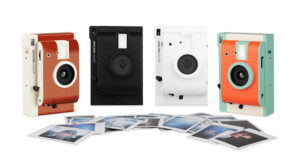
Last week, Lomography announced their first instant film camera: the Lomo'Instant (a quirky name to match a quirky camera). And rather than outright launching the product, or even just announcing a shipping date, they chose to introduce the new camera through a Kickstarter campaign.

This isn't Lomography's first attempt at crowdfunding. They did the same thing when launching their Petzval Lens and their Smartphone Film Scanner last year. Given the trend, we're likely to see more of their future launches taking the form of Kickstarter campaigns as well. But why?

Alpha Dog: How Sony Created the Most Innovative Camera Brand in Under a Decade

Using the bones of a dying giant and a healthy dose of innovation, Sony built one of the most forward thinking lines of high-end cameras available in recent memory.

When they entered the serious photography market following their acquisition of the struggling Konica Minolta camera business, Sony brought the coffers and clout of an international conglomerate as well as the fresh eyes of a newcomer. Using those tools, they've pushed the technological envelope in a way that few others were willing or capable of doing and, now, are setting the benchmark for where others ought to be aiming. Oh, and they did it all in just eight years.

10 Best Cities for Working Photographers in the US

You carry a camera everywhere because you just never know when something or someone worthy of having its picture taken will appear. You also work plenty of weddings and events, or you may be a photo journalist for a newspaper. You are a photographer, and are always on the lookout for beauty. But what makes a city good for a working photographer? While it’s important that there are plenty things to photograph, these statistics are equally relevant as well.

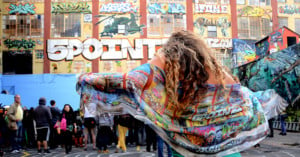
Chasing 5 Pointz

I first heard about 5 Pointz in a Wall Street Journal article in the summer of 2011. The article detailed the recent attempts by the owner to knock what had become an internationally-reknown street art mecca down, and build high-rise condominiums.

Why You Should Think About Hiring a Photojournalist to Document Your Wedding

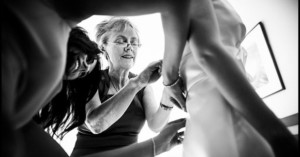
"Documentary wedding photography" is a style of photography which a small, but growing, number of couples are turning to for their wedding day. Of course, there have been photographers documenting life ever since there has been photography. In the last 10 years or so, more and more couples have decided against the traditional style of endless posed group photographs and portraits, and are commissioning photographers who do not direct or pose people during the day.

This style of wedding photography has attracted a fair number of news photographers and photojournalists, who have been doing exactly that in other areas of life. I've spent 16 years working as a photojournalist for The Times newspaper in London, and thought I'd post some pictures to illustrate how that experience has shaped how I now approach photographing a wedding.

A Portrait Journey Through Eastern Europe

This story is not going to be a technical how to. It's not about lighting gear, cameras or lenses. It's not about technique in camera or post production. It's about the unexpected things that can happen, the people you can meet and the work you can make when you travel.

Dude, Who Took My Photograph? Curating Automated Photography

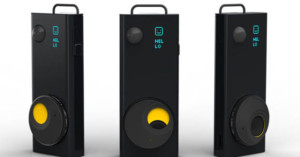
A slew of new technologies are making it possible (even easy) to document everything around you without much effort or input. Wearable, automated cameras represent the most extreme end of this spectrum - devices like Autographer and the Narrative Clip record your daily life with a mind of their own.

The Camera that Saw the Great War

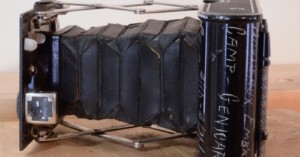
At first glance, this little black camera looks like a tiny, worn-out shooter from a hundred years ago. But …