Report Shows That Despite Some Shifts, Film Prices Remain Stable
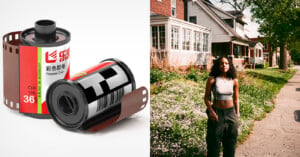
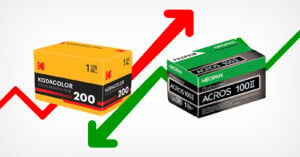
Analog Cafe has published a new film price report that looks at the cost of different film stocks around the world and compares them to previous marks.
Analog Cafe has published a new film price report that looks at the cost of different film stocks around the world and compares them to previous marks.
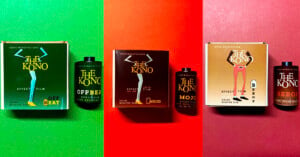
Kono has announced three new C-41 35mm color films with strong visual identities. Mojo, Offbeat, and Bebop each bring a different color cast to the equation, giving the three films unique vibes and character.
The British underworld was once famous for eccentricity, heists, and horrific violence. The Kray twins from the East End of London are arguably the most famous gangsters to ever emerge from the city; it's a scene that is notoriously difficult to photograph.
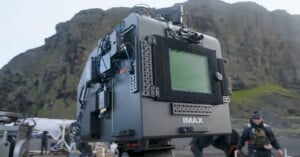
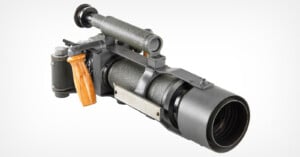
Much has been written about The Odyssey ; the first film in history to be shot entirely on the ultra-large-format IMAX system. However, it was only possible after IMAX released a new generation of cameras.
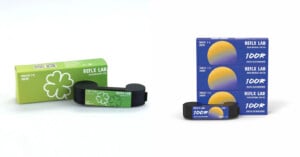
If film photography is a niche, then 110 film is a niche within a niche. The cartridge-based film format has been exclusively available from Lomography for the last 15 years, but Reflx Lab has just doubled the number of companies photographers can buy 110 from.
Jeff Dworsky dropped out of school at 14, bought a Leica at 15, and moved to a small island in Maine at 16 to become a fisherman.
When we first conceived of our Film Friday series, we had a few different motives in mind. The first was that we had long noticed that some black and white films were more popular than others with our customers. We sold a lot more Kodak Tri-X than we did Ilford XP2, for example.
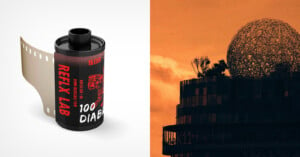
Reflx Lab, makers of analog film and camera accessories like light meters, has launched a new experimental color film, Diablo 100 redscale film.
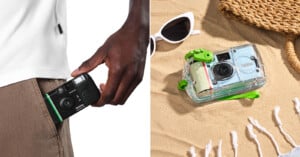
Fujifilm's classic QuickSnap series of one-time use, or "disposable" as many customers say, cameras is celebrating its 40th birthday. To mark the occasion, Fujifilm has released two new variants of its QuickSnap one-time-use analog cameras.
Photographers in 2026 live in the age of reusable film cameras. There is the Pure35 that U.K. retailer Analogue Wonderland launched last month, Lomography's huge array of cameras, and Dubble Film's SHOW camera, to name just a few. Now there's another one on the scene, and it arrives with a legendary name, the Praktica VF212.
Happy Football Film Friday! Football, soccer, footy... whatever you call it we know what has been captivating your attention these past couple weeks, and will for the days ahead!
ObscuraFlex, the system designed to function as both a digital viewfinder and a full-frame digital back for large format cameras such as 4x5 systems and adapted vintage platforms, is expanding beyond its original smartphone-first workflow.
A new iPhone camera app, M-Kamera, attempts to bring the rangefinder camera experience to mobile, including rangefinder-style focusing and a virtual film winder.
As digital technology has become ever more ingrained in modern life, a paradox has emerged alongside it: analog pursuits have experienced a remarkable resurgence.
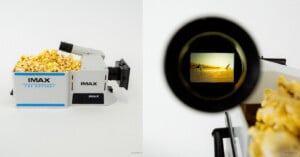
Novelty popcorn buckets are typically characters from Hollywood blockbusters. For example, there was a Grogu bucket for the recent Star Wars movie.
Polaroid is an icon. But the instant photography brand so nearly disappeared entirely in the late 2000s when the original company announced it would stop making film.
Since Light Lens Lab shared its last development update for its black-and-white film project last Summer, it has made significant progress and solved some new problems.
KEH is one of the largest pre-owned camera sales operations in the world, and the headquarters can be found in the Peach State. KEH is also the biggest and longest-standing supporter of the PetaPixel YouTube show, so we were excited to finally had an opportunity to visit the warehouse and see the operation for ourselves.
Earlier this week, I published a "review" of sorts of the Nikon S3 rangefinder, which I believe to be one of the most beautiful cameras ever made. Through that experience, though, I was reminded of Nikon's vintage glass, and once again baffled by how the company hasn't remade them.
If you were to ask us what the perfect color film is, we’d tell you it is Kodak Portra. Exactly which speed of Portra matters only a little as the whole family of films is pretty amazing.
Slovenian photographer and founder of Ondu, Elvis Halilović, has unveiled the Ondu Eikan 8x10", a new lightweight, handmade large-format field camera.
Lomography's latest release, a pair of new colorways for its popular Sprocket Rocket 35mm panoramic film camera, is a real Dr. Jekyll and Mr. Hyde situation. One of the new colorways is beautiful and understated, while the other is super ugly. The fun part is that some readers may not know which of the two colorways is the ugly one.
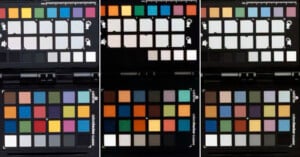
Japan-based analog photographer D.Daniel has delivered arguably the most comprehensive, efficient, and useful comparisons of color and black-and-white photographic film stocks ever.
f8 Develop is a new film negative inversion app made specifically for macOS and is meant to support photographers who scan with a mirrorless or DSLR camera at home.
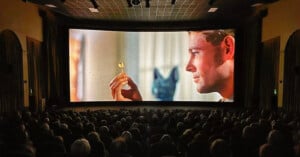
The website for Christopher Nolan's upcoming The Odyssey lets viewers watch the movie trailer in all the film's different formats, from IMAX 70mm to Dolby Vision.
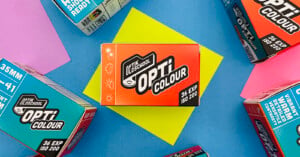
With this Film Friday Review we are shining a light on a new color film that seems to love traveling the world under a multitude of aliases. While we first met this film as Optik Oldschool OptiColour, you might have crossed paths with it under the ORWO Wolfen NC200 or KONO Color 200 monikers.
Demand for IMAX 70mm screenings of Christopher Nolan’s upcoming The Odyssey has been so high that ticket buyers reportedly faced hour-long waits online -- while opening weekend seats for large-format screenings are being listed on eBay for as much as $1,500.
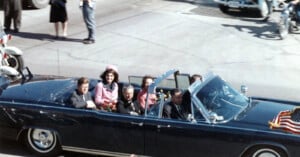
The question over who took a photograph of President John F. Kennedy on the day he was assassinated has been at the center of a legal case.
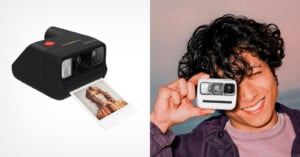
Polaroid has announced its smallest instant analog camera ever, the Go Generation 3. The company takes that one step further, describing its brand-new instant camera as "the best Polaroid Go yet."
China Lucky Film's highly anticipated all-new color emulsion, Lucky Color 200, is finally available in the United States.
Marilyn Monroe would have been 100 years old today, and to honor the occasion, a Long Island beach has erected a plaque marking a famous photo shoot that took place there in 1949.
TMax 400 came into the world in 1986, at the same time as its slower speed brother. You can think of them as near identical twins, in fact. Since its introduction, TMax 400 has helped define a whole new generation of black and white films with its tabular grain structure, high resolution, and sharp image details.
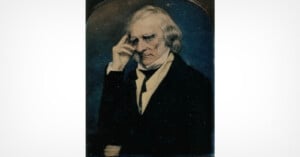
A photographer believed to have taken the very first portrait of the British Royal Family has been honored with a blue plaque in the English city of Brighton.
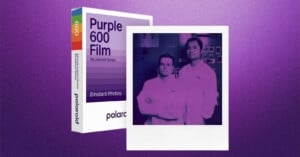
Polaroid's newest limited-edition 600 Film promises to be "completely new to instant film" and to deliver photographers something utterly unique and psychedelic. It's purple, very purple.
Cinephiles in Southern California are in for a treat this weekend when the Palm Springs 70mm Film Festival gets underway.
A unique camera made for war and developed by the German Luftwaffe is expected to sell for somewhere around $160,000 at auction next month.
The Virginia Museum of Fine Arts has announced that it has received a major gift of nearly 2,000 photographs, including important works by Nadar, Alfred Stieglitz, and Cindy Sherman.
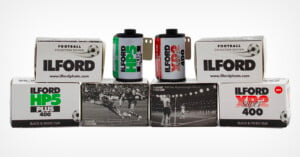
Harman Technology, among the world's largest makers of analog photo films, darkroom papers, and photo chemicals, has announced new limited-edition, football- (or soccer-) themed packaging for two of its most popular 35mm films, just in time for the World Cup, which kicks off in just a few weeks.
Over the weekend, posts on Japanese social media (SNS, as they refer to it) indicated that Fujifilm would be ending support for black and white film development services, which many took to mean as dropping support for paper and chemicals.
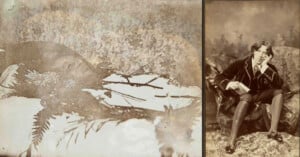
The last known photograph of literary icon Oscar Wilde was taken on his death bed in a Paris hotel room using a borrowed camera and a volatile early flash, mere hours after he passed away.
A photography student sent a 5x4 color negative into space on April 19 and exposed it to cosmic radiation, capturing a beautiful, abstract portrait of space unlike anything done before.
IMAX is reportedly in talks with buyers over a potential sale of the large-format cinema company, The Wall Street Journal reports.
The Odyssey is the first-ever movie to be shot entirely on IMAX 70mm film. The format is so large that it can only be shot continuously for roughly two and a half minutes, as that is the maximum length the IMAX camera can hold.
Science educator Steve Mould's newest video sheds fascinating light on an oft-forgotten color photography process. Mould's video has the grabby title, "You've Never Seen a Real Photo," which is closer to the truth than it sounds.
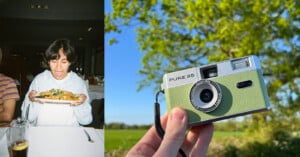
Analogue Wonderland, a photographic film store based in the U.K., has released a beginner-friendly analog camera called Pure35.
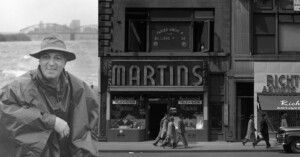
The MUUS Collection has acquired the Todd Webb archive, an American photographer whose images of postwar city life in New York City and Paris serve as visual time capsules to bygone eras. MUUS preserves, researches, and reveals works from the archives in its care.
Dora Goodman Cameras has announced that it is shutting down its store, citing a rapidly changing market and rising costs.
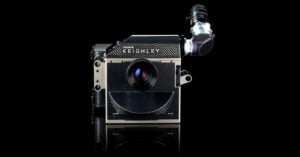
The camera used to shoot Christopher Nolan's upcoming epic The Odyssey -- the first movie ever to be shot entirely on IMAX cameras -- has gone on public display in Los Angeles.
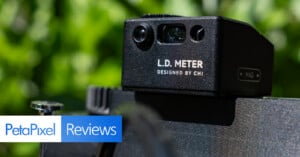
As I've delved deeply into the old and the niche of film photography, I've found myself loving cameras that either have no light meter, no viewfinder, or... neither. In those cases, I have found the L.D. Meter from Chinotechs to be the near-perfect solution.
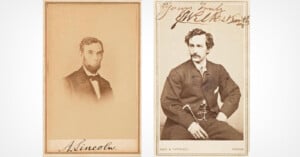
An extremely rare collection of signed photographs of American historical figures including President Abraham Lincoln and even his assassin John Wilkes Booth were sold at auction for over $100,000 each.