
Photographer Takes One in 1.7 Million Photo of Airplane Transiting the Sun
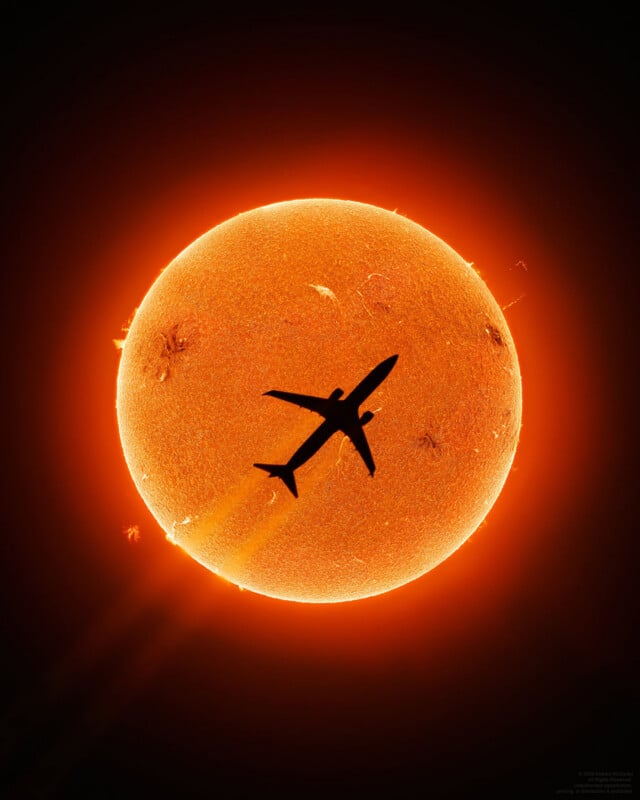
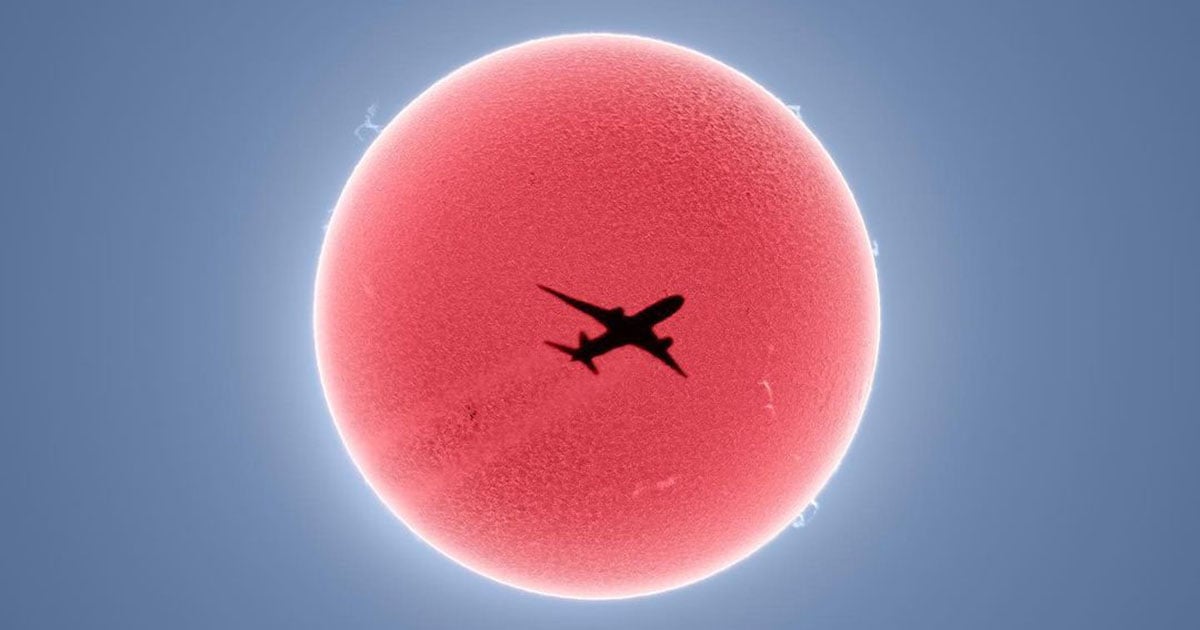
Astrophotographer Andrew McCarthy had to wait for six days and 1.7 million photos before nailing his latest masterpiece: a Boeing 737 transiting the Sun.
McCarthy says his photo, which he calls The Traveler, highlights the patience required to get results in the field of astrophotography.
“Over the past several years, I’ve captured many planes in front of the Sun by sheer chance,” McCarthy says. “However, none of them were captured with settings optimized for the plane, as my intention was to shoot the sun. Plagued by soft focus, motion blur, awkward composition, and low resolution.”
Here’s a short video showing off how I captured a plane in front of the sun, even though they follow less predictable paths than aircraft.
The hardest part wasn’t even taking all those photos… pic.twitter.com/cHY0z6i6at
— Andrew McCarthy (@AJamesMcCarthy) May 18, 2026
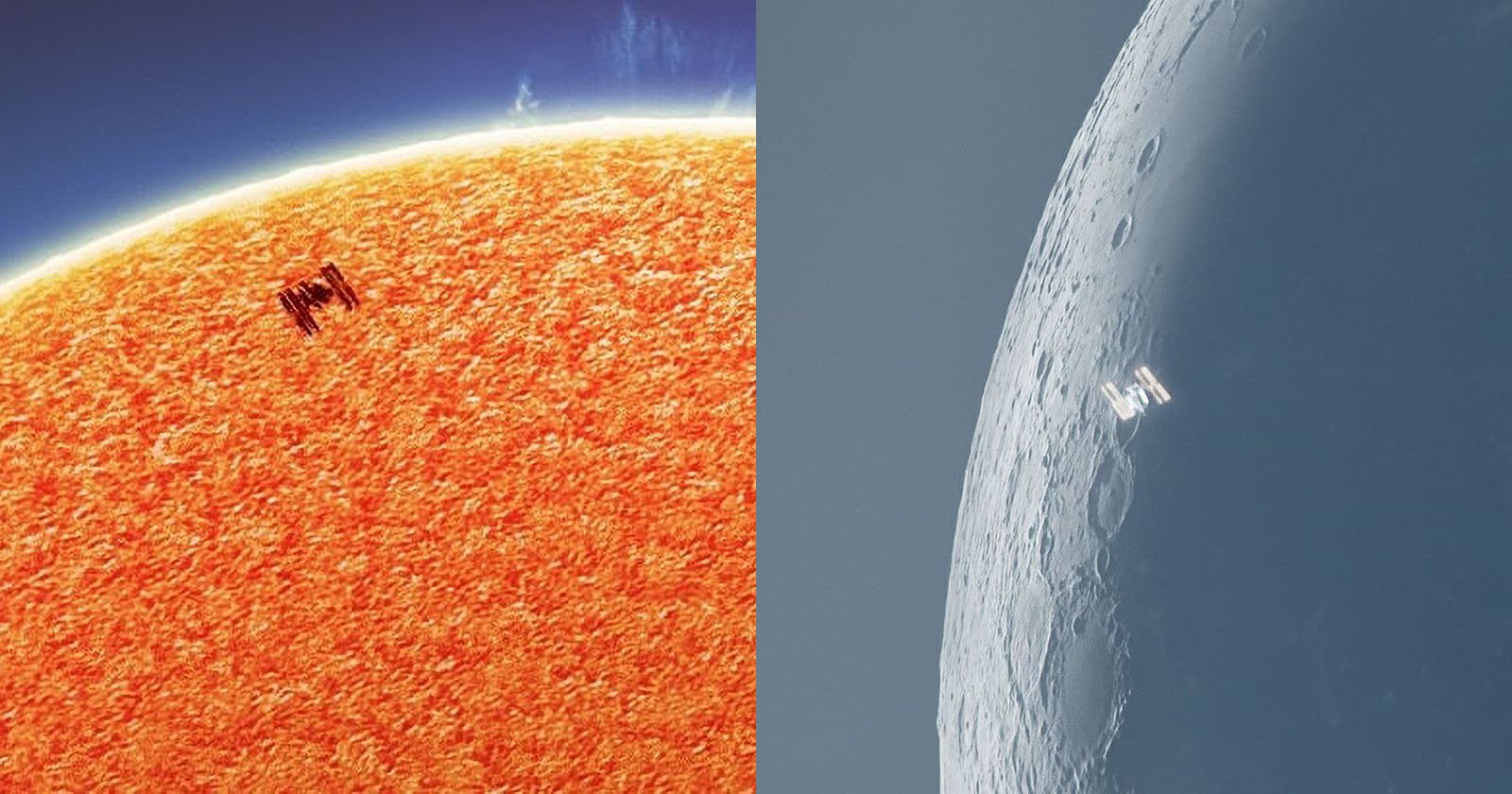
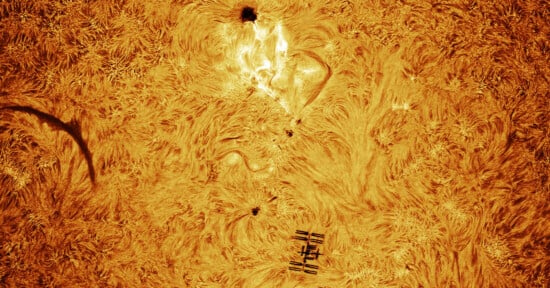
The photographer set out to change that by optimizing his setup for an airplane. But while some objects in the sky, like the International Space Station (ISS), can be captured crossing the Sun by careful study of its flight path, airplanes cannot be forecasted in the same way. This meant McCarthy had to set up two telescopes, point them at the Sun, and just hope a plane flies through his frame perfectly.
McCarthy set his cameras up to take 10 photos of the Sun per second for six entire days — a staggering 1.7 million photos. “I almost gave up after six days without a good transit,” McCarthy says.
But at last, a United Airlines Boeing 737 flying from Houston to Los Angeles transited the solar disk, and McCarthy caught it on both telescopes. This enabled him to make a high-resolution photo, which the photographer says is “one of the best” of his career. He was also able to show the final image to the actual flight crew who were onboard at the time.
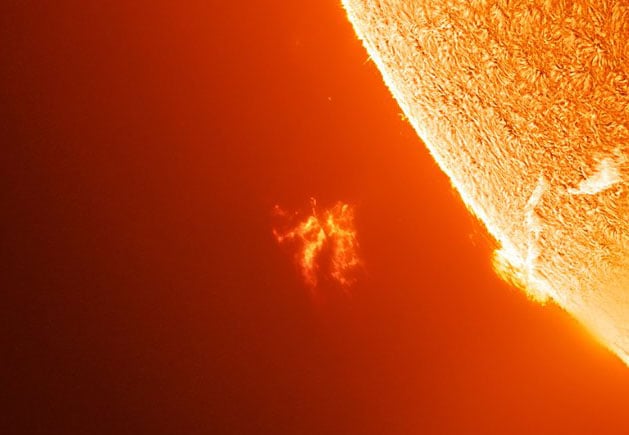
On top of all that, McCarthy captured two floating solar prominences. “These are the fluffy bits floating separately from the Sun,” McCarthy explains. “One was fleeting, as part of a small coronal mass ejection, while the other was lingering all day. It is rare for me to capture these, let alone two, so this was quite the catch.”
Last year, McCarthy broke the internet after capturing a meticulously planned shot of a skydiver falling in front of the Sun.
More of McCarthy’s work can be found on his Instagram, X, Facebook, and website.
Image creditsAll photos by Andrew McCarthy.
Affiliate Disclosure PetaPixel articles may include affiliate links; we may earn a commission if you buy through one.