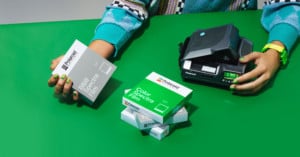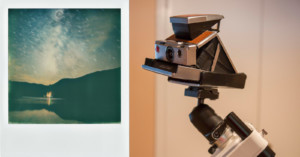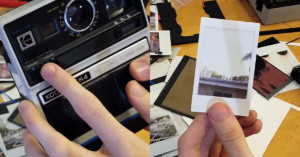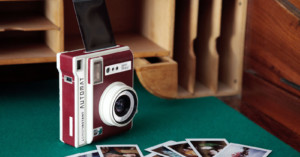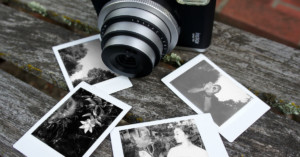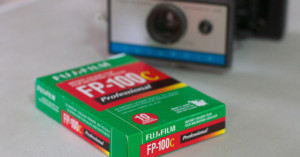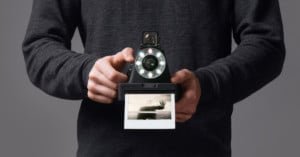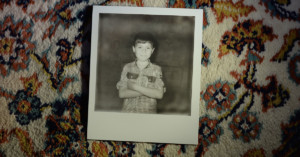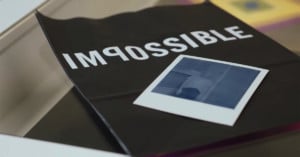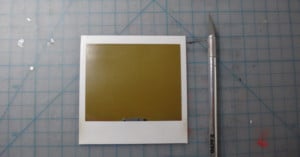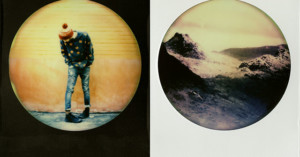
The Impossible Project has partnered up with Japanese music producer and designer Nigo for a limited edition version of its PX 70 Color Shade Film. Instead of its traditional white frames or the newer black frames, the film comes in 10 different colors: yellow, orange, red, pink, lilac, dark blue, light blue, green, black and white. Each pack comes with eight frames with randomly selected colors and costs $25 over at The Impossible Project shop.
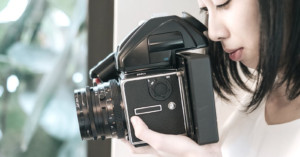
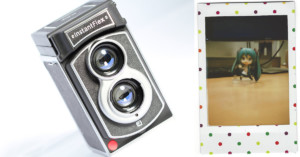
You don’t need an instant film camera to shoot instant film photos: Flickr user Angex Lin shot the above photograph using an old-school Rolleiflex twin-lens reflex camera loaded with Fujifilm Instax Mini instant film. Read more…
Line up an array of digital cameras and you’ll have yourself a setup that can take Matrix-style bullet-time shots. Artist Sam Blanchard created a similar rig, but went with Polaroid cameras instead of digital ones. The project, titled Polaroid Matrix, consists of 20 Polaroid cameras arranged in a circle and modified to be triggered remotely. After the cameras are triggered to simultaneously capture photos of the subject in the center, the Polaroid pictures are arranged and turned into a Flipbook. Read more…
Next time you’re on vacation and find yourself without a camera, try checking the mini-bar in your hotel room. Ace Hotel has announced that the mini-bar in each of their guest rooms will be stock with a refurbished Polaroid camera and limited edition packs of Ace Hotel branded Impossible Project B&W instant film. If you don’t plan on staying at any of their hotels, you can also purchase the branded kits through their website for $150 each.
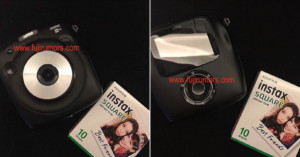
Lomo shooter wn7ant came up with a neat way of turning instant film photos into one-of-a-kind business cards. After printing out his business card design onto a transparency, he cuts it out and sticks it onto an Instax film cartridge. To create a new card, he simply takes a picture — the contact information on the transparency is printed onto every photograph!
Want to see how instant film for Polaroid cameras is made? How It’s Made recently paid a visit to The Impossible Project‘s factory in the Netherlands (purchased from Polaroid a few years ago) to give us a neat behind-the-scenes look at the processes that go into making the popular film.
After Polaroid stopped manufacturing instant film in 2008 — breaking the hearts of Polaroid lovers around the world — a small new company called The Impossible Project purchased Polaroid’s manufacturing equipment and factory in the Netherlands in an attempt to save the film from extinction. They were successful in doing so, announcing new lines of instant films in 2010. The above video is an interesting mini-documentary that gives us a behind-the-scenes look at what goes on at The Impossible Project.
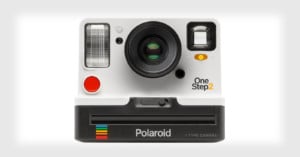
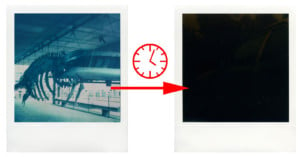
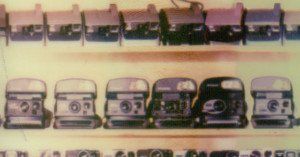
Needed a Polaroid picture for a project I’m working on, so I purchased a Polaroid One Step camera for $15 off a guy on Craigslist and a pack of Polaroid 600 film that expired back in 2003 for $26 with shipping from eBay. I was a bit concerned that the film wouldn’t work anymore, but found that the battery in the film pack still had some juice and that the film still developed, though the upper corners of the image are messed up.
Expired 600 film is selling for up to $50 to $60 a pack (10 photos) on eBay these days, even though new Impossible film for 600 cameras costs $24. You can also buy unexpired performance-guaranteed 600 film for about $5 a shot in bulk. Seems like a lot of Polaroid lovers are still snatching up Polaroid film while they still can.
Not content with simply resurrecting traditional Polaroid instant film, The Impossible Project is also selling a special Black Frame version of its PX 600 Silver Shade film. The black borders give the instant film a pretty unique look, but packs of Black Frame film are pretty pricey: 8 exposures will cost you $24.
See the big box hanging out from under this Nikon F2 film SLR? It’s called the Speed Magny, a special back that transforms the camera into an instant film camera. Instead of loading the camera with film, you take off the back of the camera and attach the 4lb contraption that’s loaded with Polaroid pack film. Light entering the camera is directed onto the instant film below using lenses and mirrors, giving you a neat way to capture instant film photos at the expense of 5 stops of light. Read more…