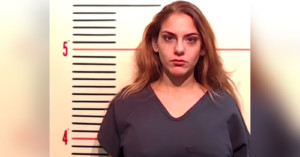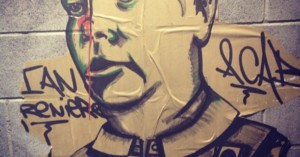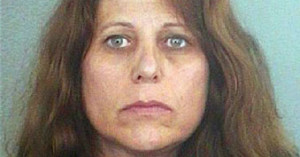
Montreal resident Jennifer Pawluck was arrested earlier this week after she posted the above photo of anti-police graffiti to her Instagram account. The photo shows a caricature of Montreal police Commander Ian Lafrenière with a bullet hole in his forehead, leading police to accuse Pawluck of criminal harassment against a high-ranking police officer. Read more…
A 15-year-old boy in Colorado has been arrested for cyber-bulling using Instagram. He is being charged with five counts of third-degree harassment for allegedly downloading photographs of his classmates from Facebook and then uploading them to an anonymous Instagram account with hurtful captions attached. Read more…
The University of California has agreed to dish out a $162,500 settlement to David Morse, a 43-year-old photographer who was arrested back in 2009 while covering a student protest. The SF Chronicle writes,
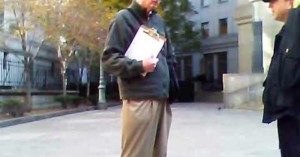
[The suit] an officer told Morse, “We want your camera. We believe your camera contains evidence of a crime.”
The officers ignored his press pass and arrested him and seven others on suspicion of rioting, threatening an education official, attempted burglary, attempted arson of an occupied building, vandalism, and assault with a deadly weapon on a police officer, the suit said.
Morse spent the night in jail. Prosecutors declined to file charges.
But police obtained a search warrant and used several of his photos in brochures and online in hopes that the public could identify individuals.
As part of the settlement, the police department has also agreed to modify its procedures regarding seeking materials from journalists and will be conducting training sessions teaching its officers about media rights.
After being arrested on October 1, 2007 for using his cell phone to film officers making an arrest, Boston lawyer Simon Glik sued the city for violating his civil rights. Late last year the court denied a motion to have the case dismissed, and just yesterday it was announced that the City of Boston had come to a settlement with Glik, agreeing to pay him $170,000 for damages and legal fees. The decision last year and the settlement yesterday both reaffirm that the First Amendment protects the right to photograph and film police officers carrying out their duties in a public place.
Update: Apparently this isn’t something ordinary photographers need to worry about. See below.
The Washington Post has published a list of 160 misdemeanor offenses that can land you in jail in Washington D.C. While most are quite reasonable (e.g. “Sale of Cigarettes to a Minor” or “Unlicensed Driving Instructor”), there is one that is troubling. Under the category “Photographer Violations” is the entry:
Photographer – More than 5 minutes at location
The entry is quite vague and, as Carlos Miller points out, leaves a lot of room for police officer interpretation.
Update: The Washington Post has written a followup article addressing this issue (thx Darrow). Apparently the law is directed at full-time photographers who photograph passersby on the streets:
”Our policy has been that the street photographer license would apply to persons who are stationed on public space to take photos of passersby,” said agency spokesman Helder Gil in an e-mail. Amateurs aren’t covered, he said, nor are “journalists, professional photographers who take pictures of buildings/scenery, or wedding photographers taking pics of happy couples on D.C. streets and sidewalks.”
So as long as you don’t make a living hustling tourists for snapshots, you can snap away without keeping an eye on your watch.
Freelance news photographer Phil Datz was recording the conclusion of a police chase from the opposite sidewalk last Friday when he was confronted by a police officer and commanded to “go away”. Though he politely obeyed and moved a block further from the scene, the officer decided to arrest him for “obstruction of governmental administration”. The latest news is that the department is planning to drop the charges and put its officers through “media relations training”.
In the United States, anyone can be photographed in most public places without their consent… as long as they don’t have a reasonable expectation of privacy. A female traffic magistrate named Rhonda Hollander was arrested last week after following a man into a courthouse bathroom and photographing him as he used the urinal.
When Broward Sheriff’s Deputy Darlene Harden confronted Hollander a short time later, the magistrate admitted taking a picture but refused to turn over her phone, arguing that it was a public restroom and she was not violating any laws, according to the report. [#]
Other places where people have an expectation of privacy include homes, dressing rooms, medical facilities, and phone booths. Basically, it helps to have some common sense.
Being stopped by police for being suspicious — and having cameras — isn’t an issue unique to our time. In 1955, photographer Robert Frank was driving through Arkansas when he was stopped by a police officer who looked into his car and noticed, among other things, “a number of cameras”. The officer had something to take care of in a nearby city, so he conveniently had Frank held in a city jail until he could return and question him. Read more…
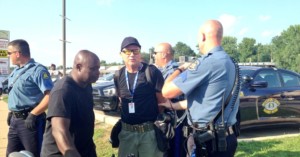
On November 9th, 2009, Software programmer Antonio Musumeci was filming the arrest of a protestor outside a federal courthouse in NYC when he himself was arrested. His main camera was confiscated, but he recorded the entire encounter on a second camera (the resulting video is above). In April 2010, the New York Civil Liberties Union sued the government on Musumeci’s behalf, and yesterday it was was announced that a settlement had been reached, with the government recognizing the public’s right to photograph and film in public spaces outside federal buildings. Read more…
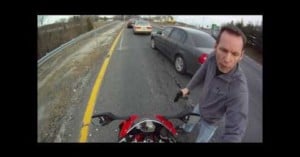
Charges have been dropped against Anthony Graber, a motorcyclist who filmed a plainclothes Maryland State Trooper during a traffic stop and uploaded the video to YouTube. According to the Baltimore Sun,
Judge Emory A Pitt Jr. tossed all the charges filed against Anthony Graber, leaving only speeding and other traffic violations, and most likely sparing him a trial that had been scheduled for Oct. 12. The judge ruled that Maryland’s wire tap law allows recording of both voice and sound in areas where privacy cannot be expected. He ruled that a police officer on a traffic stop has no expectation of privacy.
“Those of us who are public officials and are entrusted with the power of the state are ultimately accountable to the public,” the judge wrote. “When we exercise that power in public fora, we should not expect our actions to be shielded from public observation.”