Tutorials

Whether you are a beginning photographer or a seasoned professional, there are always new things to learn and more areas to improve in. PetaPixel regularly publishes in-depth tutorials on a wide range of subjects, from Photoshop tips and post-processing techniques to ideas on building your own cameras and do-it-yourself equipment.

Three Approaches to Publishing Your Photo Book

There comes a point in a photographer’s life when publishing a book seems like a logical step. The coffee table book represents a platonic ideal for a photo project that is both long-term and worthy of considerations by others. Yet, even with the advent of high quality on-demand solutions like Blurb, book publishing is still fraught with challenges. Here are three different approaches to book publishing in the 21st century.
A Practical Guide to Creating Superresolution Photos with Photoshop

We’ve seen it in plenty of thriller/crime solver TV shows and movies: upon reviewing some grainy and very low-resolution surveillance footage, someone inevitably asks the technician, “can you zoom in on that and enhance it?” Then, with the quick press of a few masterfully placed keystrokes and bleepy computer sounds, the image is suddenly enhanced with vastly increased resolution and a key plot device is revealed.

How to Do Levitation Photography: A Tutorial

As a part of a personal 50/50 project (a photo a day for 50 days with a 50mm lens), I tried my first attempts at levitation photography and had a lot of fun doing it. This tutorial will walk you through the best methods to make a surreal levitation portrait; only a pinch of magic required.

How to Add Fog to Your Photo Shoot Using Dry Ice

Here's a look at how I use dry ice in my photography. My goal with this article is simply to share my journey with this technique. In the images used as examples, no fog textures were used (unless noted) -- basically, if you see fog, that's how it was captured (minus the color work).

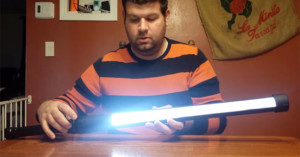
How I Made Myself a DIY Spider Light for $40

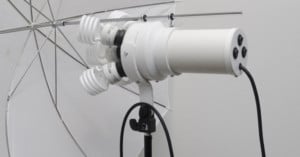
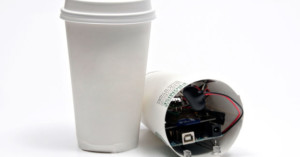
I recently made myself a DIY Spider Light as a thrifty alternative to the Spiderlite that costs hundreds of dollars. The entire project ended up costing $40 per light and can be built entirely with parts from a local home improvement store.

A Primer on Insuring Your Camera Gear and Making It Recoverable

If you've invested any significant amount of money in your camera gear, it's a good idea to make sure it's insured against loss or damage. If you've never really explored this subject before, here's a helpful video that can bring you up to speed. It's a 13-minute overview by the folks over at DSLR Video Shooter on the best services and solutions out there for making sure your gear is insured and recoverable.

Tutorial: Photographing and Processing the Orion Constellation

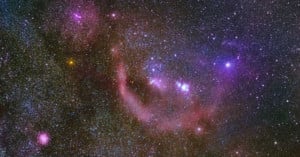
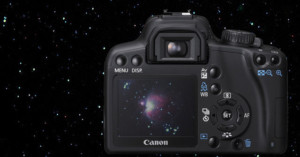
Here's a tutorial that will teach you how to photograph and process one of the most colorful parts of the night sky, the Orion constellation. It will walk you through all the steps of planning, shooting, and processing a photograph of Orion and the colorful features in it.

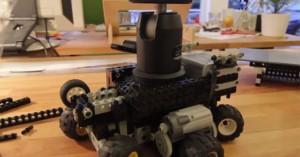
How to Build a Camera Dolly Out of LEGO Pieces

Photographer Pascal Kulcsar of Mainz, Germany wanted to add some movements to his time-lapse videos, so he built himself a fancy dolly using LEGO pieces. The tiny vehicle has 6 wheels and is powered by a motor that can run for 8 hours of constant movement with regular AA batteries.

8 Steps to Arranging a Fashion Editorial Shoot

If you're a fellow fashion photographer, you have probably been in that usual situation in which you have to arrange an editorial shoot all by yourself. This can be really empowering, fun and creative... but also extremely difficult.

How to Avoid Star Trails by Following the ‘500 Rule’

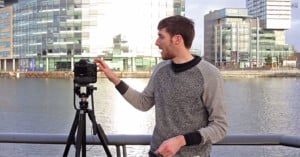
Due to the rotation of the Earth, it appears as though the stars are moving through the sky in long exposures. Star trails can be a desired effect when done for much longer exposures, but in other cases we want points of light to represent how we see the stars with our eyes. To achieve points of light you can use a simple rule that's often called the "500 Rule".

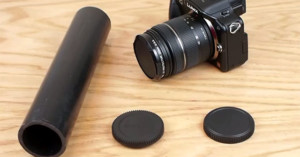
How I Replaced the Shutter in My Canon 5D Mark II By Myself and Saved $400

The shutter on my old Canon 5D Mark II died while on a trip to Fiji earlier this year. It happened quickly; I was shooting a panorama when horizontal black bars started appearing in some of the shots. After about 10 more photos in between turning the camera off and on again, it was dead. The shutter was stuck closed and powering the camera on yielded a helpless sounding soft ‘clunk’ and an “Error 20″ message.

4 Techniques that Will Help You Master Dodging and Burning Your Photos

If you have 30-minutes to spare for a tutorial, check out this one by photographer and retoucher Michael Woloszynowicz on the techniques of dodging and burning. It's an in-depth video in which he discusses 4 different approaches that photographers can take and which ones to use in which situations -- things like layer blend modes, curves adjustments, frequency separation, and layer blend-if.

A Brief Intro to Shooting with a Rangefinder Camera

If you've never picked up a rangefinder camera before and have always wondered how it differs from single-lens reflex cameras, here's a short video that may be of interest to you. In it, photographer Craig Semetko discusses the basics of rangefinder photography -- in this case he's using a Leica M -- and its advantages compared to SLRs.

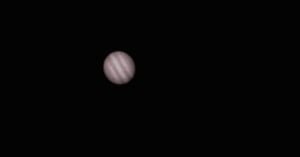
How to Photograph Jupiter from Your Own Backyard On the Cheap

I recently captured this picture of Jupiter, the 5th planet from the Sun. It was well received and many liked it. Lots of people wanted to know how to take a picture like this and what it would cost, and surprisingly I did this on a relatively low budget for astrophotography.

Video: How to Capture Astrophotography Images Without a Star Tracker

In astrophotography, a star tracker is a piece of gear that compensates for the Earth’s rotation so you can take sharp long exposure photographs of the night sky.

Unfortunately, not everyone can get their hands on one of these, and so we've dug up this awesome tutorial by astrophotographer Forrest Tanaka on how to capture impressive astrophotography images without a star tracker.

How to Capture a Beautiful Watch Product Shot Using Only an iPad for Lighting

Product photography -- even when done with cheap gear like this awesome tutorial using an iPhone, an IKEA lamp and some flashlights -- usually involves multiple light sources. But there is a way around that, as Laya Gerlock over on DIY Photography demonstrates in this awesome tutorial titled "How to Shoot a Perfect Watch with Nothing but an iPad."

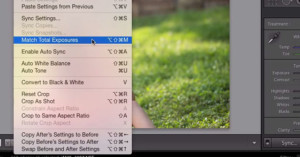
Tutorial: How to Batch Process Your RAW Time-Lapse Photography

Time-lapse photography seems pretty straightforward, right? You just capture a stream of images over a designated time frame and put them together in post-production to create your video. But as simple as that may sound, there are a few basic elements to the post-processing of your images that can greatly alter what the final product will look like.

Creative Underexposure with Nikon DSLRs

With the release of the D750, much has been made of its ability to recover shadow detail. Given the range of talents that the D750 has it is strange that this has been singled out given that the D800 and D4, released in 2012, outperform it in this regard, and the cheaper D600 (also from 2012) is able to match it at base ISO. And the old guard, the D700, D3 and D3s, weren’t too shabby at recovery either! …