How to Use Victorian Composition Ideas in Your Photography
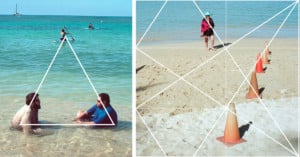
This is a set of notes on composition, loosely based on ideas of composition from the Victorian era. There's quite a bit more, and yet quite a bit less, to the Victorian ideas.
Mastering composition is the best way to get more keepers in your street photography. That makes sense, right? If you know how to make a visually pleasing image, then you can discipline yourself to capture the remarkable photos that tell a story.
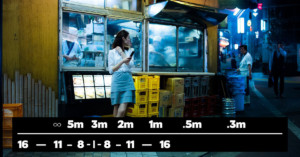
Have you ever cursed your camera for missing that special moment in the streets? Do you ever struggle to get the subject quickly in focus before the fleeting moment is lost forever in the aether? Well then why not try manual focus?
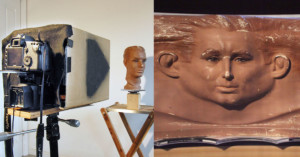
"Slit-scan photography," as it's known these days, has a long history. It is related to focal plane shutter distortion in the film era and to the rolling shutter effect in the digital age.
My name is Chris McCann, and I'm a photographer based in San Francisco. In this post, I'm sharing a list of photography videos I've found that have been helpful to me.
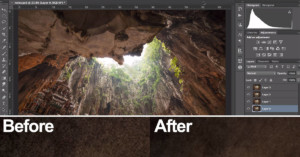
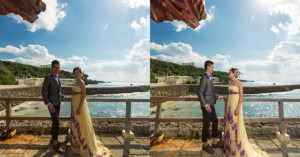
Want to remove noise in a high ISO photo while preserving the details and textures in your shot? Here's a simple photography and Photoshop technique that lets you easily do that.
If you're looking for videos to watch to quench your thirst for photography, YouTube has a great selection. If you've never really poked around before, we've put together a list of 13 channels you should follow.
What do you do when you find a good location to photograph, but the time of day isn't right due to strong sunlight and harsh shadows? That's the subject of this 12-minute tutorial by photographer Mike Browne.
VSCO has launched a new project called VSCO Academy, a bi-weekly series of free video tutorials on the ins and outs of photography.
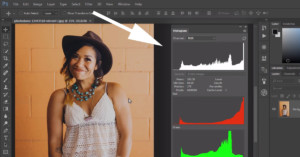
If you're just starting out in photography and photo editing, you may be confused about that strange chart on your camera and in your software called the histogram. Here's a simple 60-second explanation to kick start your understanding of how to interpret them.
Want to strengthen your Lightroom skills? Adobe recently launched "Lightroom Coffee Break," an ongoing series of videos that each contain a helpful Lightroom tip or trick, presented in 1-minute or less.
Here's a fun little 7-minute video tutorial on how you can create interesting water illusions using an ordinary camera and some sound. It has to do with syncing the water drops to your camera's frame rate.
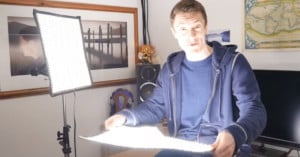
Want to add some flexible LED panels to your lighting kit without breaking the bank? This 19-minute video tutorial by DIY Perks is for you. It's a step-by-step guide on how you can assemble your own LED panel for about $60 by buying high CRI LED strip lights (~$25), a PWM LED dimmer (~$8), an articulating DSLR camera arm (~$18), some faux leather for the backing, some wiring and a solder gun.
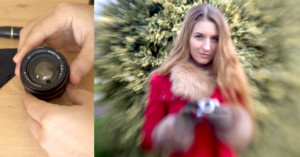
If you enjoy do-it-yourself photography hacks and projects, here's an interesting one for you to try: buy an old Soviet MIR-1B camera lens for about $45 on eBay, open it up by unscrewing the front, and reverse the front lens element. The result is a "reverse globular lens," photographer Mathieu Stern says.
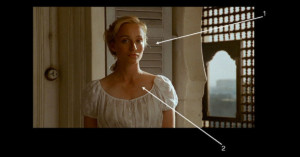
Almost everything I do as a photographer comes back to this challenge: seeing light as a cinematographer would on set. I was recently reminded of this in conversation with a friend and fellow photographer as I was trying to think of the best advice I could give to someone wanting to step up their lighting game. So I’m sharing one of my lighting journals from film school, it was my sort of “ah ha” moment after several semesters of confusion and frustration when it came to lighting.
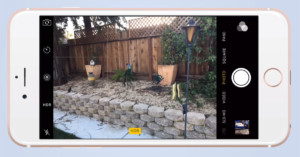
If you're completely new to taking pictures with an iPhone, here's a 4-minute video that'll help you hit the ground running. MacRumors put together a number of basic tips and tricks you can use to take a step beyond simply tapping the on-screen shutter button.
I write an annual article to help photographers with one of the toughest parts of their job: pricing their work. In the 2016 version, I’m going to add some new elements such as a little advice for photography buyers. Another section I’m most excited about is the question and answer portion at the end. Each year I receive many questions about photography rates in the comments. This year, I address some of the common and interesting follow-up questions I have received over the past few years.
Want to learn the basics of photography for free from the comfort of your own home? There are many ways to do so these days, but a new one you might want to check out is Photoskop.
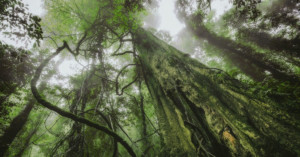
Australia is home to some of the most extensive areas of subtropical rainforest in the world. These protected environments are often the highlight of many international visitors who travel thousands of kilometers to experience the unique flora and fauna. The best part about these geological wonders is that there’s always something new to discover and they make ultimate subjects for nature photographers.
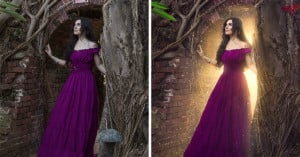
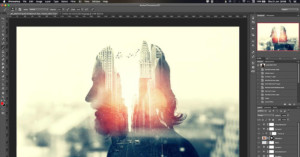
This surreal photo-manipulation is titled "A Dream," and it was created using a single photograph that was edited in Photoshop. In this post I'll provide a step-by-step walkthrough of how it was made to show you how you can make a similar image yourself.
In this post I'll be sharing the best one light portrait setup I've ever used. I'll come clean right off the bat here and say that I stumbled across this little super easy lighting technique more by luck than skill.
This is the cheapest yet most effective photography hack I can think of. Step one: get disc reflector. Step two: cut lens-sized hole in said reflector. Step three: profit.
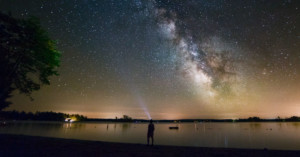
If you are willing to get up early or stay up super late, Milky Way season is back in North America! Above is a shot I made on February 14th, 2016, in Sedona, Arizona. This image was taken at 5:45 AM, just prior to sunrise. Something I tried for the first time with this photo is taking 10 consecutive shots of the sky at a higher ISO (5000) and shorter shutter speed (15s), and then stacking the photos, which gives you awesome pinpoint stars with minimal noise.
Becoming a professional photographer is pretty "easy" in one sense, yet incredibly "hard" in another. The lower and lower barriers of entry makes jumping in easy, but developing yourself and your business in the industry can be a challenge that takes a lot of time, effort, and dedication.
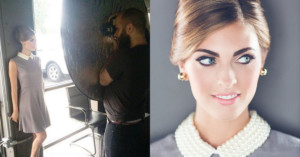
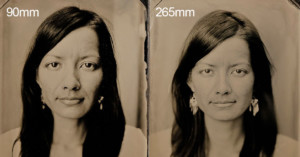
In 35mm photography, a "portrait lens" is usually considered to be a fast lens with a focal length of around 80-135mm. This allows you to achieve a shallow depth of field and a pleasant perspective that doesn't distort your subject's facial features. But that doesn't mean you should rule out wide angle lenses completely when shooting portraits.
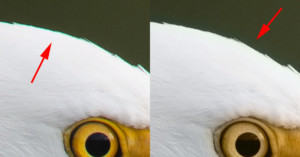
Photoshop and Lightroom both have built-in tools for dealing with chromatic aberration (AKA color fringing), but in some cases the features don't work as well as you'd hope. In the 8-minute video tutorial above, photographer Steve Perry of Backcountry Gallery shares a quick and easy trick he uses in Photoshop to manually remove fringing from his shots.
Rob Cantor is a talented musician and songwriter who's a mastermind at creating viral and creative content. His video titled “Perfect” features him doing 29 celebrity impressions in 1 original song, and has over 14 million views.
I’m not ashamed to admit it. I regularly use my fancy camera to photograph my cats.
One of my absolute favorite things to do in Photoshop is to play with lighting effects. Whether that be to make something glow, create a spotlight sort of effect, or set my hands on fire, I'm always so impressed with the many ways Photoshop allows you to alter lighting.
It was a beautiful day in Montreal. I was on a regular afternoon jog listening to a popular photography podcast. The topic of the episode was travel photography. The guests of the show were two professional photographers with the years of experience.
Facebook ads are some of the best and cheapest sources for advertising a new wedding photography business.
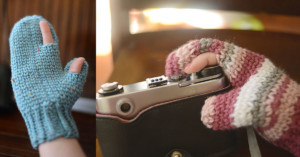
If you live in a cold area and have both a passion for photography and a knack for crocheting, here's a fun project for you: photography mittens. Carmen Jacob of Spindle Shuttle Needle has created stylish mittens that have special holes for your thumb and index finger to poke through, allowing you to operate your camera while keeping your hands warm and toasty.
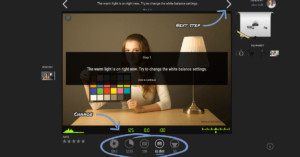
In this video and post I’ll cover 28 great features, tricks, hacks, and more of Adobe Photoshop CC 2015. Some are simple, some are difficult, some are well known, and some are more like Easter eggs.
Here's a simple trick for landscape photos: when shooting a landscape photo that needs a hard edge graduated ND filter, you can use your hand. Yes your hand! It's a technique I've been using in my own work recently.
My name is Tavis Leaf Glover, and I’m an artist just like you, trying to create art that I can be proud of and share with the world. Though, something really hindered me in the beginning... the Rule of Thirds.
My name is Piotr Skoczylas, and I am a surreal portrait photographer. I picked up a camera 3 years ago, and since that moment I knew I wanted my pictures to be something more than just the click of the shutter. I was experimenting for a really long time until I created something I really liked, and with which I could connect emotionally.
Shooting two or more cameras generally means you need to ensure the cameras are all synchronized to the same clock time. Unfortunately, my Canon 5D Mark III drifts horrendously when it comes to keeping good time -- perhaps even 20 seconds in a week. I found myself continuously having to set each of my cameras before each wedding shoot to ensure images are timestamped in the right order.
My name is Mohammed Sattar, and I'm a photographer and digital artist. My goal isn't to capture reality -- it's to create dreams.
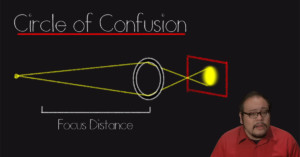
Here's a new 18-minute educational video by Filmmaker IQ about the subjects of depth of field and its relationship to different lenses and sensor sizes. "Through some fundamental scientific demonstrations, we will clarify concepts like circle of confusion and lens equivalency," the video says.
As 2016 gets underway, I'd like to share 8 tips on how to take and make better images. To prove that this has nothing to do with how much fancy gear you have, all these tips can be applied to any camera, and all the example images were shot and edited using only my phone.
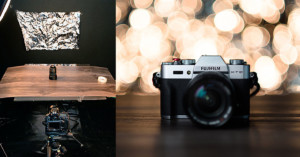
I recently wrote an article about 8 Reasons You Should Buy A 50mm f/1.8 Lens and one part was about using it with the "El Bokeh Wall." What's an El Bokeh Wall? It's using some aluminum foil to add beautiful bokeh to the background of your photos. Here's a full tutorial on the technique.
If you live in a remote area with dark skies, you are one of the lucky ones; the lucky ones that get to look up on a clear dark night and see a thick band of glowing light stretch across the sky.
Photographer Alexis Cuarezma is a master of doing rapid-fire portrait shoots of famous athletes for Sports Illustrated. When some of his shoots are limited to just 1 minute, Cuarezma uses 2 lighting setups simultaneously and sometimes even 5 setups on 1 set using a burst of exposures.
Smartphone camera quality has gotten pretty darn good in recent years, but one of the limiting factors is still the tiny lens that's found in front of the (usually) tiny sensor. Accessory makers have started addressing this problem by creating add-on lenses that you can attach to your phone to improve the look of your photos -- even ZEISS jumped into the game this week.
Here's a short 3-minute video by Australian photographer Pete Leong on how you can set your flash and camera settings to illuminate portrait subjects while a bright sun is in the background back-lighting them.
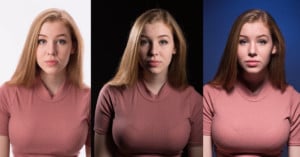
I know this topic is covered here and there and everywhere: in school and online, in workshops and lectures, on street corner posters and graffiti under freeway overpasses… However, one way or another this topic seems to either elude a lot of photographers entirely or perhaps they ignore it knowingly. Either way, after continually seeing tight headshots done with lenses possessing an obviously incorrect focal length, my personal OCD has reached a boiling point and I decided to finally do this …
If you're looking to get better at photography in 2016, one great option is to do a 52-week photography challenge that forces you to complete regular assignments throughout the whole year. And we've found a great one you can take on as your new year's resolution.
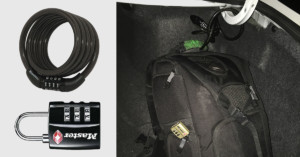
In a recent post about "How Camera Gear was stolen in 2015," it was reported that 31% of gear theft victims had their gear stolen from their car. The good news is that a $30 dollar fix can leave you feeling a little less worried to leave your equipment in the trunk.
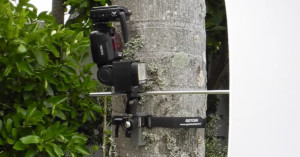
New Zealand-based photographer Chris Cameron has a nice little kit he put together to mount his off-camera flash to any tree or pole. The setup centers around a plastic "dog bone" that you can make for yourself with a 3D printer.
If you have a lens of one mount and a camera with another, there's a good chance that there's an adapter out there that can help you pair the two. This is called shooting with an adapted lens (versus shooting with a native one). Photographer Mark Ryan Sallee of Michromatic released this helpful 12-minute primer on the subject.