
How Apple Created Portrait Lighting
Apple just released this 1-minute video that offers a short and sweet behind-the-scenes explanation of how the company created the Portrait Lighting feature found in the latest iPhones.
Apple just released this 1-minute video that offers a short and sweet behind-the-scenes explanation of how the company created the Portrait Lighting feature found in the latest iPhones.

How does SpaceX get such clear and detailed imagery and footage of its rocket launches? Here's a 5-minute video from Primal Space that answers that question.

It seems that February 2018 is the month of global shutter CMOS sensor breakthroughs. A day after Sony announced the first 1MP+ backlit global shutter CMOS sensor, Panasonic announced its own groundbreaking development: a global shutter CMOS sensor that's capable of 8K, 60FPS, and HDR.

If you're in the market for an SSD drive, you're probably looking at 128GB, 250GB, or 500GB drive. Well, Samsung just announced a 30720GB drive. Yes, you read that number correctly -- it's the highest-capacity SSD drive in the world.

Sony just announced a groundbreaking development in the world of camera image sensors: it has created a 1.46-megapixel back-illuminated CMOS sensor that has global shutter. This is the first-ever CMOS sensor of over 1MP that has both back-illumination and global shutter.

Fingerprint ID is used on many smartphones these days for security and identification, but would you like to see the same feature on your camera gear? Canon has apparently developed a fingerprint ID system that can identify the photographer using the camera or lens.

In October 2017, Google announced Clips, a small hands-free AI-powered camera that's designed to capture your life's memories without much human intervention. The camera isn't on store shelves yet, but Google is revealing some new interesting details about it. One such detail is that the camera was trained with the help of real professional photographers.

Twitter has just announced that auto-cropping of photos on the social networking service will be producing much better results thanks to a new neural network that has been trained for the task.

Cascable, the iOS app that provides software tools for "modern day" photographers, has just added "Recipes" to the app's list of features. These are automation tools for mobile photographers.

Google's Art & Culture app has been around since 2016, but the latest update harnesses machine-learning technology for an interesting purpose: it can now help you find your doppelgänger in the art world using a selfie photo.

Ever wonder how the iPhone's amazing Portrait Model is able to create "fake" bokeh? Some Stuff Explained created this simple 5-minute explanation video that explains how Apple's Portrait Mode works on iPhones with dual lenses.

Google has just unveiled two new VR point-and-shoot cameras that are capable of harnessing YouTube's VR180 format. The two cameras, the Lenovo Mirage and the Yi Horizon VR180, were announced at CES 2018.
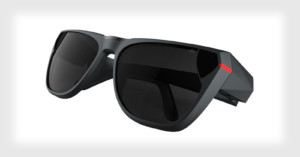
Following in the footsteps of Snapchat's Spectacles, there is a new kid on the block in the world of camera sunglasses: Acton. The company has created a new pair of sunglasses called ACE Eyewear that can shoot photos and videos and post them to Facebook, YouTube, and Instagram.
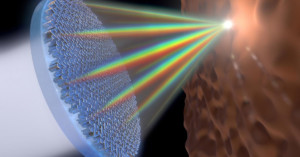
Researchers have created the first "metalens" that can focus the entire visible spectrum of light onto a single point in high resolution. The breakthrough brings metalenses one step closer towards replacing bulky camera lenses with much smaller chips.
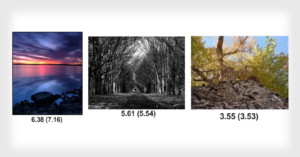
Google has introduced a new AI system that's trained to rate photos on whether or not they are good technically and attractive aesthetically. It's called NIMA, or Neural Image Assessment
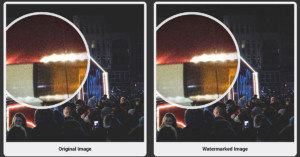
Imatag is a new service that uses invisible watermarks to protect photographs from copyright infringement. With the development of AI technology that can easily remove physical watermarks, more covert solutions could be a solution for photographers looking to identify and prove ownership of copied images online.

UK police are turning to high-tech artificial intelligence to help wage war against the scourge of child pornography, but the system currently has a tricky problem: the AI has a hard time telling the difference between nudity and photos of deserts.

DxO recently announced that it has acquired the Nik Collection suite of popular photo tools after Google abandoned development in May. The Collection is still available as a free download and can be run as standalone programs independent of Photoshop and Lightroom. Here’s how.

Dual cameras have become ubiquitous in the smartphone world, and with them has emerged a new technique for simulating a shallow depth of field -- the feature commonly called ‘Portrait Mode’. This 10-minute video from Marques Brownlee explains how it works, and it also pits Portrait Mode on an iPhone X, Note 8, and Pixel 2 against the $8,000 medium format camera Hasselblad X1D.

Samsung smartphone are about to get a lot more internal storage. Samsung has announced that it has begun mass production of a 512GB embedded Universal Flash Storage solution that will appear in the next generation of smartphones from the South Korean giant.

Researchers from the University of Illinois have managed to create a new camera called the Mantis Cam that can see polarized light. This technology provides possible solutions for everything from unlocking the mysteries of the underwater world to early cancer detection.

Want to change winter to summer or day to night in a photo? In the future, that could be as easy as a single click. Scientists at NVIDIA are working on a mind-boggling AI system that can change things like seasons, time of day, and weather in photos.

Adobe just revealed a powerful new tool that's coming soon to Photoshop CC. Called "Select Subject," it uses machine learning to detect subjects in your photos to help you isolate them from the backgrounds.

Security researcher Kevin Finisterre recently found a flaw that exposed private customer data of the Chinese drone company DJI to the public. After reporting the bug to DJI's bug bounty program, Finisterre received pushback and a legal threat. So instead of collecting his $30,000 bounty, Finisterre is now going public with his findings (and experience).

Instead of searching for the ideal model for a photo shoot, photographers of the future may be able to generate one using artificial intelligence. Neural networks these days can generate portraits of imaginary people.

Olympus today unveiled a new camera -- one that's unlike any of the company's modern digital cameras. The 2.4-megapixel camera is found in the new Olympus EyeTrek Insight EI-10 smart glasses.

LiShield is a new LED light bulb technology that helps protect privacy by confusing cameras to prevent unauthorized photos. The bulb is the creation of a team of researchers at the University of California, San Diego.

Pika is a new bot friend that "explores the world" with children through the use of a smartphone camera. The concept combines the camera with computer vision and augmented reality.

As the worlds of artificial intelligence and digital photography collide, we're starting to see some mind-blowing technology emerge. The latest research in turning low-resolution photos into high-definition photos may drop your jaws -- it's starting to cross into the realm of sci-fi.

Let's Enhance is a new free website that uses neural networks to upscale your photos in a way Photoshop can't. It magically boosts and enhances your photo resolution like something straight out of CSI.

Apple has quietly acquired Invisage, the camera sensor startup company behind QuantumFilm, according to a new report.

Want to turn your smartphone snapshots into DSLR-quality photos? A group of scientists in Switzerland is trying to help make that possible. They've created a neural network that aims to automatically enhance low-quality phone snapshots into "DSLR-quality photos."

Have you ever considered that your iPhone might be watching you? Felix Krause, a developer at Google, says he has found that iPhone apps could theoretically spy on you if given camera permissions.
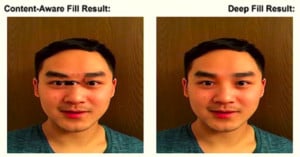
Adobe shared its powerful Content-Aware Fill as a sneak peek back in 2010, and the feature has become a powerful tool in the Photoshop arsenal. Now the company is teasing a new technology called Deep Fill, which takes the idea to yet another level using AI techniques.
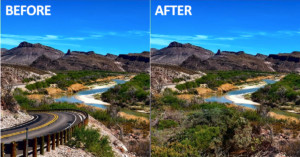
In addition to its Cloak and Scribbler projects, Adobe also used its MAX 2017 conference to offer a sneak peek of a technology called Scene Stitch. It's like Content-Aware Fill on steroids: instead of guessing the fill content with details from the photo, Scene Stitch uses AI and a database of images to find content to fill the hole.

Adobe is teasing an impressive new technology called Scribbler. It's an "interactive deep learning-based image generation system" that you can use to automatically colorize black-and-white photos. Above is a 6.5-minute demo of Scribbler.

Adobe demoed a number of technologies at Adobe MAX 2017 yesterday, including something called Cloak. It's basically Photoshop's Content-Aware Fill for video -- you can easily remove unwanted things from video, as you can see in the 6-minute demo above.

Google Photos is now able to identify and recognize your furry feline or canine companions, pulling together albums specifically featuring them.

The stock photo service Shutterstock has announced a new powerful photo search tool called Composition Aware Search. It uses advanced deep learning technology to let you search for photos containing certain objects in certain locations.

Western Digital has unveiled new "next-generation technology" that promises to bring hard disk drive capacity to a whopping 40TB by 2025. That's a leap of about 300% in a span of around 7 years.

First launched in the iPhone 7 Plus, Apple's 'Portrait Mode' uses depth data from dual rear cameras to generate faux blur for a shallow depth-of-field effect. Google's new Pixel 2 has a similar mode that's done with a single "dual pixel" sensor. Now Samsung has unveiled a new "dual pixel" sensor that may bring this tech to an even wider audience.

Researchers at Facebook and Tel Aviv University in Israel have teamed up to bring your selfies to "life." Using a single still photo of a person's face, their new technology is able to animate it and introduce different expressions.

Think Photoshop runs slowly on your computer? To make yourself feel better, check out how "fast" basic Photoshop operations were 20 years ago. Here's a short clip of the Photoshop demo that was given at Macworld Expo in 1997 to show the speed of a new CPU.

Google's new Pixel 2 phones boast the best smartphone camera ever tested by DxOMark. In this 9-minute video by Nat and Friends, learn how Google created this bar-raising camera. The video includes a number of interesting interviews with the Pixel 2 team.

More and more cameras are getting Internet connectivity these days, opening the door to new security and privacy concerns. A Dutch woman learned a creepy lesson on this recently when her Internet-connected camera started tracking her and talking to her.

The new Google Pixel 2 smartphones announced yesterday has a new feature called "Fused Video Stabilization." The short side-by-side comparison video above shows how effective it is at smoothing out extremely shaky footage.

Say hello to colorspike, a powerful animation-driven LED light stick that can revolutionize how you think about adding colored light to photo shoots and video projects.

Google has just announced Google Clips, a new hands-free camera that takes photos for you. Instead of having to pull yourself out of special moments to shoot photos and videos, Clips will capture moments so you can be in them.
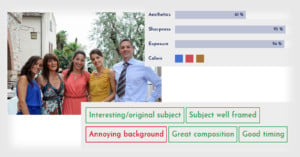
Apple has quietly acquired a new French technology startup, Regaind, which specializes in AI and computer vision for analyzing photos. Apple's Photos app is already able to search through images using keywords like "dog" or "tree" and pull out the relevant images, but this acquisition may indicate further AI developments for the app.

Snapchat has been rolling out a continuous stream of new filters, but the latest ones are rather unusual. Following the trend of Snapchat working with augmented reality, the new additions will totally transform a boring blue sky into something far more dramatic.