A Digital Photographer Tries Large Format for the First Time
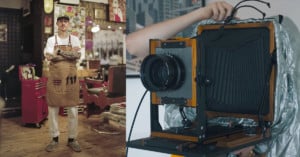
This lovely video from photographer Thomas Heaton sees him heading out in to the wilderness with his tent and an Intrepid 4x5 to try large format photography for the first time.
“Yeah, I’m in a crevasse”, Jamie Mullner radios to his friends after tumbling 60 feet to the depths of a glacier in the Swiss Alps. “I had the GoPro recording; how epic is that!?”
I recently had the amazing opportunity to work with some very interesting historical media. A retired NASA engineer friend contacted me having found a box of photographic films in his desk drawer. Turns out the box contained two partial rolls and several cut slides of 70mm film from the 1971 Apollo 15 mission! What a find!
Scanning film is probably the least attractive part of shooting film, but that doesn't mean you should neglect this stage. Nowadays, we all want to share our analog images online, and the only way to do that is by digitizing our negatives one way or another.
Lomography reasserted their commitment to film photography nostalgia today by bringing another relic of photography's past back into the mainstream. Say hello to Lomography's new Simple Use Film Camera, the disposable camera gone hipster.
A couple of years ago, my twin boys (now 9) began to ask me for cameras. I was 6 when I got my first camera -- it was the first thing I used my allowance on.
The Library Book is a lavish creation of sweeping 360° panoramic photography of U.S. libraries by Thomas R. Schiff and published by Aperture. The book beautifully captures the shifting architectural styles through 120 images from the very earliest American libraries to modernist masterpieces.
As camera makers struggle to innovate, consumers are finding little need to upgrade. The market is slowing to the point of inertia—manufacturers need to take a left field approach to stay competitive.
Given that most photos are captured digitally and shared online, it’s easy to forget the beauty of a print.
Aspiring filmmaker Vugar Efendi has created a fascinating video for history and film buffs alike. In it, he places famous movie clips right next to the historical news reels and TV clips that inspired them, showing us just how incredibly accurate some of Hollywood's period pieces really are.
This is the story behind the world's first wide-angle, head-on photographs of a fighter jet. In the video above, photographer Richard Cooke explains how he captured this incredible photograph remotely, on film, essentially shooting blind, back in 1977.
If you have a film or digital camera that can shoot double exposures, there's a free do-it-yourself accessory you can use to get creative with the technique: it's the half lens cap.
This year marks the point at which I have been using Hasselblad cameras for over a decade. My first was a 201F in 2007, before moving to a 203FE in 2011 and adding a 202FA in 2015.
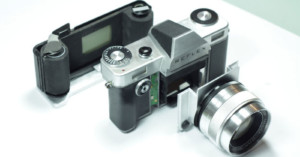
Ever since the advent of digital cameras, some film photographers have dreamed of having a way to convert their beloved film cameras into digital ones. Photographer Robin Guymer took matters into his own hands: using his knowledge of electronics, he converted a Sony NEX-3 mirrorless camera into a digital back for his film Nikon FE SLR camera.
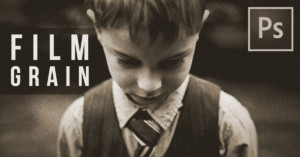
Lomography is selling a new limited edition film called Color Negative F²/400. It's a film with an unusual concept and backstory: it was aged like wine in oak casks for 7 years.
Snapchat is known for popularizing the idea of the self-destructing photo, but did you know that long before Snapchat existed, Polaroid had already offered its own line of self-destructing Polaroid pictures? It was called the Fade to Black line.
In this article, we won't be talking about cameras and film only. Today I also want to share with you a beautiful region of Ireland that I discovered recently. It's called the Ring of Kerry. But before we start our exploration of the Emerald Island, let me introduce our travel buddy: Kodak Ektar 100.
Film is not dead. In fact, it's a growth industry. No, we're not talking Tech or Medical type growth, but there is a clear and obvious resurgence of interest in film photography, and companies like ADOX are reacting to it by expanding and building new factories.
Developing your own 35mm or 120 film at home almost always requires a darkroom, but LAB-BOX wants to change all that. The new 'multi-format daylight-loading film tank' lets you develop your own film anywhere, even in bright sunlight if you'd like. No darkroom required.
It's time to give some long-overdue love to two cheap films in price, but by no means in quality. It can be tempting to go for the expensive films when you're out buying rolls of 35mm, but let's not forget about the bottom of the shelf.
Vincent Moschetti of One Year with Film Only has developed a fun little "tool" that will help film beginners find their perfect 35mm match. It's called "Film Dating," and it's basically a 5-step questionnaire that tries to narrow down the qualities you like in a film stock and suggest the best option for you.
First Kodak, then FILM Ferrania, and now Bergger. The French manufacturer is the latest company to further the analog photography resurgence by announcing a new film. It's called BERGGER Pancro400.
The film renaissance is growing. Just weeks after Kodak announced the return of Ektachrome film, the Italian film brand FILM Ferrania is back from the dead as well. Today it introduces its first new film stock. Called Ferrania P30, it's a black-and-white 35mm film.
Patience is not one of my many virtues and I've always preferred practice to theory. Instead of taking the time to learn the essentials before starting, I usually jump in head-first... come what may! This behavior has caused me disappointment, loss of time and money.
Introductions to basic lighting don't get much simpler or better than this. You could call it Lighting 101, and whether that light is coming from a window or an artificial light source, the info here qualifies as "must know basics" for anybody with a camera in hand.
Kodak made a lot of people happy when they announced they would be bringing back Ektachrome, but they blew those same photographers' minds when they admitted they were "looking into" bringing back Kodachrome. Those people won't be happy about this update.
Raymond Thi—the creator of the Composition Cam app and ultra-popular Twitter account—is back with another great database for composition-obsessed photographers. It's called Geometric Shots, and it's a searchable collection of great composition from well-known films and TV shows.
The world of analog photography surprises me a bit more every day! I recently read about a technique called Stand Development, so I have decided to try it myself. For those of who never heard of it before, let me explain you the differences between it and a normal development process.
Back in 2015, Sydney, Australia-based photographer Alex Benetel was invited by Instagram and Disney to shoot behind-the-scenes photos on the London movie set of Rogue One: A Star Wars Story.
StreetPan is the 400 speed, panchromatic brain-child of Bellamy Hunt of Japan Camera Hunter fame.
In case you haven't heard, film is making a comeback. It's not just small companies funding new film stocks on Kickstarter, either—Kodak is bringing back Ektachrome and "investigating" what it would take to bring back Kodachrome. There's never been a better time to revisit one of the greatest film cameras ever made.
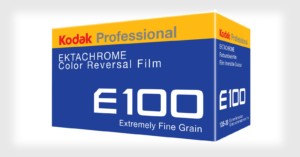
It's not every day that you hear about a classic film line being brought back from the dead, but that's what's being announced today. Kodak Ektachrome film is coming back for film photographers.
Prior to January 22, 1987, Associated Press photographers were given a choice of shooting B&W or color film on photo assignments. But on that day, something happened that caused AP photographers to switch to shooting every assignment in color: it was the suicide of American politician R. Budd Dwyer.
Brooklyn-based fine art photographer Johnny Tang has spent the past five years working on an impressive series of clone photographs. Some of the images are created with over 100 photos... shot entirely on 35mm film.
I entered the world of photography when digital cameras where already on the rise, and as a result, I learned photography on digital. That being said, I am a sucker for anything analog... the sensation of using real organic materials to produce photographs excites me.
My name is Marius Hanzak, and I'm an experimental photography student currently studying at the Cleveland College of Art and Design in the UK. For one of my recent projects, titled RGB Church Street, I experimented with making color photos using black and white film.
It's the holidays, which means gift guides from every photography site out there are about to clutter your Facebook feed. We'll probably put something together for you as well, but for now, here's one idea that's both affordable and bound to make the film lover on your list smile.
We all know a knockoff when we see it. Fake Rolexes, certain Russian motorcycles, and pretty much anything bought off of a street cart in Hong Kong, these poor quality imitators just can’t match their real deal counterparts. It’s no different in the world of film. And one film in particular has garnered a reputation for being just such a cheap copy—Ilford HP5 Plus.
Photographer Christoffer Relander collects landscapes... literally. Using medium format film, he's capturing some of his favorite landscapes inside mason jars using in-camera double exposures.
It’s not news that photography has changed dramatically over the past century. What was once an arduous process involving chemicals and clothespins has been completely digitalized, and in many cases automated. Anyone with a smartphone can call themselves a photographer; but does that mean the artistry has fizzled? Not in the least.
I've been shooting Canon for the last 15 years and have finally made the decision to move on. The reasons are not really the focus of this article but rather my process for getting into a new system and making that process a creative one.
"What was your first camera?" The answer to that question can reveal a lot about a person. Did you start on digital or film? Was it an SLR, a point-and-shoot, maybe even a medium format camera? Was it your mom's camera? In this fun video, 10 top industry photographers share what their first camera was.
Most photographers could work their way through a few terabytes worth of memory cards during a trip to Norway. But when Tom Kluyver decided to join his buddy Chris Konig on a landscape photography adventure, he didn't pack memory cards. Instead, he brought his panoramic Hasselblad XPan and some Kodak Portra.
Wedding photographers these days often find themselves competing with guests who spend the whole ceremony shooting photos with smartphones, DSLRs, and even tablets. The short film above, titled "Unplugged," is a parody that shows why couples are sometimes choosing to have an "unplugged" wedding free of these distractions.
Here's a video by the Camera Repair Centre in Halifax, Nova Scotia, that shows an overhaul they did recently of a Pentax K1000 film SLR -- the "dirtiest Pentax [they've] seen in a very long time." The 3 to 4 hour examination and cleaning is condensed down to 2.5 minutes, and shows the beautiful mechanical inner workings of the K1000.
One of the challenges (and rewards) of managing a digital production lab for a university research library is working with the wide assortment of analog formats that are collected within its archives, special collections, and map library holdings. For instance, we've recently begun conversion work on a 2002 aerial survey of Connecticut that was originally shot on 9"x9" positive black and white film.
If you've been itching to step up your film photography game—be it trying 35mm for the first time, stepping up to 120 medium format, or even trying out large format film—this old video that's circulating the Interwebz again today is a great place to start.
My name is Skyler Adams. I recently wanted to challenge my gear acquisition syndrome, so I decided to shoot with a $1 camera for a month.
Gary Fong is famous in the photo industry for inventing the Lightsphere diffusion system, but now he's taking a huge step in a new direction: Fong has directed a Hollywood feature film... using only Sony mirrorless cameras.
Storm and wedding photographer Mike Olbinski of Phoenix, Arizona, is back again with another incredible time-lapse project that shows summer monsoon season covering landscapes with rain, lightning, and dust. The 8-minute video above is titled "Monsoon III."