March 2026

Jump to articles by year, month, or day.

Year
Month
Day

Year alone opens that year’s archive. Add a month or day to narrow it.

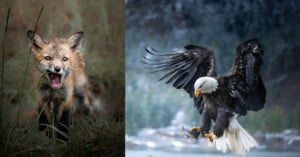
A young fox stands in tall grass with its mouth open, while beside it a bald eagle swoops down over water, clutching a fish in its talons.

Beyond the Sharp Shot: 11 Tips to Take Artistic Wildlife Photos

Wildlife photographer Tiffany Taxis had been sitting with a bear and her three cubs on the Alaska coast for hours when the large animal went rigid. She stopped nursing. Her gaze became focused and she started to drool. Thirty yards away, a lone wolf stood against the glaciers. Every photographer's instinct would say the same thing: zoom tight, fill the frame with the wolf. Taxis did the opposite. She pulled wide, trusting her storytelling instincts that years of art school had taught her.

A collage of three close-up images: honey bees on honeycomb, a bee drinking from a yellow flower, and a bumblebee hanging upside down from a white blossom.

A Closer Look at the Beautiful Macro Cinematography in ‘Secrets of the Bees’


As its name suggests, National Geographic's new two-part documentary series, "Secrets of the Bees," turns the lens toward one of Earth's most important inhabitants: bees. The series is fascinating, full of interesting information and science about bees, but also replete with exceptional cinematography. The miniseries has many fantastic close-up shots of bees, unlike anything captured before.

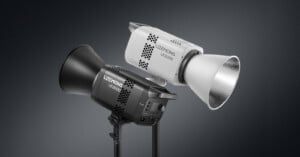
Two professional studio lights, one black and one white, with the brand name "Litetons LE200D" displayed on each. The lights have large reflectors and are set against a dark gradient background.

Godox Introduces Budget-Friendly Monolight for Creators

Godox continues to expand its accessible lighting ecosystem with the release of the Litemons LE200D Daylight LED Monolight, a compact yet powerful fixture designed for creators who prioritize output, simplicity, and value. Positioned as a daylight-only alternative within the growing Litemons lineup, the LE200D delivers impressive brightness and modern control features at a notably aggressive $190 price point.

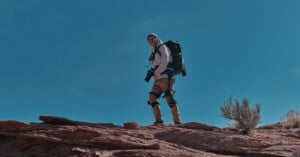
A person wearing outdoor gear and a backpack stands on a rocky terrain under a clear blue sky, holding a camera and looking off into the distance. Sparse desert vegetation is visible nearby.

The Vastnaut One Exoskeleton Expands Outdoor Photography’s Horizons

Photography is among the best and most fun ways to enjoy nature. However, for many, the physical demands of outdoor adventures can be too much, forcing people to stay home or stick to only the most accessible, often overcrowded, photo spots. That's where Vastnaut comes in with the Vastnaut One, the world's first AI-powered 4x4 wearable exoskeleton. It works with your body to reduce stress and enable you to go farther and explore places that you otherwise couldn't.

Two iPhones side by side: the original iPhone with a silver back and black bottom section on the left, and a modern iPhone with dual rear cameras and a dark finish on the right, both showing the Apple logo.

See How Far iPhone Camera Performance Has Come in 19 Years

While PetaPixel readers are particularly passionate about serious, dedicated cameras with the latest and greatest features, one of the most popular cameras in the world is the iPhone. Nearly every year, Apple touts improved photo quality on its latest handhelds, often due to a combination of better hardware and more sophisticated software.

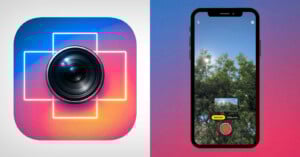
A camera app icon with a lens and neon lines is on the left, while on the right, a smartphone screen shows a camera app taking a photo of trees under a blue sky. Both images have a gradient pink and blue background.

DualShot Recorder App Captures Vertical and Horizontal Video at the Same Time

A new mobile app, DualShot Recorder, skyrocketed up the App Store charts this weekend. DualShot Recorder enters the content creation space with a focused promise: eliminate the need to film the same scene twice for different aspect ratios. Designed for iPhone users, the app enables simultaneous recording in both portrait (9:16) and landscape (16:9) formats, producing two synchronized video files from a single tap.

Two digital cameras shown from the back, each featuring a large LCD screen, control buttons, and dials. The camera on the left has an electronic viewfinder in the top left corner; the one on the right does not.

Panasonic, Please Stop Removing Viewfinders

Earlier this week, Panasonic unveiled the Lumix ZS300, also known as the TZ300 in some markets. The new compact camera is nearly identical to its predecessor, released in early 2018, except for one big thing: the ZS200's electronic viewfinder has been removed, replaced with nothing but more plastic. There are logical explanations for this, but they do little to stop me from disliking the change.

Close-up of a black Nikkor S camera lens, showing detailed texture, focal length markings (135, 200), and two customizable L-Fn buttons on the lens barrel against a dark background.

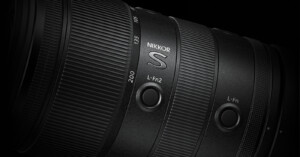
Nikon Explains How It Makes Lenses Smaller While Somehow Making Them Better

Nikon's original Nikkor Z 24-70mm f/2.8 S and Nikkor Z 70-200mm f/2.8 VR S lenses were already superb when they were released in 2019 and 2020, delivering great optical performance and dependable autofocus inside a well-designed chassis. However, much has changed in lens design in the years since, and Nikon's even better, significantly lighter 24-70mm f/2.8 S II and 70-200mm f/2.8 VR S II zooms reflect multifaceted technological advancements.

A spacious, modern museum lobby with large digital screens displaying nature scenes, wooden architectural features, a globe, informational exhibits, and visitors including adults and children walking and interacting.

Upcoming Nat Geo Museum Puts Iconic Photography Front and Center

The National Geographic Museum of Exploration officially opens June 26 in Washington, D.C., inviting visitors to experience the power of photography, storytelling, and human curiosity. The museum features exhibitions that celebrate exploration, scientific discovery, and visual storytelling, with photography at its heart.

A digital graphic showing the letters "DNG" in bold blue font above a stylized camera shutter icon on a blue-green gradient background.

After Over 20 Years of Efforts, DNG Is Now the Official RAW Image Standard

In March 2004, Australian photographer Robert Edwards asked a simple but meaningful question on Rob Galbraith's now-defunct photography forums: "Could Adobe make a RAW format?" The answer was very much "yes," and Adobe announced the DNG format, or Digital Negative, later that same year. Now, more than two decades later, DNG is now the official standard under the International Organization for Standardization (ISO).