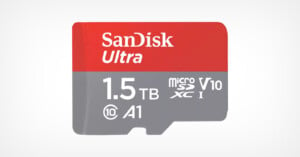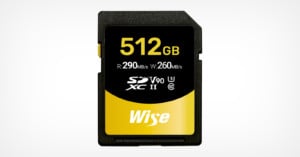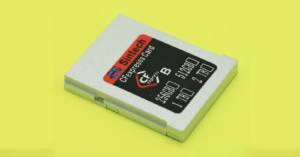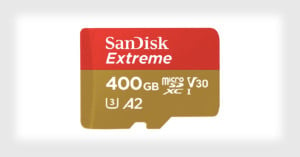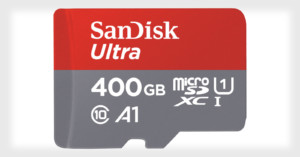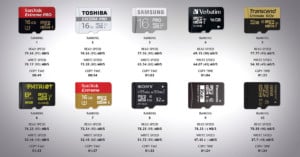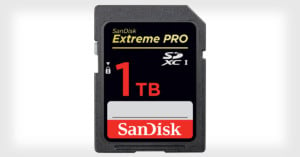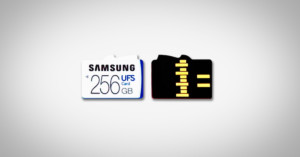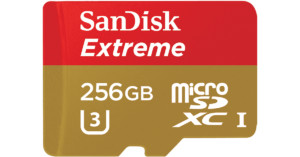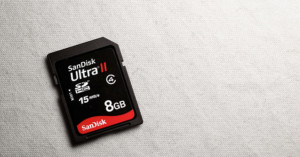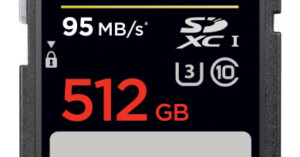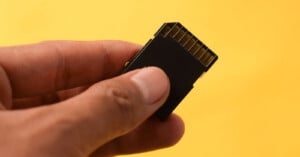
Check out the two memory cards above. One of them is a counterfeit card while the other is a genuine one. Can you tell which is which? If you can’t, we don’t blame you. Japan-based photography enthusiast Damien Douxchamps couldn’t either until he popped the fake card into his camera and began shooting. The card felt a bit sluggish, so he ran some tests on his computer. Turned out the 60MB/s card was actually slower than his old 45MB/s card.
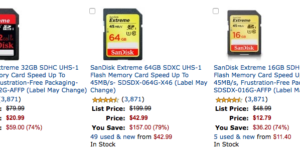
While it’s not unusual to come across counterfeit memory cards — it’s estimated that 1/3 of “SanDisk”-labeled cards are — what’s a bit concerning is how Douxchamps purchased his: he ordered the cards off Amazon — cards that were “fulfilled by Amazon.”
Read more…

When XQD memory cards were announced in December 2011, the CompactFlash Association touted the format as the successor to CompactFlash cards. We definitely seemed to be moving in that direction at first: one month after the unveiling, Nikon’s flagship D4 DSLR was announced with XQD card support. The day after that, Sony became the first major memory card maker to announce a line of XQD cards. Six months later, Lexar also announced its intentions to join the party.
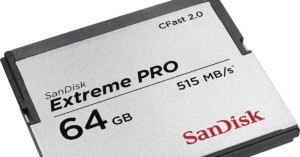
Since then, things have died down to the point where you can hear grasshoppers chirping. Not a single XQD-capable camera was announced at Photokina 2012 this past week. Despite being the first to make them, Sony strangely decided to leave the cards out of its top-of-the-line cameras as well.
Read more…

At the end of last year a new format called XQD was unveiled as the eventual replacement for CompactFlash. About a month later at CES 2012, Sony announced the first XQD cards. If you’re not sold on the new format, here’s some good news for you: Lexar and SanDisk have both announced that they have no plans to release XQD cards in the near future and that they’re both committed to the CompactFlash format (a bit strange though, given that SanDisk was one of the companies that announced XQD in November 2010). Lexar’s actions certainly back up its words: at CES it unveiled its largest (256GB) and fastest (1000x) CompactFlash cards ever.

(via PhotographyBlog)
Image credit: 22 GB of wedding photos by John Carleton
Update: The deal prices seem to be fluctuating. They might not be what our screenshot shows.

In the market for memory cards? B&H is currently offering SanDisk Compact Flash cards at crazy prices. They’re listing Extreme Pro cards at less than 50% of the price offered at other retailers. For example, a 16GB Extreme Pro card currently costs $60 (with free shipping in the US) from B&H but $130+ at most other places.
SanDisk Compact Flash Cards [B&H Photo Video]
Thanks for sending in the tip, Tyler!

According to a survey conducted for SanDisk, 64% of adults in the US wouldn’t consider destroying their photo collections for $1 million. At the same time, the general public probably doesn’t spend nearly enough time and money ensuring the safety of those same photos. Well, SanDisk announced a new product today designed to help photos last at least as long as their owners do. It’s called the “Memory Vault”, and is a rugged flash drive that has the proven ability to preserve data uncorrupted — a big problem for ordinary hard drives — for up to 100 years. 8GB of storage will cost you $50, while 16GB is priced at $80.
SanDisk Memory Vault [SanDisk]

Last week Toshiba announced “FlashAir” SD card with built-in LAN functionality, and today SanDisk is launching a counterattack. Rather than develop its own wireless cards, the company is partnering with Eye-Fi to sell co-branded wireless SD cards to European customers. The cards, which allow photos to be transfered to a computer over Wi-Fi, will be available in 4GB and 8GB sizes, and are basically Eye-Fi cards with a SanDisk logo slapped onto them. No word on price or release date as of yet.
It looks like wireless memory cards are going to be one of the next big things in digital photography as more and more big players are hopping onto the bandwagon.
(via Eye-Fi via MegaPixel)

Did you know that a third of the SanDisk memory cards being used on Earth are actually fake? A SanDisk engineer recently shared this startling fact with a reader over at The Online Photographer:
[...] at any given time, approximately a third of the SanDisk memory cards (made by Toshiba) being used out there in the world are counterfeit. As in, not SanDisk memory cards at all—some other kind of cards dressed up as lookalikes.
Thirty percent, was the number quoted. A third, more or less.
To make sure you’re getting the real thing, always purchase your memory cards from reputable dealers.
Read more…

Sure Lexar just launched a 128GB SDXC card, but that only transfers at a meager 20MB/s. SanDisk’s new Extreme Pro Compact Flash card announced today boasts the same 128GB capacity but has a write speed of up to 100MB/s. That extra 80MB/s is quite costly — unlike the $700 it costs to buy the Lexar SDXC card, this SanDisk one costs $1,500. But as they say, time is money… right?

Nikon, Sony, and Sandisk have announced that they’re teaming up to develop a set of specifications for the next generation of memory cards. The new format uses a new interface (PCI Express, previously Parallel ATA) that allows data transfer rates of up to 500MB per second. The theoretical maximum capacities of the cards would also be increased from the current 2 terabyte ceiling.

These future cards would allow photographers with future cameras to store a large number of RAW images captured with continuous burst shooting, and would also make transferring data off the card a snap. No word yet on when the future will arrive.
(via Engadget)
Image credit: Sandisk Extreme III 16GB by janandersen_dk

SanDisk has just announced that Japan’s police force has adopted its 1GB SD WORM memory card for collecting evidence. The Write Once, Read Many cards are tamperproof, can only be written to using a WORM-compatible device, and supposedly stores data reliably for 100 years. Practically speaking, this means that photographs and audio can be collected onto the cards, allowing those who access the data later on to be confident that it wasn’t tampered or edited in any way. The National Police in Japan have tested the technology extensively, and seem to be convinced of SanDisk’s claims.

We can’t really think of any practical application for ordinary photographers (can you?), but it’s interesting to know that this kind of technology is out there and being used.