
The Best Lens Filters for Photography in 2026
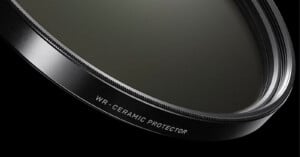
Lens filters are among the few camera accessories that can be either genuinely useful or completely pointless, depending on the quality of the glass, coating, frame, and purpose.
Matt Williams is a writer, photographer, and filmmaker currently residing near Dayton, Ohio, where he attends school, majoring in English Language Arts and Political Science. He is passionate about the science, art, and history of photography. He is a fan of Paul Newman, Ingmar Bergman films, rare and unique lenses, fruit (not raspberries), and telling people on the Internet they’re wrong. Some of his favorite photographers are Saul Leiter, Berenice Abbott, Gregory Crewdson, Edward Weston, Imogen Cunningham, and William Eggleston. Someday, he’d like to work for Zeiss or Leica and promises to learn German if that happens. He is working on several photo projects and might finish them someday.
Lens filters are among the few camera accessories that can be either genuinely useful or completely pointless, depending on the quality of the glass, coating, frame, and purpose.
Autofocus is one of the great invisible revolutions in photography. When it works well, it disappears. A photographer raises the camera, half-presses the shutter, sees a box snap to an eye, a bird, a car, or a face, and the lens silently moves to the right position.
Photography has always had a weakness for metrics, but dynamic range has taken on a peculiar authority in the digital era. It is treated not just as a specification, but as a verdict. Cameras are ranked, dismissed, or praised based on differences of less than a stop, as if such a number alone could determine the quality of an image.
This year, the world celebrates the 100th anniversary of a camera that revolutionized photography: the Leica I. Often called the Leica Standard, this compact 35mm rangefinder was introduced at the 1925 Leipzig Spring Fair and marked the beginning of modern handheld photography. It didn’t just represent a technological leap -- it sparked a cultural and artistic movement.
Autofocus (AF) is one of the most significant advancements in the history of photography. From the first autofocus camera -- the Konica C35 AF in 1977 -- to the first true autofocus ILC, the Minolta Maxxum 7000. Although manual focus still has its devotees -- especially in genres that reward deliberation, such as macro, landscape, or vintage shooting -- autofocus has become the default expectation for most modern photographers.
In 2012, beneath the unassuming asphalt of a Leicester City Council car park, history stirred. Archaeologists and historians from the University of Leicester, in collaboration with amateur enthusiasts and the Richard III Society, undertook a dig many thought more symbolic than scientific.
Pick up a dusty old lens from a flea market, an estate sale, or even your own forgotten storage bin, and you might notice something strange glinting beneath the surface of the front element: delicate white threads, odd patterns like spiderwebs or frost creeping across the inside of the glass. That eerie substance is lens fungus -- an unwelcome guest in the world of photography that quietly invades optical systems, thrives in darkness and moisture, and, if left untreated, can cause permanent and costly damage to your equipment.
When I first reviewed Leica LUX, I approached it with a blend of cautious optimism and healthy skepticism. Leica’s decision to enter the mobile photography app space was bold, considering both the reverence surrounding the Leica name and the saturated, high-standard world of iPhone photography apps -- where names like Halide, Obscura, and ProCamera dominate. At launch, Leica LUX showed promise but also left a lot to be desired. Now, nearly a year later, it’s time to revisit it. Spoiler alert: there's been meaningful progress -- but also stubborn blind spots that Leica needs to address if LUX wants to compete at the top tier.
Photography is as much a science as it is an art, and nowhere is that more evident than in the construction of camera lenses. Behind every sharp image is a complex array of glass elements, coatings, and design choices that collectively shape how light is captured.
The Motion Picture Production Code, more commonly referred to as the Hays Code, was one of the most influential forces shaping Hollywood’s Golden Age. Created to uphold moral standards in cinema, the Code governed what could and could not be shown on screen for over three decades. Yet, as restrictive as it was, resistance to its rules surfaced even from within the industry itself.
For several decades, there were two big names -- both of which happened to be German -- in the 35mm camera world that stood like skyscrapers among all companies. You’ve undoubtedly heard of both of them: Carl Zeiss and Leitz Camera, more commonly known as Zeiss and Leica.
Medium format cameras have long been cherished by photographers for their ability to produce images with exceptional detail, rich tones, and a unique aesthetic that’s difficult to replicate in smaller formats. While these cameras were historically the tools of professional studios and well-funded enthusiasts, the growing interest in film photography has created a vibrant market for medium format options that cater to a range of budgets. This guide is here to help you navigate the world of budget-friendly medium-format film cameras and find the perfect model to match your creative ambitions without breaking the bank.
Leica M-mount cameras and lenses are legendary for their precision craftsmanship and stunning image quality. But let’s face it -- Leica glass can be intimidatingly expensive. If you’re dreaming of getting the most out of your Leica setup -- whether it be digital or analog -- without spending a small fortune, you’re in the right place. The truth is that these days, you needn’t buy the most expensive glass to get incredible results; most major manufacturers are making lenses that are, at minimum, good. Many of them are making excellent optics, including those relatively new to the scene.
The resurgence of film photography in recent years has breathed new life into the world of analog cameras and for many, the 35mm format remains the gold standard. Its perfect balance of image quality, convenience, and affordability makes it a favorite among both newcomers and seasoned photographers.
During the tumultuous years of World War II, communication between American soldiers overseas and their loved ones back home was not just a matter of personal comfort but a crucial element in maintaining morale on the front lines.
Photography is an art and science deeply rooted in the manipulation of light. From the earliest days of the camera obscura to the digital age, photographers have sought to control exposure—the amount of light that reaches the camera sensor or film—to create compelling images. Central to this control are the variables of aperture, shutter speed, and ISO (no, ISO does not actually change the sensitivity but nevertheless plays an integral role in exposure choices).
In recent years, Venus Optics has developed a reputation for crafting innovative and unique optics, making a name for itself by producing lenses that often push the boundaries of engineering. I’d go so far as to say Venus Optics has become one of, if not the most exciting manufacturers on the market.
A couple of weeks ago, Leica announced the Leica LUX camera app, the legendary German company’s first smartphone app for taking photos. While the company has produced its FOTOS app for many years, this is its first dedicated to smartphone photography.
As a huge nerd for the history of photography, I've spent a lot of time reading about and studying products of the past. And there have been a lot, to say the least.
As many of us, including myself, prepare to travel this summer, we -- as photographers -- tend to carry a lot of lithium batteries for our photography gear. After all, we aren’t going to check our precious and pricey cameras, lenses, and other equipment. Naturally, batteries are a necessary component of any photographer’s kit, whether they be camera batteries, lithium-ion AA or AAA batteries, or something else.
A tripod head is one of the most important pieces of equipment a photographer can own. Most photographers start with cheap, shoddily built tripods with integrated heads, sometimes bought as part of a kit. While they don’t know it, these tripods aren’t worth their weight in plastic, which is a fancy way of saying they’re worthless.
While most of the attention in the photography world is focused on full-frame and APS-C products -- hardly surprising since those are what most companies focus on -- Micro Four Thirds is still one of the best systems on the market.
Last fall, Fujifilm unveiled its newest medium format camera, the Fujifilm GFX 100 II along with its first tilt-shift lenses and a new fast prime: the Fujifilm GF 55mm f/1.7 R WR.
I’m not just a camera history nerd, I’m also a huge fan of weird things in general. Weird and unique technology is especially fascinating, and I’m sure many readers here share the same sentiment.
My first digital ILC (interchangeable lens camera) was the Nikon D40, which I purchased during my senior year of high school in late 2007. That camera was followed by the Canon T2i (550D), which I bought in 2010, primarily because of Canon’s significantly more advanced video features; I have always been an active filmmaker as well as a photographer. Like most people, my first two lenses for each of these cameras were the kit 18-55mm zoom and a cheap nifty-fifty prime lens, so the cost of switching systems wasn’t exactly high.
I have always admired Sigma. It wasn’t regarded in the same league as it is today for its lenses until the Art series came out, but Sigma’s digital cameras have always been singular in design and purpose. The family-owned company has never been afraid to try something new, and honestly, that’s something we need to see a lot more of in the photography world.
One of the best things I’ve purchased as a photographer (and videographer) was an editing console. I own probably eight at this point, all with their own purposes and advantages.
Merriam-Webster defines “retro” as “fashionably nostalgic or old-fashioned.” With the rise in popularity of shooting on film over the past few years and the extraordinary success of instant cameras among the general populace, I think it is fair to say that retro cameras are likewise lusted after by many.
I write about a lot of things here at PetaPixel -- reviews, guides, technical articles, opinion pieces -- but one of my favorite topics to write about is the history of photography. As an avid user and collector of vintage cameras and lenses, I have passionately absorbed as much knowledge about their history as possible over many years. Like studying world history, there is much value in understanding where we came from and what got to us where we are now.
We don’t often extensively cover video gear here at PetaPixel, but we thought it might be helpful to cover some of the best hybrid cameras out there -- those cameras geared toward both photographers and videographers.
The compact camera, also known colloquially as the point-and-shoot camera, has been a staple of the photography world for over a century. Perhaps the first mass-market compact camera was introduced in 1900 by Eastman Kodak, costing a mere one dollar (about $36 today).
Photographic printing was once a widespread and vital art form in itself. While there were (and are) various techniques for producing prints from film, the most common in the film era was the use of light-sensitive paper and an enlarger -- the paper would be exposed to a film negative or positive transparency (slide film) via the enlarger in a darkroom, or a digital exposure unit such a minilab machine, which you used to find in just about every drugstore.
Cameras all have a pretty solid set of features and design elements that appeal to a wide range of users. But, for the most part, pretty much all of them lack a set of features that would make them all a lot more powerful and enjoyable to use.
The Meyer Optik Görlitz 35mm f/2.8 Trioplan II is a unique lens that performs its best when the bokeh is specifically integrated into a shot and not just a coincidence of the defocus area. That means it's not for everyone, but it has its place.
Film is back, and with its booming popularity, there are a lot of options to try. These are our top picks for the best 35mm film you can find today for a range of use cases.
I've been using the Panasonic GH6 for a few months so we could provide a long-term review for what was once a hotly-anticipated successor to the very popular GH5.
Venus Optics has introduced yet another unique lens to the market: the Laowa Argus 25mm f/0.95 APO for Micro Four Thirds. As a long-time user of the Micro Four Thirds system, I jumped at the opportunity to test drive this lens after I heard “0.95” and “APO” in the same sentence.
Once a staple of photography for the general populace, disposable (or “single-use”) cameras have become something of a niche -- most people who never stopped shooting film or those younger audiences who are coming to it for the first time choose to use an affordable SLR or point and shoot camera. The image quality is quite superior and a single roll of film is less expensive (though typically not by much) than a disposable camera.
Photoshop and Lightroom are mainstays in most photographers’ workflows for a reason. While other options abound, no other set of programs matches the popularity and widespread adoption of Adobe’s signature photography software. But while Photoshop’s manipulation capabilities and Lightroom’s processing and editing power are certainly robust, both offer even more power beyond the software itself in the form of plugins.
If you’re a photographer, you’re likely familiar with memory cards. They’re what our photographs are stored on -- removable flash media that we insert into a slot (or slots) in our camera, take photos, and then (sometimes) remove and insert into a card reader or card slot on our computer.
I’ve been an Olympus and Micro Four Thirds user since I purchased a used E-M5 in 2016. I love Olympus, and like many others was sad to hear the news when the company’s photo division came to an end. There was a lot of speculation and anxiety over what JIP would do with the business, but the rebranding to OM Digital encouraged confidence. Since then, I have eagerly awaited the new company’s first camera. And now we have it: the OM System OM-1.
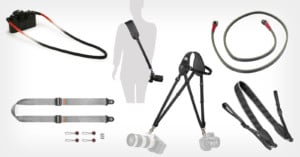
We can spend hours poring over buying guides and recommendations for the fanciest, most expensive pieces of kit to complete our bag as photographers, but in all that excitement, there is one crucial piece of our arsenal that can be overlooked. It hardly qualifies as a bell or a whistle and no one will drool with envy at the sight of it, but it is absolutely one of the most important purchases you will make: the camera strap.
Vintage lenses are more popular than ever, thanks in large part to the mirrorless revolution as well as affordable, high-quality cinema and hybrid video cameras. These lenses are regularly “cine modded” for video use due to their unique character and less clinical rendering, (sometimes) affordable prices compared to cine lenses, helicoid-driven focus with hard stops, and physical aperture rings (which are often de-clicked).
While visiting a friend recently, I noted that his teenage daughter’s walls were lined with Polaroids of her and her friends. I expressed some surprise and inquired about what got her interested in instant photography. She tilted her head and smirked at the question, and I soon understood why. The term “instant photography” struck her as curiously redundant.
Looking to get started in photography but feel overwhelmed at the huge number of different camera models on the market? The daunting feeling can be an obstacle as you try to dive headfirst into the art form, but you have come to the right place: we have selected the best cameras for beginners looking to dip their toes in photography without breaking the bank or getting in over their heads.
The past decade has seen an explosion of film users. Whether this is driven by a sense of nostalgia, or a desire to experience the past (for those too young to have shot film earlier in their life), for the simplicity, or perhaps because some celebrities have taken to shooting film, it doesn’t really matter. The reality is likely a combination of many factors.
While there are many advantages to buying a brand new camera -- including a manufacturer warranty and, well, the fact that it’s never been used by anyone else -- there are likewise a plethora of reasons to buy cameras on the used market.
It is very common to hear the term "1-inch sensor" and based on the name, it would be natural to assume that at least part of it is 1-inch in size. Except that's not the case.
We exist in a constantly churning sea of content: there were 1.4 trillion photos taken in 2021 and an estimated 1.6 trillion shutter buttons will be pressed this year. With so many taken, where is the best place to share photos?
Leica has finally officially revealed the M11 Rangefinder, letting us finally put all the rumors of what we may or may not expect to rest. Now that it's here, what has five years of development given us?