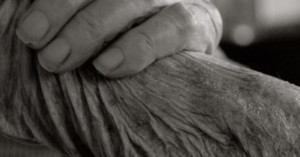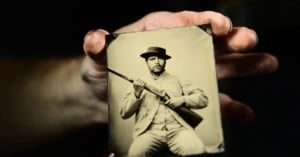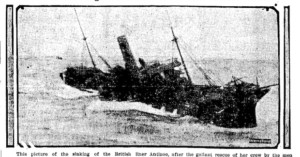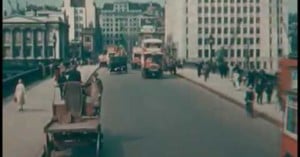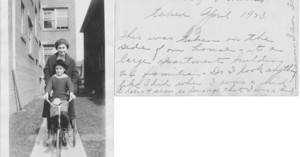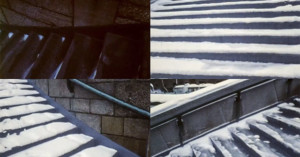
Similar to the centenarian portraits we shared earlier today, here’s a beautiful video with moving portraits (both literally and figuratively) of elderly people by photographer Simon Biswas. The piece is titled “The Light of Day”.
(via FlakPhoto via Coudal)

For his project titled Jahrhundertmensch, German photographer Karsten Thormaehlen shot portraits of elderly men and women who have reached the ripe old age of 100, also known as a “centenarian“. In 2009, the UN estimated that there are only about 455,000 centenarians in the world.
Read more…

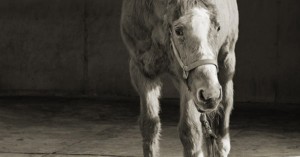
For her project titled “Elderly Animals“, photographer Isa Leshko found and photographed various animals in the twilight of their lives.
Read more…

Check out this awesome picture frame: it’s an old french door that was cut in half, stripped, painted, distressed. Old windows can make for unique frames as well!
(via Reddit)
Image credit: Photograph by TheContrarian2 and used with permission

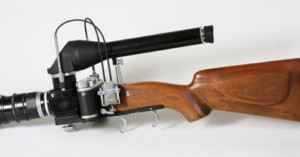
Here’s a strange (and extremely rare) piece of camera gear: the Leica Telephoto Assembly Rifle. Also known as “the Leica Gun”, it was made for photographers at the 1936 Olympics in Berlin, Germany, and became popular among wildlife and sports photographers during the interwar years. One of them will be auctioned off at the Tamarkin Rare Camera Auction on October 30th, and is expected to fetch up to $100,000.
Who knows, maybe shoulder stocks will make a comeback as a form of image stabilization.
Leica Telephoto Assembly Rifle (via Leica Rumors)

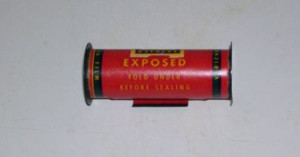
Photo-enthusiast etxenike recently won a spool of Verichrome Pan 116 film in an auction, and discovered that it had already been exposed. He had the film developed, and found that five of the eight photographs survived — not bad for film that has been sitting around since the 50s or 60s!
Read more…

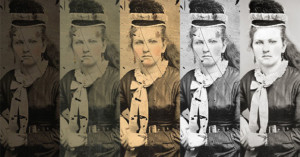
Photo restorer Bob Rosinsky of Top Dog Imaging wrote an interesting article describing how he restored a tintype photograph from the 1870s brought to him by a client.
My standard operating procedure is to use an ultra-high resolution camera combined with a top-of-the-line macro lens to photograph tintypes. I use strobe lights to illuminate the artwork. Strobes produce “hard” light, much like the sun on a clear day. In addition to the strobes, I place a polarizer over the camera lens and polarizer gels over the strobe lights. This eliminates all reflections and enables the camera to pick up a greater tonal range along with more detail.
[...] I began the laborious process of restoration, which involved a prodigious amount of retouching.
Reminds us a bit of this 76-year-old Chinese Photoshop master’s work.
Restoring a Photograph from the 1870s (via kottke.org)
P.S. Earlier this week another tintype photo from the same decade sold for $2.3 million.

For part of his MA in Documentary Photography at the University of Wales, Brendan Corrigan visited car boot sales — a kind of market where people sell things out of their trunks — and purchased old cameras for about the price of a roll of film. He then had the used film inside each camera developed, publishing the photos online alongside the cameras they were found in (along with the price he paid for the camera). His project is called “Make me an offer“.
Read more…

Used in New York back in 1938, this revolver camera was a Colt 38 with a tiny camera that would capture a photograph whenever the trigger was pulled. I sure hope those sample photographs taken with this revolver were shot while the gun wasn’t loaded…
(via Photojojo)
Image credit: Revolver-camera / Revolver camera by Nationaal Archief

If you have an old or broken flatbed scanner lying around and gathering dust, a neat thing you can do is convert it into a cheap, do-it-yourself lightbox for viewing negatives and slides. Photo-enthusiast James Wilson did this as a weekend project:
It was a simple process; gut the scanner, hook up a light fixture inside it, and paint the inside of the glass white. Total cost was around ten bucks for the light fixture, wiring, and paint. [#]
You can read Wilson’s writeup here. There are also some additional photos over on Flickr.
This was one of my weekend projects (via Lifehacker)