SanDisk’s Name is Now Mud
Due in large part to its abysmal response -- or rather, complete lack thereof -- to widespread reports of the failure of its portable SSD products, the SanDisk brand name is now mud.
Due in large part to its abysmal response -- or rather, complete lack thereof -- to widespread reports of the failure of its portable SSD products, the SanDisk brand name is now mud.
It takes a lot of hard work to become a professional photographer. There are untold hours of toil to perfect the craft and lots of money spent to reach a pro level. So when you get there, how much should you be paid for a day's work?
When the Canon EOS R3 hit the market two years ago, we knew there would be a flagship R1 camera coming at some point. While we wait, we figured why not make a wishlist of the features and technologies we would like to see when the R1 finally arrives.
Founded back in 2004, Flickr has changed owners several times through the years as the social media and photo-sharing landscape evolved. Here are 10 reasons why I believe Flickr is still the best site on the Web for photographers.
While PetaPixel editor-in-chief Jaron Schneider implores drone manufacturers to make drones compelling enough to jump through regulatory hoops in the United States, law enforcement and first responders in the United States are finding plenty of reasons to fly drones. However, some critics wonder if existing limits are sufficient to curtail the questionable use of drones, especially by police.
Drones are not nearly as exciting nor popular as they were just a few short years ago as a combination of laws and incremental updates has made the flying them feel like too much effort for not enough payoff.
In my daily routine as a photographer and filmmaker, I work with two Canon EOS R5 cameras. Along with the standard f/2.8 zoom lenses, I also carry a few prime lenses in my camera bag, such as the RF 50mm f/1.2 or the RF 85mm f/1.2.
Have you Googled “headshot photographers" lately? The results are pretty eye-opening. Right before I sat down to write this, my Google search resulted in 4 sponsored ads, right at the top, for AI headshot generators. If that doesn’t concern you, it should.
Melania Trump's latest NFT drop that celebrates the Apollo 11 lunar landing prominently uses a photo from NASA's archives, which is a violation of the space agency's image usage rules.
It's time for a State of the Union, Camera Edition. In recent years, we have seen some dramatically positive changes from all the major camera manufacturers, but nobody is perfect. Let's talk about each one's weak points.
The great photographer panic over artificial intelligence (AI) has been underway for some time, but it reached new heights this week when a photo competition disqualified a genuine photo after the judges became suspicious that iPhone photographer Suzi Dougherty was trying to trick them.
Meta CEO Mark Zuckerberg is making news for more than Meta's popular new Twitter killer, Threads, the famous CEO posted a family portrait on Instagram that has caused a stir across social media.
Meta, formerly Facebook, is no stranger to ripping off features from other social networks and hopping on popular trends. But this time, with Threads, the company finally picked a good time and a good angle to play copycat.
As photographers wait nervously for artificially intelligent (AI) robots to replace them, an inherent quirk of the technology may actually be what saves them.
Flair markets itself as "The AI design tool for branded content," but based on hands-on impressions, it leaves much to be desired.
Google says it is developing an artificial intelligence (AI) software that is trained off real photos of a user and can then generate an infinite number of selfies so that a user doesn't even have to activate their camera to post to Instagram.
Last week, the BeBop Corporation, the owners of Madavor Media, filed a lawsuit against online rental studio platform Giggster for $25 million, alleging breach of contract and fraud over the sale of Madavor Media's photo properties, including Outdoor Photographer and Imaging Resource.
There are many different kinds of photographer. There are passionate hobbyists, professionals, amateurs, and smartphone shooters who have only a passing interest in photography. With very few exceptions, all of them are now using artificial intelligence (AI) in some form or another.
When I opened the box containing the Loupeck CT editing station for my review earlier this year, I immediately looked to see if it had a stand. Designed to sit flat on the desk, the orientation of the Loupedeck wasn’t particularly comfortable on my wrist. It did not.
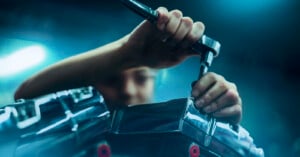
There’s something about the passion that exists between a mechanic and a motorcycle. Their hands and tools are their paintbrushes, and their grease-stained nails are their paint. I was fortunate to witness them create their art and document it all while creating my own.
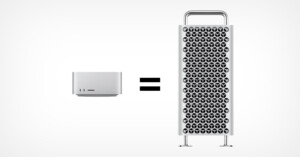
Ever since Apple released its own silicon, creators have salivated at the thought of what kinds of performance could be expected from the company's highest-end machine, the Mac Pro. Today we found out, and it wasn't necessarily the expected answer.
By this point, you've probably seen Adobe's beta of Generative Fill in Photoshop, which allows you to expand a photo beyond its original borders. It is an incredible feat of technology, but brings up complicated questions: who owns that new, expanded photo? Is it copyrightable?
We have all marveled at the latest imagery artificial intelligence (A.I.) produced. This remarkable technological tool enables the swift creation of imagery by providing the algorithm with concise textual prompts.
Sony isn't making bad cameras right now, but it is making some incredibly unexciting ones. They're starting to run together, and I can't help but look at the last few announcements and find myself just crushingly bored.
While photographers fret over artificial intelligence (AI) replacing them, the people who make AI models seem to be concerned that the world is about to end.
Cameras all have a pretty solid set of features and design elements that appeal to a wide range of users. But, for the most part, pretty much all of them lack a set of features that would make them all a lot more powerful and enjoyable to use.
Here on PetaPixel, the focus is often how people use cameras to create beautiful art, capture incredible moments, and document important events. However, sometimes there's an intersection between camera technology and ethics that is just as important, if less visually interesting.
I remember when I first became a professional photographer and I was devouring advice from those further along in the path than me. People talked about personal photography projects and how important they were. They were important for developing your skills and getting noticed and setting yourself apart, but in my experience, there’s something more important.
When I made images documenting the mourning period after the passing of Queen Elizabeth II there was a complexity to the situation that I wanted to convey. I wrote about navigating different manifestations of grief, as well as that grief in the context of the wider political relationship between the deceased and the citizens of the UK.
After wondering why the Imaging Resource (IR) was seeing so few updates recently, a number of people noticed that it seemed to have vanished from the internet as of sometime last Friday, May 5. Had another "OG" photo review website bitten the dust?
The Nikon Z8 is exciting, not only because it’s a very capable camera, but also because it represents a major paradigm shift in the camera industry.
If you are not responsible for the meaning behind your photographs then who is?
Long-time Sony executive Shigeki Ishizuka recently gave an interview in which he candidly spoke about early developments in the imaging division and how the flip to mirrorless was part of a longer-term plan to unsettle the camera market. Was this really a clever strategy or a re-writing of history to fit the narrative?
Hey, photographers: don’t be discouraged if you can’t afford the latest and greatest gear out there. You may be surprised by what you can do with modest gear.
When Nikon announced the new Z 400mm f/2.8 TC lens, lots of people asked if I was going to buy one. My answer? “No way, I’d be crazy to spend $14,000 on one lens.” So I guess I’m crazy, because now I have one. Here’s what happened that changed my mind.
Yesterday, ethicist Kwame Anthony Appiah published his response to a parent of the bride's question: would it be ethical to digitally alter the hair color of a guest at the wedding? Appiah argues yes, but I think that answer misses the mark.
When it rains, it pours. Recent controversies have shown that photography competitions, even large, prestigious ones, are woefully unprepared for the ongoing artificial intelligence (AI) revolution.
The monochrome digital camera is an odd beast - something talked about in revered terms - with echoes reverberating from those hallowed Leica halls because it is only Leica that had dipped its toe in the proverbial monochrome waters... until now.
Artificial intelligence images have the potential to misinform the future. For the first time in the technological present, we are on the cusp of a life-and-art-altering explosion of intentionally created dis-informational imagery.
The alarm on my phone sounds at 4 am. For a few bleary seconds I think, this can’t be right…but then it hits me: I have a plane to catch. Not only me, but my wife, our four kids, and my mother-in-law need to cram ourselves and all our bags into the minivan and be on the road by 4:45 am. We are headed to St. Louis for my last photography conference of the year: Shutterfest.
Last week, PetaPixel broke the news about an artist refusing a prize after his AI image won a major photo contest and since then major publications have followed up on the story, creating a firestorm.
Video editors are flocking to DaVinci Resolve in droves, marking a major paradigm shift in the editing landscape that we haven't seen since the dreadful launch of Final Cut Pro X drove users to Adobe Premiere Pro.
We've all seen the images surfacing online of portraits with seven fingers on one hand and two left feet. Recently, the internet has been inundated by imagery coming from prompted artificial intelligence programs such as Midjourney, Jasper, and DALL-E. The world has been captivated by the potential these new neural networks bring to the creative space.
Innovation from Canon got me into photography, but sadly Canon and its competitors lost their way.
I, like so many others, have spent years of my life attempting to make it easier to be informed about cameras and imaging technology. But despite this, I and those like me have failed in our goal to educate Gen Z.
I recently wrote about the importance of discourse on the ethics around photography, where I offered my perspective on why rules and doctrines around decision making can diminish your ability to stand behind your work, justify your decisions, and really take responsibility and ownership over your vision.
What Canon says and does is important to the camera industry because it is so dominant across large swathes of the sector. And as a publicly listed company, it is required to publish both its financial results and business strategy going forward. Canon recently updated its medium-term strategy, so where does it see itself in five years' time? In one word: dominant. More importantly, what does this say about the future for everyone else?
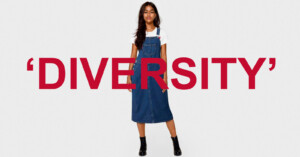
Last week, Levi Strauss was heavily criticized for its decision to start using digital models generated by artificial intelligence (AI) instead of using that investment to hire more real people, especially since it was done under the guise of "diversity."
Last week, Adobe made waves by announcing the beta release of its new text-to-image generative artificial intelligence (AI) model, Firefly. Adobe says its new platform wasn't built using stolen images, but rather, as Adobe boasts, Firefly has been trained using Adobe Stock images, openly licensed content, and public domain content.
Some years ago I wrote about the (now fairly obvious seeming) perspective of photography as a process of grounded, present awareness in order to achieve a result.