Educational

PetaPixel's editorials are in-depth stories, thought-pieces, and opinions on the photography industry led by the minds of our editorial team.

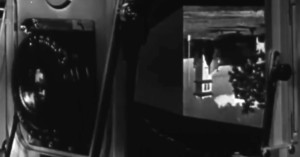
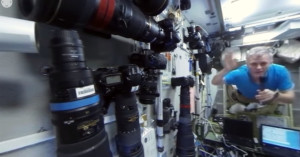
This 360° Video Shows the DSLR Wall on the ISS

This video by RT, titled "Space 360," is the first-ever interactive 360-degree video shot on the International Space Station. It's also of special interest for photography enthusiasts: it shows the inside of the service module, where the astronauts' Nikon DSLR cameras and lenses are stored on the walls.

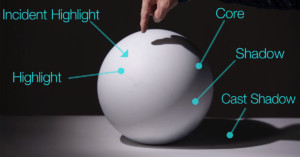
Understanding the Basic Laws of Light, Part 2

It's so easy to get caught up in the minutia of photography. Sure, megapixels, microcontrast, MTF charts, and the like are all important, but only after you understand how to work with the most important piece of the photographic puzzle: light.

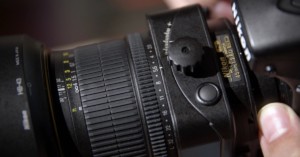
Tilt-Shift Lenses: How They Work and How to Use Them

Everybody knows tilt-shift lenses can be used to get a "miniature" effect, but many photographers are oblivious to their other, more traditional applications, and even fewer understand exactly how these lenses work. The folks at LensPro ToGo are here to clear things up.

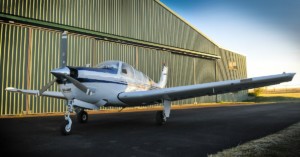
Camera Drone Safety Tips from an Airplane Pilot

I hold a private pilot certificate, as well as a remote pilot certificate; I am also a photographer. I just wanted to share with you some advice from a budding pilot who comes from the much larger world of flying that is general aviation.

The Basics of U.S. Copyright for Photographers

When I was in college, I lived for a while in a crappy little rental house next to a cemetery. Neither I nor my roommate, Brad, knew how to cook anything, and we ate bologna sandwiches pretty much all the time. Eventually, someone gave us a cookbook so simple that even a half-starved English major could learn a few basic dishes--the first page actually had step-by-step instructions, with pictures, for making toast in a toaster.

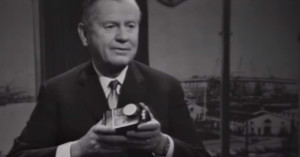
A Rare 1967 TV Interview with Victor Hasselblad

Back in 1967, Swedish National Television was granted a rare interview with Hasselblad founder Victor Hasselblad at his sea-side home in Sweden. In the 30-minute segment above, Hasselblad talks about everything from designing his first camera to dealing with copycats in Japan.

Digitizing 9×9 Film with an Automated X-Y Table and a 50MP Canon 5DS R

One of the challenges (and rewards) of managing a digital production lab for a university research library is working with the wide assortment of analog formats that are collected within its archives, special collections, and map library holdings. For instance, we've recently begun conversion work on a 2002 aerial survey of Connecticut that was originally shot on 9"x9" positive black and white film.

How Geometry Can Literally Shape the Story in Your Images

Leading lines, negative space, rule of thirds, all of these compositional elements are discussed ad nauseam in the world of photography. This short video ignores all that, and instead focuses on a different, but equally powerful element in an image: geometric shapes.

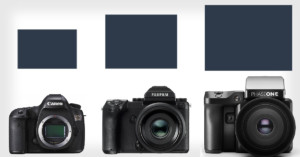
Shooting a 300-Megapixel Photo: Film vs Digital

For a recent project, I was tasked with shooting a hot rod. It was exciting from the beginning, because this particular kind of car is pretty rare here where I live. The owner also requested that their dog sit on the car's fender, and for the photos to be huge -- 100 megapixels were too few.

How a Combat Photographer Named a Phenomenon to Honor Soldiers

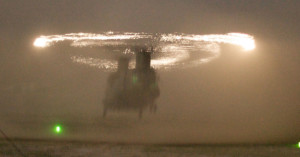
While embedded with troops in Afghanistan in the late 2000s, war photographer and writer Michael Yon captured numerous photos of the sparkling halo that can appear when a helicopter's rotors hit sand and dust. Upon finding that the particular phenomenon didn't have a name, Yon gave it one that honors two fallen soldiers: the Kopp-Etchells Effect.

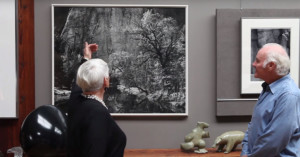
How Ansel Adams Wrote Pictorialism Out of Photography History

We all have a blind spot, both literally and metaphorically. Ansel Adams had one so big and powerful that he, Beaumont Newhall, and a few others “disappeared” some very important and wonderful photographers from the history of photography. And in doing so they also helped “disappear” an important movement in photography, one called Pictorialism.

How Phantom Ultra-Slow-Mo Cameras Are Made

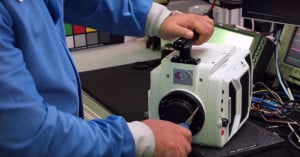
If you ever see an ultra-slow-motion clip online, there's a good chance that it was shot using a Phantom high-speed camera. The 12-minute video above is a behind-the-scenes look at how the cameras -- which cost upwards of $150,000 -- are made.

A Simple Explanation of How Lenses Work

Canon just released this 3.5-minute video that explains how lenses work. We learn about focal points, spherical aberration, chromatic aberration, and how multiple lens elements are used together for aberration correction.

5 Myths of Digital Photography

Myths and misconceptions persist because they’re either compelling or no one bothers to correct them. For photographers, many myths of digital photography arose when trying to draw imperfect analogies to film photography.

Video: How Automatic Film Processing Labs Work

Back in the heyday of film photography, a common part of the photography experience was dropping off your film rolls at a store or lab, placing the roll in an envelope and checking boxes with instructions for what you'd like. Here's a fascinating 5-minute video that reveals what happened to your film between drop off and delivery of your prints and processed film.

How Stop-Motion Photography Has Evolved Since 1900

Stop-motion photography has come a long way since the early 1900s, but it still involves creating an animation one frame at a time by introducing slight changes and movements between still photos. To see how far we've come with the technique, check out this 3-minute video, titled "The Evolution of Stop-Motion."

Untold Stories About Ansel Adams’ Portraits and Workshops

Jeanne Adams is the daughter-in-law of the late and great landscape photographer Ansel Adams, and she served as the head of the Ansel Adams Gallery for 25 years. In the 10-minute interview above, Jeanne talks to Marc Silber of Advancing Your Photography about Ansel's workshops, teaching styles, and lesser-known portraits.

Speedlights vs Studio Strobes: Which is Better and Why?

As beginner's guides go, this is one of the best we've stumbled across. In 10 minutes, Joe Edelman does a fantastic job comparing the standard speedlight to the standard monolight or "studio strobe," explaining some of the confusing terminology, and helping break down which is better when and why.

This Camera Ensures a Photo Finish at the Olympics

Since 1932, the renowned Swiss watchmaker Omega has served as Official Timekeeper at the Olympic Games 26 times. This year at the Rio Olympics, Omega is once again providing finish line cameras to provide officials and the public with the most precise view of the athletes.