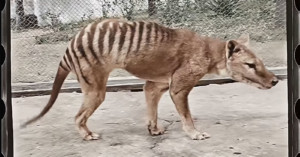
Last Tasmanian Tiger Seen in Newly Colorized 1933 Footage
A newly digitized and colorized newsreel from 1933 is providing the world with a fascinating new look at the Tasmanian Tiger, an animal that has been extinct since 1936.
A newly digitized and colorized newsreel from 1933 is providing the world with a fascinating new look at the Tasmanian Tiger, an animal that has been extinct since 1936.
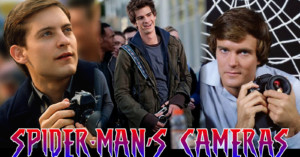
I’m sure photographers out there are one of two minds. One is that Peter Parker being both a photographer and a superhero is amazing and that we wish we could get those crazy angles. The second is that by taking pictures of himself for money, he is a total scam artist that raised the bar on pictures of Spider-Man no one could hope to accomplish.
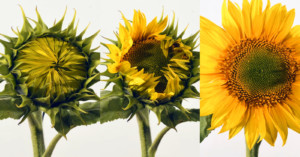
Photographer Neil Bromhall runs a popular YouTube channel that features mesmerizing timelapses of plants growing and blooming over multiple days. His latest effort is this pair of 1-minute timelapses that show a sunflower opening over the course of 10 days.
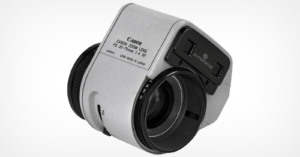
The Canon Zoom Lens FD 35-70mm f/4 AF was a lens originally manufactured in 1981 and features an unusual motor system that allowed it to autofocus. In Kai Wong's 13-minute video, he shows how it still works remarkably well even today.
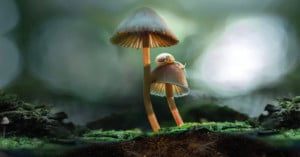
Filmmaker Louie Schwartzberg has been creating timelapses of different fungi over the course of the last 15 years as part of his film Fantastic Fungi. In a video with Wired, he explains how he creates these epic sequences.
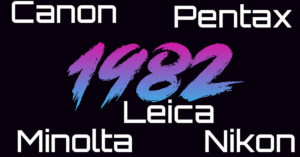
1982. Michael Jackson releases Thriller, E.T. hits the movie theatres and Cats opens on Broadway. It was a great time to be a fan of movies, music, and theater. But it was also an amazing time to be a photographer -- there were innovations with every release and more around every corner.
Anna Mazurek has achieved a true photographer dream life. She is an editorial and commercial travel photographer, is paid to roam the world, and photographs for famous publications.
Scientists have captured the first-ever images of a giant tortoise hunting, killing, and eating a bird. The "gentle giants" were previously believed to be herbivores.
Not all lenses perform well with infrared. A fantastic lens for normal visible light photography may be terrible for infrared (aka “IR”) photography. Choosing the right lens can be tricky.
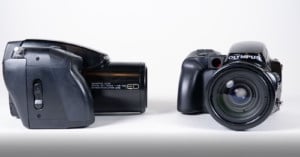
Do you know what ZLR stands for? How about ED, or ESP? And what in the world is Fuzzy Logic? In this article, we'll learn all about the Olympus IS-1, a pivotal model in a whole new category of camera released in the 1990s, and all the strange acronyms that come with it.
Photographer and YouTuber Eric Floberg released this 13-minute video in which he shares his tips and experience in creating passive income streams that can help supplement a photography business and generate money in more ways than one.
What if every second lasted one hour instead? What would our world look like? Thanks to the powerful technology of ultra-high-speed cameras, here's a fascinating video that shows exactly what things would look like.
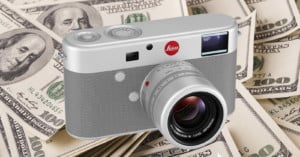
We all love interesting and perhaps somewhat obscure facts and anyone reading this site has at least a moderate interest in cameras -- and hopefully, their history. Part of that history includes the unique, weird, one-of-a-kind, and (you guessed it) extremely expensive cameras which have, in one way or another, played a role in paving the way to where we are today.
It’s not easy for most people to think about what peace and justice mean to them, or how to express it. But that’s what we ask people in war-torn communities to do, all around the world.
In its latest educational online class, Apple collaborated with photographer Mark Clennon to show how to direct, shoot, and edit powerful portraits using an iPhone.
I started in photography as a stepping stone into digital art. As with most photographers, I started taking pictures of everyone and everything. It was not fun hiking with me; I was the guy stopping every five minutes to take pictures of trees and rocks.
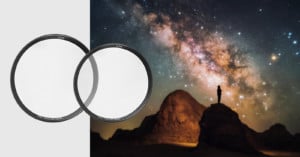
The Chinese lens filter brand Haida has announced its new NanoPro Soft Diffusion Filters. The lens filters are designed specifically for capturing soft photos of the starry night sky.
Happy World Photography Day! Today is a special day that celebrates the art, science, and history of photography. Here's a look at how it all began and the impact photography plays in our lives today.
Smartphone camera quality has improved by leaps and bounds in recent years, and there are regulars reports of professional photographers using phones to shoot everything from timelapses to magazine covers. But how many professionals are actually using phones in their professional lives these days?
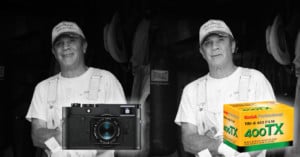
The Leica M10 Monochrom is a $9,000 digital camera dedicated to black-and-white photography, but how does it compare to a $10 roll of Kodak Tri-X 400 black-and-white film? That's what the folks at Camera West TV decided to find out.
It may seem obvious to some of you but I’ve presented this material enough to know that it’s best to never assume everyone understands what an archive actually is, how to create one, and, ultimately, how to leverage it for income. So let’s just start with a clear definition of a photo archive.
Two storm chasing photographers have shared a fascinating behind-the-scenes look into what it takes to get the perfect shot in unpredictable and often dangerous weather conditions. As you can see in the 13-minute video above, this type of photography is not for beginners or the faint-hearted.
There is a purveying thought that larger resolution sensors, with therefore smaller pixels, are worse than lower resolution sensors, with therefore larger pixels, in low light. This is a myth.
As photographers, we generally aim to shoot perfectly to where our photos require minimal to no editing. But for some of us, the editing process can be just as creative of a process as the photography side.
Reflections are the sole reason we’re able to see objects. An object that absorbs 100% of the light is invisible. Fortunately, we don’t encounter these in our daily lives. Any lighting-conscious photographer would be aware of the fact that their light positioning directly influences reflection and hence the viewer experience.
The world of Instagram is changing. Brands, clients, and audiences are looking for fresh perspectives, and one way to capture that as a photographer is to keep your finger on the pulse of what's current.
I am a professional wedding, portrait, and fashion photographer and have been photographing couples for nearly three decades and I have been teaching photography for over twenty years. I recently published a brand new video tutorial with tips on how to pose couples that have a big height difference.
Although timelapse -- and especially long-term timelapse -- might appear intimidating to beginners, photographer and filmmaker Casper Rolsted has shared simple tips that anyone can follow to get started even with basic equipment.
Do non-human beings have a need for privacy? And if so, is it comparable to that of human beings? Does wildlife photography invade privacy? This essay seeks to explore these questions by comparing paparazzi photography with wildlife photography regarding the concept of privacy invasion. To do so, two images will be studied in detail and compared to each other.
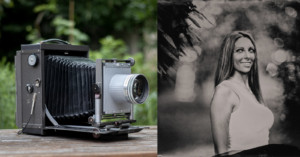
Well-known wet plate photographer Markus Hofstätter recently purchased an old wet-plate camera, repaired it to a working condition, and added two lenses to it with the help of his 3D printer.
Click. Press the playback button. Look at photo. "Mehhhh." We’ve all had it happen -- the photo on the back of our camera does not match the vision or intent we had when we clicked the shutter button. To help myself in these situations, I follow "the two-minute rule" to create more interesting photos.
A content creator for Moment -- an online marketplace for photo and video gear -- has shared why he ditched shooting in RAW and more often than not will shoot with his Fujifilm JPEG files, making most of the different ways to post-process in the camera, instead.
For most, Hasselblad is a name that has been associated with iconic photographs and technical quality -- and a huge price that reflects that. However, has Hasselblad always been a premium photography brand, and why are they so expensive?
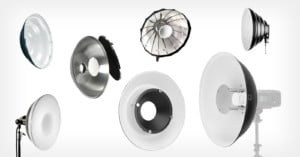
The beauty dish is one of the most commonly used light modifiers for beauty and portrait work, but being popular doesn’t mean that it’s an easy-to-use modifier without any quirks and intricacies. In fact, you can only harness the true magic of the beauty dish if you know the principles behind it inside-out. In this article, I will explain everything you need to know when using a beauty dish.
We all love soft light because it adds that dreaminess to food and drink photos that will always be great. However, recently I have been seeing more people use hard light in their food and drink photography.
When starting out in photography, you are bombarded with terms, definitions, and a whole new universe of things you must know as a photographer. Sometimes the definitions are confusing at best, seemingly conflicting at worst. When it comes to lighting, there's a big list of terms and jargon that you need to know. Here are some of the common ones with simple definitions and explanations.
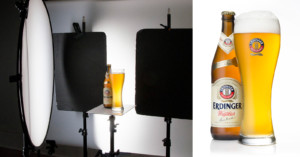
In this 18-minute video, photographer Dustin Dolby explains many of the tricks beverage photographers use and shows how anyone can achieve professional-level beer photos with just a few speedlights and some entry-level camera gear.
A lot of words have been written and exchanged about the difference between -- and possible advantages or disadvantages of -- CCD (charged-couple device) and CMOS (metal oxide semiconductor + active-pixel sensor) camera sensors. What really is the difference between them?
Filmmaker Ryan McIntyre recently had the opportunity to use the Phantom TMX 7510 slow-motion camera's 100,000 frames per second and combined it with a Laowa 24mm 2x Macro Probe lens to capture spectacular footage of vintage flashbulbs bursting brightly.
It’s a wonderful time to be considering a new camera. There are so many options for camera type, features, prices, and sensor sizes that the choices can seem overwhelming. For this conversation, we’re going to focus (pardon the pun) on the sensor sizes you might consider for your next camera.
Photographs contain "layers of mind." That's according to a new study, which found that people are considered to be "less real" and have "less mind" when they're seen in photos of photos rather than photos themselves.
PhotoPlus has launched Learning Lens, a new online platform that will play host to educational resources for photographers. The company says that it plans to cover anything and everything photographers could possibly want to learn about, all for free.
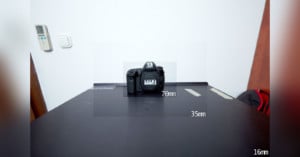
The focal length of lenses doesn't cause perspective distortion, which is often explained as "lens compression." Period. Now before you call me crazy and dismiss whatever I have to say, I’d like to invite you to take a dive into how lenses work and what actually causes perspective distortion.
Apple has released a brief shoot-along online educational class where the company shows how to capture -- and edit -- unique and interesting photos using the iPhone's Night Mode.
If you have scrolled through Instagram, I am sure you have seen the lovely, well framed and fun flat-lay food photos there. Flat-lays are images taken from above, which involves having your camera at a 180-degree angle and showing your subject flat on the surface.
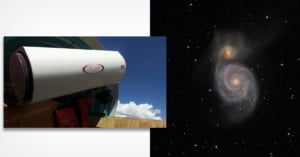
Are you a photographer who would love to give deep space imaging a try – but you’re not quite ready to spend thousands of dollars (or more) to build your own astrophotography rig? With remote astrophotography, you can create astonishing images without the high startup costs.
What is light? This perhaps may be the most simple question with the most complex answer in photography. Light enables us to see, create, and most importantly convey meaning through our art. Light also gives us the oxygen we breathe (through plant photosynthesis).
Back when I was taking pictures just for the fun of it, I never once thought to optimize my preparation. There was no preparation -- no shot list, no scouting, no mood board. That all changed when making pictures became my job and my livelihood.
Well, you finally did it. After months of thinking about it, pining over the pictures and recommendations of others on social media, and constantly inflating your budget, someone’s got a new camera. But after spending all that time thinking about your new purchase, you neglected to put any serious thought into what to do with your used camera gear. So where do you start?.
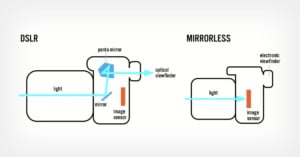
Mirrorless or DSLR? That is the question. It’s a great time to be a photographer considering a new camera purchase. Whether it’s your first camera or twenty-first, there have never been more options available for features, price, and capabilities. Plus, if buying a new (not used) camera, there are really no bad cameras out there. But the first decision you will need to make about your new camera is which imaging system you prefer: mirrorless or DSLR.