Sony’s New 50MP Smartphone Sensor Promises Nearly 17 Stops of Dynamic Range and Better Low-Light Photos
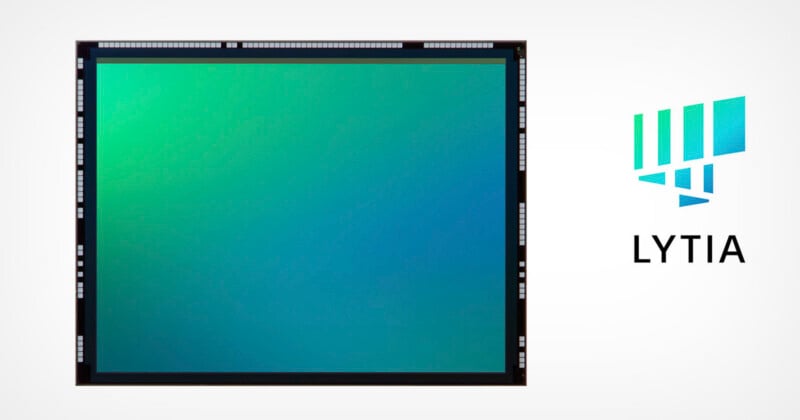
Sony has announced a new 50-megapixel Lytia (stylized “LYTIA”) 720 image sensor. The 50-megapixel sensor promises industry-leading low-light performance and supports 4Kp60 HDR video recording.
The new mobile image sensor borrows heavily from Sony’s higher-end Lytia sensors, like the larger Lytia 901 and Lytia 910, the latter of which is Sony’s first LOFIC image sensor. Like the 901 and 910 sensors, the Lytia 720 includes Sony’s HF-HDR technology, which stands for “Hybrid Frame-HDR.”
This HDR technology combines Dual Conversion Gain-HDR (DCG-HDR) with frames captured at shorter exposures. Basically, it combines low-to-medium brightness range data with high-brightness range data captured with a short exposure to improve overall dynamic range. Sony promises 100 dB of dynamic range in the Lytia 720, which equates to around 16.6 stops.
The Lytia 720 is smaller than the Lytia 901 and 910 image sensors, making it a more likely candidate for the main camera on mid-range Android smartphones or as the telephoto sensor on high-end and flagship-level phones. The Lytia 720 is a Type 1/1.56 sensor, while the 200-megapixel Lytia 901 is a huge Type 1/1.12 sensor and the 50-megapixel LOFIC Lytia 910 is Type 1/1.28.
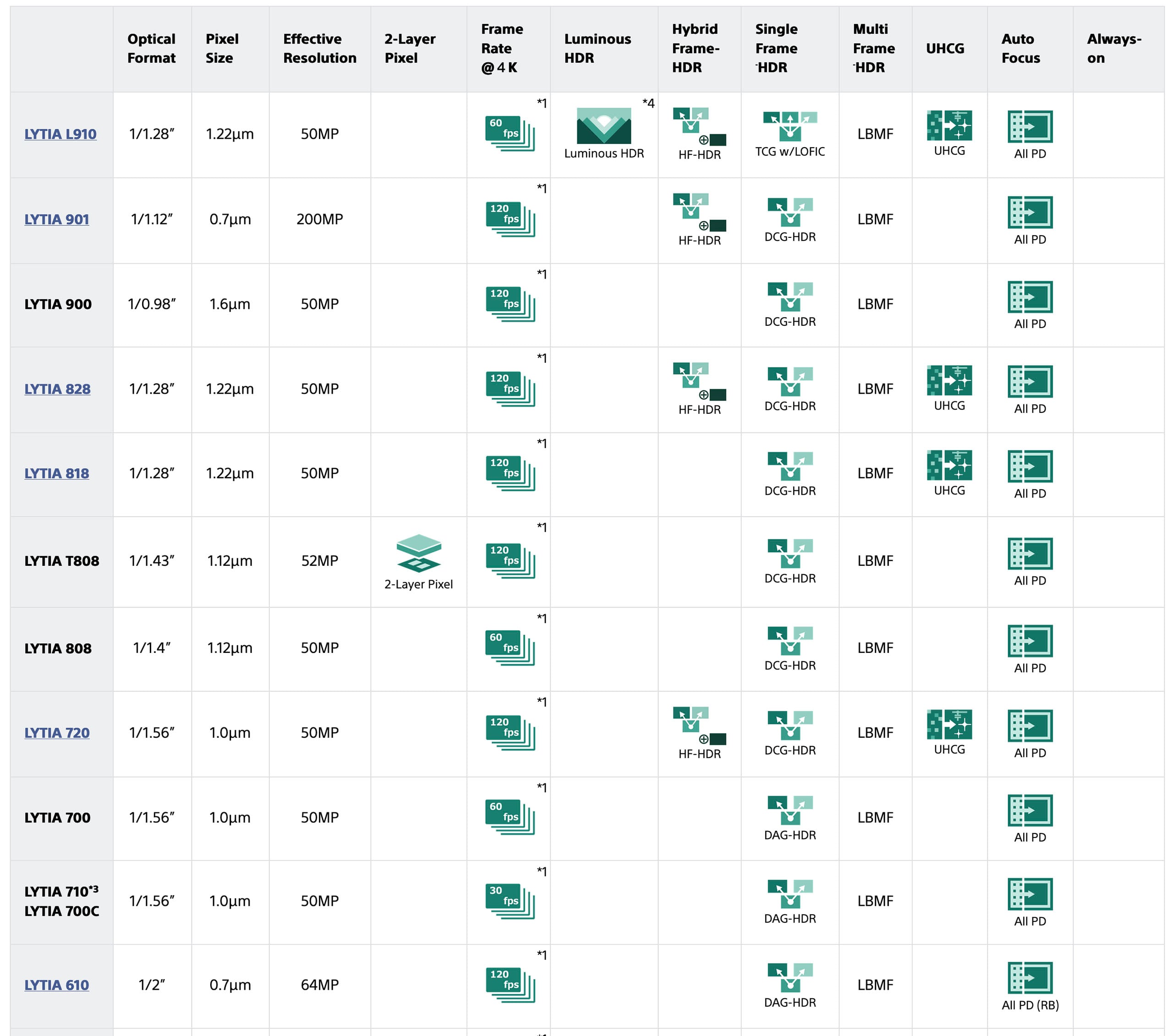
The Lytia 720 effectively replaces the Lytia 700 in Sony’s current lineup, promising significantly better dynamic range and low-light performance compared to that 50-megapixel Type 1/1.56 sensor.
Sony says that compared to the Lytia 700, the Lytia 720’s proprietary low-noise circuit technology reduces random noise in dim scenes by about 50%, a significant improvement.
In addition to 4Kp60 HDR video recording, the Lytia 720 also supports 4Kp120 recording without DCG-HDR enabled. It can capture 50-megapixel photos with all-pixel autofocus at up to 50 frames per second and 12.5-megapixel shots at 90 frames per second (or 30 with DCG-HDR).
The Sony Lytia 720 image sensor should appear in smartphones soon, as Sony says it will be available for mass production shipping early next month.
As mentioned, a Type 1/1.56 image sensor is very common in smartphones. It’s the same size as the main camera in the iPhone 18 Pro series, for example, although Apple doesn’t discuss it publicly. It’s also used as the main camera sensor in many other mid-to-high-end smartphones. It’s also a common sensor size for telephoto cameras, including in flagship-level devices.
Image creditsSony