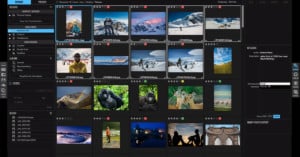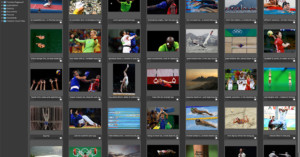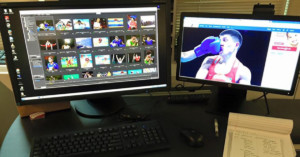
As we shared last week, being a sports photographer at the Olympics is a difficult task: battling a round-the-clock schedule and a sea of competing photographers, hauling around a boatload of gear from venue to venue is just the least of your concerns.
Shooters aren’t the only ones with a difficult job, though: photo editors have it just as bad. Reuters photo editor Russell Boyce has written up a fascinating article that offers a behind-the-scenes look into the responsibilities — and mindset — of a picture editor at the Games. Read more…
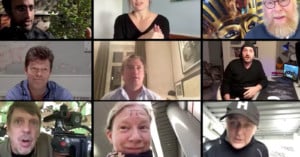
Here’s an hour-long live video interview that Photoshelter recently did with Michele Hadlow, senior photo editor over at Forbes Magazine.
Hadlow speaks on how the magazine has managed to continue commissioning high-profile shoots despite cutbacks common across most publications. Michele tells us about the top characteristics all killer portraits must have to get featured, and what photographers need to succeed with both their subjects and clients.
Michele also discusses how Forbes hires photographers, and what up-and-coming photographers can do to get noticed. Having been at the magazine for over 14 years, Michele speaks to over a decade of work in the industry
After discovering his photograph used without permission on The Telegraph’s website, photographer Jonathan Kent contacted the newspaper asking to be compensated for the unauthorized use. He then received an email from deputy picture editor Matthew Fearn, who defended the newspaper’s actions, stating,
[Due to the] ever-shifting nature of news – in particular with the advent of online publishing – [...] it is not always possible to secure copyright clearance before pictures are published.
Our industry therefore adopts the stance that if a picture has no overwhelming artistic value and if there is no issue of exclusivity (ie it is already being published online or elsewhere) then no reasonable copyright owner will object to its being republished in exchange for a reasonable licence fee. The only alternative to such a stance is not to publish pictures at all unless they come from a commercial library, the available range of which will inevitably be inadequate.
[...] In this instance, and in light of what you have told us, we have no reason to doubt that you are the copyright owner for this picture. However the blog from which it was taken gave no indication as to the copyright owner and no contact details. We therefore used it (in fact we inadvertently used it again for some four hours this morning) in the normal way, which is to say that we were always prepared to pay the industry standard rate.
Fearn has reportedly offered Kent £400 to settle the case, arguing that it is a higher amount than Kent would be awarded by the court.
To keep itself lean and focused, Google is planning to do some spring cleaning and shut down a number of non-critical projects and services that don’t attract enough attention to keep alive. One of the services marked for termination is Picnik, the online photo editor that Google acquired back in 2010. The service will remain online until April 19, after which the team will be folded into the Google+ team.
Photo editor Michael Davis on why clichés win photo contests:
I think one of the dynamics at play is that work that was recognized in the past triggers interest in similar work in the present. In other words, we have this library of images in our minds and when we see images that are similar to the images that we think are great, there’s an association, a connection that is positive. These are derivative images. But instead of being a negative aspect, these images get elevated, often to the highest awards and often without realizing we’re just awarding what worked in the past.
That’s the nature of the cliché: I’m photographing a subject that was deemed good in the past, therefore the photo I make today will also be good. As a judge, the perspective is: This type of photo has been recognized in the past, therefore we should recognize it today.
His advice for photographers looking to break free of subjects that have been beaten shot to death? Do the hard work of researching prior work, and think about breaking new ground in either the subject, story, or storytelling method.
Last friday, Dayton Daily News photo editor Larry Price received instructions to lay off half of his photo staff. Rather than follow through with the order, Price — a 35-year veteran photojournalist and winner of two Pulitzer Prizes in photography — decided to sacrifice his own job instead, resigning from the post this past Monday. Ginger Christ of the Dayton BizBlog writes,
In his 35 years as a photojournalist [...], Price has seen the industry shrink, watched as newspapers cut their workforce and all but eliminated photography departments in efforts to consolidate and cut costs.
“I’ve watched this happen in newspapers year after year now. I’ve had many, many friends that have been affected, many stellar journalists,” Price said. “These people are my group. They’re my friends. They’re my colleagues. I’ve asked so much of them in the four years I’ve been here. Every time, they’ve stepped up to the plate and delivered. It wasn’t a decision I could make in good conscience.”
Price is also troubled by the fact that newspapers abandon photojournalistic quality when photos don’t help increase profits, saying, “the bottom line simply is not as important as what information can convey to people in helping them make decisions.”
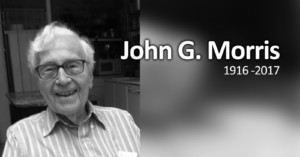
Photo editor John G. Morris is a legendary photo editor who played a huge role in how we perceived major world events in the 20th century. Here’s an interesting behind-the-scenes look at his role in shaping history.
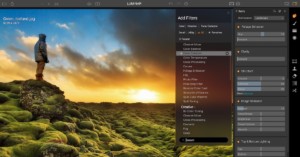
Mugtug Darkroom is a new browser-based photo editor that uses HTML5 rather than Flash. It was presented at the Google I/O web developer conference yesterday to show off what’s possible with HTML5, the proposed next version of HTML that’s gaining steam.
Web apps taking advantage of HTML can take advantage of new scripting APIs that allow such things as offline data storage and drag and drop functionality.
The app is indeed impressive, but only worked in Firefox 3.6 for us. It might or might not work for you depending on what browser you’re using.
After loading up an image via upload, URL, Flickr, or Picasa, you can do many of the basic edits you might do on a photo in more advanced programs like Photoshop.
Looks like there’s big improvements coming to our internet experience in the very near future.