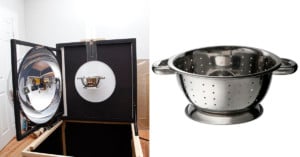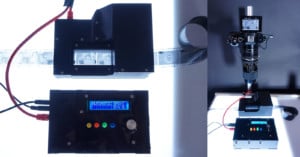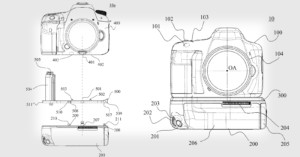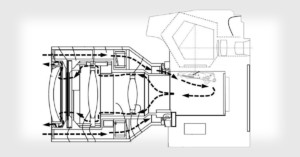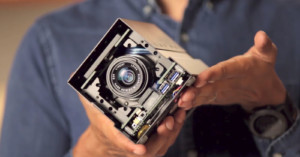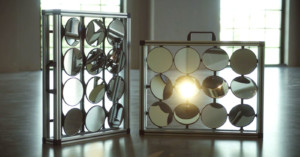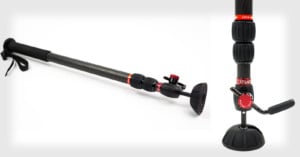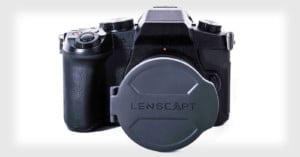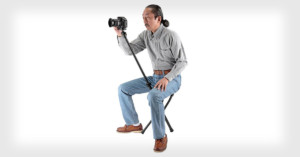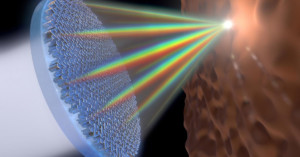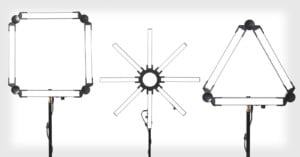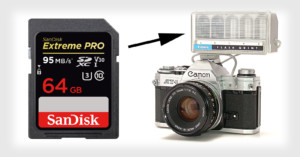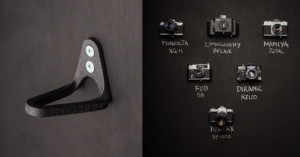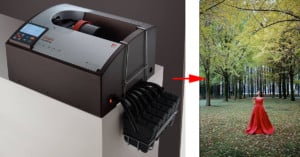
When BBC Future approached design company Conran with a challenge to “redesign any object,” Senior Product Designer Jared Mankelow chose the camera. He believes that the form factor of our cameras hasn’t kept pace with their function, and so his square creation harkens back to the film cameras of old, while simultaneously catapulting the camera into the future. Read more…

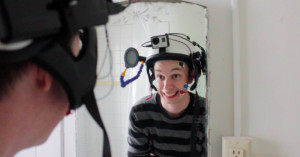
Necessity may be the mother of invention, but laziness is definitely its father. Case in point, here’s an interesting tidbit of imaging history: the first webcam ever was actually invented by lazy students at Cambridge University who didn’t want to waste a trip to the nearby coffee pot if it was going to be empty when they got there. Read more…

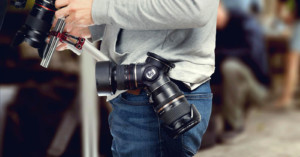
Holsters are becoming pretty popular for keeping camera gear on your hip and at the ready, and now Washington-based gear company Rhino Camera Gear wants to bring the concept to batteries. It has unveiled a new product that’s designed to cut a few seconds out of the time it takes you to switch out empty batteries for fresh ones.

The accessory is called the Rhino Battery Holster, and moves your juiced batteries from inside your camera bag to your side.
Read more…

We’re not sure how many punk rock fans moonlight as photographers (or the other way around), but those who do may find the new CamCuff a tempting camera accessory. It’s a fashion accessory wrist cuff that doubles as a camera strap for those of you who aren’t big on the neck variety.
Read more…

Jonathan Dandrow believes that traffic enforcement cameras are “dangerous, invasive, error-prone, and unconstitutional,” so he decided to find a way to turn camera technology against those cameras. He ended up creating the noPhoto, a high-tech license plate frame that makes it impossible for a red light or speed trap camera to snap a useable photograph of your plate.
Read more…

Photographer Preston Turk has an idea for how to best store lens caps when they’re not attached to lenses. Called the Stow-Away, it a universal lens cap holder that can hold most of the standard lens diameters (AKA filter sizes): 52mm, 55mm, 58mm, 62mm, 67mm, and 72mm. Turk designed the accessory to attach to the underside of cameras via the standard tripod mount. Giving your lens cap a quick shove underneath your camera will click it securely into place.
Read more…

Compact cameras feature lenses that automatically “cap” themselves when retracted and not in use. Interchangeable lenses, on the other hand, usually don’t. The X-Cap changes that. It’s a Taiwan-designed lens cap that snaps onto the front of certain lenses that feature a retracting front element (the Micro Four Thirds system has lenses like this). When the front element retracts, the cap automatically closes — great for people who hate dealing with lens caps.
Read more…

HandiZoom is a new camera accessory that adds a special grip to your DSLR that allows you to hold and use it like a camcorder. The device adds ENG-style zoom controls by connecting directly with the zoom ring on your camera lens. Videographers who’ve transitioned to DSLR shooting may feel much more at home with their hand around an ergonomic grip and a zoom rocker under their fingertips.
Read more…

Photographer Jesse Rosten wanted a more efficient and mobile way to do off-camera lighting, so he invented this backpack-style apparatus that he calls “The Strobist Jet Pack”. Although it’s pretty ridiculous looking (it reminds us of Ghostbusters), it works well for placing lighting equipment in exactly the place needed while still being able to move about.
Read more…

Google scientist Sam Hasinoff has come up with a technique called “light-efficient photography” that uses focus-stacking to reduce the amount of time exposures require. In traditional photography, increasing the depth of field in a scene requires reducing the size of the aperture, which reduces the amount of light hitting the sensor and increases the amount of time required to properly expose the photo. This can cause a problem in some situations, such as when a longer exposure would lead to motion blur in the scene.
Hasinoff’s technique allows a camera to capture a photo of equal exposure and equivalent depth of field in a much shorter amount of time. He proposes using a wide aperture to capture as much light as possible, and using software to compensate for the shallow depth of field by stacking multiple exposures. In the example shown above, the camera captures an identical photograph twice as fast by simply stacking two photos taken with larger apertures.
Light-Efficient Photography (via Amateur Photographer)