Space

Photography and astronomy offer humanity a fascinating view into the universe.
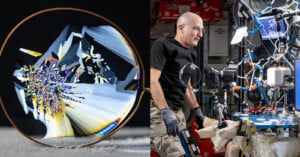
An astronaut in a gray shirt folds his arms inside a space station, with cameras floating nearby. He stands amid an array of equipment and cables, highlighting the zero-gravity environment.

How to Change a Camera Lens in Zero Gravity

NASA astronaut Don Pettit is a prolific photographer, arguably the best to ever go to space. In a fun new video from aboard the International Space Station, Pettit shows how to change camera lenses in space, and photographers on Earth will surely be envious of Pettit's zero-gravity conditions.

A Nikon camera without a lens is displayed next to a white and red camera bag, which has a camera lens built into the front, both set on a white surface with a dark, blurred background.

The Custom Nikon Z9 and Thermal Blanket Headed to the Moon

Nikon and NASA have a rich history of collaboration dating back more than 50 years when Nikon supplied specialized analog cameras for Apollo missions. Nikon cameras are headed back to the Moon, and Nikon showed off some of the new lunar-bound technology this week at CES.

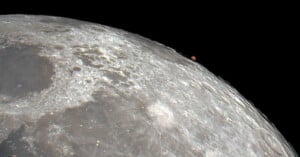
A detailed grayscale image of the Moon's surface, featuring numerous craters and a stark contrast between illuminated and shadowed areas. Several large craters are prominent in the center-left, highlighting the rugged lunar terrain.

The Three Best Photos From BepiColombo’s Historic Mercury Flyby

The joint European Space Agency (ESA) and Japan Aerospace Exploration Agency (JAXA) BepiColombo mission performed its sixth flyby of Mercury yesterday, January 8, 2025. This historic maneuver enabled the spacecraft to capture incredible new photos of the planet's surface from just 295 kilometers (183 miles) away.
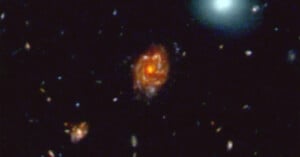
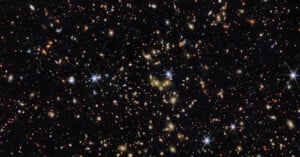
A vast, colorful galaxy cluster filled with numerous bright stars and galaxies against a dark backdrop. The image showcases a celestial spectacle with scattered light sources of varying sizes and colors, highlighting the universe's vastness.

The 570-Megapixel Dark Energy Camera’s Dazzling View of 230 Sparkling Galaxies

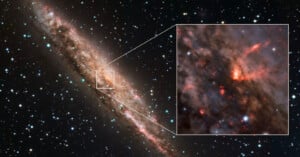
The groundbreaking Dark Energy Camera (DECam) entered service in 2012 and served as the primary camera used for the Dark Energy Survey. The 570-megapixel camera, which features 74 total CCD image sensors, recently captured a dazzling photo of the Antlia Cluster (Abell S636), a group of at least 230 galaxies located about 130 million light-years from Earth.

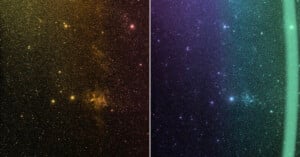
Left side: A vibrant star cluster with multicolored cosmic clouds and bright stars scattered throughout. Right side: A nebula with greenish hues, featuring a dense cluster of stars and cloudy patterns.

NASA Embraces Holiday Spirit With Images of Stellar Wreath and Cosmic Christmas Tree

Scientists frequently combine data from NASA's James Webb Space Telescope (JWST/Webb) and Chandra X-ray Observatory (Chandra) to get a complete picture of cosmic objects and learn more about the Universe's history. However, this week, the collaboration has a special festive twist as NASA shared new images of a cosmic "wreath" and "Christmas tree" in deep space.