The DJI Pocket 4P’s Sensor Is So Good, Footage Looks Nearly Identical to Full Frame’s Best
While the DJI Osmo Pocket 4P has only been officially unveiled in China, PetaPixel has been testing the device ahead of embargo and can exclusively share some key details about the dual-lens gimbal camera, including its brand-new, cutting-edge LOFIC image sensor.
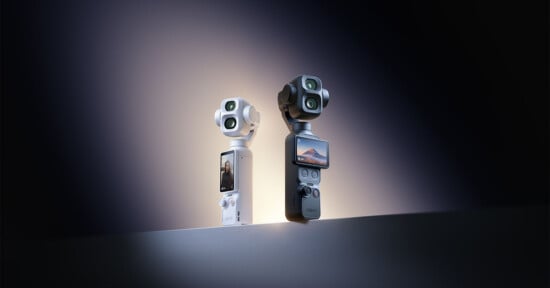
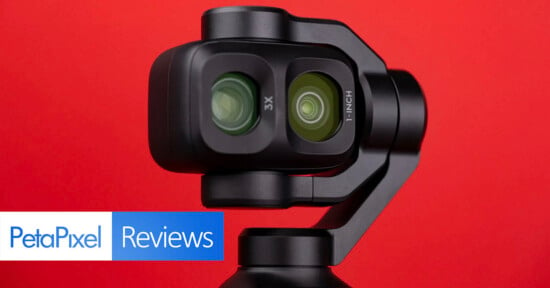
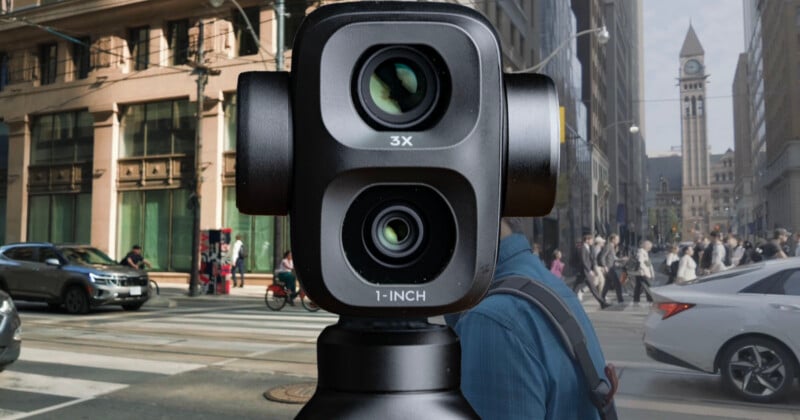
Unlike the standard Osmo Pocket 4 that DJI unveiled in April, which has a single camera, the oft-teased Pocket 4P sports a pair of cameras on its moving gimbal head. This is not just a matter of adding a second, longer camera to the standard Osmo Pocket 4, though, as DJI has completely changed the 4P’s main camera.
In place of the familiar, albeit impressive, Type 1 image sensor, DJI has given its professional-oriented Osmo Pocket 4P a brand-new 50-megapixel LOFIC image sensor. While it is still paired with a 20mm equivalent lens, like the standard Osmo Pocket 4, the move to a LOFIC image sensor ushers in unprecedented image quality for the Osmo Pocket series.
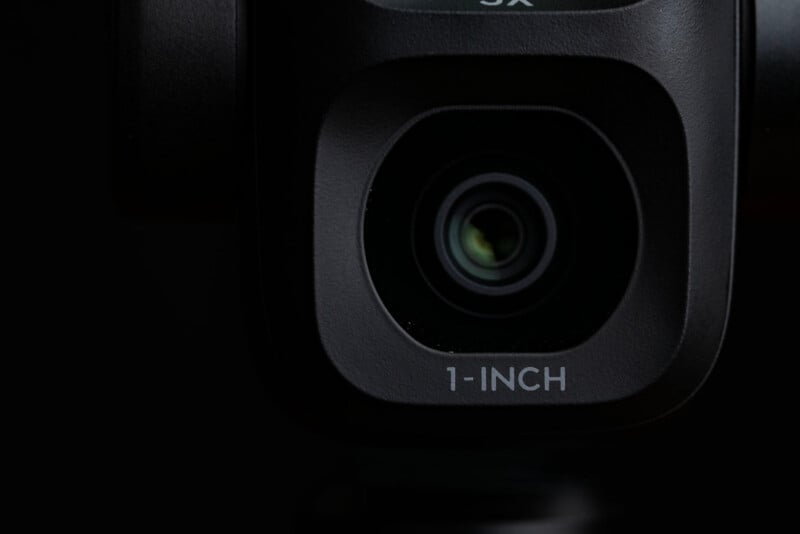
LOFIC image sensors are at the very cutting edge of image sensor technology, only arriving in consumer devices earlier this year, like the Xiaomi 17 Ultra smartphone. The technology is so fresh that DJI is even declining to say precisely who manufactured its new image sensor.
In Xiaomi’s case, it worked with OmniVision on a LOFIC sensor. But it’s worth noting that Sony, a frequent maker of the image sensors in DJI’s products, just announced its debut LOFIC image sensor for smartphones and other mobile devices a couple of weeks ago.
Where OmniVision and Sony overlap is in how they describe the benefits of LOFIC image sensors. LOFIC stands for “Lateral Overflow Integration Capacity,” and it is undeniably the next big thing in image sensor performance.
What Is a LOFIC Image Sensor?
With a traditional image sensor, excess photovoltaic charge is lost. A photodiode reaches its full-well capacity (or doesn’t), and then any extra electricity is gone. When a photodiode exceeds its capacity, the highlights blow, and data is lost forever. The more capacity a photodiode has, the more expansive a sensor’s dynamic range, all else equal.
What a LOFIC sensor promises to do, and in PetaPixel‘s experience thus far, succeeds at doing, is preserving and expanding highlight data. Instead of excess electric charge being lost forever, a LOFIC sensor captures and stores that overflow charge in a secondary capacitor, which it can then use to improve performance at the brightest end of an image or video’s tonal range.
Dynamic Range Benefits
This effectively increases the dynamic range. In the case of the DJI Osmo Pocket 4P, DJI claims that its new content creator-focused camera delivers nearly 17 stops of dynamic range. The company claims about 14 stops of dynamic range for its standard Osmo Pocket 4 camera, demonstrating some of what LOFIC image sensor technology can deliver.
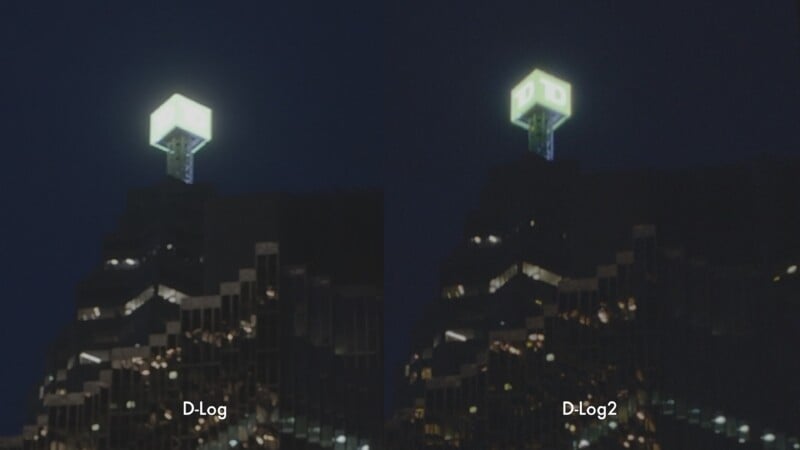
“The Osmo Pocket 4P’s LOFIC image sensor offers a higher dynamic range along with better shadow-side signal-to-noise performance,” a DJI spokesperson exclusively tells PetaPixel. “In other words, it can retain more highlight information while also producing cleaner shadows.
“Achieving up to 17 stops of dynamic range, it also gives creators much more room for post-production grading.”
If the gain is kept low to preserve highlight detail, shadow details are lost. If the gain is increased to improve shadow detail, particularly in low light, highlights are clipped, and that data is lost. What LOFIC does is fundamentally change how a sensor collects and stores light, enabling cleaner shadows without losing as much highlight data.
It is worth considering what expanded latitude in the highlights means for how an image sensor can be used. With a traditional sensor, engineers must carefully balance shadow sensitivity and performance against highlight clipping. To achieve better low-light performance, a sensor’s signal must be amplified, which then makes it easier to clip highlights.
However, if excess highlight information can be preserved, like with a LOFIC sensor, there is significantly reduced image quality cost to amplifying a sensor’s signal to achieve cleaner shadow detail. Basically, it’s like having your cake and eating it too. The floor and ceiling are raised simultaneously, meaning cleaner shadows without losing highlights. This is another way of saying “more dynamic range.”
What LOFIC Means for the Osmo Pocket 4P’s Image Quality
While PetaPixel is not prepared at this time to conduct a specific dynamic range measurement for the Osmo Pocket 4P, the camera’s LOFIC image sensor has proven exceptionally impressive in real-world testing.
“While initially testing the image quality of the DJI Osmo Pocket 4P’s main camera with the new D-Log2 profile, I was immediately impressed with the dynamic range of the files,” PetaPixel‘s Jordan Drake says. “There was plenty of detail in the highlights, and the shadows looked remarkably clean.”

For a true torture test, Drake pitted the Osmo Pocket 4P against one of the best full-frame cameras on the market for video dynamic range, the Panasonic Lumix S1 II, with its Dynamic Range Boost mode enabled.
“Remember, a full-frame sensor is around eight times as large as a Type 1 sensor,” Drake explains. It is also important to recognize that the S1 II’s dynamic range is excellent, representing the very best that is possible for video on a full frame camera.
Nearly Full-Frame Performance In a Relatively Tiny Image Sensor
Nonetheless, with both cameras set to one-third of a stop below their clipping point in an extreme high-contrast test scene, the Osmo Pocket 4P delivered very similar performance.
“The usable dynamic range of this relatively tiny LOFIC sensor is comparable to professional full-frame cameras,” Drake adds. “That’s extremely impressive.”

This “extremely impressive” performance required significant engineering work by DJI.
The company tells PetaPixel that it had to customize the image signal processing pipeline for the new Osmo Pocket 4P to take full advantage of the LOFIC sensor.
How and Why DJI Put a LOFIC Sensor In the Osmo Pocket 4P
“DJI had to customize the ISP pipeline to merge dual signal paths and optimize power delivery and thermal performance. This included developing our algorithm with signal-fusion methods, pixel-level calibration, dedicated noise reduction, and a custom log curve. On the firmware side, the sensor driver timing had to be redesigned, which was a substantial engineering effort,” DJI says.
While the company admits that using D-Log 2 at ISO 800 or 1600 will deliver the best dynamic range in most situations, and occasionally requires the use of its neutral density (ND) filters to achieve the appropriate shutter speed and exposure, even footage shot in the normal color profile will show relative performance gains.
“Even footage shot in the normal color profile will have better highlight control, more shadow detail, no motion ghosting, and more balanced exposure in backlit scenes — all because the ISP uses LOFIC’s wider latitude internally for tone mapping,” the company explains.
If the performance of the new LOFIC image sensor is so good — and it is — then why did DJI opt to include it only in the Osmo Pocket 4P?
DJI says the new Osmo Pocket 4P is designed for creators who want the absolute best image quality and post-production flexibility. But this comes with tradeoffs, at least in practical terms.
Although DJI has not shared global pricing for the Osmo Pocket 4P, it will cost more than the standard Osmo Pocket 4, as expected. It also consumes more power, produces more heat, and required significant, complex hardware and software engineering. These are all very real costs for DJI.
“But when you consider the fact that image quality is the most important factor for users, using a LOFIC image sensor is a net positive,” the company tells PetaPixel. Unlike another of the most cutting-edge image sensor architectures, global shutter, an LOFIC sensor has no image-quality downsides. It’s all positive, albeit at greater cost.
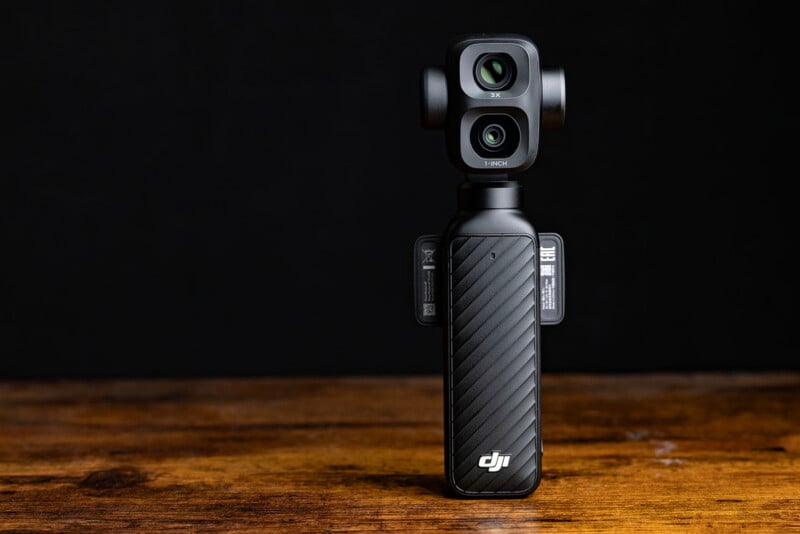
“DJI’s LOFIC sensor is an architectural breakthrough, especially when you consider the size constraints of the Osmo Pocket Camera series,” DJI says.
The company’s previous improvements have come in the form of slightly bigger image sensors and some new features. By and large, these have been incremental improvements with mild to moderate performance gains.
LOFIC, on the other hand, is a transformational leap in image quality.
With a traditional image sensor, DJI could never have achieved such a significant jump in image quality. The company could likewise never have put a full-frame image sensor inside the Osmo Pocket 4; it would have forced DJI to abandon the entire modus operandi of its Osmo Pocket series.
“LOFIC technology allows a small sensor to approach the dynamic range of a much larger format camera,” DJI says.
The new LOFIC sensor is the biggest leap forward the Osmo Pocket series has ever taken.
Image creditsPhotos and videos by Jordan Drake for PetaPixel