A Digital Twin-Lens Reflex Camera is Long Past Due
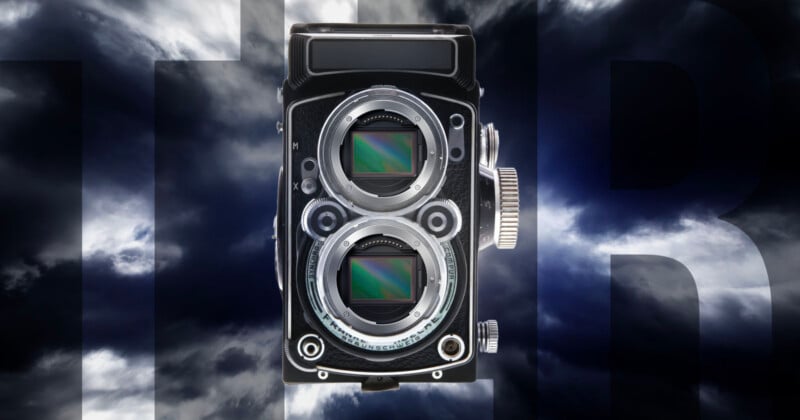
The more photos I take and the more cameras I test, the more I realize that the shooting experience is just as important as the results. So why has one of the most iconic experiences — the waist-level twin-lens reflex camera — been left by the wayside?
There is nothing wrong with taking the approach that a camera is simply a means to an end. This is a totally valid outlook, and many professionals view the camera as a creative extension of themselves, or simply as a tool that allows them to produce their work.
However, for many of us, photography is a hobby and a fun way to express ourselves. The camera becomes a companion that we bring along to witness our lives as we live them, and we want to have a unique adventure as much as we want to capture memorable images. For the exact same reason that I will often fish with a vintage bamboo rod, I will also challenge myself to capture images with a camera that isn’t necessarily purpose-built for the occasion.
And on that note, if there is a vintage shooting experience that I long to reconnect with, it is the twin-lens reflex camera.
The Legacy of the TLR
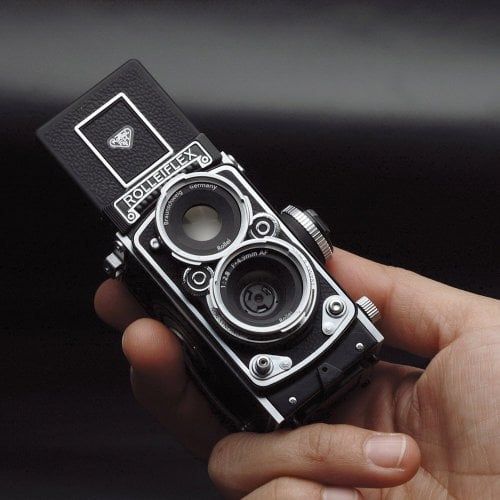
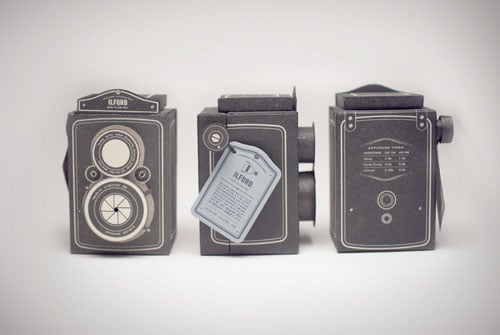
The TLR is a style of camera that fell out of favor compared to more advanced medium-format SLR styles. It is so aptly named due to its use of two identical lenses, one above the other, to both compose the image and capture it. There are many brands that made TLR cameras, but perhaps the most well-known is Rolleiflex.
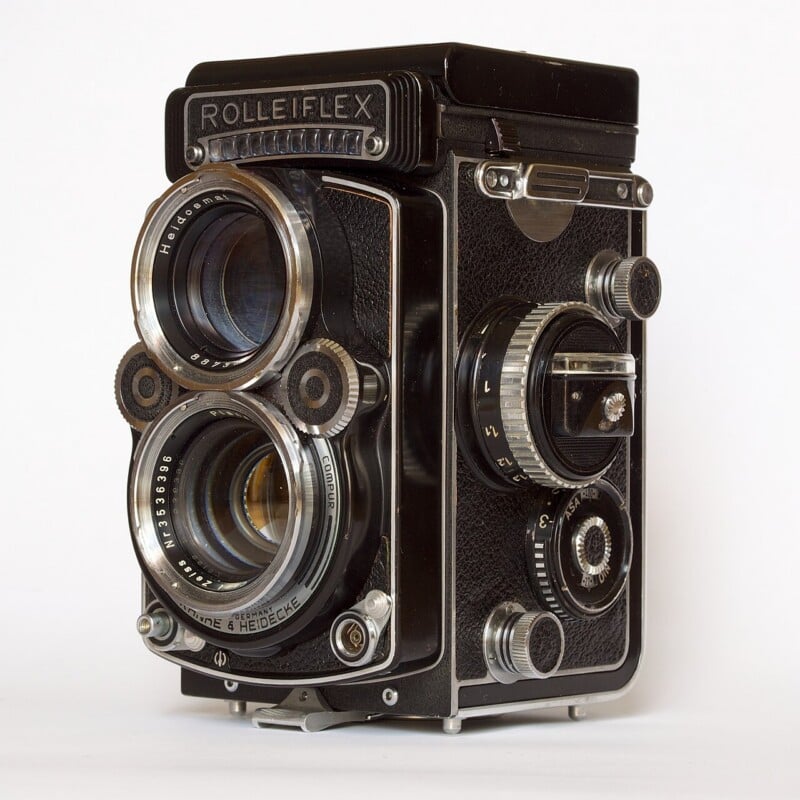
Obviously, the single-lens reflex camera could be made more compact and with less glass, as the main lens both composes the frame and focuses the photo onto film. But TLR cameras still drew loyal users for many years because of their stylish good looks and a unique waist-level composition.
The upper lens is aimed at a 45-degree mirror that bounces the image up to the ground glass focusing screen at the top. This allows for a comfortable waist-level position to shoot from, and some would also argue that it is a more discreet way of taking pictures on the street. If you aren’t looking at the subject, they aren’t inclined to look at you, and many candid shots have been taken this way.
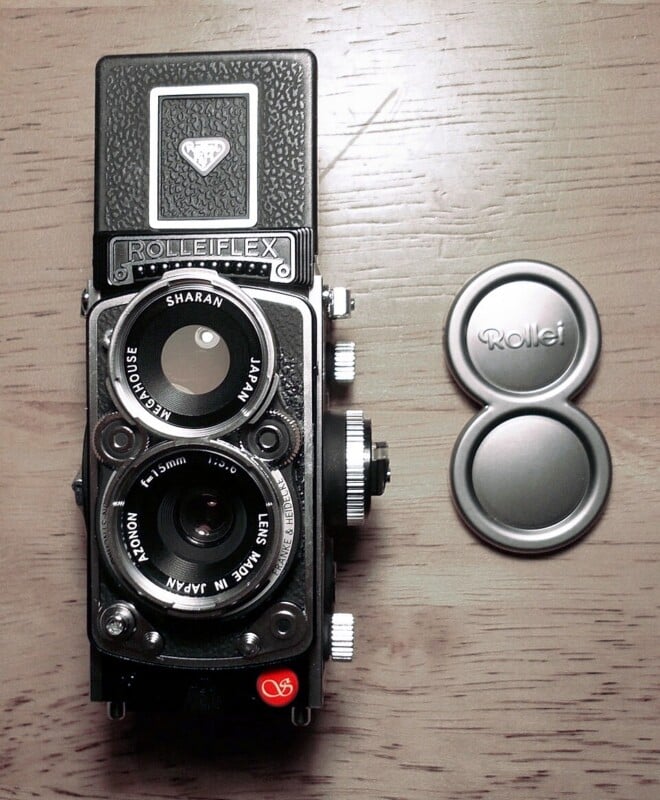
TLR cameras would almost always be medium-format cameras (although there are exceptions), and usually capture photos in a square format. Mamiya even created a line of cameras that could accept interchangeable dual-lens assemblies so that different focal lengths could be used.
However, as charming as TLR cameras were, their versatility often suffered. They tended to be heavy and usually only offered one focal length option. Unlike an SLR with a pentaprism, composing an image was also reversed from left to right, which took some practice to get used to. Suffice it to say, pretty much every other style of camera has been modified to shoot digitally, except the TLR design. There might be some really good reasons for this, but I’m going to advocate that we should bring back the TLR design and make it digital, and this is how I would do it.
What Would It Take?
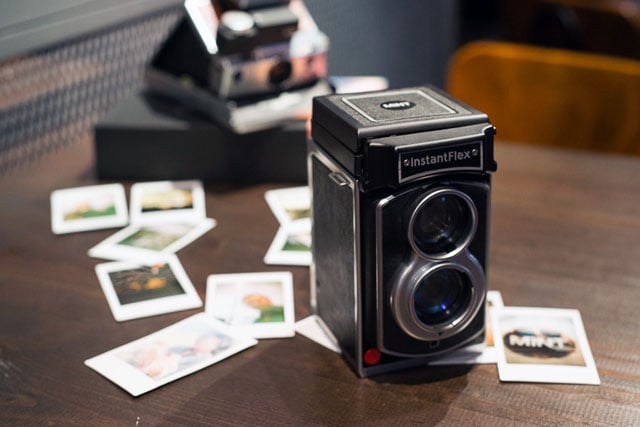
Now you might be shouting at the screen right now that indeed there are digital TLRs in existence. What about the Minox keychain cameras, or the recently developed Chuzhao cameras? These charming examples of e-waste are actually just using a single lens with a fake lens added above to mimic the look and display the composition to an LCD panel at the top of the camera. They are also very basic and very affordable cameras with little in the way of creative control.
However, these little devices actually support my assertion that we need proper digital TLR cameras again and that the market will bear it. As crappy as the imagery may be out of these cameras, they capture the imagination with the charming twin-lens design, which is always handsome, and they also show that shooting a waist-level camera can be both practical and fun.
To make a legitimate TLR, we first need to utilize two separate lenses in front of two separate sensors. They could be square-cropped APS-C sensors or square-cropped full-frame sensors. Hell, you could even just let them shoot the full aspect ratio of the chip and allow for an easy switch to a square format.
Then, because we have two separate lens and sensor assemblies, make one a wider and one a tighter focal length, which helps get over the inherent lack of multiple focal lengths on most TLR designs. This design would allow you to frame from above with the LCD panel, see exactly what your composition will be without the left and right reversal, and make use of the space for the two lenses inherent to the design while giving you two different focal lengths.
We would not simply be remaking the TLR experience, but actually improving it in many ways.
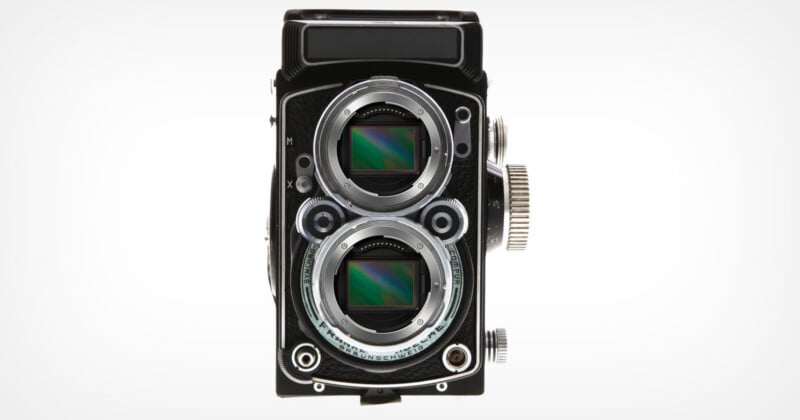
Wouldn’t it be great to have a single compact camera around the shoulder that offered two different lenses in one package, without having to delay and switch optics under pressure? This camera would be stylish yet also discreet, with plenty of vintage charm. It would provide a unique style of shooting that many have not experienced.
From a purely technical standpoint, the digital TLR could be scaled in size depending on the sensor size and the desires of the photographer carrying it, and yet a full-frame version would still be quite small to travel with. Considering that both lenses involved would be primes with relatively fast apertures, the camera could be capable of quite high image quality and thus used for serious applications that the current e-waste versions couldn’t touch.
Why Has No One Tried?
I think this concept is solid, and the results would be both fun to use and desirable to the photographic community. So why hasn’t it happened yet?
Certainly, developing such a concept would be expensive, and there will be a fair amount of research and development to undergo in order to make it possible. This represents a real risk to whoever decides to try it.
But aren’t all camera designs always a risk to some degree, and aren’t they all worthwhile risks too?
Without risk-taking, we wouldn’t have the vibrant selection of cameras that we appreciate today. What is guaranteed is the fact that a digital TLR will be on the pricier side of the scale. You are effectively purchasing two lenses and two sensors, after all. However, I don’t think an APS-C proof-of-concept camera would be that prohibitive in cost, all things considered. It is essentially just two simple compact digital cameras glued to each other that share a battery, image pipeline, and LCD screen.
I might be crazy — I often am — but I really think the digital TLR would be a fun and practical way of shooting that checks so many boxes when it comes to what we look for in a compact companion camera. Perhaps if you all agree, and we also find a brave manufacturer willing to attempt it, this dream may one day come true.
Affiliate Disclosure PetaPixel articles may include affiliate links; we may earn a commission if you buy through one.