11 TED Talks on Photography Worth Watching
Need some inspiration to start off the new year? Try these 11 TED talks on photography.
Need some inspiration to start off the new year? Try these 11 TED talks on photography.
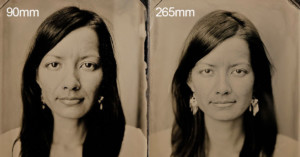
I know this topic is covered here and there and everywhere: in school and online, in workshops and lectures, on street corner posters and graffiti under freeway overpasses… However, one way or another this topic seems to either elude a lot of photographers entirely or perhaps they ignore it knowingly. Either way, after continually seeing tight headshots done with lenses possessing an obviously incorrect focal length, my personal OCD has reached a boiling point and I decided to finally do this …
Earlier this week, National Geographic announced this year's winners of its prestigious photo contest. After receiving 13,000 entries, the three judges -- photo editor Jessie Wender and photographers David Guttenfelder and Anand Varma -- had to come to an agreement on a single grand prize winner and the winner of the three categories (people, places, and nature).
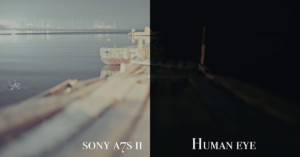
The Sony a7S II is known to have amazing performance in low light and at high ISO. To see just how powerful its low light capabilities are, a Greek photographer who goes by Boji decided to do a casual test that pits the camera against the human eye. You can see the comparison in the 48-second video above.
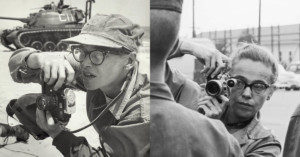
Dickey Chapelle was a pioneering female American war photographer who brought her camera to combat fields from World War II through the Vietnam War. The 3-minute video above by PBS NewsHour is a look at the life and work of the legendary photojournalist.
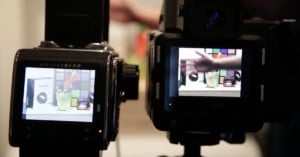
Medium format retail and rental company Capture Integration just posted this short and simple 1.5-minute side-by-side comparison between the Live View displays of Hasselblad and Phase One 50 megapixel digital backs.
If you have a lens of one mount and a camera with another, there's a good chance that there's an adapter out there that can help you pair the two. This is called shooting with an adapted lens (versus shooting with a native one). Photographer Mark Ryan Sallee of Michromatic released this helpful 12-minute primer on the subject.
You may not recognize the name, face, and photos of Douglas Miller, but many people living in Laguna Beach, California, do. He's a street photographer who has been shooting a roll of film per day for 44 years, creating a remarkable photo archive of 350,000+ spontaneous snapshots that tell the story of his town.
If you're ever shooting around emus, be sure to keep your camera bag at a safe distance. Photographer Arnhem Peterson put his camera backpack on the ground while photographing goats recently, and an emu wandered over and mistook the camera bag for a suitable mate.
One of the gripes Star Wars fans have about Episodes 1, 2, 3 is that George Lucas relied heavily on CGI rather than the brilliant practical effects that were found in the original trilogy. Many of the action scenes were simply actors waving light saber sticks around on giant green screen sets.
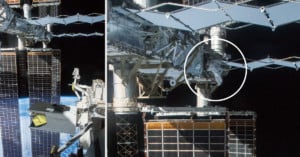
You've probably seen countless photos by now of astronauts working inside and outside the International Space Station, but sometimes it's hard to get a sense of scale when the photos don't show much of the station. If you'd like an idea of just how big the station is, check out this photo of American astronaut Kjell Lindgren working on it.
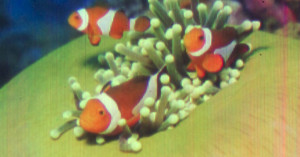
Believe it or not, what you see here is the world's smallest color inkjet photo ever printed. It's so small that it's invisible to the naked eye: you'll need a microscope to see the shot, which shows clown fishes hanging around their sea anemone home.
60 Minutes just aired a fascinating segment on Apple this past weekend, offering a behind-the-scenes look at the secretive and dominant company. Here's one of the crazy facts that was mentioned: Apple has 800 employees whose work is dedicated solely to the iPhone's camera.
Composition can make or break a photograph. This is why it's important to understand it and know how to effectively and creatively use it. In essence, composition describes the position of relative elements in a photograph. A strong composition will tend to have leading lines that draw attention to your subject: these can be horizontal, vertical or diagonal lines depending on the placement of your subject in the frame.
The anti-theft gear registry LensTag just provided us with this new look at how camera gear was stolen over the past year. As you can see from the pie chart above, car and home break ins are still the biggest way thieves are targeting cameras and lenses: they accounted for over half of all thefts reported to LensTag in 2015.
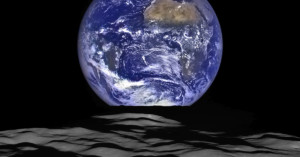
NASA just released an amazing new high-resolution photo of the Earth "rising" above the horizon of the Moon. It was captured by the camera onboard the Lunar Reconnaissance Orbiter from its orbit around the moon.
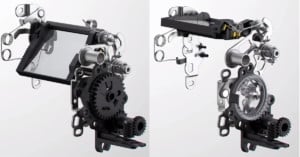
If you shoot with a DSLR, you might take for granted that the mirror inside your camera swings out of the way to allow light to hit the sensor. There's actually quite a bit of precise engineering behind those seemingly simple flips.
Back in 2011, we shared how the original Star Wars lightsaber was created from camera parts using the handle from a Graflex flashgun. Joey Shanks of Shanks FX just released this 6-minute video tutorial on how you can recreate the original lightsaber on camera yourself.
Photographer Jay P. Morgan of The Slanted Lens made this helpful 7-minute video tutorial that provides a crash course on the different types of clamps used by photographers during shoots.
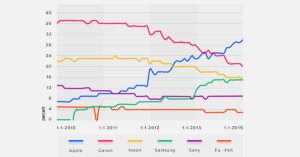
Flickr recently gathered up photo and camera data to review the past year, and now the company is doing some number crunching to reveal major trends in the cameras used by the photographer community.
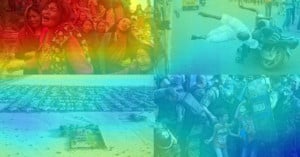
The braniacs at MIT have created an algorithm to determine the “memorability” of a photograph. The deep learning-based technology “learned” what makes a photo memorable by evaluating the rankings from 5,000 human volunteers, and even indicates which portions of an image it considers to be memorable with a heatmap depiction. The algorithm is allegedly as good as a human in determining what makes a memorable photograph.
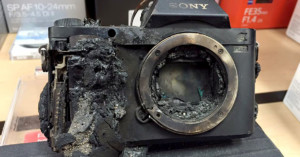
Ever wonder what happens to a camera if you accidentally drop it into a volcano's molten lava? Well, wonder no more, because some poor photographer found out the hard way.
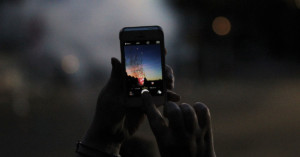
Camera sales haven't been doing too well in recent years, but that hasn't kept picture taking from exploding. While the dedicated camera industry has seen year-on-year declines, smartphone photography has turned everyone into a casual photographer: there are now 8 times as many picture takers worldwide than there were 10 years ago.
Here's a 1-minute stop-motion commercial Karen X. Cheng recently produced and directed for Totspot, a resale shopping app for kids clothes. Cheng also documented the production process in order to show "how painstakingly laborious" stop motion photography is.
After exploring the science of digital camera sensors, Filmmaker IQ just published this new video that explores the history and science of lenses. John Hess talks about everything from the ancient Nimrud lens from 750 B.C. up through how Japan came to dominate the lens industry.
Want to see how the look of portraits have evolved with major camera developments throughout history? Photographer Leo Rosas Morin of COOPH shot 11 portraits of 1 model, and using Photoshop, he recreated the aesthetics of 11 key moments in photography history.
Back in 1909, a super-rich French banker named Albert Kahn decided to create a photographic record of the world using the new color photography process that had just appeared, the Autochrome Lumière. He commissioned 4 photographers to take their cameras to places all over the world. One of the cities they documented was Paris.
Charles M. Conlon was an early 20th century American photographer who was among the first to regularly photograph baseball games and players. Although he shot many iconic early photos of the sport, his name was largely unknown until 1990, when 8,000+ of his negatives were found in the archives of Sporting News.
Between 1985 and 1991, ABC, A&E, and The Travel Channel aired a weekly half-hour TV show for photographers titled "World of Photography." The show was a big influence on a generation of photographers, exposing them to new photographers and photography techniques.
When you think of the planet Jupiter, you probably think of that giant striped planet with the Great Red Spot anticyclonic storm swirling across the face. But that's just one way of looking at Jupiter.
Is it wise to convert your raw files to the Adobe DNG format? If you are using Lightroom or Photoshop with Camera Raw, you have the option to convert your master files to DNG. In this article I want to focus on the benefits of converting, the reasons why converting to DNG may not always be ideal or necessary, as well as tackle some of the misinformation about DNG.
Tips from the Top Floor podcast host Chris Marquardt recently got a private tour of the Kodak Technology Vault in the George Eastman Museum in Rochester, New York. In the 1-hour video above, technical curator Todd Gustavson offers a glimpse into the treasures owned by the museum behind closed doors, stepping through the history of photography -- from the daguerreotype to digital camera prototypes -- in the process.
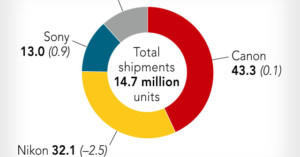
Nikkei Asian Review published this interesting chart showing which companies dominated the interchangeable-lens camera sales in 2014. Canon had 43.3%, Nikon had 32.1%, Sony had 13%, and other companies accounted for a combined 11.6%. From a year earlier, Nikon lost 2.5% share to Sony and other smaller companies, while Canon basically held steady.
Here's a great 13-minute video in which John Hess of Filmmaker IQ teaches about the science and technology behind digital camera sensors. First, however, he revisits how photographic film worked, as some of the general concepts were carried over into the digital world.
Here's a wonderful 6-minute documentary about the Seeing with Photography Collective, a New York-based group that brings together the work of visually impaired and sighted photographers.
Back in 1907, a photo retoucher named C.H. Claudy wrote an article for Volume 17 of Camera magazine titled "Faking the Negative." In the piece, Claudy describes the latest and greatest techniques for "faking a photo" at the time.
Here's a short 4-minute video in which photography instructor Karl Taylor offers a basic explanation of histograms for photographers who are just starting out. If you're trying to wrap your mind around the concept of histograms, this video may be a great starting point for you.
Back in 2011, Lytro launched the world's first consumer light field camera, which lets you "shoot first and focus later." But what exactly is light field photography? …
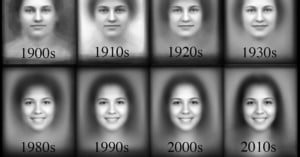
Smiling is a relatively recent phenomenon in the history of photography. If you take a look at photos from many decades ago, people commonly wore stoic expressions on their faces and portraits were a much more serious affair.
Billy and Marc from The Fuji Guys recently paid a visit to the Fujifilm factory in Sendai, Japan, where different pieces of kit in the Fujifilm lineup are put together. The 8-minute video above is a behind-the-scenes tour that shows how the new Fujifilm XF 35mm f/2 R WR lenses are assembled.
If you can carve 20 minutes out of your day, check out this fantastic lecture that was recently given by award-winning photojournalist Michael Goulding at Sports Shooter Academy 12. The talk centers around the mantra "See Better Shoot Better."
These are the first and last photos that were taken by NASA's Apollo mission astronauts on the surface of the moon. They bookend the entire set of lunar images that can be found in the Project Apollo Archive.
In 2011, a modern-day treasure hunter was browsing through an antique shop in Fresno, California. Flipping through boxes, he came across an old photograph. An unsmiling group of men, 19th century Americans it seemed, were playing croquet in front of a wooden building in a rural setting. It was an interesting photograph. He paid $2 for it and walked out.
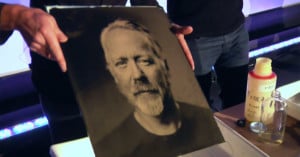
Tested recently put on a show at the Castro Theater in San Francisco. One of the presentations was by local photographer Michael Shindler, who specializes in wet plate collodion photography.
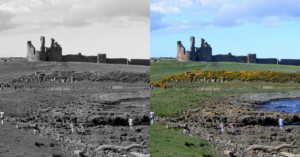
Did you know that your brain can be tricked into seeing a black-and-white photo in full color? The 1-minute BBC clip above shows an example of this, and you can try it out for yourself.
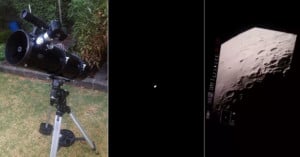
If you have a telescope or lens that's powerful enough, you can watch the moon transit the sky through the live view on your DSLR's LCD screen.
You may have the eye, the talent, and all of the other necessary hard skills to make it in the commercial world. The only thing you lack is a portfolio relevant to the stuff you want to get paid to shoot. It’s a classic chicken and egg problem.
If you've ever photographed spinning airplane propeller or helicopter rotor blades with your smartphone, you may have found that the spinning blades were turned into bizarre shapes in the resulting photo. What you're seeing is distortion caused by a rolling shutter, when a CMOS sensor captures a scene by scanning across it very quickly rather than capturing the entire frame at once.
Ansel Adams is best known for his breathtaking landscape photos, but he photographed much more than nature during his decades-long career. In 1943, already the best-known American photographer, Adams visited the Manzanar War Relocation Center in California, one of the relocation camps the US gathered Japanese-Americans into during World War II.
What makes one smartphone camera good and another one bad? YouTube tech video star Marques Brownlee of MKBHD just posted this easy-to-understand 5-minute-long explanation of smartphone camera quality.