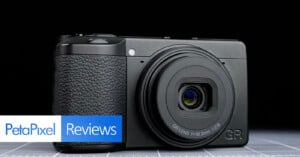
Ricoh GR IV Review: A Successor Worth Waiting For
Small, pocketable cameras with fixed lenses hold an enviable position in the camera world. If a manufacturer makes one, it sells out.

Smartphone season is here, and, as usual, Google is starting things off. The Pixel 10 series has arrived, and although a telephoto lens has now been added to the base model, we prefer to evaluate the highest-end Pro series for its creative photo and video usage. At first glance, the specs and hardware look almost unchanged from the previous models. So is new software enough, or is this the most iterative update Google has ever released?
The Hasselblad X2D II 100C builds upon its predecessors in key ways, preserving the aspects that made each prior camera special while smoothing nearly every rough edge. The legendary Swedish photo company has finally delivered a camera that lives up to the X1D's initial promise.
The industry desperately needs more lens support for APS-C cameras and it often feels like a neglected market. Full frame is clearly the favored child when it comes to the camera game, but I happen to love smaller sensor cameras, which give a great mixture of compactness and quality. Sigma is on a roll, making sure to give users excellent and affordable optics for Sony E mount, Canon RF mount, and Fujifilm X mount. The latest $629 Sigma 12mm f/1.4 DC Contemporary lens seeks to cover the ultra-wide arena with plenty of light-gathering potential to boot.
Batteries are boring. The most recent and exciting battery innovation I can recall is when manufacturers started incorporating USB-C ports into camera batteries. Needless to say, it's a low bar. That's why my expectations for the Linogy AA/AAA Battery Charging system were at most lukewarm, but after using it, I have to admit: this thing is great.
The 10th version of any flagship smartphone line should probably mean something, yet Google is launching its Pixel 10 series with no more fanfare than before. However, that doesn't mean there aren't changes worth being excited about.
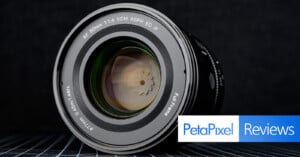
The fixed 200mm f/2 is a very rare and specialized lens. In the DSLR days, there were very few available, and they were all ridiculously expensive. Canon and Nikon both made some very prestigious versions that delivered razor-sharp optics and incredibly shallow depth-of-field. They were also useful for low-light sports and action photography.
With the popularity of film photography reaching a fever pitch recently, seeing Leica announce its first-ever black and white 35mm film shouldn't shock you. Leica is even making a film camera brand-new, so it makes a ton of sense. But is Leica Monopan 50 any good and -- more importantly -- is it unique?
Being small is what makes the Vivo X200 FE stand out from a crowd of bigger phones, thanks to its impressive knack for capturing images that others can’t or won’t.

Foldable phones aren’t camera trend-setters because they get their camera components from other models. The Samsung Galaxy Z Fold 7 is no different in carrying on that pattern, only this time it’s actually rocking a flagship-level main wide-angle camera.
The Sony RX1R II was such a unique product for its time, offering high resolution mated to a stunning Zeiss lens, all in a compact size. However, it was always a premium product that demanded an exorbitant price. The RX1R II debuted at around $3,300, and let’s keep in mind that was nine years ago.
In Calgary, we have an annual Japanese festival aptly named Omatsuri. This is a fun event with lots of vendors, great food, and displays of Japanese culture. It's also an excellent testing ground for the new Samyang 85mm f/1.8 P FE.
Nothing ventured, nothing gained. As a brand hailing from Britain, Nothing has been around since 2020, and the Phone 3 is its first true flagship aimed at taking on the best in the industry.
In May, vintage-inspired analog camera company Reto announced the Reto Pano, a reusable point-and-shoot camera with both an ultra-wide lens and the promise of being able to switch freely between standard 35mm film aspect ratio and panoramic mid-roll. It got my attention.
Wandrd's Prvke series has earned a devoted following among photographers, and with the launch of the new Prvke V4 21L and the Essential Camera Cube V2, Wandrd promises photographers an even better carrying experience. I find out if Wandrd's new bag lives up to its billing.
If you have a Sony E-mount camera body, the world is your oyster when it comes to lens selection. If you have a camera in Nikon Z-mount, you'd better like Tamron and Nikon glass. With all the excellent third-party lenses being manufactured, Nikon users can feel a little left out. But what if you could mount E-mount lenses onto your Nikon body? Megadap decided to allow just that, and we got our hands on the $249 ETZ21 Pro to see if E-mount lenses play nice with Nikon bodies.
Harman is on a roll, expanding its support for analog photographers with multiple new film emulsions this year. Right on the heels of Kentmere Pan 200, its new Phoenix II film stock replaces the more experimental original Phoenix and improves on it in multiple areas. That said, it might not be for everyone.
LK Samyang revealed a very exciting lens at the CP+ show in 2024 and it turned my head when I walked past the booth. Not only are ultra-compact ultra-wide zoom lenses few and far between, but this particular lens was a co-venture with the storied lens manufacturer, Schneider-Kreuznach.
I don't really like fisheye lenses. I've never found much use for them and find the surreal look of the images to be of limited utility. But that doesn't mean that I won't jump at the chance to give a new one a try.
"Then shalt thou count to three, no more, no less. Three shall be the number thou shalt count, and the number of the counting shall be three". The Quest for the Holy Grail by the comedy troupe, Monty Python, had it right. There is a Holy Trinity, and many professional photographers abide by it.
Gura Gear announced a brand-new, $180 sling bag at the Bild Expo last month called the Kiboko City Sling 6L, and from what the company tells me, the idea was so popular that it sold 1,500 of them in just those two days. There is something about this bag that caught people's eyes, so I decided I needed to see what that was.
I’ll be honest: I’ve never used a NAS before. As a photographer and content creator, I’ve spent years juggling stacks of external SSDs and hard drives in a messy, chaotic system that has somehow worked. But what I don’t have are enough backups, and the constant worry of a drive failing or getting lost has always nagged at me.
Light Lens Lab is all about recreating classic -- and hard-to-acquire -- lenses from the past. Its latest revelation is a faithful homage to the P. Angenieux S21 50mm f/1.5 lens. Originally designed in the 1950s with an M42 thread mount for the Exacta SLR, the S21 delivered that Silver Screen look, with soft corners and a gentle glow to the frame when shooting wide open.
The Genki Moonbase is a stylish and powerful power strip that is sure to liven up any workspace. It's also chock-full of ports, featuring three AC outlets and four USB-C ports.
Over the last couple of years, the number of computers, headphones, cameras, and portable batteries that charge with USB-C that I've acquired has ballooned substantially. I've resorted to using batches of individual USB-C plugs cobbled together in my aging infrastructure, but it's an inelegant solution. That's where the UGreen Nexode came in.
The Honor 400 is a mid-range phone that is as much a showcase of the company’s AI features as it is about mobile photography.
Thypoch has been pumping out new lenses for Leica M-mount regularly for the past year, and while there are certainly digital cameras that they work great on, I think the company knows its biggest market is probably going to be analog fans.
Did Christmas come early? It’s the middle of the summer, and I am testing my favorite lens focal length. Not only that, the lens also happens to have a fast f/1.4 aperture and this comes just days after having tested the very impressive Viltrox 85mm f/1.4 Pro. I must be really lucky because the Sirui Aurora 85mm f/1.4 is lightweight, well-built, and a very affordable $600.
Recently, at the Bild Expo in New York City, I asked some prestigious photographers and creative professionals an important question: What is the greatest digital camera of all time? Some said the Fujifilm X100 series, some said the Nikon D780, and I even heard the DJI Pocket 3. Of course, they were all wrong. The correct answer is, of course, the Panasonic Lumix GM-5.
In the world of wildlife photography, capturing fast-moving subjects from a distance requires the perfect blend of reach, speed, and image quality. Sigma, renowned for its high-performance lenses, has recently announced the launch of the Sigma 300-600mm f/4 DG DN OS Sports, a powerful zoom lens specifically designed for wildlife photographers.
The Viltrox FE 85mm f/1.4 Pro is a professional-quality lens, but it is not the highest-end offering from Viltrox. The Lab series is the premier line of optics from Viltrox, and with this Pro series lens being a $599 bargain, I started to wonder if it was too good to be true.
The Sigma 17-40mm f/1.8 DC Art is the successor to Sigma's legendary 18-35mm zoom lens for crop-sensor cameras. It has been a long time coming and stands out as a truly professional APS-C zoom lens in a mirrorless era where APS-C zooms often target beginners and enthusiasts more than seasoned professionals. But does Sigma's latest live up to its legacy?
I'm not a huge fan of ultra-light travel tripods. As compact as they are, they often lack the stability required for anything beyond casual use. There is a balancing act involved in finding the right amount of stability while still keeping the tripod convenient enough to enjoy. I did not like the Peak Design Travel Tripod due to its fiddly head design and slightly wobbly legs, but they may have reached the Goldilocks zone with the latest Peak Design Pro Lite. This one feels just right. At $800, though, you have a fairly high price of admission.
Flagship cameras always get the biggest fanfare but it’s often the model that sits right below that gets the most play. These are the cameras made for the enthusiast photographer who does not need the biggest and fastest camera but does want some high-end features at a decent price. Where the OM System OM-1 Mark II is the pinnacle of OM technology, the new $1,200 OM-5 Mark II will probably be the workhorse of the lineup.
The Fujifilm X100 series of cameras is the most popular design out of the entire brand and possibly out of anyone else's brand, too. These cameras hit an ideal balance between styling and compactness, but they never really appealed to me as much as they seem to for everyone else. I know that I am in the vast minority with this very unpopular opinion but I think that a better Fujifilm camera exists and we all get to appreciate it together now because the X-E5 has finally arrived.
To usher in the next generation of its 360-degree action camera, Insta360 didn’t go back to the drawing board. Instead, it turned to the community, taking stock in what its customers liked, but also didn’t like about the brand’s X4 action camera.
As smartphones have made photography more accessible than ever, a small Japanese company is taking a radically different approach to capturing memories. The Kyu camera, launched in Japan in late 2024 and now available for pre-order in the U.S., wants to challenge our relationship with digital memories through an intriguingly restrictive design philosophy.
When I first reviewed Leica LUX, I approached it with a blend of cautious optimism and healthy skepticism. Leica’s decision to enter the mobile photography app space was bold, considering both the reverence surrounding the Leica name and the saturated, high-standard world of iPhone photography apps -- where names like Halide, Obscura, and ProCamera dominate. At launch, Leica LUX showed promise but also left a lot to be desired. Now, nearly a year later, it’s time to revisit it. Spoiler alert: there's been meaningful progress -- but also stubborn blind spots that Leica needs to address if LUX wants to compete at the top tier.
Who can afford an L-mount, general-purpose f/2.8 professional lens anymore? Turns out, a lot more people will have this opportunity with the launch of the new Panasonic Lumix S 24-60mm f/2.8.
Shimoda’s Sidecountry camera backpack is the brand’s latest flagship offering in its Side Series, meticulously designed to meet the needs of photographers who require versatility, comfort, and easy access to gear while exploring the outdoors.
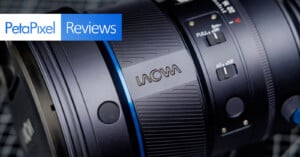
Venus Optics' Laowa brand is known for its weird and wonderful lens designs. Sometimes, they are exquisite, unique designs that bring versatility to the photographer's bag. Other times, the lenses are budget alternatives that trade some optical performance in the name of "character." The latest version of the Laowa 15mm f/4.5 Macro is definitely in the latter category, but that doesn’t mean that it lacks value. At $399, this is a solid, budget-friendly optic.
It’s been more than four years since the launch of Sony’s very popular FX3 compact cinema camera, so I was expecting an update to that model to come any time. Imagine my surprise when Sony instead launched a high-resolution cinema camera with a strong emphasis on photographic functionality and a brand-new design.
Being a film photographer is an expensive hobby. Sure, it's easy to get started with the relatively low cost of hardware but film and developing costs (even if you're doing it yourself) add up fast. That's why Kentmere Pan 200 is so welcome: it's good, it's readily available, and it's cheap at $8 per roll.
The most advanced mobile photography features are a trickle-down affair where some end up being part of mid-range and affordable phones. That’s been Google’s Pixel A series in a nutshell, only in the case of the Pixel 9a, it also applies to the AI-driven tools that play a key role in the broader imaging package.
When Fujifilm teased its new X half camera, the industry went into a tizzy trying to figure out if it was a half-frame analog camera or a compact digital. It turns out that the Fujifilm X half is actually not half a camera but more like two cameras in one.
SSDs continue to get faster, but the bottleneck for performance usually comes down to connectivity. It doesn't matter how fast your drive can write if the cable can't push data through to match. With Thunderbolt 5, though, that throughput has been jacked up, and OWC's new Envoy Ultra SSD shows that for those who need pure speed, there is an option.
You might think that the world has enough 24-megapixel full-frame cameras by now, but you would be wrong. With image quality having reached a performance plateau, the only way to improve is by going faster. Last year, Nikon released its Z6 III, debuting a new partially stacked sensor. We wondered when another camera might come out that utilizes this same excellent technology, and now that wait is over.
The DJI Mavic is the all-around choice for midrange professional use, and now we get to witness the fourth version in all its splendor. Much like the 3 Pro that comes before it, the Mavic 4 Pro features a three-camera array on a sophisticated gimbal using Hasselblad color science to provide stunning photos and videos.
Samsung looks to trim some fat and return to an age when smartphones can be unapologetically thin again. That’s the Galaxy S25 Edge in a nutshell. Samsung’s latest premium device is the lightest it has made in years.
I love the 75mm focal length. In fact, anything around 70mm to 90mm is more like a normal lens for me than a 50mm. And if the lens has a fast aperture, I'm even more enamored.