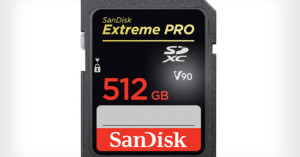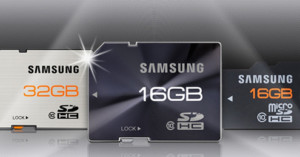
Samsung has released a new line of SD and microSD memory cards that focus not only on speed and durability but appearance as well. They come with a brushed metal look in silver or black, and are able pretty dang tough as well:
In order to ensure their reliability, Samsung has designed both lines of memory products to be waterproof, shockproof, and magnet proof, allowing them to withstand some of the harshest conditions. All models are guaranteed to survive up to 24 hours in water, withstand the force of a 1.6 ton vehicle (3,200 lbs), and resist up to 10,000 gauss (slightly less than the power of a medical imaging magnet).
Prices range from $10 to $90 for 2GB to 32GB cards.
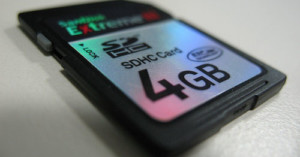
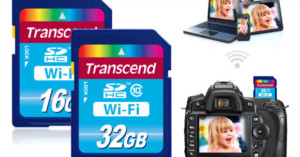
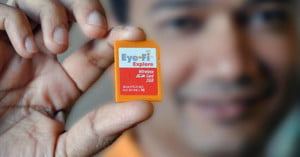
Perhaps lost amidst the excitement over new cameras at CES 2012 earlier this month was the SD Association’s unveiling of a new Wi-Fi data transfer standard. This new specification should make it easier for other memory card manufacturers to jump into the Wi-Fi-capable memory card game — an arena currently dominated by Eye-Fi (and more recently Toshiba).
Eye-Fi is, predictably, not happy with this latest development. The company is itself part of the SD Association, but has chosen not to back the standard. In a blog post published last week, CEO Yuval Koren argues that any company implementing the new standard would violate Eye-Fi’s patents for technology that took “tens of millions of dollars and several years” to create.
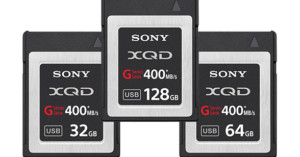
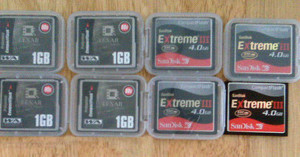
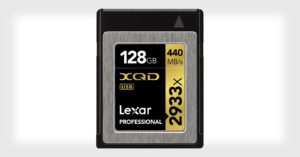
At the end of last year a new format called XQD was unveiled as the eventual replacement for CompactFlash. About a month later at CES 2012, Sony announced the first XQD cards. If you’re not sold on the new format, here’s some good news for you: Lexar and SanDisk have both announced that they have no plans to release XQD cards in the near future and that they’re both committed to the CompactFlash format (a bit strange though, given that SanDisk was one of the companies that announced XQD in November 2010). Lexar’s actions certainly back up its words: at CES it unveiled its largest (256GB) and fastest (1000x) CompactFlash cards ever.
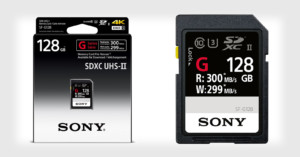
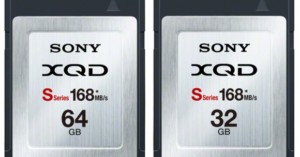
Well, well, well, look who’s first to the XQD game. It’s not Sandisk or Lexar, but Sony. On the same day Nikon announced its new D4 with XQD compatibility, Sony has announced the first line of XQD memory cards (intended to eventually replace CF cards). They offer 125MB/s transfer speeds, and can quickly store up to 100 RAW images in continuous shooting mode. A 16GB card will cost $129, while a 32GB one will be priced at $229. They’ll hit store shelves sometime in February.
In other news, Lexar has announced new 1000x CompactFlash cards, which can read at 150MB/s. A 128GB one is priced at a staggering $900. They’ve also announced the industry’s first 256GB card, which has read speeds of 60MB/s.
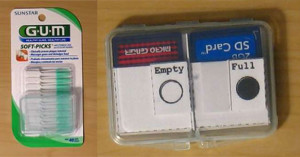
Wanting a cheap and compact way to carry, protect, and manage his SD cards, Instructables member FrankenPaper discovered that the plastic cases that come with Sunstar GUM Soft-Picks are the perfect size for holding 2 cards. To keep the cards from jostling around and to track whether they’re full or empty, he created an insert that you can print, cut, and fold yourself (download the PDF here).
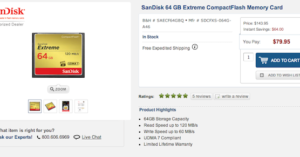
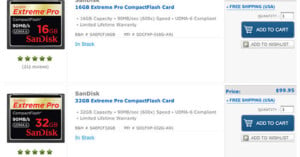
Update: The deal prices seem to be fluctuating. They might not be what our screenshot shows.
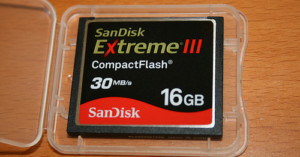
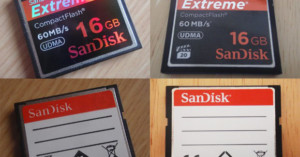
In the market for memory cards? B&H is currently offering SanDisk Compact Flash cards at crazy prices. They’re listing Extreme Pro cards at less than 50% of the price offered at other retailers. For example, a 16GB Extreme Pro card currently costs $60 (with free shipping in the US) from B&H but $130+ at most other places.

Instead of labeling their memory cards in MB/s, some manufacturers choose to use “Times” ratings (e.g. 8x, 12x, 20x, etc…). While it’s pretty clear that a higher number indicates faster speed, what exactly is the number a multiple of? Read more…
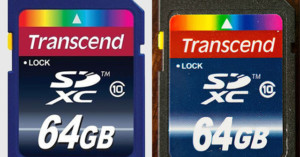
Did you know that a third of the SanDisk memory cards being used on Earth are actually fake? A SanDisk engineer recently shared this startling fact with a reader over at The Online Photographer:
[...] at any given time, approximately a third of the SanDisk memory cards (made by Toshiba) being used out there in the world are counterfeit. As in, not SanDisk memory cards at all—some other kind of cards dressed up as lookalikes.
Thirty percent, was the number quoted. A third, more or less.
To make sure you’re getting the real thing, always purchase your memory cards from reputable dealers. Read more…
Samsung recently partnered up with viral marketing agency The Viral Factory to launch 200 paper airplanes carrying SD cards from the edges of space. We first reported on this experiment back in September of last year, but they followed through with the plans and just published this video this week showing how they accomplished it. The balloon was launched in Germany, and each SD Card carried a message for the finder to prove how durable they are. Read more…
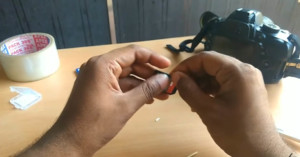
Here’s a clever trick to keep in mind if you use SD cards for your photography: if the locking mechanism on the side of the card breaks off and renders your card unwritable, covering over the area with a little scotch tape magically makes your card useable again.