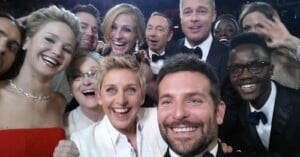
10 Years Later: No One Would Care About Ellen’s Oscar Selfie Today
The 10-year anniversary of Ellen DeGeneres' internet-breaking Oscars selfie reveals just how much photo culture has changed.
The 10-year anniversary of Ellen DeGeneres' internet-breaking Oscars selfie reveals just how much photo culture has changed.
This past week, the PetaPixel team came across an opinion on a photography blog that we didn't think was fair. In short, it argued that all "small sensor cameras suck," which is just not true.
It's been a hot minute since I've played with a true superzoom, so I was unusually excited to see how Panasonic's new compact 28-200mm f/4-7.1 -- the L-mount's first all-in-one zoom lens -- performed.
Sitting in a McDonald's restaurant smoking a cigarette while eating a burger, this "peak male specimen" apparently had his picture taken in 1989, according to the caption.
A child's online privacy has long been a concern for parents and guardians, and even law enforcement. It is a topic mired in debate, and it's also an ever-changing technological landscape thanks to new AI tools. Wading into the complicated situation is freelance writer Hannah Nwoko in a new piece for The Guardian.
World-class chipmaker NVIDIA became the first company in its industry to reach a market cap above $2 trillion. This remarkable high water mark capped off an incredible week for NVIDIA, which posted record revenue last week.
In 2016, Adobe developed a technology that was best described as "Photoshop for audio." It would be able to change words in a voiceover simply by typing new words. Sounds scary, right? It was, and Adobe never released it -- for good reason.
During Sunday's Super Bowl commercials, a set of incredible photos were seen by some 123 million people. Regardless of where you stand on the Jesus-themed ad, it was a pretty cool moment for photography.
I can be called an Apple fanboy. I'd push back on the notion that I love everything the company does but for better or worse, I'm ingrained in the Apple ecosystem and have been for more than two decades. So naturally, I've been eagerly awaiting the Apple Vision Pro.
In a recent interview, a Samsung executive attempted to gaslight us all by saying that no photo is really "real."
The OM-1 Mark II has landed with more of a whimper than a bang. It's a great camera but there's not much new about it. However, the rush to pass judgment on what the lack of novel features means for the future of OM System and Micro Four Thirds at large is premature.
The 135mm focal length is one of my favorite portrait ranges due to its compressed rendering of people’s faces, as well as lending itself to stunningly dramatic full-body environmental portraits. Last year saw the release of two new 135mm lenses, one each from Canon and Nikon. Take into account the venerable Sony 135mm G Master and you have all three of the major full-frame mirrorless companies now offering a 135mm f/1.8 lens.
A viral photo of a classic home computer setup from the early 2000s has sparked a wave of nostalgia from millennials.
Following DPReview publising its Sony a9 III studio test shots, PetaPixel wrote about our hands-on experience with the a9 III's image quality. We wanted to add more context to that discussion, even if it spoils parts of our impending review.
As photographers flip their calendars over to 2024, waving goodbye to a year of great gear and hopefully even better photos, it is time for shutterbugs to usher in the New Year with top-notch -- and totally realistic -- New Year's resolutions.
We all have to start somewhere. For most of us, that means a basic DSLR or mirrorless camera kit with a compact, handy general-purpose zoom lens. Undoubtedly, we can't wait to ditch our basic kit lens for something faster or more versatile. A kit lens is something we feel we need to graduate from to call ourselves an accomplished photographer. But is that really the case? Maybe the humble kit lens has more to offer than we think, so today we will look at our five favorite kit lenses of all time.
This year has been a fascinating one in the world of photography, and like every year, it was full of incredible highs, devastating lows, and everything in between.
This past summer, I hit the hot streets of Marrakech, Morocco with Lomography's new LomoChrome '92 film in a Canon AE-1 SLR camera with a 50mm lens.
In a recent opinion piece, The New York Times delcared that AI is the "future of photography." Whether that's true or not remains to be seen but it has undoubtedly been a big year for images generated by artificial intelligence.
Now in its third year, PetaPixel has gathered its team together to guess the things they just know are going to take place over the next calendar year. All of us are, as usual, ready to be very, very wrong.
Kate Middleton and Prince William released their Christmas card photo of them posing with their children over the weekend which caused a stir after many accused them of a "Photoshop fail."
Earlier this week, PetaPixel reported on a remarkable story that scientists AI-generated images from peoples’ brains with “75 percent accuracy.”
Much of the focus on the potential hazards of generative AI technology has understandably been on how it impacts artists and copyright ownership, and how it could affect people's jobs and wages. New research shows that the dangers of generative AI go much further and may be catastrophic for the environment.
The Sony World Photography Awards is arguably the most prestigious and largest photo contest. The 2024 edition is open to entries and some of its rules are under fire.
The Sony a9 III is still months away from release but has already sent photographers into a frenzy. The positive buzz around the camera is as high as any camera reveal ever, and with good reason. The a9 III's global shutter system is a complete game-changer for a wide range of photographers and videographers and will enable shots that have long been impossible.
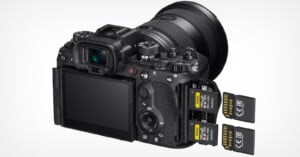
Sony's new a9 III is the first full-frame interchangeable lens mirrorless (ILC) camera to use a global shutter, which unlocks some serious performance like 120 frames per second shooting. It doesn't however, have support for the latest CFexpress specification.
The Leica M11 series now consists of three cameras. We have the original M11 which I very much enjoyed using on the streets of New York. Then, the M11 Monochrom was released and became an instant classic. I loved taking black-and-white images with it all over Montana. Now we have the release of the M11-P which apart from some minor cosmetic changes is largely the same as the original M11. So, why then should we get excited about such a similar camera?
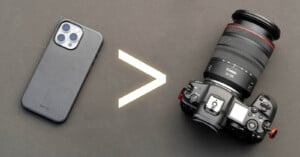
Previously, we made a video about when and why you would use a mirrorless interchangeable lens camera instead of a smartphone. It seems only fair to look at the opposite scenario too.
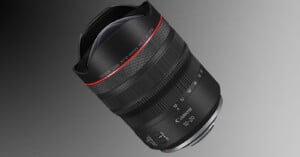
Late last night, Canon introduced a new wide-angle zoom lens -- the 10-20mm f/4 L IS STM -- that is unlike any optic it has ever produced. It's unique, and one publication published a story with quite an incendiary accusation: Canon didn't actually make it, Sigma did.
Sigma has not released a new camera since 2021 and doesn't currently have an APS-C camera, otherwise known as a crop sensor, in its lineup. In fact, it hasn't made one since the sd Quattro in 2016. That should change, and I believe it's about to.
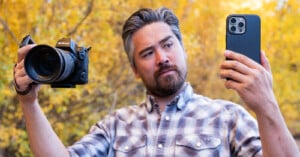
I've just returned from a whirlwind tour of Idaho and it provided me with ample photographic opportunities. I figured if I always have a phone with me and I always have a mirrorless camera, why not test them out against each other?
A couple of companies have released new SSD products in the last few months and they carry one commonality: USB 3.2 2x2. They shouldn't, because all it does is overstate the performance a vast majority of users will ever see.
Apple's iPhone has for several years now been the best choice for shooting video on mobile, but the recent addition of ProRes Log capture on the iPhone 15 Pro and Pro Max is taking that to another level.
Between inflation and "shrinkflation," consumers are getting the short end of the stick these days. As the rich get richer, regular folks face a litany of anti-consumer practices, not the least of which are misleading food photos at restaurants.
Earlier this month, Blackmagic announced its first full-frame camera, the Blackmagic Cinema Camera 6K. On paper, the specifications looked enticing, and newly-released sample footage shows that it can live up to that hype.
Rumors about upcoming cameras and lenses are a staple of the online photography community. Manufacturers nearly always hate them and photographers often love them. I land somewhere in the middle but tend more toward the idea that rumors, even when intriguing, can be damaging.
Apple rides a delicate line with its iPhone camera system. On the one hand, it wants to keep it as simple as possible to keep photographers "in the moment." On the other hand, creators keep demanding more of the system. Two of Apple's executives sit down with PetaPixel and explain how they navigate these two seemingly disparate goals.
Visiting Apple Park in Cupertino for the launch of the brand-new iPhone 15 series was quite the experience, and after a day getting to know the Pro and Pro Max series devices, I was left with a few answers and a lot more questions.
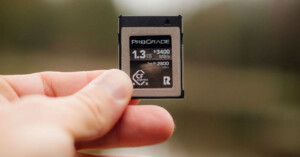
CFexpress 4.0 cards are already entering the market this year with the promise of much faster read and write speeds. While that sounds great, it is going to be a while before photographers and filmmakers can really take advantage of it.
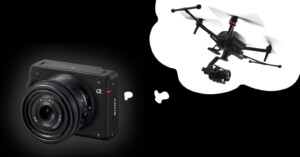
Sony's Airpeak S1 drone has thus far been a rare misstep for the respected Japanese company. Despite some (expensive) improvements to the Airpeak S1 drone, Sony's support for its flagship aerial platform, first revealed in 2021, has been significantly undercut by yesterday's reveal of the Sony ILX-LR1 full-frame camera.
Eight years of discussions. Six months of training. Two days of final preparations. Much was required to give photographer Blair Bunting two hours at the edge of Earth's atmosphere to conduct the first-ever photo shoot at near-space where he captured images that have never been made before and will likely never be made again.
We've seen the 100-400mm f/5-6.3 DG DN OS Contemporary before because it's the current full-frame super-telephoto option from Sigma for mirrorless cameras. What we haven't seen before is a full-frame Sigma that has been specifically adapted for the APS-C-sized Fujifilm lens mount -- until now.
It takes a lot of hard work to become a professional photographer. There are untold hours of toil to perfect the craft and lots of money spent to reach a pro level. So when you get there, how much should you be paid for a day's work?
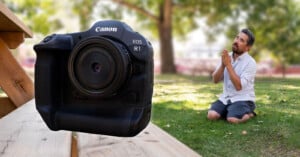
When the Canon EOS R3 hit the market two years ago, we knew there would be a flagship R1 camera coming at some point. While we wait, we figured why not make a wishlist of the features and technologies we would like to see when the R1 finally arrives.
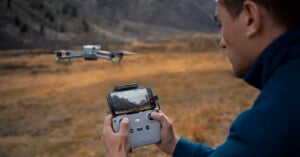
Drones are not nearly as exciting nor popular as they were just a few short years ago as a combination of laws and incremental updates has made the flying them feel like too much effort for not enough payoff.
It's time for a State of the Union, Camera Edition. In recent years, we have seen some dramatically positive changes from all the major camera manufacturers, but nobody is perfect. Let's talk about each one's weak points.
The great photographer panic over artificial intelligence (AI) has been underway for some time, but it reached new heights this week when a photo competition disqualified a genuine photo after the judges became suspicious that iPhone photographer Suzi Dougherty was trying to trick them.
Sony has been working hard to re-release new iterations of its existing lenses because although many of the early lenses were decent, they still left much to be desired. The original G Master zooms, for example, were priced like high-grade professional lenses, but came up short optically.
Meta, formerly Facebook, is no stranger to ripping off features from other social networks and hopping on popular trends. But this time, with Threads, the company finally picked a good time and a good angle to play copycat.
As photographers wait nervously for artificially intelligent (AI) robots to replace them, an inherent quirk of the technology may actually be what saves them.