Editorial

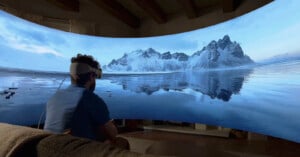
A person wearing a virtual reality headset sits on a couch, immersed in a panoramic scene of snowy mountains and a calm lake that reflects the landscape. The curved display surrounding them enhances the immersive experience.

Apple Smartly Bets on Blackmagic and Canon in Vision Pro Content Gamble

While Apple's Vision Pro spatial computing headset is extremely impressive from a technological perspective and has some incredible tricks up its sleeve, it's a tough sell given its eye-watering $3,499 starting price and relative lack of content. Apple's WWDC keynote demonstrated that the company is working hard to tackle the second hurdle.

A modern glass building with the Adobe logo prominently displayed at the top right corner. The glass facade of the building appears shattered with large cracks running throughout, creating an illusion of broken glass. The sky in the background has a pinkish hue.


Adobe Has Made It Too Easy to Hate Them

Another week, another public relations nightmare for Adobe. While not every controversy is Adobe's fault, each is understandable in the larger context: Adobe lost people's trust a while ago, and everything it does is under a microscope.

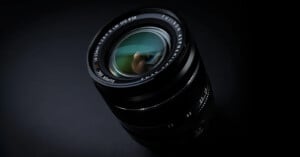
Close-up shot of a Fujinon camera lens against a black background. The lens has reflections visible on its glass, with the text "Fujinon Aspherical Super EBC" and the specifications "18-55mm 1:2.8-4 R LM OIS" around the outer edge.

Farewell Fujinon XF 18-55mm, the Kit Lens Nobody Else Dared to Make

While photographers can still get their hands on the Fujinon XF 18-55mm f/2.8-4 R LM OIS lens, it will no longer be the kit lens of choice for Fujifilm cameras, including for the new Fujifilm X-T50 camera. Supplanted by the new XF 16-50mm f/2.8-4.8 R LM WR, the XF 18-55mm f/2.8-4 proved challenging for competitors to match -- not for a lack of ability, but a lack of desire.

Shantanu Narayan with glasses and a beard, wearing a suit jacket, is shown against a vibrant background of pink and red soundwaves. The image has a purple tint and a white outline around the person, giving a graphic design effect.

Adobe’s CEO is Just Not on the Same Wavelength as Artists

Adobe CEO Shantanu Narayen has been in charge of Adobe for nearly two decades and in that time has rarely done interviews. However, he has been making the rounds lately to pump up AI's tires, including an interview published this week with The Verge's Nilay Patel for the publication's Decoder podcast. There, Narayen said some interesting, if not disconcerting, things.

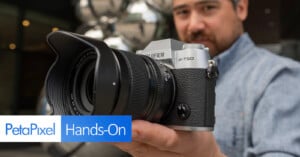
A vintage-style camera with silver top, black leather body, and a lens labeled "fujinon aspherical lens super ebc f=23mm" against a colorful, abstract background.

For Many Photographers, the Experience Matters More Than Features and Specs

I've always been fascinated by the latest and greatest technology, and that obsession has carried over to photography ever since I picked up my first camera. However, as cameras have improved, I've begun prioritizing how a camera makes me feel rather than what the camera offers regarding specs and features. Given the most popular cameras these days, I'm not alone in seeking joy over performance.

Close-up of the adobe logo with a stylized "a" in orange above the word "adobe" in white, affixed to a textured dark gray wall.

Adobe Says AI is the ‘New Digital Camera’

Generative AI is changing how people create and business is done, which has far-reaching impacts. Photography is no stranger to technological revolutions and has thus far always survived. However, the coming storm of AI feels different to many, including Adobe, a company that has been involved with digital imaging since its earliest days.

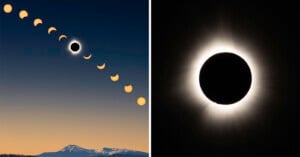
Jeremy Gray -- April 8, 2024 -- Total solar eclipse, Patten, Maine

My Solar Eclipse Experience Gave Me So Much More Than Photos

It's the morning of April 8, 2024. My camera equipment is packed in their bags, and vital Sun rotation information and eclipse timing information are scratched in a notepad. Somehow, despite years of notice about this historic total solar eclipse, the first to hit my home state of Maine since 1963 and the last until 2079, I'm committing the cardinal sin of photography: I'm trying to photograph a once-in-a-lifetime event with nebulous plans and no scouting.

Mark Weir

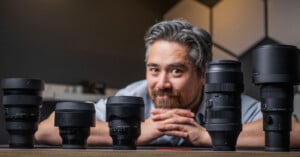
A Tribute to an Incredible Mind: Sony’s Mark Weir

Mark Weir, Senior Manager of Electronics at Sony, retired this week after working for the company since 1986. He is, without a doubt, one of the smartest and friendliest people the digital camera industry has ever known and while we are so happy he finally is taking time for himself, we're still a bit sad to see him go.

Sigma 50mm f/1.2 Art hands on review

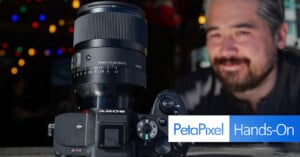
The 50mm f/1.2 Art Proves Sigma Has Mastered Lens Making

I normally dismiss ultra-fast aperture lenses because they tend to be overly large, overly expensive, and overly excessive. I rarely want to have the shallowest depth of field possible, and an f/1.2 lens is only two-thirds of a stop brighter than a reasonably priced f/1.4 lens. But what if I can have my cake and eat it too?

Landscape op-ed: Has landscape photography lost its way?

No, Landscape Photography Has Not ‘Gone Off the Deep End’

Next to portraiture, landscape photography is among the oldest genres. It has gone through evolutions, and thanks to pioneers like Ansel Adams, landscape photography even helped bring photography into the larger art discussion. But after more than a century of influence and brilliance, has landscape photography lost its way?

Nikon is all-in on wildlife photography with the Nikkor Z system

Nikon Is All-In on Wildlife Photography, and I Love It

Nikon has long been a popular choice for amateur and professional wildlife photographers. Since the days of its film and digital SLR cameras, it has committed to engineering robust cameras with swift autofocus and making top-tier telephoto lenses. That same focus persists in the mirrorless age, perhaps even more.

How Photographers Can Protect Their Photos (and Democracy) from Generative AI

Sight was the first of our senses to be technologically shared in a world we did not witness with our own eyes. Photography—writing with light—has historically meant a one-to-one relationship between what was before a camera (defined as a lens focussing light on a recording media) and what came out the other end, created by a human.