Instagram Now Available for Android
It’s been a long time coming, but today the popular photo snapping and sharing app …
It’s been a long time coming, but today the popular photo snapping and sharing app …
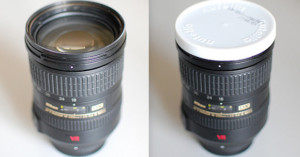
Here’s your completely random photography fact of the day: Nutella lids can double …
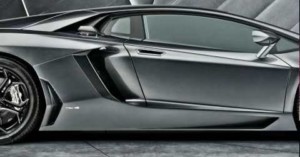
How would you go about photographing a $380,000 Lamborghini Aventador? Here's an interesting behind the scenes video in which photographer Blair Bunting presents a step-by-step walkthrough of how went about doing it.

Japan-based art collective NAM shot this series of advertisements showing gravity-defying chocolate confections. What's interesting about the concept is that they decided to do everything without digital trickery, opting instead to hang the various foods from thin strings.
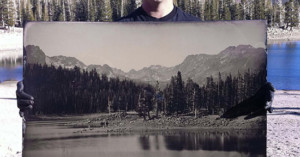
Los Angeles-based photographer Ian Ruhter creates amazing photographs using a van that he turned into a gigantic camera. He uses the collodion process (AKA wet plate photography) to turn large sheets of metal into photographs, and spends upwards of $500 making each giant one-of-a-kind print.
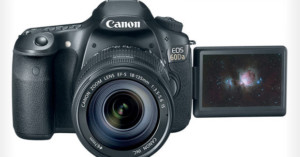
Canon has announced the new 60Da, a DSLR geared towards astrophotographers and the successor to the 20Da. So what's different about this camera?
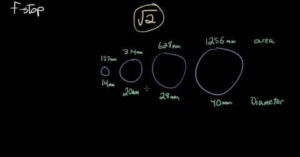
Even if you have a good command of using f-stop numbers and properly exposing photographs, you might not understand …
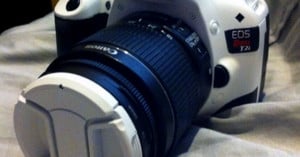
Leica charges thousands of dollars extra for its limited edition white cameras, but a Boston-based photo enthusiast named Andrew successfully customized his camera for only a few dollars by going the DIY route. After spending two hours strategically placing green painters tape onto his Canon Rebel T2i DSLR using a razor, he hung the camera by the strap mount and applied six coats of white spray paint and three coats of matte clear.
Leica recently put out this short portrait of renowned street photographer Joel Meyerowitz, …

April Fools' Day 2012 has come and gone. Even though we didn't publish any bogus stories this year, here's a quick roundup of other photo-related sites that did. The screenshot above shows Kodak's homepage yesterday, which advertised a new kitten printing machine. Interestingly enough, there was a serious news ticker just below it that discussed the company's bankruptcy status.

Want to see how high end camera lenses are tested for durability? Here’s a video in which Carl Zeiss …
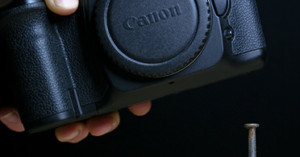
With the recent camera releases (or maybe Spring fever) I’ve been rather amazed watching various photography forums have major melt downs during the last few weeks. I said something about cameras and lenses just being tools, not life and death, and got immediately annihilated. They aren’t just tools, I was told, they are the means to make a living for some people, and the passionate hobby of others. That got me thinking, though: I have friends who make their living as carpenters, and others for whom woodworking is a passionate hobby. I got to thinking how silly their forums would seem if they acted like we do.
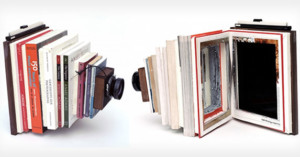
Artists Taiyo Onorato and Nico Krebs create homemade cameras out of bizarre objects …
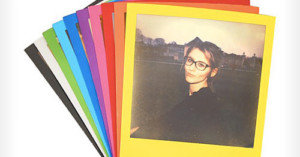
The Impossible Project has partnered up with Japanese music producer and designer Nigo …
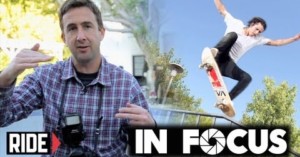
Here's a tutorial by skateboarding photographer Michael Burnett in which he discusses various composition tips and techniques. His area of expertise is in shooting skateboarders, but the tips are very applicable for other types of photography as well.

Dinner Etiquette is a project by Melbourne-based art director Sonia Rentsch and photographer Scott Newett that consists of clever still life photos of tableware that's arranged to look like fine dining attire.

Cincinnati native Amy Hildebrand was born completely blind due to albinism, a disorder in which the body is unable to produce melanin (the pigment that gives color to hair, skin, and eyes).
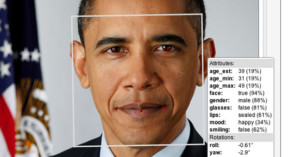
Facial recognition service Face.com has announced a new feature in its API: age detection. After analyzing a photograph of a person's face, the software returns three values: minimum age, maximum age, and estimated age, along with the confidence level of the guesses. Applications for the new technology include enhanced parental controls and targeted advertising.

Here’s a great 6-minute video in which PBS Off Book examines the impact three Internet phenomena — …

One of the biggest stories in the news over the past month has been the controversy surrounding the …

Vimeo has partnered up with Nikon for a new educational video series titled …

Choices is a Warhol-esque (or Gursky-esque) project by photographer Richard Stultz, who visited various stores to document the mind-numbingly large number of choices consumers are faced while shopping.

Posing App is a new app that offers a pocket reference for poses …

The Guardian published an article yesterday that features a number of prominent photographers …
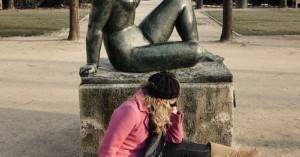
Editor's note: This is a piece by photographers Bryan Formhals and Blake Andrews on how famous photographers' styles are copied over and over again. Please do not read or comment if you take things too seriously.
The other day while reading the Internet I came across “The 10 Most Harmful Novels for Aspiring Writers.” I wondered whether there could be a list for photographers as well. I thought about it and then sent my list to Blake Andrews to see if he wanted to contribute and have some fun with it. Here's what we came up with.
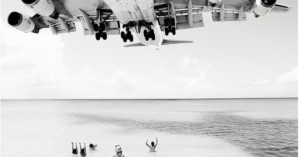
Maho Beach outside of Princess Juliana International Airport in Sint Maarten is famous for the fact that landing airplanes fly overhead at minimal altitude. It's one of the only places in the world where airplanes can be viewed in their flightpath just outside the end of the runway, and therefore is very popular with tourists and plane spotters. Austrian photographer Josef Hoflehner has a project titled "Jet Airliner" that consists of photos of massive jet airliners hovering over the heads of sunbathers on the beach.
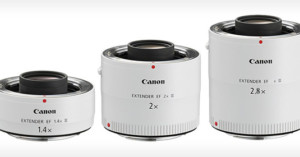
There may soon be a new member of the Canon Extender EF lens …

After reading about the Wakhan Corridor in the New York Times, French photographers …
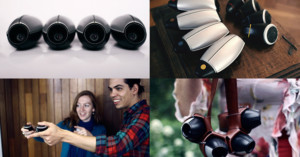
Apollon is a concept camera designed by product designer Gordon Tiemstra for his industrial design university project. The big concept is that the camera can be physically combined with your friends' cameras, allowing them to snap photographs together to create things like panoramas and 3D photographs. The images captured by any camera in the cluster is wirelessly transferred to all of the others, giving everyone the complete set of images that were snapped.
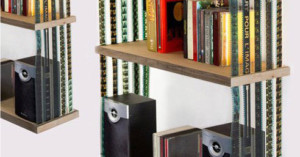
VU35 is a new brand by Lucas Desimone and Matias Resich that offers products created from wood and reused 35mm film -- a plastic material that's difficult to dispose of. Their first product is a minimalistic collapsible bookshelf called Filmantes, which uses strips of film to connect three wooden shelves.

Here's a tutorial by photographer Joe Edelman that teaches how you can build a studio lighting setup with fluorescent lights for under $200. You can find a detailed parts list over in the description of the video on YouTube.
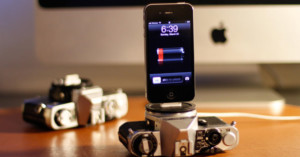
Etsy seller Roberto Altieri creates unique iPhone/iPod charging docks out of old -- and hopefully defunct -- Pentax and Minolta SLR cameras from the 1960s and 1970s.
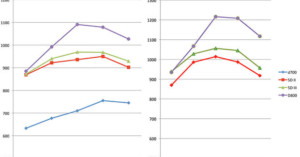
Last week camera testing service DxOMark announced that the Nikon D800 had earned the highest sensor quality score ever awarded. Roger Cicala of LensRentals wanted to see for himself how much of an advantage the D800's 36.3MP sensor had over its competition, so he did some sensor resolution tests on the camera, comparing it to the Canon 5D Mark III, 5D Mark II, and Nikon D700. His conclusion?
[...] there’s no question the D800 can actually get those pixels to show up in the final product (assuming your final product is a big print – they’re going to be wasted posting on your Facebook page). But you’d better have some really good glass in front of it. I don’t think the 28-300 superzooms are going to cut it with this camera.
In the real world, highest possible resolution is nice to know about and talk about, but usually not of critical importance compared to other factors. You’ll be able to make superb images with any decent lens for an 8 X 10 or even 11 X 16 print. But if you’re getting the camera because of the resolution, it makes sense to know which lenses will allow all of that resolution to be utilized. Just in case you get that job that needs billboard sized prints.
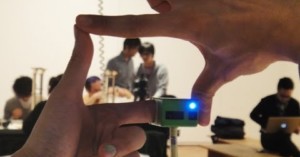
Last November we featured a concept camera called Air that is worn on your fingers and snaps …
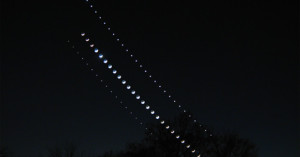
This past Sunday, Jupiter and Venus put on a show by lining up with our moon (a …
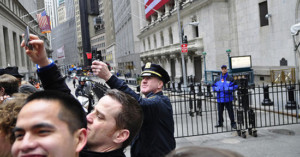
After being arrested on October 1, 2007 for using his cell phone to film officers making an arrest, Boston …
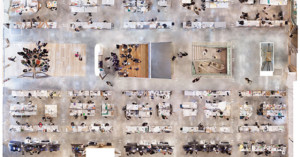
Architectural photographer Brett Beyer was recently commissioned by Cornell University to make a photograph of the interior of its recently completed Milstein Hall. The request wasn't for a standard interior photo, but for an aerial shot of the 25,000-square-foot studio space that looked as if you were looking down at it with the roof removed (think Google Earth but for the interior of a building). Beyer accomplished this by pointing his Canon 5D Mark II and 17-40mm lens down from the ceiling on a 12-foot boom and then capturing 250 separate photographs of every square inch of the space over three days. He then spent 10 days stitching the images together by hand in Photoshop to create the amazing photo seen above.

JumpFromPaper is a new line of unique handbags that uses thick outlines and …
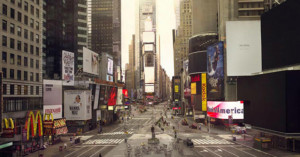
Silent World is a project by Paris-based artists Lucie & Simon that shows post-apocalyptic views of famous locations around the world. All but one or two of the people in each location are removed from the scene. Rather than use multiple exposures and compositing the images to remove moving objects (e.g. people and cars), they chose to use a neutral density filter -- one that's normally used by NASA for analyzing stars -- in order to achieve extremely long exposure times during the day.
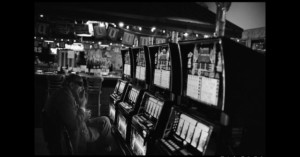
Here's an oldie but goodie: back in September 2009, photographer Chris Weeks released this documentary about street photography titled Documenting the Human Condition. It's occasionally preachy and at times feels like a stealthy Leica advertisement, but should be interesting to you if you're at all interested in the practice of street photography.

A month after announcing massive losses of $2.9 billion, Sony is taking evasive …
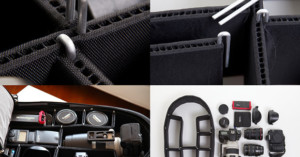
TrekPak is a new padded camera bag insert that does away with the annoyances of velcro by introducing a new pin system for adjusting dividers:
What makes TrekPak really unique, is that you won’t find any Velcro. When you try to adjust a normal gear bag while out in the field, you know how frustrating it can be. The Velcro sticks where you don’t want it to, is hard to pull apart, and just looks messy and cluttered. Our patent pending system uses anodized aluminum pins and durable padded dividers to offer limitless organizational options. The TrekPak pin system is much easier to adjust, very secure, and straight up, it’s slick.
They're starting with inserts for Pelican camera bags, but are planning to release generic inserts and inserts designed for other bags as well.

What would you do if you were given the task of creating a self-portrait within 20 minutes in front …

According to the UN, one third of the world's food goes to waste -- mostly in industrialized nations -- while 925 million people around the world are threatened by starvation. To draw attention to this startling fact, Vienna-based photographer Klaus Pichler has been working for the past nine months on a project titled One Third, which consists of photos of rotting food. The food ranges from simple vegetables to cultural dishes from around the world, and everything is allowed to rot naturally by being stored in large plastic containers in Pichler's bathroom.
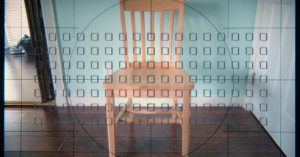
Sony is reportedly focusing on autofocus as one of the main battlegrounds it’ll wage war on in the DSLR …

Here’s a video in which renowned portrait photographer Nadav Kander discusses his approach …
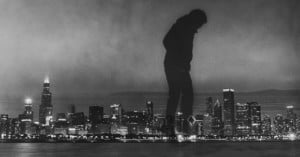
Photographer Tim Chao created this beautiful photo of a dark figure standing over …
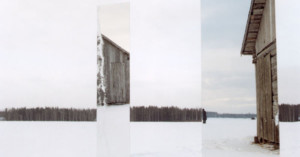
For her project titled Mirrors, Swedish photographer Ilar Gunilla Persson photographed various landscapes with giant mirrors placed in them. The mirrors give the scenes an surreal and artificial look, but all the shots were captured on film.
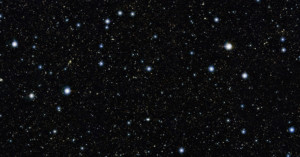
This photo is what you get when you point a massive 4.1 meter telescope (VISTA in Chile) at an unremarkable patch of night sky and capture six thousand separate exposures that provide an effective "shutter speed" of 55 hours. It's an image that contains more than 200,000 individual galaxies, each containing countless stars and planets (to put the image into perspective, the famous Hubble Ultra-Deep Field contains "only" around 10,000 galaxies). And get this: this view only shows a tiny 0.004% of the entire sky!
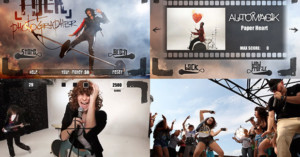
Rock Photographer is a new iPhone game that can be described as a mix between "Guitar Hero for photography" and "Pokemon Snap for adults".