The Godox C100 is a Screenless Camera with a Transparent Display
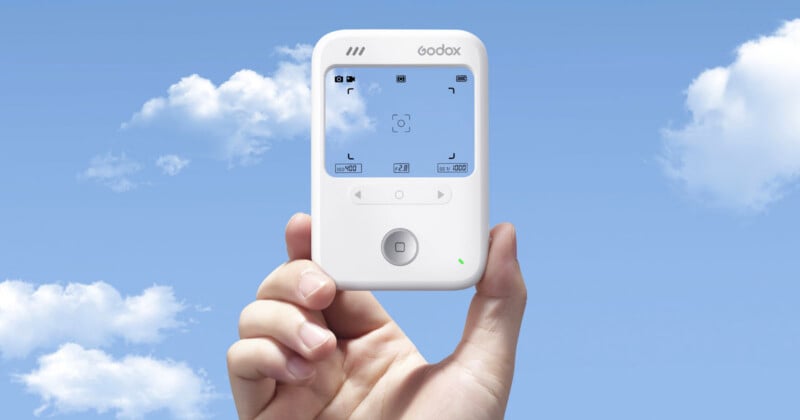
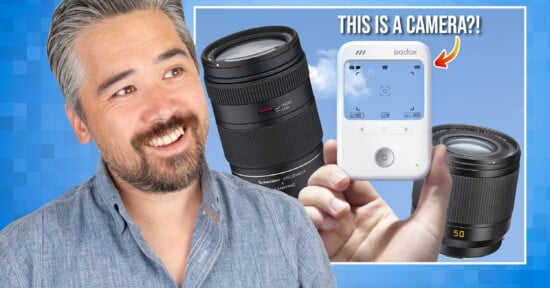
Along with the explosion of miniature cameras since the runaway success of the Kodak Charmera took the world by storm has been the tangential surge of other compact cameras. Godox’s new C100 falls into that second category.
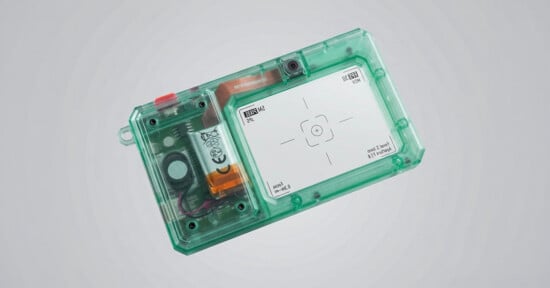
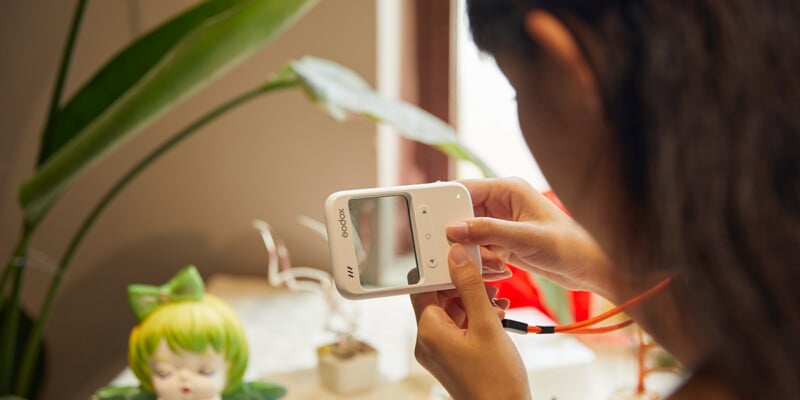
The design of the C100 is intentionally extremely simple. Instead of a typical digital camera that displays a view through a display, it has no display at all and only allows composition to take place via a transparent window. It’s not a new idea, given that one similar example from Escura was showcased earlier this year at Japan’s CP+ show in Yokohama (shown in the Reel below).
Godox’s reach is substantially larger, so it’s more likely that this compact camera will find its way into more hands.
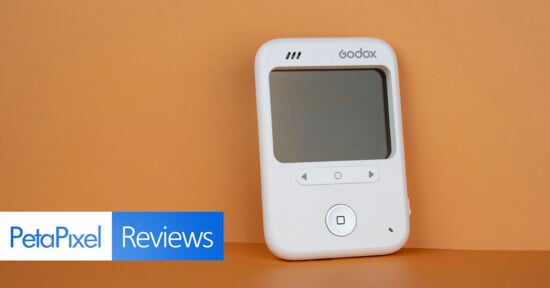
The company describes the C100 as having an “avant-garde” design that weighs a scant 65 grams. It’s just a rectangle split in half, with the top half featuring the camera unit on top of a transparent window with the battery, storage, and “grip” below it. Godox says that the transparent window has about 50% light transmittance. That is perhaps best visualized in the image below, where the area of the screen is noticeably darker than the wall around the camera.

“The C100 focuses on immersive shooting, observation, and feeling,” Godox says, roughly translated from Chinese. “Then, after pressing the shutter, you aren’t stuck looking back in time at the photo but instead live in the moment.”
That transparent window is, surprisingly, not a fixed graphic, which was the case for the camera Escura showcased at CP+. That was simply a transparent plastic window with graphics printed on it, while Godox’s display shows active exposure information, the current frame, and battery life. Adding this small feature takes the C100 from a curious toy and elevates it to a genuinely interesting photography product. Two arrow keys and a select key on the back of the camera are, presumably, for adjusting settings.
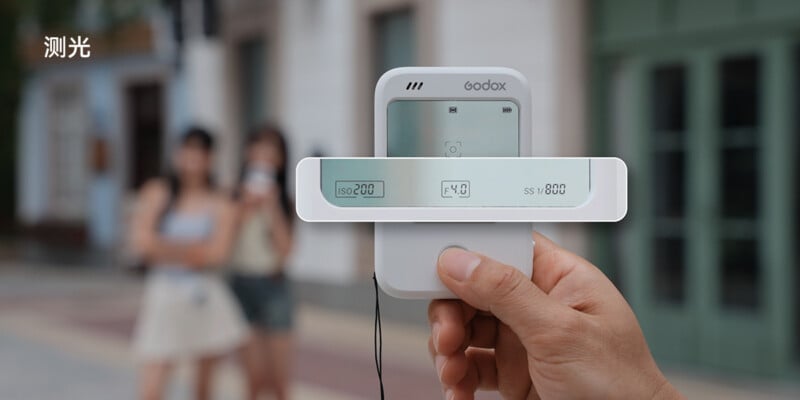
The display window being active is especially helpful since the C100 can capture in multiple aspect ratios: 6:9, 4:3, 3:2, and 1:1. The visible frame lines will adjust accordingly.
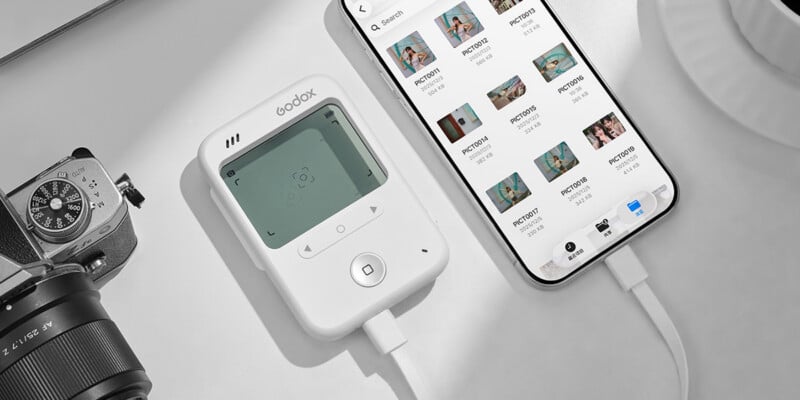
The camera can also connect directly with a smartphone or computer via USB-C for quick and easy preview and download of photos and videos. The camera uses up to 128GB microSD cards, so standard card readers are also an option. USB-C is also used for charging, and Godox says to expect it to last for about 1.5 hours of continuous video recording, which likely translates to significantly longer life for simple photography.

Godox hasn’t published any information on the sensor, image size (or format), or video quality. That said, in preview images of the C100, photos appear to be anywhere between 320 kilobytes and 570 kilobytes, so don’t expect high resolution.
Pricing for the C100 wasn’t listed on Godox’s website, but Digital Camera World reports that it costs ¥199, which is about $29.
Image creditsGodox
Affiliate Disclosure PetaPixel articles may include affiliate links; we may earn a commission if you buy through one.