Camera Traps in Honduras Exonerate an Endangered Species Blamed for Eating Crops
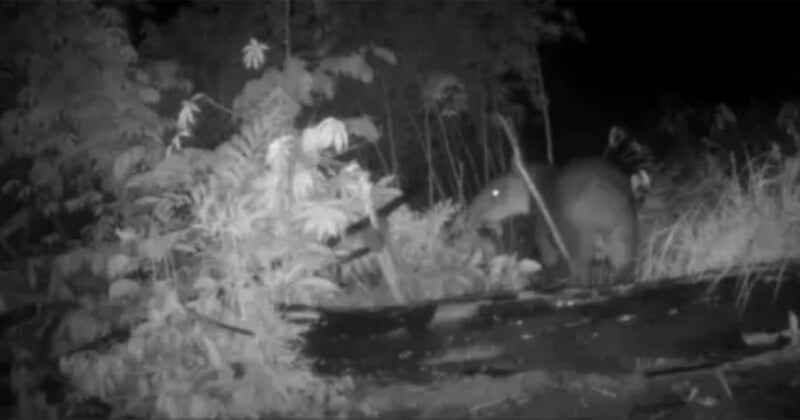
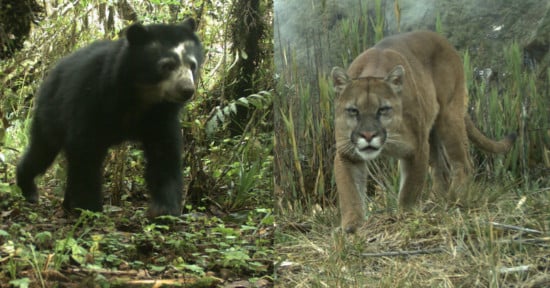
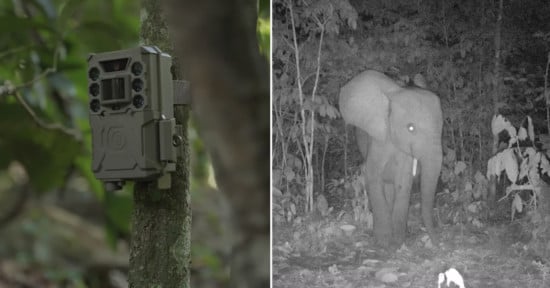
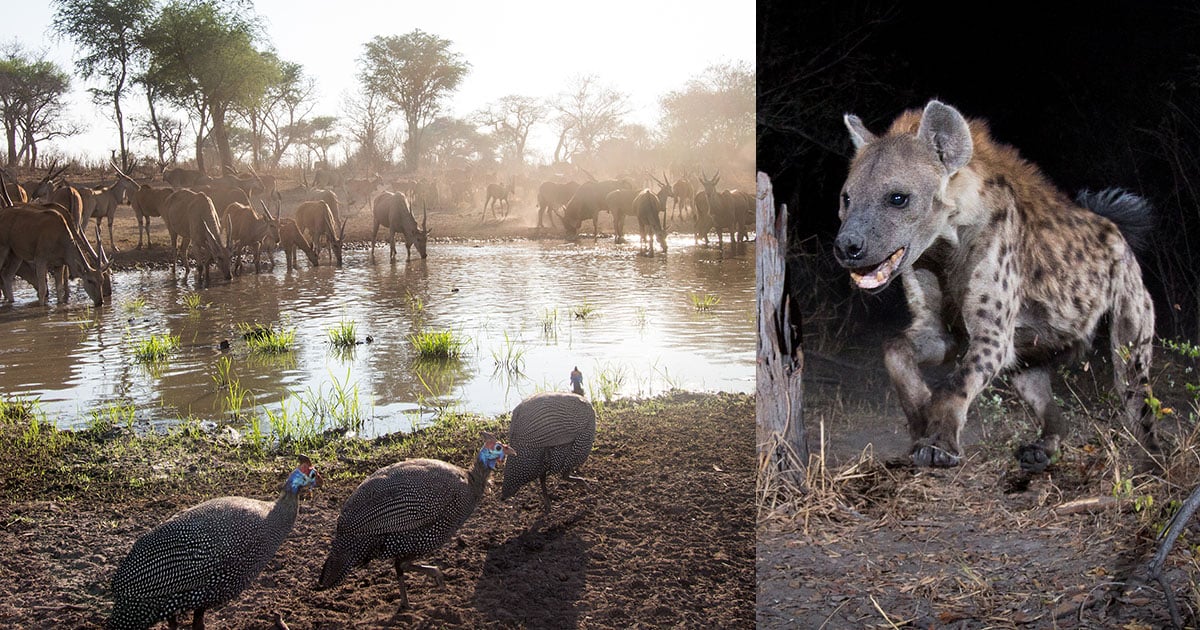
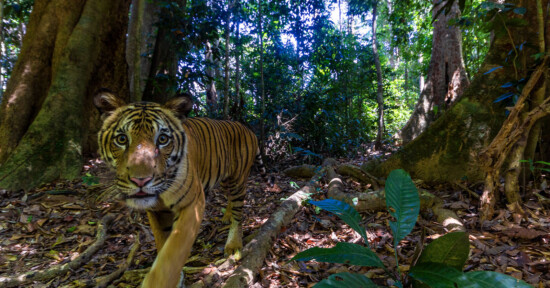
Camera traps are a hugely important tool in wildlife photography and conservation. As a new study in Honduras shows, camera traps can also be used to exonerate animals accused of destroying crops.
A new study in Neotropical Biology and Conservation shows that non-invasive technology — camera traps — can be used to solve “one of the most common challenges in wildlife conservation: identifying the species actually responsible for crop damage.”
As EurekaAlert! explains in a news release, many humans living near forests regularly contend with wildlife venturing into their agricultural fields and eating their crops. These interactions can often lead to increased conflict and tension between people and animals, which is especially harmful to wildlife, which often faces hunting and habitat loss as a result.
In the Indigenous Miskitu community in Mavita in eastern Honduras, local people have “long reported losses in their cassava fields, locally known as yucales.”
Most of the residents believed that Baird’s tapir (Tapirus bairdii), an endangered species and the largest land mammal in Central America, was responsible for the damage and losses. Residents also thought that pacas (Cuniculus paca) and armadillos (Dasypus mexicanus) were accomplices.
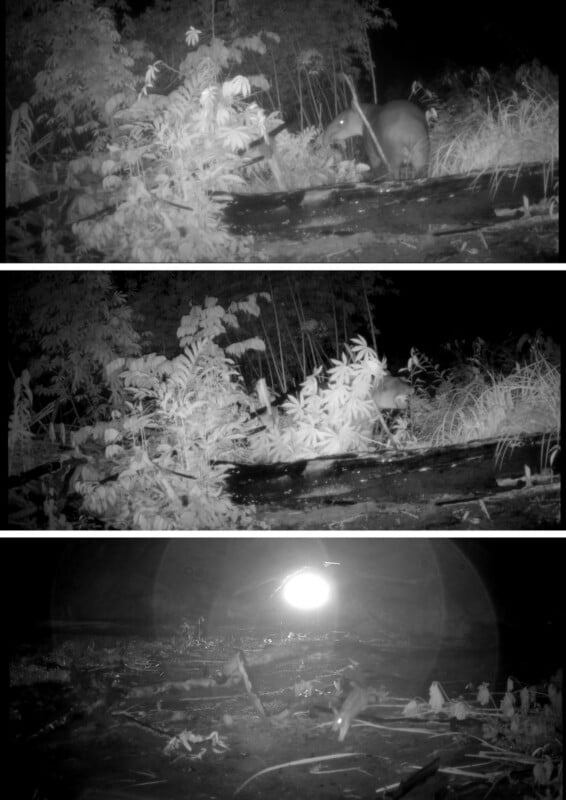
But was the endangered tapir really the culprit?
To find out, researchers from the Wildlife Conservation Society (WCS) set up camera traps with solar-powered, motion-activated LEDs across a 10-hectare cassava field. The researchers hoped to document precisely which animals were visiting crops and determine if a lighting system could protect the vegetables.
Throughout two months of monitoring, the camera traps recorded seven different mammals visiting the cassava fields, including ocelots, jaguarundis, opossums, rabbits, and yes, tapirs.
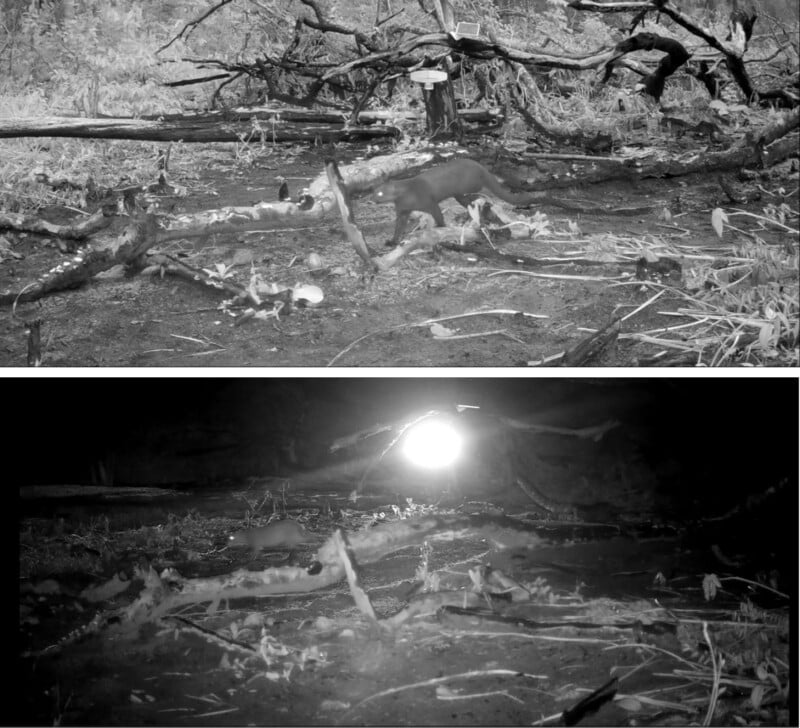
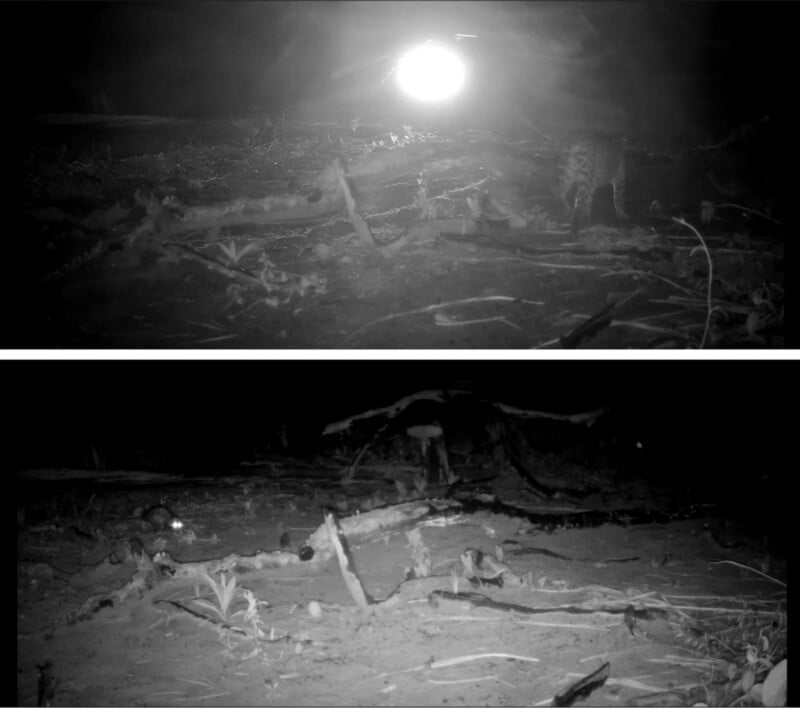
The most frequent visitor was not the Baird’s tapir, as residents suspected, but the Honduran cottontail rabbit (Sylvilagus hondurensis, which locals did not even realize visited their crops at all.
“Many conservation conflicts begin with assumptions. Without evidence, it is easy to blame large and conspicuous animals,” says research lead author Manfredo Turcios-Casco. “Camera traps allowed us to identify which species were truly interacting with the crops and helped us separate perception from reality.”
“What surprised me most was discovering that the species most frequently blamed by local people was not the one causing most of the crop interactions,” Turcios-Casco adds.
Image creditsTurcios-Casco et al., 2026. Wildlife Conservation Society.
Affiliate Disclosure PetaPixel articles may include affiliate links; we may earn a commission if you buy through one.