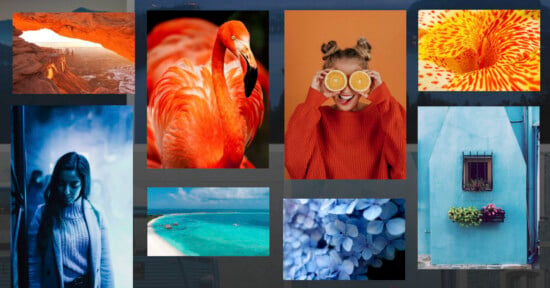
This Photographer Got So Tired of Compression He Built a Photo-Sharing Website Without It
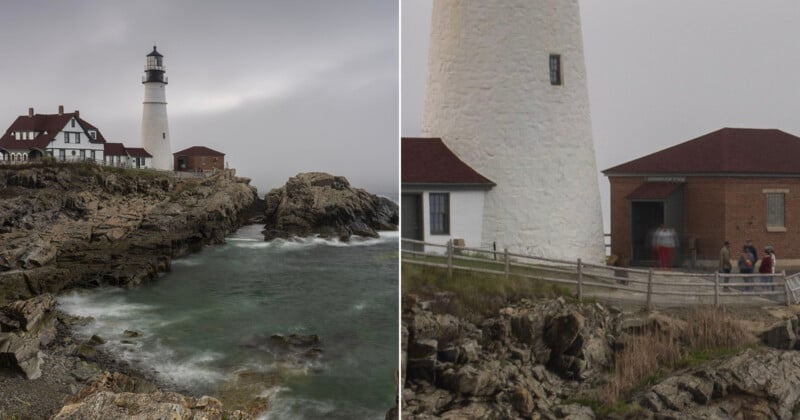
As camera megapixel counts keep rising, the limitations of online photo sharing only become more apparent. Most photographers share photos online via platforms that use heavy-duty compression, making images look noticeably worse. While this isn’t always a big deal, it can be, especially when trying to share with clients. To solve this issue, a Japanese developer built HiRezGo, an online sharing service that promises to show photos in full quality.
HiRezGo lets photographers share their images with clients in original quality on the web, lets photographers or clients easily review sharpness and detail in photos online, bypasses the web’s typical resizing limitations, and provides a portfolio-quality place to showcase their work.
Per developer, photographer, and HiRezGo creator Ryutaro Kiuchi, HiRezGo preserves original high-resolution image data by using a progressive streaming approach. Depending on the zoom level, the website changes the resolution it displays. So if a user doesn’t need to see the image at original resolution, HiRezGo doesn’t load all that data. However, as the user zooms, more data streams in seamlessly, keeping the user experience smooth without compromising image quality.

Kiuchi explains that compression is so common on the web because when a platform tries to load large images, loading slows way down, and data usage increases considerably. Serving high-resolution images at scale requires significant server resources that most platforms are unwilling to incur. For a specific website or social media platform, standardizing image sizes also ensures a consistent user experience and performance.
“As a result, most services prioritize speed and scalability over image fidelity,” Kiuchi tells PetaPixel
While this is not necessarily a bad thing, it can have real downsides for photographers.
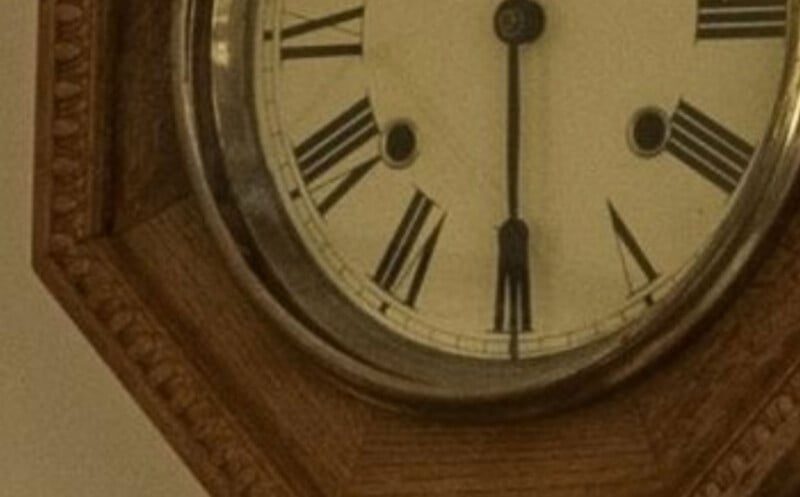
“For photographers, [compression] often leads to loss of fine detail (texture, sharpness, micro-contrast), color degradation and banding, compression artifacts in gradients and shadow regions, and reduced visual distinction between high-end camera images and smartphone photos,” Kiuchi says.
Since HiRezGo approaches photos “more like interactive visual data rather than static compressed files,” it doesn’t perform any aggressive pre-compression, and full detail remains available the entire time. It is not a resizing operation either; it is a data streaming one.
As Kiuchi explains, even though he takes photos with a high-end, dedicated camera, once he uploads them to the web, they look “somehow ordinary,” despite his being very particular about how he captures them.
“In the end, they don’t look much different from photos taken with a smartphone.”
Camera technology across the board has evolved considerably over the past decade, with image quality only improving. But arguably, at least in some ways, how people view images has gotten worse.


Social media is a very common place to share photos, but it is not an ideal place to correctly showcase images, Kiuchi argues. It is not an optimal way to view photos that photographers like him work very hard to capture.
“What is important here is that it is not that the value of the camera has disappeared,” Kiuchi writes. “Rather, the places where the camera’s value can be demonstrated have decreased — this is the essence.”
As Kiuchi says, there are plenty of places where high-quality image display exists on the web, like in high-end digital archives. But this type of image-streaming technology has not really trickled down to the general web user yet, and certainly not in a way specifically designed for photographers like HiRezGo.


“The viewing experience of photos is being left behind,” he says.
The solution to these problems of photographic work being unpleasant to view online and broadly devalued, HiRezGo, was very hard to create, Kiuchi explains.
HiRezGo works across desktop and mobile, including a wide range of browsers. This level of compatibility was hard to develop. Users can share direct URLs to uploaded photos, share via QR code, and even embed HiRezGo images as an iframe elsewhere.
“In short, with thousands of combinations of various factors — such as how data is held on the server side, communication methods for different devices, and internal processing methods of the Viewer for different devices — I had to go through a process of trial and error, groping for which implementation method was the pinpoint optimal one,” Kiuchi says.



HiRezGo has launched now, but the work is far from finished. Kiuchi plans to add numerous new features, including client-specific galleries, real-time sharing from on-site shooting, and even AI-based retouching tools in the browser.
“Honestly, this is not finished yet. However, I am building this with the desire to properly convey the meaning of shooting with a camera.”
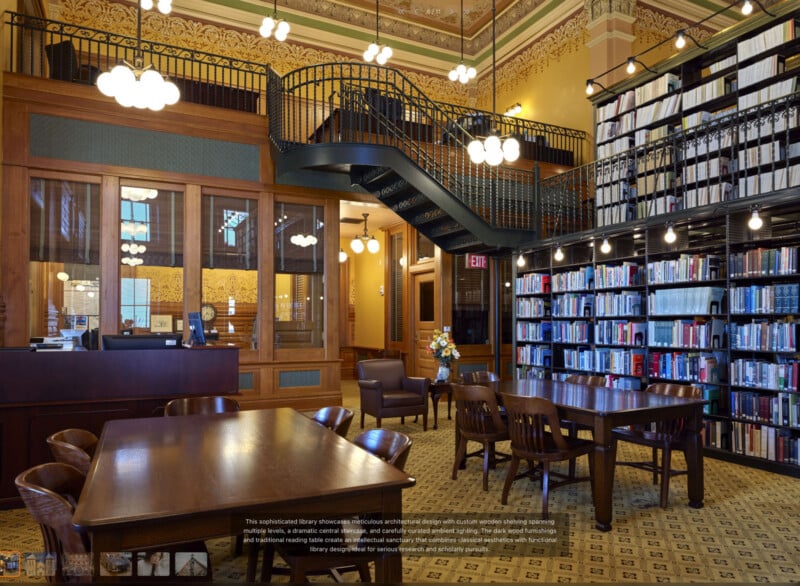
In real-world use, HiRezGo very much delivers on its core promise. The results are very impressive. Images look nearly as sharp and detailed in the web browser as they do when viewed in Lightroom.
Users can test it with their own photos right now, or browse photos Kiuchi has uploaded in a test gallery.

HiRezGo is launching with multiple tiers. A free version offers 5GB of storage, 3,000 monthly page views, and 10 uploads per day. It also includes ads.
Lite and Standard plans add more storage, more monthly page views, unlimited uploads, and remove ads for $95.99 and $287.99 annually. There are also monthly subscription options.
Image creditsHiRezGo sample photos by Ryutaro Kiuchi. Additional test photos by Jeremy Gray.
Affiliate Disclosure PetaPixel articles may include affiliate links; we may earn a commission if you buy through one.