Atomos Acquires Flanders Scientific, Among the Most Trusted Reference Monitor Brands
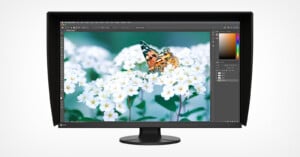
Atomos has acquired Flanders Scientific, a major name in the professional reference monitor space.

Atomos has acquired Flanders Scientific, a major name in the professional reference monitor space.
Remote cameras are an incredible tool that enable scientists to safely monitor, study, and photograph rare animals. Scientists working in the forests of Sabah, Malaysian Borneo, broke a record by observing an individual Sunda clouded leopard on camera traps for more than six years.
Canon Explorer of Light Atiba Jefferson worked with the Ryan Seacrest Foundation to provide kids at Rady Children's Health in Orange County with a photo-filled afternoon they'll never forget.
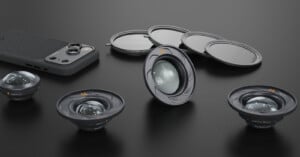
ShiftCam has announced V-Series, which it describes as "the next generation of mobile optics." The V-Series comprises four new add-on lenses for smartphones: a fisheye, a wide-angle, a telephoto prime, and a macro.
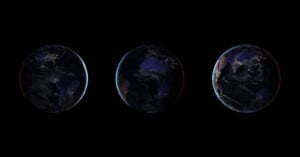
Light pollution is a significant, increasing problem, and it doesn't just affect astrophotographers. Scientists using satellite imagery of Earth from 2014 through 2022 have found that human activity and artificial lights increased light pollution by 16 percent in just eight years.
The DJI Osmo Pocket 4 has been rumored for a while, even leaking a couple of months ago. Well, it's official now, and DJI is teasing a full reveal next week.
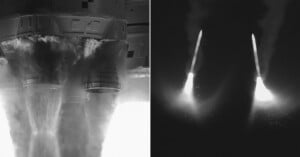
NASA continues to upload more media from its exciting Artemis II launch last week and ongoing lunar mission. Part of the latest batch of images is infrared still frames and videos from the Artemis II launch, which not only provide useful data for scientists but look spectacular for everyone else.
VSCO has increasingly incorporated artificial intelligence (AI) into its photography products, including AI Lab, a dedicated AI-based editing platform inside the VSCO app on iOS. To better understand how photographers feel about AI and how they want to use it in their photography workflow, VSCO conducted a survey of photographers across the U.S. and Canada in December, and the results are quite interesting. The company published its report today.
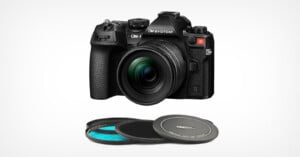
OM Digital Solutions (OMDS) officially announced the OM System OM-1 Mark II IR in Japan, a new infrared version of the OM-1 II released in early 2024. The new camera is designed primarily for industrial and scientific applications.
Eizo has announced the ColorEdge CS3200X, a new 31.5-inch 4K UHD (3840 x 2160) monitor that promises extremely accurate color rendering for professional photography, videography, and design workflows.
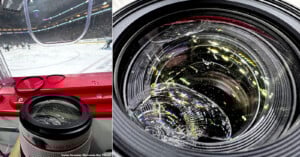
The infamous camera cut-out at hockey arenas has claimed another victim, this time The Minnesota Star Tribune photographer Carlos Gonzalez's brand-new Canon RF 70-200mm f/2.8L IS USM.
World Press Photo has announced the winners of its annual photo competition, celebrating the best and most powerful photojournalism photos from the past year.
Professional architectural photographer Mike Kelley has achieved extensive commercial success but has remained dedicated to personal artistic projects as well. These personal projects have often been the ones to lead to Kelley's "craziest opportunities," including one that took him to NASA's Michoud Assembly Facility to photograph the Orion crew capsule and SLS rocket that just last week carried four brave Artemis II astronauts into space to orbit the Moon.
Last week, Insta360 unveiled the Snap selfie monitor for smartphones, but only in Asia. Today, the company unveiled its latest mobile accessory across global markets.
Sandmarc's new Capture Leather Wallet is a photographer-centric take on a traditional bi-fold leather wallet, holding the owner's cash, credit cards, and even memory cards.
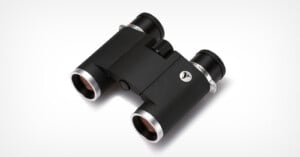
Like numerous other lens makers, Cosina Voigtländer makes binoculars. Cosina brought its brand new Voigtländer Mod. Vienna binoculars to CP+ 2026, but they were lost in the shuffle of new photo gear and are only just now starting to launch in global markets. The new binoculars are very stylish, featuring some of the style and charm of Voigtländer's beloved photo lenses.
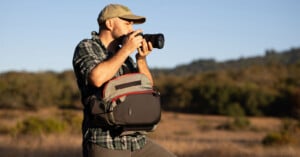
Think Tank Photo has announced a pair of new sling bags for adventurous photographers, the PhotoCross V2 Sling. Available in 11- and 14-liter versions, the bag features a single shoulder strap and is designed to offer photographers quick, comfortable access to their gear without removing the bag.
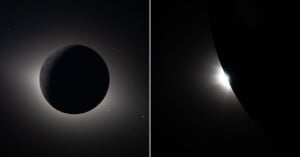
The NASA Artemis II crew had a very eventful April 6. After breaking Apollo 13's record for the farthest distance humans have ever been from Earth, the crew got busy taking a lot of photos, including unique photos of the Moon and beautiful eclipse photos unlike anything visible on Earth.
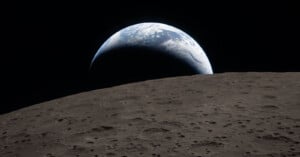
NASA Artemis II astronauts captured a beautiful photo, "Earthset," showing the Earth setting beyond the lunar horizon. This is the Artemis II crew's unique take on Apollo 8 astronaut Bill Anders' iconic "Earthrise" photo.
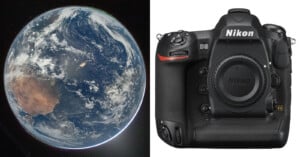
While much of the discussion surrounding the Artemis II crew's beautiful photos from their Orion spacecraft has focused on the images themselves, and they are fantastic shots, some of the discussion has surrounded the cameras used to capture the photos. Photographers love chatting gear, after all. While the Nikon D5 DSLR may seem like a puzzling choice as the primary camera on a prestigious space mission in 2026, it's the best tool for the job.
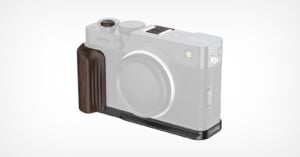
The Fujifilm X-E5 is already a beautiful camera, arguably one of the best-looking new models released last year. SmallRig wants to make the X-E5 even more stylish (and functional) with a new wooden grip and Arca-Swiss tripod plate attachment.
French photographer Imad Djebarni just developed a new iPhone app designed for film photographers. Pellica's primary purpose is to track which films photographers use, which is not a wholly new concept for an app. However, Pellica aims to do much more than track film.
Hall of Fame baseball player Ken Griffey Jr.'s passion for photography is well known. The slugger-turned-photographer is a mainstay at major sporting events, including NFL games, soccer matches, and last year's Masters Tournament at the iconic Augusta National Golf Club. Griffey's experience behind the camera at The Masters is the focus of a new documentary, "Photographer No. 24."
Fujifilm has two Fujikina events coming up in Europe, including one in May in Copenhagen, Denmark, and another in June in Warsaw, Poland. These events are designed to give photographers, regardless of the gear they use, a chance to gather, learn, and celebrate the art of photography.
Photographer Steven Madow has been photographing rocket launches for over a decade, but arguably no rocket launch he has photographed has been as big of a deal as the Artemis II launch on Wednesday, April 1. Madow set up 14 different Panasonic Lumix cameras to cover the monumental event, including seven remote cameras at the launch site. His outstanding photos are the result of years of practice and planning.
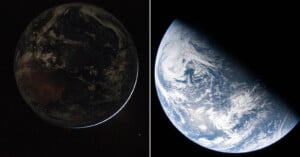
Just a few hours after sharing the Artemis II crew's first photos of Earth, NASA shared two more photos captured by Artemis II Commander Reid Wiseman, this time showing the dark side of the Earth and Earth's Terminator Line, the constantly moving boundary that separates day and night.
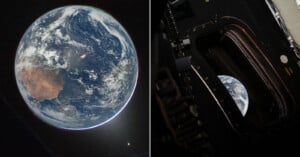
The NASA Artemis II crew piloted their Orion spacecraft out of Earth's orbit this morning, charting a path toward the Moon. Artemis II Mission Commander Reid Wiseman captured a pair of exceptional photos of Earth through Orion's capsule window, a spectacular celebration of the crew's latest achievements. These are the first two images downlinked from the Artemis II crew.
Anamorphic lenses are everywhere these days. From the small screen of television to the big screen of IMAX theaters, cinematographers often reach for anamorphics. These lenses not only deliver an ultra-wide, cinematic look but also feature distinct oval bokeh and exaggerated flare. The look is so prevalent in live-action filmmaking now that even animated movies, like the brand-new "The Super Mario Galaxy Movie," are following suit and simulating the "look" of anamorphic lenses.
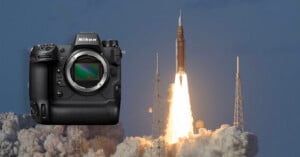
Although the plan had been for NASA Artemis II astronauts to bring just Nikon D5 DSLR cameras with them to space, last-minute requests by the crew helped get a Nikon Z9 aboard Artemis II before it launched into space yesterday.
Tokina was a significant name in lenses during the DSLR era, but photographers could be forgiven for thinking the company had given up on photography due to its lack of new lenses in recent years. However, Tokina is not gone. In fact, the company is working on its next lens right now, promising that it will be "one lens like no other."
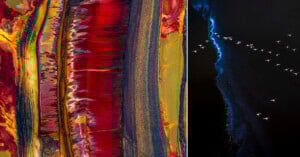
Photographer Jon McCormack's new monograph, "Patterns: Art of the Natural World," is a beautiful visual love letter to nature and all its intricate patterns, from microscopic and rarely-seen to vast and majestic.
As expected, there have been a lot of April Fools' Day pranks in the photo industry today. Mixed in with the standard goofy and funny joke products, like ISO 0 film, a helium-filled camera backpack that weighs nothing, and a film roll with a different film emulsion for every frame, is Thypoch's camera idea that seems like it might not be a joke at all.
Although it is April Fools' Day, OM Digital Solutions (OMDS) is not joking around. The company announced a significant change in its corporate shareholder structure today, which it says will "enable more agile and flexible decision-making."
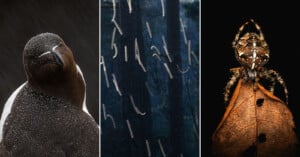
The Scottish Nature Photography Awards announced the winners of its 2025 competition, celebrating the best and most beautiful nature, wildlife, and landscape photos captured in Scotland.
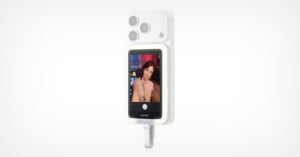
Insta360 Japan announced a new Snap selfie monitor that magnetically attaches to the back of a smartphone and enables mobile users to capture higher quality selfies using the superior rear cameras on their device.
Another professional athlete picked up a camera to try their hand at photography. This time it was NFL cornerback Mike Sainristil from the Washington Commanders, who used a Nikon DSLR to photograph the NHL's Washington Capitals faceoff against the Philadelphia Flyers.
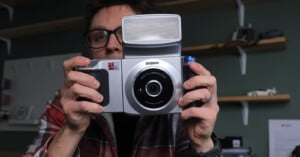
Photographer James Warner, known for his excellent YouTube channel, snappiness, loves weird digital cameras. His latest acquisition is a bizarre but fun relic, the Sony C200X digital passport system camera. This chunky silver digicam from 2003 has a vertically oriented sensor, a huge on-camera flash, and is designed to permanently live in an administrative office. It exists solely to shoot passport or ID photos and works alongside an accompanying Sony thermal printer.
AI in photography is a hot topic. It can range from a purely workflow tool to a portrait retoucher and even a full-blown creation tool. According to a survey of 363 photographers who either use AI as part of their workflow or are open to AI retouching tools, the vast majority believe AI should assist but not take over creative control.
As its name suggests, National Geographic's new two-part documentary series, "Secrets of the Bees," turns the lens toward one of Earth's most important inhabitants: bees. The series is fascinating, full of interesting information and science about bees, but also replete with exceptional cinematography. The miniseries has many fantastic close-up shots of bees, unlike anything captured before.
Photographer and university student Megan Tucker created a browser-based photography conditions forecaster, LightCast Suite, to help fellow photographers decide when it's worth heading out with their camera gear.
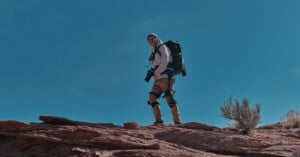
Photography is among the best and most fun ways to enjoy nature. However, for many, the physical demands of outdoor adventures can be too much, forcing people to stay home or stick to only the most accessible, often overcrowded, photo spots. That's where Vastnaut comes in with the Vastnaut One, the world's first AI-powered 4x4 wearable exoskeleton. It works with your body to reduce stress and enable you to go farther and explore places that you otherwise couldn't.
While PetaPixel readers are particularly passionate about serious, dedicated cameras with the latest and greatest features, one of the most popular cameras in the world is the iPhone. Nearly every year, Apple touts improved photo quality on its latest handhelds, often due to a combination of better hardware and more sophisticated software.
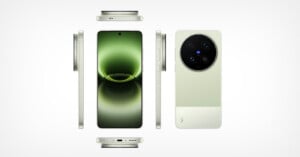
Vivo officially launched its latest flagship smartphone, the X300 Ultra in China. Vivo says its new phone features Vivo's best-ever suite of cameras and photography features, and the company promises that the X300 Ultra redefines mobile imaging for still photography and video.
Tamron is focused on making lenses that no other manufacturer does. A consequence of this is that Tamron makes a lot of zoom lenses, although the company reiterated to PetaPixel at CP+ 2026 that it is not opposed to making new prime lenses, but it needs to be the right prime, a unique offering.
Thypoch, known for its classically-inspired manual focus prime lenses like the Simera 28mm f/1.4, Eureka 50mm f/2, and most recently, the Ksana 21mm f/3.5, has unveiled its next project: an autofocus-equipped 24-50mm f/2.8 zoom lens. This is a very bold new chapter for the upstart Chinese lens company.
Earlier this week, Panasonic unveiled the Lumix ZS300, also known as the TZ300 in some markets. The new compact camera is nearly identical to its predecessor, released in early 2018, except for one big thing: the ZS200's electronic viewfinder has been removed, replaced with nothing but more plastic. There are logical explanations for this, but they do little to stop me from disliking the change.
U.K. filmmaker Guy Loftus has launched Rushes, stylized rushes, a new video hosting and sharing platform designed to fill the void left by a reshaped Vimeo. The platform is built by video creators, for video creators.
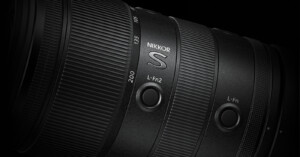
Nikon's original Nikkor Z 24-70mm f/2.8 S and Nikkor Z 70-200mm f/2.8 VR S lenses were already superb when they were released in 2019 and 2020, delivering great optical performance and dependable autofocus inside a well-designed chassis. However, much has changed in lens design in the years since, and Nikon's even better, significantly lighter 24-70mm f/2.8 S II and 70-200mm f/2.8 VR S II zooms reflect multifaceted technological advancements.
In March 2004, Australian photographer Robert Edwards asked a simple but meaningful question on Rob Galbraith's now-defunct photography forums: "Could Adobe make a RAW format?" The answer was very much "yes," and Adobe announced the DNG format, or Digital Negative, later that same year. Now, more than two decades later, DNG is now the official standard under the International Organization for Standardization (ISO).
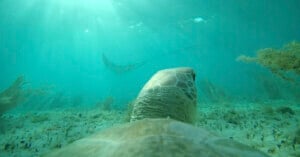
Marine biologist Dr. Nathan Robinson went viral over a decade ago for a video of him removing a straw from a sea turtle's nostril. However, Dr. Robinson is so much more than that viral moment. He has dedicated his career to studying and helping marine life. One way he does so is through TurtleCam, cameras safely attached to sea turtle shells that capture their behavior and habitat in remarkable detail.