
Why Other Reviewers Love the Sony RX10 V Even Though We Didn’t
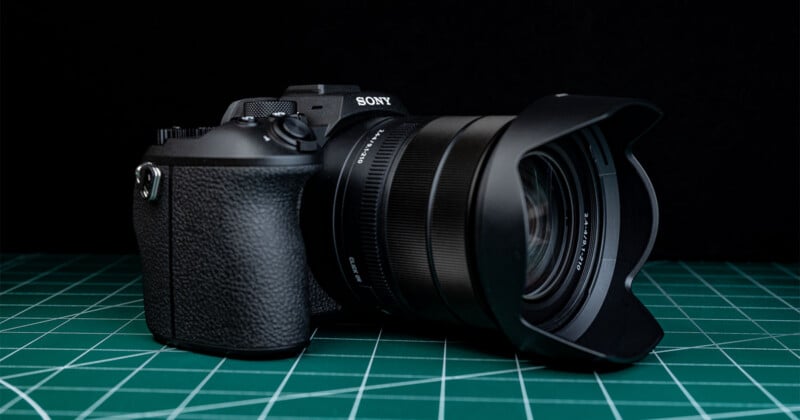
Sony unveiled the long-awaited RX10 V this week, bringing out a new versatile bridge camera for the first time since the RX10 IV in 2017. You’ve already seen what we think, but we believe it’s important to get a diverse assortment of opinions when considering something as important as a camera purchase. $2,299 is a lot of money, after all.
Both Chris Niccolls and I independently tested the Sony RX10 V and reached very similar conclusions. It’s a good, versatile camera that offers meaningful improvements over its predecessor in numerous important areas, but it still feels old-fashioned in some key ways.
Image quality is good in the best of situations, but quickly deteriorates at higher ISO settings. Autofocus is better, but neither Niccolls nor I felt that it was decisive enough in difficult scenarios. The redesigned body is great, and a clear high point for the RX10 V.
However, perhaps most importantly, the RX10 V doesn’t quite justify its price tag for us. If photographers are seeking the best bridge camera on the market, the Sony RX10 V is it. If they are seeking a really good camera that delivers impressive performance all the time, the RX10 V misses that mark. As my review headline says, “Sometimes the best isn’t good enough.”
But that’s what we think. There are plenty of highly respected voices in the photography space we think you should hear from, too, if you’re wondering whether the RX10 V is the right camera for you.
For example, excellent wildlife photographer Steve Perry reviewed the RX10 V, finding it to exceed his expectations.
Both Chris and I used the RX10 V for wildlife photography and found its high-power zoom and improved continuous shooting performance useful, but noted some unfortunate limitations, including the need to shoot lossy RAW files to use the camera’s electronic shutter and disappointing high-ISO performance.
For Perry, the Sony RX10 V proved to be a very pleasant surprise.
I went into this test thinking there was no way that a superzoom with a 1-inch sensor and a built-in lens was going to work well for ‘real wildlife photography.’
Honestly, I had roughly the same enthusiasm for this camera that I bring to a dentist visit for a root canal.
But here’s the thing, once I started using the new Sony RX10 V, it kept doing things I didn’t expect. It tracked things like blackbirds in flight. It gave me close-ups I was not expecting. The buffer was way deeper than I ever though it would be. And that Zeiss 24-600mm equivalent lens was a lot more useful in the field than I wanted to admit.
As Perry says, no, the RX10 V won’t replace a professional-grade interchangeable lens camera and super-tele lens, like his Sony a1 II and FE 600mm f/4 lens. But the acclaimed wildlife shooter believes the RX10 V has more than enough chops to satisfy wildlife-loving photographers who don’t always want to bring out a big kit or don’t have the budget for one.
Granted, Perry is such a great wildlife photographer, I’m sure he could pull off exceptional results with just about anything, but he makes a good point. The RX10 V can definitely deliver great results, and its built-in lens is impressive. Perry’s video above is full of outstanding wildlife photos that show the RX10 V at its best.
Perry’s skills can also help overcome the RX10 V’s lack of Pre-Capture, a notably missing feature that would have been really useful for my wildlife photography experiences. Perry may not need the latest assistive features, but I sure do.
Another positive review for the Sony RX10 V comes from our friend, Gordon Laing of Camera Labs.
Laing always appreciates a versatile digital camera, celebrating the RX10 V for its ability to easily go from wide-angle to super-telephoto.
“Unless you’re happy lugging around and swapping multiple lenses, I’d say it’s the ultimate camera for something like a safari,” Laing says of the new RX10 V.
It’s a great point, and the RX10 V’s versatility and relative ease of use are among its strongest attributes. It does some things that no other camera can, save for perhaps its predecessor in some situations.
As Laing explains, for photographers who want to capture wide-angle landscapes at one moment, portraits at another, and close-up wildlife or sports shots just a few seconds later, the RX10 V hits many of the right notes.
As PetaPixel‘s Jordan Drake espoused in our Sony RX10 V video review, the Sony RX10 V also has much improved video features and performance compared to its predecessor, making it a very compelling choice for video content creators who want a huge zoom lens and modern features.
Jason Vong agrees. Although the Sony RX10 V uses a relatively small sensor, especially for a camera in its price bracket, it can deliver great results for hybrid use cases.
“You’re not gonna find another camera like this in this compact-ish size with this mega-long reach,” Vong says. “At least not without taking further hit in image quality.”
Vong says the RX10 V is a great choice for three large groups of people: People who want a super-versatile all-in-one camera but don’t necessarily care about the best possible image quality, photographers who want to do wildlife photography without breaking their backs or wallets, and travelers who want better photos than their smartphone can provide. For these use cases, we agree that the RX10 V is great.
Is the Sony RX10 V for You?
As PetaPixel concluded in our Sony RX10 V Review, while the camera is not without its flaws, it’s definitely the best overall bridge camera on the market. While the competition is thin these days, the RX10 V is very good overall, though it’s quite expensive.
Whether the Sony RX10 V is the right camera for you depends on many factors, but the most important question a prospective buyer needs to ask themselves is this: What do I want most from a camera?
If the answer is versatility and the ability to do just about any photography at a pretty good level without needing to change lenses or lug around a big camera, the RX10 V may very well be the camera for you. It can do landscapes, portraits, wildlife, and travel. It can’t do any of them at an extremely high level, but it can do them all without swapping lenses, and that can be really important to some people.
If what you want instead is really great image quality, features like Pre-Capture, and Sony’s best autofocus system, and you’re willing to pay a bit more and swap lenses to get it, then looking elsewhere makes sense.
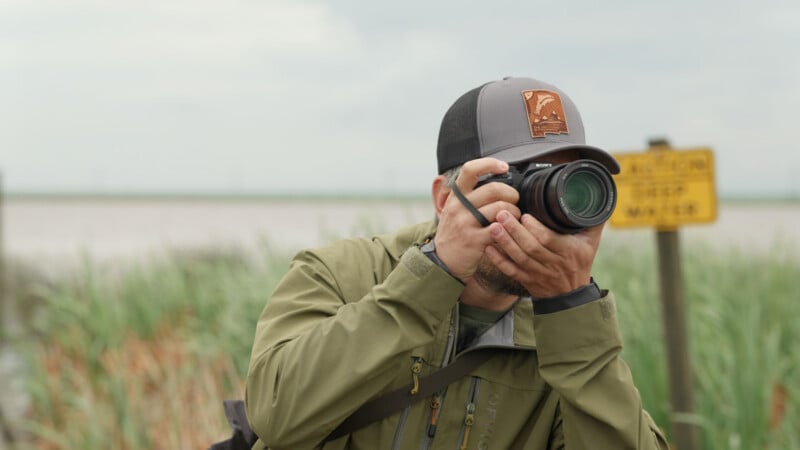
The Sony RX10 V is not everything for everyone, but it is fully capable of producing great results in ways other all-in-one cameras cannot.
“Purely on the value side, the RX10 V’s proposition is attractive. And I believe that for many people, the Sony RX10 V will be an excellent camera that does everything they want and more,” I wrote in my review. “I’m just not one of those people. I want more, and I think that is a reasonable demand.”
You might not want more than the RX10 V offers. Some of our peers didn’t, and that is entirely reasonable.
Affiliate Disclosure PetaPixel articles may include affiliate links; we may earn a commission if you buy through one.