
Tokina 11-18mm f/2.8 ATX-M Review: Strong Optics, Delicate Lens
Wide-angle zoom lenses with fast apertures are few and far between when it comes to Sony APS-C cameras. The Tokina 11-18mm f/2.8 ATX-M takes its shot in this overlooked class.
Wide-angle zoom lenses with fast apertures are few and far between when it comes to Sony APS-C cameras. The Tokina 11-18mm f/2.8 ATX-M takes its shot in this overlooked class.

When it comes to macro photography, having the right lens is critical for achieving the best possible images. As such, the updated $547 HD D FA Macro 100mm F/2.8 ED AW from Pentax brings a refreshed optical formula optimized to work better with larger megapixel DSLR's but, sadly, not much else.
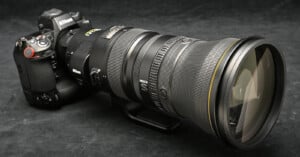
When Nikon announced the new Z 400mm f/2.8 TC lens, lots of people asked if I was going to buy one. My answer? “No way, I’d be crazy to spend $14,000 on one lens.” So I guess I’m crazy, because now I have one. Here’s what happened that changed my mind.

Dramatic, restrictive, and humbling are three words I'd use to describe the Carl Zeiss 16mm f/8 Hologon Ultra-wide lens that I shoot adapted to Leica M film cameras.

Fujifilm Japan has published a video tour of one of its camera and lens factories. In total, the company has six production facilities, including four in Japan.
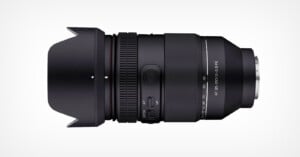
Samyang has announced a new 35-150mm f/2-2.8 lens for Sony E-mount which features a wide zoom range typically associated with "all-in-one" style kit lenses but with a fast variable aperture that is uncommon in that segment.

One of the first images the James Webb Space Telescope ever captured was only possible thanks to a gravitational lens. Its latest is another example of this phenomenon, this time featuring a galaxy called the Cosmic Seahorse.
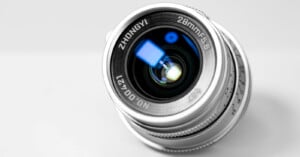
Chinese lens manufacturer Zhong Yi Optics has announced the Mitakon Creator 28mm f/5.6 lens, a $299 recreation of the Leica Summaron M 28mm f/5.6 which the company says has a "faithful adherence to the original lens characteristics while maintaining an affordable price for photographers".
I have a special interest in manual focus 50mm lenses. It began with a Praktica film SLR that was bundled with a 50mm f/2.8 Meyer-Optic Görlitz lens. Next came a Canon Ftb SLR with a 50mm f/1.4 FD SSC lens. This lens had a noticeable improvement in image quality along with a much better anti-reflection coating.
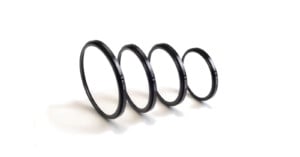
If you want to get a rise from fellow photographers, hop onto any online photography forum and discuss ultraviolet (UV) lens filters. You can say they're excellent or that they're worthless. Either way, you're sure to kickstart a less-than-friendly debate. Like most online debates, there'll be no winners.
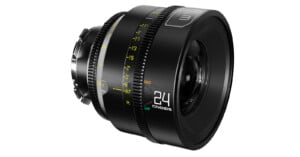
Less than a month after announcing the Pictor 12-25mm T2.8 parfocal cinema lens, DZOFilm has unveiled its Gnosis 24mm T2.8 macro cine lens.

I received a request from Apexel to review a phone accessory that connects to microscopes, telescopes, or binoculars. I replied to inform them that I had none of those pieces of equipment but I might be interested in reviewing a macro or microscope attachment to mobile phones.
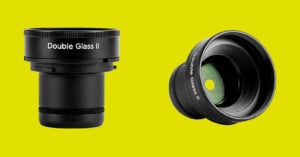
Lensbaby has unveiled its new Double Glass II optic at CP+ 2023 in Japan. The latest in Lensbaby's long line of unique creative photography lenses and accessories, the Double Glass II is a new-and-improved version of Lensbaby's Double Glass optic for its Optic Swap system.

Sony’s new Sony 50mm f/1.4 GM is a compact, fast, and high-resolution lens in Sony’s upper-echelon G Master lineup, and it joins Sony’s already flush 50mm focal length lineup.

The Viltrox AF 75mm f/1.2 doesn't slot neatly into Viltrox's existing prime lens lineup for APS-C cameras (and currently for Fuji X-mount) - in fact, I'd call it an aberration, an experiment, possibly even a mistake. But what a wonderful mistake.

Micro Four Thirds (MFT) is perhaps the most derided of all camera formats in modern digital photography. It is constantly overlooked, scoffed at, and is the subject of disdain. It really shouldn't be, and you all are way too hard on it.

One of the most basic and common terms in the world of photography is the focal length of a lens. In this guide, we will dive down deep into what focal length is and how it works.
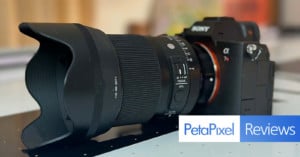
Sigma’s 50mm f/1.4 DG DN Art takes its place as the latest lens in Sigma’s venerable high-end lens line and is a welcome addition thanks to excellent performance and a low cost of entry.

A recent factory tour reveals some of the steps that Fujifilm takes to hand-assemble its huge XF 150-600mm f/5.6-8 R LM OIS WR lens.
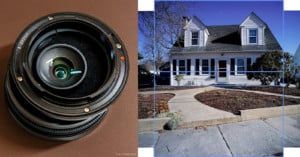
Low-cost lenses started appearing in the market in the last twenty years or so, with prices coming down steadily. When I saw another inexpensive lens in an article a couple of months ago, it grabbed my attention not with its price but with its core feature. It was a shift lens. An 18mm, fixed-aperture at f/8, shift lens at $119 was worth trying.
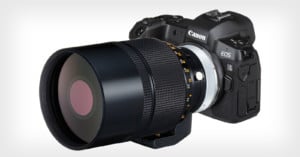
Canon has designed a pair of RF-mount catadioptric telephoto lenses that it says successfully corrects for field curvature while still being small, lightweight, and have a large aperture: a 300mm f/2.3 and a 400mm f/5.
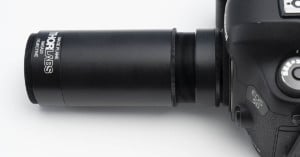
The Mitutoyo long working distance objectives are popular in macro photography, but often difficult to mount to a camera.

The Sigma 60-600mm for Sony E-Mount is a versatile, compelling, and unique lens with a mindblowing 10x optical zoom range. As with any all-in-one lens, it’s not without its compromises, and the $2000 price puts it up against Sony’s native FE 200–600mm f/5.6–6.3 G OSS, even though the Sigma has a more versatile zoom range.

There's more to consider than focal length and price when buying a new lens. Lenses come with an assortment of features such as stabilization and weather sealing, plus issues like distortion and bokeh.
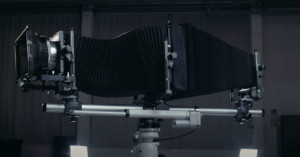
A team of photographers built a super fast f/0.3 29mm lens from a Leitz projector lens to shoot a beautiful short film.

7Artisans has announced a new wide-angle APS-C lens for Nikon Z, Sony E, Fuji X, EOS-M, and MFT mounts, the 12mm f/2.8 Mark II, an updated version of its previous 12mm f/2.8.
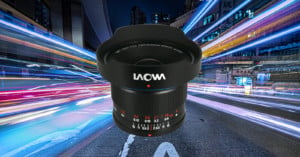
Venus Optics has announced the Laowa 6mm f/2 Zero-D MFT rectilinear lens, the "Photo Version" of the previously released 6mm T2.1 Cine Lens that offers the same image quality as the cine version but finally adds electronic components for in-camera controls and proper EXIF information recording.

We are proud to announce the second-annual PetaPixel Awards which praise a number of new photography products that our staff has voted as the best in their respective categories.
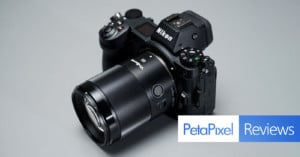
The $379 Yongnuo 85mm f/1.8 Z DF DSM lens is among the first third-party prime lenses available for the Nikon Z system that not only has an impressive autofocus system, but also boasts a customizable Lens Function button (L-Fn) and control ring.
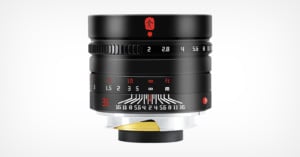
7Artisans has announced a new large-aperture prime lens for the Leica M Mount, the M35mm f/2 Mark II, an updated model of its previous 35mm f/2 for Leica rangefinders that has since been discontinued.

Google has added its Lens image search directly onto its homepage, allowing users to access the company's advanced image recognition tool directly from the search box.
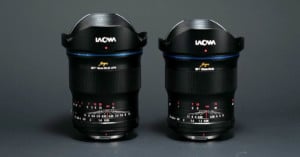
Venus Optics today announced two new ultra-fast Laowa lenses in the Argus lineup. They are the Laowa Argus 18mm f/0.95 APO lens for Micro Four Thirds cameras and the Laowa Argus 25mm f/0.95 APO lens for APS-C crop sensor cameras.

At first glance, the Tamron 50-400mm f/4.5-6.3 Di III VC VXD seems like Frankenstein’s monster of lenses. Super-telephoto lenses that provide a relatively wide focal length are uncommon and generally awful. Making a lens with such a wide range of focal lengths is complicated, yet Tamron made one that performs well across the zoom range.

Photographer and photography instructor Micahel Andrew has launched a Kickstarter campaign to address what he sees as the common shortcomings of lens filter systems called the Maven Magnetic series.

Hot off of the heels of the 90mm f/2.8 2x Macro APO lens, Venus Optics has released another Laowa macro lens for mirrorless cameras in the 58mm f/2.8 2x Ultra Macro APO, which is arguably more versatile and therefore more appealing to general shooters.
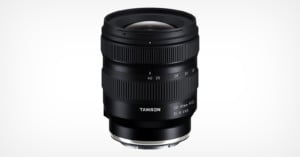
Tamron has announced the 20-40mm f/2.8 Di III VXD (Model A062) for full-frame Sony E-Mount. The company says that it was created in "aggressive pursuit" of portability, and is the smallest and lightest lens in its class.
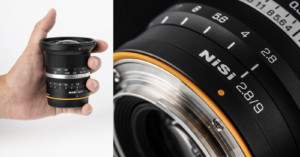
NiSi has announced its second-ever lens, a 9mm f/2.8 for multiple APS-C camera mounts. The company positions the lens as ideal for architecture and astrophotography thanks to its wide angle and the promise of low distortion and consistent sharpness.

Aperture can seem like one of the most challenging camera settings to fully understand, but once you understand it, your photography will improve immensely.
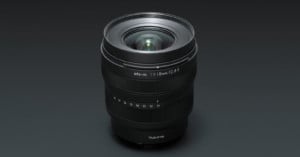
Tokina has announced the atx-m 11-18mm f/2.8 E, its first super-wide-angle zoom lens designed exclusively for mirrorless and promises full compatibility with Sony E-Mount APS-C cameras.
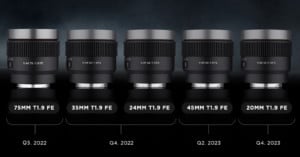
Samyang Optics has announced the V-AF lineup of lenses, a new series of "world's first" autofocus cinema lenses for full-frame E-mount systems. The new lenses are designed to allow creatives to shoot videos more conveniently.