DPReview Will Remain Available as an Archive After It Closes
Digital Photography Review has released an update about its impending closure, addressing the concerns from its readers about lost content and announcing an archival effort.
Digital Photography Review has released an update about its impending closure, addressing the concerns from its readers about lost content and announcing an archival effort.
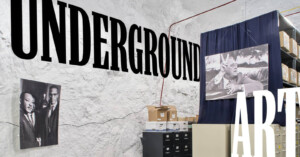
Around 50 miles (82 kilometers) north of Pittsburgh, Pennsylvania, and 220 feet (67 meters) underground, there are roughly 11 million images protected by armed guards.
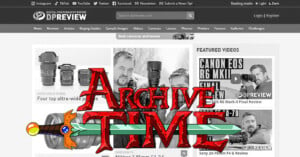
Following yesterday's news that DPReview is shutting down, photographers around the web began wondering what would happen to its huge library of articles, reviews, and camera test images, including the website's excellent studio shot comparison tool. Archive Team aims to scrape more than 4 million articles and posts within the next three weeks.
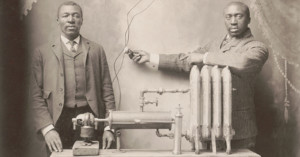
Getty Images will allow access to 30,000 rarely seen images of the Black diaspora in the United Kingdom and the United States that date back to the 19th century.
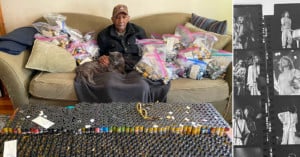
Photographer Charles Daniels has been photographing famous rockers like Rod Stewart, Jimi Hendrix, The Who's Pete Townshend, Aerosmith's Steven Tyler, and others since the late 1960s. However, tens of thousands of his photos have never been seen -- they are sitting in roughly 3,200 rolls of undeveloped film in his Boston home.

A historic film restoration editor has compiled, repaired, and colorized 22-minutes of nearly century-old footage that shows the construction of the Empire State Building.

A photographer has been collecting undeveloped film from long-forgotten cameras found in secondhand shops. Not always successful, but the quest has yielded never-before-seen personal photos that get archived in a series titled "Someone Else's."
Losing priceless digital photographs is something that all too many people experience these days. If you want to make sure you store your digital files properly, read this guide on the best ways to backup your photos for a lifetime.
It may seem obvious to some of you but I’ve presented this material enough to know that it’s best to never assume everyone understands what an archive actually is, how to create one, and, ultimately, how to leverage it for income. So let’s just start with a clear definition of a photo archive.
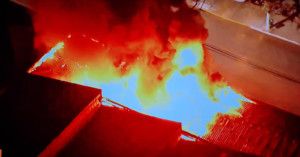
A storage facility belonging to the Cinemateca Brasileira has been engulfed by flames and while there were no injuries, the facility is home to priceless archives of 35mm and 16mm film and other museological objects.

The Finnish capital city of Helsinki is the country's central hub of politics, education, finance, and culture. If you'd like a window into the history of the city, check out Helsinkiphotos.fi -- it's an online database of over 65,000 free photos that anyone can view and use.
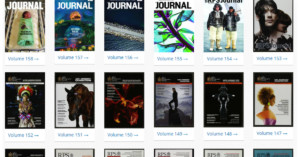
The Royal Photographic Society Journal is the oldest continually published photographic periodical in the world, and its entire archive of issues from 1853 to 2018 is available to read online... for free.
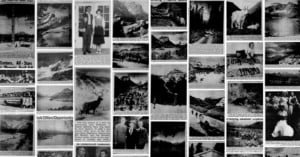
The Library of Congress has created something really cool. It's called the Newspaper Navigator, and it's an AI-powered image search that lets you browse through over 1.5 million newspaper photos from over 16 million pages worth of digitized newspapers published between 1900 and 1963.
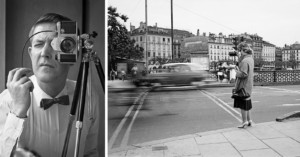
Back in 2014, photography enthusiast Dylan Scalet inherited a sizable collection of photos shot by his grandfather, Jack Sharp. It wasn't until the COVID-19 lockdown that he began digitizing the film, and in doing so, Scalet discovered that he had a treasure trove of beautiful (and previously unseen) street photos showing life in Europe over half a century ago.
The Oakland Museum of California has created an online archive showcasing the work of pioneering documentary photographer Dorothea Lange. If you've never explored Lange's work, there may be no better way to dive in.
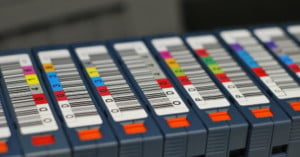
Leaps in storage capacity are pretty common these days. However, the biggest jump in archival media storage won't come from spinning disks or solid state drives—Fujifilm is currently working on cramming an incredible 400TB worth of of capacity onto a single magnetic tape drive.

The Cambridge Digital Library recently uploaded a powerful collection of images captured by Albert Eckstein in the 1930s. Eckstein, a German Jewish doctor, was exiled by Hitler and the Nazi party in 1935 and he chose to spend his exile in Turkey helping to fight the scourge of infant mortality in the country's poorest communities.
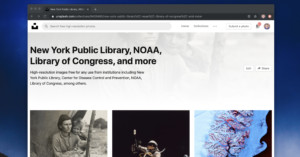
Late last week, controversial free stock photography website Unsplash announced that the Library of Congress, CDC, the New York Public Library and 10 other major institutions would be adding hundreds of scientific and historic images from their collection to the site's archive.
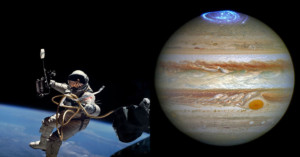
NASA revamped its Image and Video Library website in 2017 to make a massive trove of free imagery available to the public in high resolution. Here's a look at 20 of the most popular shots in NASA's photo collection.
Have you ever had a moment in your life where a friend, co-worker or client comes to you and ask you for a specific image and you just can’t find the original? If you’re like me with a few Lightroom catalogs containing ten thousands of photographs, then this situation will likely happen.
Instagram has publicly launched its new "Data Download" tool that lets users download a copy of all the photos and data they've uploaded to the service. The move comes at a time in which calls for "data portability" are increasing around the world.
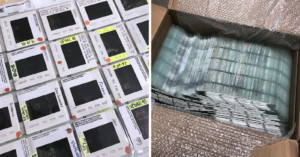
Ever since I was a kid, I loved saving stuff. I saved all my baseball cards in rubber band stacks in shoe boxes. I collected stacks and stacks of 7-Eleven Slurpee baseball cups in 1973. Every San Francisco Giants yearbook and media guide going back to the early 1960s? Yup, got them too.

Storing your photos safely on hard drives is all well and good, but when you're looking at long-term storage then you need to look after the hard drives properly. Corrupted hard drives can be a disaster, and it can happen when they're exposed to shock, dust, and static over time. ProStorage is a line of cases for avoiding those dangers.
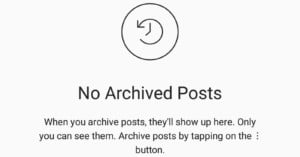
Instagram is testing a new feature called Archived Posts that will let you pull photos off of your main profile and into a hidden "Archive" section. That way, you can curate a perfect profile without deleting any of the photos you've shared on the social network.
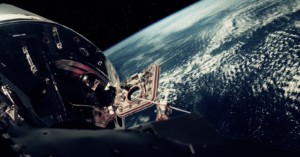
Motion Designer Christian Stangl and his brother, composer Wolfgang Stangl, just created one of the most beautiful odes to space exploration we've seen... and they did it without ever taking a single photograph. Every photo in their tribute was pulled from NASA's Project Apollo Archive.
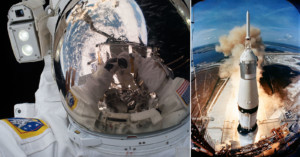
NASA just launched an updated Image and Video Library website that puts the entire NASA photo archive at your fingertips, just one keyword search away. Our apologies to your productivity... you're about to do some serious procrastinating.
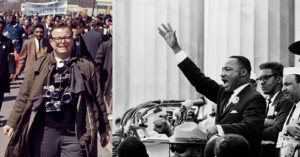
The Library of Congress recently acquired the archives of civil rights photographer Bob Adelman. An anonymous donor gifted the collection, an archive that contains some of the most outstanding images ever captured of the Civil Rights Movement.
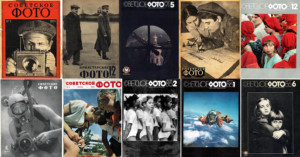
This is really cool. It turns out you can browse through full issues of the old Soviet Photo (AKA "Советское фото") magazine online at Archive.org. Fans of photography history will love this treasure trove, which contains 437 digitized issues originally published between 1926 and 1991.

Photographers are always telling each other to print their photos, but at the same time, services keep springing up that let you do the exact opposite: digitize your prints. Photomyne is one of these services, a feature-rich smartphone app that lets you turn your old prints into digital files faster than anything else out there.
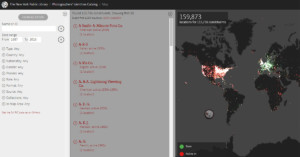
The New York Public Library has launched a new online resource called the Photographers’ Identities Catalog (PIC). If researching the world of photography is your thing, then you'll love this site: it features the biographical info of over 100,000 photographers and other businesses in the industry.
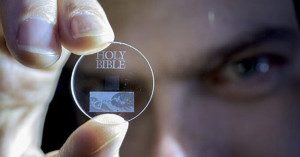
If you back up your photos on optical disks or storage drives, there's a good chance your data won't last as long as you do due to things known as "disc rot" and "data rot". But what if you want to ensure that your precious photos live longer than you? Good news: a new "eternal" storage technology may be on the horizon.
Scientists have created nanostructured glass discs that can storage digital data for billions of years.

One of the largest photo collections in the world was just sold. Corbis, which is owned by Bill Gates, has sold off its images business to Visual China Group, China's equivalent of Getty Images. VCG is the same company that led a $13 million investment in 500px in 2015, and which is partnering with 500px to expand into China.
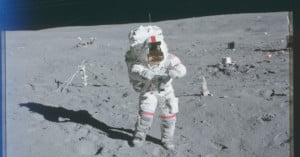
Want to browse the entire collection of photos captured on the moon by Apollo astronauts with their chest-mounted Hasselblad cameras? You can now do so right on Flickr.
The Project Apollo Archive has uploaded over 8,400 high-resolution scans of photos shot by Apollo astronauts during trips to the moon.
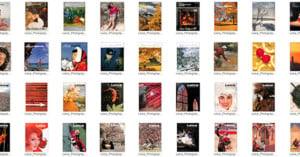
Some photographers find that shooting with a Leica camera provides an experience unlike any other. If you happen to be one of those photographers, or possibly a curious individual, we have quite a bit of exciting news. Photography enthusiast Daniel Neal has uploaded a large collection of Leica Photography magazines to the web for public viewing.

1,250 glass negatives from between 1910 and 1925 were recently found in the archives of the Swiss photo agency Keystone. After some thorough research work, it was concluded that the photos formed an important chapter of Swiss photographic history: they were shot by photographer Jules Decrauzat, widely considered now to be the first sports photographer and first major photojournalist in the history of Switzerland.

John Rogers was once one of the high flying entrepreneurs in the photo world. After coming up with the brilliant idea of scanning old photos for newspapers and splitting the rights to the digital images, Rogers was on his way to amassing one of the largest photo libraries in the world and was earning a whopping $120,000 per week selling his images on eBay.
Now his empire has come crashing down. Rogers is reportedly being sued for more than $90 million and has lost his business entirely.
Amazon has just dropped a huge bomb on the file storage industry by announcing two new unlimited cloud storage subscription plans. One lets you store all the files your heart desires for just $60 a year, and the second is one that may be a very attractive backup option for photographers: unlimited photo storage for just $12 a year.
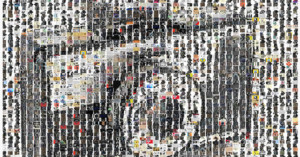
Fans of vintage cameras, listen up, because we're run across a wonderful resource that could very easily consume hours upon hours of your time. Sounds good, right? The resource is a French online archive called Collection Appareils, and it contains images and info about some 10,142 cameras made by every manufacturer from Ace to Zion.
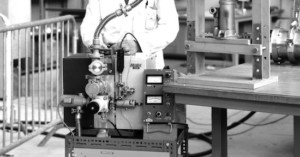
Scientists are all about recording data, facts and other information meticulously so that others can replicate their experiments. But, sometimes, even scientists can slip up. That, it seems, is what happened with the photography archive at CERN.
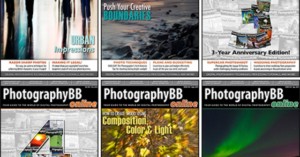
Update: It looks like the original download links are now defunct. They appear to be redirecting visitors to a deal a day website. Apologies.
After officially ending its run last year, the PDF photography magazine PhotographyBB has reopened its archives by popular demand. Created and edited by Dave Seeram, PhotographyBB published over 50 editions over the course of its four-year existence, and now you can download every single one of them for free.